Detailed Guide to Undersized AC Unit Signs in Humid Climates
.webp)
When Your AC Can't Keep Up: Undersized AC Unit Signs and Problems in a Humid Gulf Coast Climate
The undersized AC unit signs and problems in a humid Gulf Coast climate are different from what homeowners in drier parts of the country deal with — and they're often more damaging. Here in South Louisiana, your air conditioner isn't just fighting heat. It's fighting heat and moisture at the same time, every single day of a cooling season that stretches well beyond summer.
Common signs your AC is undersized for the Gulf Coast:
• Your home never reaches the temperature set on the thermostat, especially in the afternoon
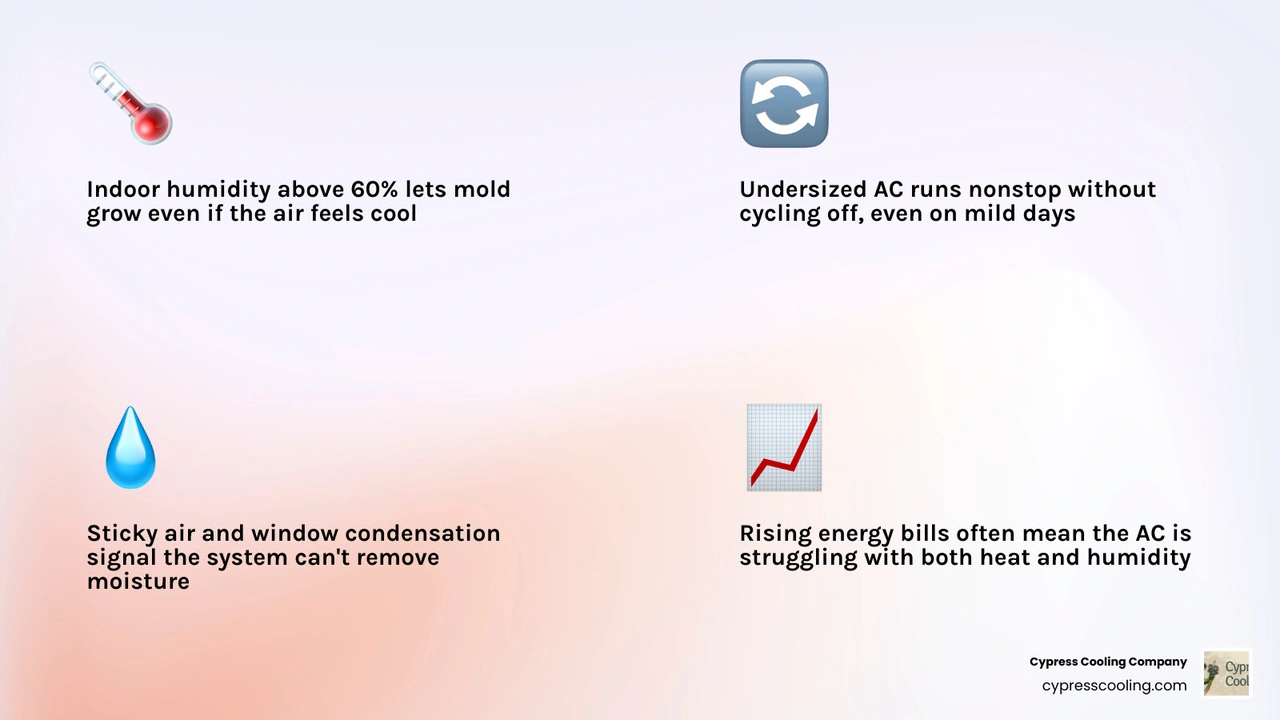
• The AC runs constantly without cycling off, even on mild days
• Indoor air feels sticky or humid even when the system is running
• Energy bills keep climbing without a clear reason
• Some rooms are noticeably warmer than others
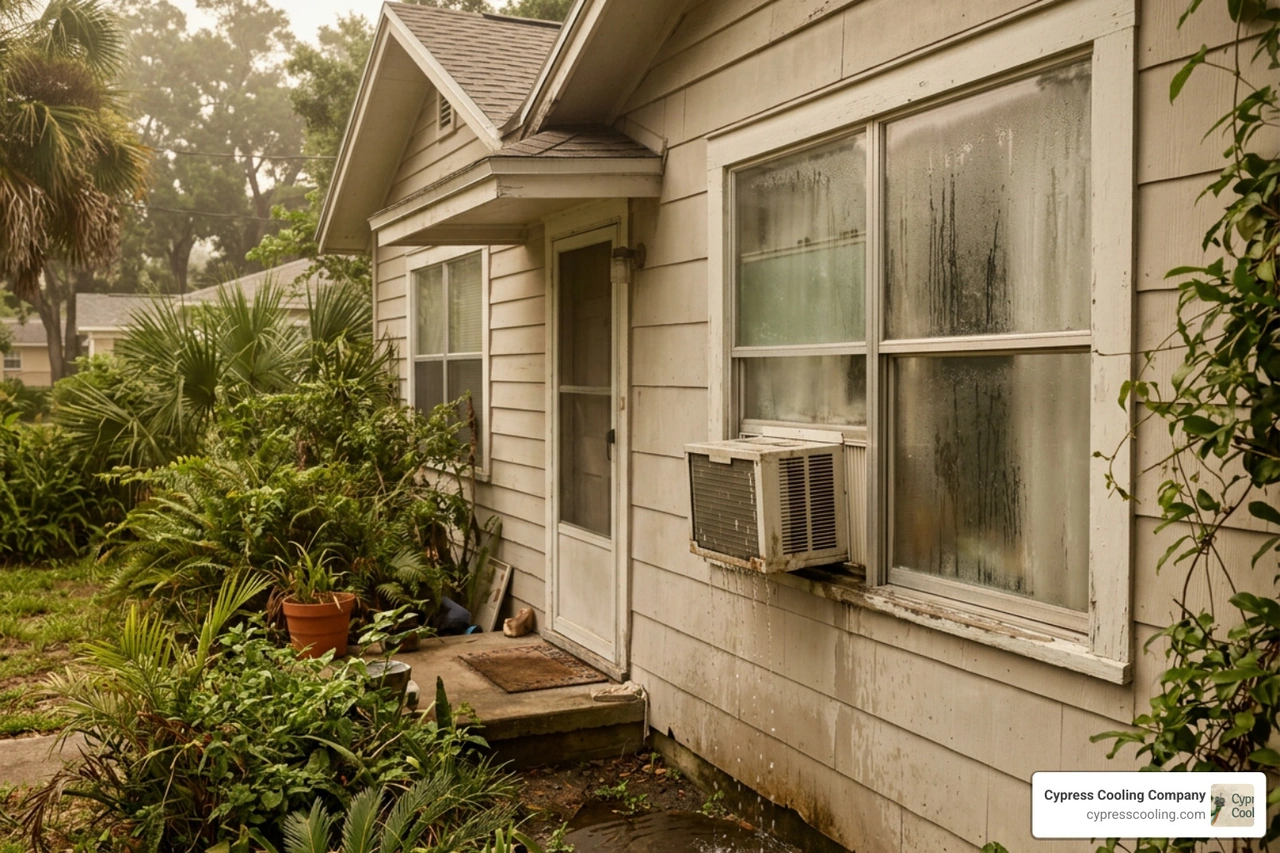
• You notice musty odors, condensation on windows, or surfaces that feel damp
The problem with spotting these signs in Louisiana is that many homeowners assume the heat is just "that bad." Sometimes it is. But often, the real issue is an AC system that was never sized correctly for the actual cooling load of the home — including the enormous moisture burden that Gulf Coast humidity adds to every cooling cycle.
When indoor humidity climbs above 60%, mold can begin to grow even if the air feels cool. A system that runs constantly but still can't pull moisture out of the air isn't just uncomfortable — it's quietly damaging your home and shortening the life of your equipment.
Undersized ac unit signs and problems in a humid gulf coast climate terms to remember:
• ac never reaches set temperature during a heat wave what is wrong
• how high humidity in the New Orleans area makes your ac work harder
• why does my ac run all day without stopping in a louisiana summer
Identifying Undersized AC Unit Signs and Problems in a Humid Gulf Coast Climate

When you live in Metairie, Kenner, or Mandeville, summer isn't just a season; it's a marathon of heat and heavy air. During these brutal stretches, identifying whether your cooling system is broken or simply too small can save you from a lot of hot, sleepless nights.
An undersized air conditioner lacks the cooling capacity (measured in BTUs or tons) to offset the heat entering your home. If you want to dive deeper into the basic troubleshooting steps before making a service call, check out our guide on AC Troubleshooting Before Calling a Pro or read up on AC Not Cooling But Running What to Check First.
One of the most obvious signs of an undersized system is constant operation. On a typical 95°F afternoon in New Orleans or Slidell, a properly sized system should run long, steady cycles to keep things cool. However, if your system is running 24/7 without a single break—even when outdoor temperatures drop in the evening—it is a major red flag. You can read more about this specific issue in our article Why Does My AC Run All Day Without Stopping in a Louisiana Summer.
Another classic indicator is a failure to maintain your thermostat settings. If you set your thermostat to 72°F, but the indoor temperature stubbornly sits at 78°F from noon until 8 PM, your system is struggling to keep up with demand. Homeowners can perform a basic "Delta T" (temperature differential) test by measuring the temperature of the air going into the return vent and comparing it to the cold air coming out of the supply registers. A healthy, functioning system should show a difference of 15 to 20 degrees. If you have a solid 18-degree drop but your house is still hot, the unit is likely too small for the space, rather than mechanically broken. For more detail on this, refer to How to Tell If Your AC Unit Is Undersized .
How Latent Heat Multiplies Undersized AC Unit Signs and Problems in a Humid Gulf Coast Climate
To understand why an undersized AC is such a disaster along the Gulf Coast, we have to look at the difference between sensible heat and latent heat.
• Sensible heat is the heat you can measure with a thermometer (the actual air temperature).
• Latent heat is the heat stored in water vapor (humidity).
Because moist air holds significantly more thermal energy than dry air, your air conditioner has to work twice as hard. It must first condense the moisture out of the air (removing latent heat) before it can effectively lower the indoor air temperature (removing sensible heat). Our detailed article on How High Humidity in the New Orleans Area Makes Your AC Work Harder breaks down this exact physical process.
When an AC unit is undersized, its evaporator coil is constantly overwhelmed by the high moisture load. The system runs continuously, but because the volume of air it can process is too low, it never manages to dry out the indoor environment. The result? A sticky, muggy indoor environment where the air feels heavy and warm, even if the thermostat claims the temperature is dropping.
Long-Term Damage from Ignoring Undersized AC Unit Signs and Problems in a Humid Gulf Coast Climate
Operating an undersized system in South Louisiana is a recipe for long-term home and equipment damage. First, there is the threat of mold and mildew. When indoor relative humidity consistently stays above the 60% threshold, it creates the perfect breeding ground for mold spores. This mold can colonize your drywall, carpets, furniture, and even the inside of your ductwork, leading to poor indoor air quality and costly remediation.
Second, the structural integrity of your home is at risk. Excess moisture causes wooden doors to swell and stick in their frames, hardwood floors to warp or buckle, and wallpaper to peel.
Finally, there is the extreme mechanical wear and tear on your HVAC hardware. Air conditioners are not designed to run 24 hours a day, 7 days a week. This constant operation puts immense strain on the compressor—the heart of your system. You can learn how to spot early failure signs in our guide on Signs Your AC Compressor is Going Bad in a Gulf Coast Climate.
While a properly sized and maintained system in a dry climate can last 15 to 20 years, the heavy moisture and salt-laden air of the Gulf Coast cuts that down. In fact, the Average Lifespan of a Central Air Conditioner in a Hot Humid Climate is often only 10 to 12 years. If you are trying to decide whether to keep patching up your struggling unit or invest in a new one, read Should I Repair or Replace My Air Conditioner in South Louisiana and consult our AC Repair vs Replace Decision Guide. For further reading on mitigating these environmental factors, check out Protecting Your HVAC System from Coastal and Humid Climate ... .
The Science of Humidity and AC Performance on the Gulf Coast
On the Gulf Coast, dew points regularly climb into the upper 70s and low 80s for six months out of the year. This means the outdoor air is holding an incredible amount of water. When this humid air infiltrates your home, it raises the indoor relative humidity.
Your AC unit removes this moisture by blowing warm, humid indoor air across a freezing cold evaporator coil. As the air cools past its dew point, the water vapor condenses into liquid water on the coil, dripping down into a drain pan and out of your home through condensate drain lines. During a typical South Louisiana summer, a central air unit can remove several gallons of water from the air every single day.
If your system is struggling with this moisture load, you might notice water backing up or musty smells. These are key indicators that your system needs professional attention before seasonal weather shifts occur, as highlighted in Signs Your HVAC Needs Attention This Fall in New Orleans, LA .
To combat this extreme humidity, the type of AC technology you choose makes a massive difference. Below is a comparison of how different compressor types perform under high-humidity Gulf Coast conditions:
• Single-Stage — Performance in High Humidity: Poor. Runs at 100% capacity or not at all. Often leads to temperature swings and struggles to dehumidify on mild, humid days. — Efficiency Under Heavy Latent Loads: Low. Consumes maximum energy during long cycles. — Comfort Level: Sticky and inconsistent.
• Two-Stage — Performance in High Humidity: Moderate. Can run at a lower capacity (around 65-70%) on milder days for longer, gentler cycles that remove more moisture. — Efficiency Under Heavy Latent Loads: Medium. Saves energy during part-load conditions. — Comfort Level: Comfortable, with fewer humidity spikes.
• Variable-Speed — Performance in High Humidity: Excellent. Continuously adjusts its speed in tiny increments to match the exact cooling and dehumidifying needs of the home. — Efficiency Under Heavy Latent Loads: High. Runs almost constantly at very low, highly efficient speeds to maximize moisture removal. — Comfort Level: Outstanding. Maintains highly stable temperature and humidity.
How to Determine if Your AC is Truly Undersized
Before assuming your AC is too small and needs to be replaced, it is vital to rule out other system deficiencies. Sometimes, a system that acts undersized is actually just suffering from poor duct design, dirty coils, or low refrigerant.
For instance, a system with restricted airflow due to crushed or leaking ducts will struggle to cool your home, mimicking the signs of a small unit. We discuss this in detail in How Poor Duct Design Causes AC to Run Constantly in a Louisiana Home. Similarly, a thick layer of grime on your outdoor unit will prevent heat transfer, causing the system to run indefinitely. Check out Dirty Condenser Coil Symptoms in a Hot Humid Environment to see if a good cleaning might solve your problem.
To know for sure if your system is truly undersized, a professional must perform a Manual J load calculation. This is the industry-standard formula developed by the Air Conditioning Contractors of America (ACCA). Unlike outdated rules of thumb (like "1 ton of cooling per 500 square feet"), a Manual J calculation is incredibly precise. It takes into account:
• The exact square footage and ceiling heights of your home
• The local climate zone (South Louisiana is Climate Zone 2)
• The orientation of your home (which direction your windows face)
• The insulation R-values in your attic, walls, and floors
• The type and efficiency of your windows and doors
• Air infiltration rates (how leaky your home's construction is)
• Internal heat gains from appliances, lighting, and the number of occupants
If your home has vaulted ceilings, poor insulation, or large south-facing windows, your actual heat load will be much higher than a simple square-footage estimate would suggest. If you find your AC Never Reaches Set Temperature During a Heat Wave What is Wrong, a professional load calculation is the only way to get a definitive answer.
Solutions and Upgrades for Coastal Homes
If a Manual J load calculation confirms that your air conditioner is indeed too small for your South Louisiana home, you have several options to restore comfort and protect your property.
1. System Replacement and Right-Sizing: The most permanent solution is to replace the struggling system with a properly sized unit. We can help you navigate this transition smoothly. Check out our services for AC Replacement in New Orleans LA and AC Installation in New Orleans LA to learn how we carefully size and install new systems for maximum efficiency.
2. Whole-Home Dehumidifiers: If your AC is only slightly undersized or struggles primarily with humidity on mild, overcast spring and autumn days, installing a whole-home dehumidifier directly into your existing ductwork is an excellent solution. This allows the dehumidifier to handle the latent moisture load, leaving your AC to focus purely on controlling the temperature.
3. Ductless Mini-Split Systems: If you have a specific zone of your home—like a converted garage, a sunroom, or a master bedroom with vaulted ceilings—that your central AC can't seem to cool, adding a ductless mini-split is a highly efficient way to supplement your cooling without replacing your entire central system.
4. Improving the Building Envelope: Sometimes, you can "resize" your home to match your existing AC. By adding blown-in attic insulation, sealing duct leaks, and applying low-E window films to hot, west-facing glass, you can significantly reduce your home's heat load, allowing your current AC to keep up.
Frequently Asked Questions about AC Sizing and Humidity
Why does my house feel cold but clammy?
This "cold but clammy" feeling is almost always caused by an oversized AC unit, which is the opposite problem of an undersized unit. When an AC is too large, it cools the air in your home incredibly fast and shuts off (short cycles) before it has run long enough to pull moisture out of the air. This leaves you with cold, highly humid air, which prevents your sweat from evaporating and makes your skin feel cold and sticky.
Can an undersized AC unit cause mold growth?
Yes, absolutely. Because an undersized AC system cannot process enough air volume to effectively lower the indoor relative humidity, the moisture levels in your home will frequently rise above the critical 60% threshold. This sustained high humidity provides the perfect environment for mold spores to settle and grow on walls, ceilings, and inside ductwork.
How long should an AC run on a 95-degree day in Louisiana?
On a 95°F day in South Louisiana—which is close to our local summer design temperature—a properly sized AC system should run almost continuously during the hottest afternoon hours. This is normal and highly efficient. As long as the system is maintaining your set temperature and keeping indoor relative humidity between 45% and 55%, long, steady run times are exactly what you want for optimal comfort and moisture removal.
Conclusion
Living with a struggling, undersized air conditioner in South Louisiana is a recipe for high energy bills, indoor discomfort, and potential mold issues. At Cypress Cooling Company, we are dedicated to helping homeowners in Algiers, Metairie, Kenner, Mandeville, Slidell, and throughout South Louisiana find real, lasting comfort.
Our core philosophy is to diagnose, educate, and guide without selling. We will never push you into a costly replacement if a simple duct repair or system tune-up can solve your comfort issues. If you want to ensure your system is running at peak performance, read about What is Included in a Professional AC Tune-Up in South Louisiana and how regular care can save you money in How Maintenance Extends AC Life in South Louisiana Heat.
Ready for an honest, pressure-free assessment of your home's cooling system? Explore our Cypress Cooling Air Conditioning Services today or contact us to schedule a professional sizing analysis!
OUR CLIENTS HAVE TO SAY ABOUT US



Service areas
Our service areas are designed to meet the diverse needs of our clients. We focus on providing exceptional service and ensuring customer satisfaction in every location we operate.