Signs Your AC Compressor Is Going Bad in a Gulf Coast Climate
.webp)
Why Knowing the Signs Your AC Compressor Is Going Bad in a Gulf Coast Climate Could Save You Thousands
The signs your AC compressor is going bad in a gulf coast climate are not always obvious — but catching them early can be the difference between a manageable repair and a full system replacement in the middle of a South Louisiana summer.
Here is a quick look at the most common warning signs:
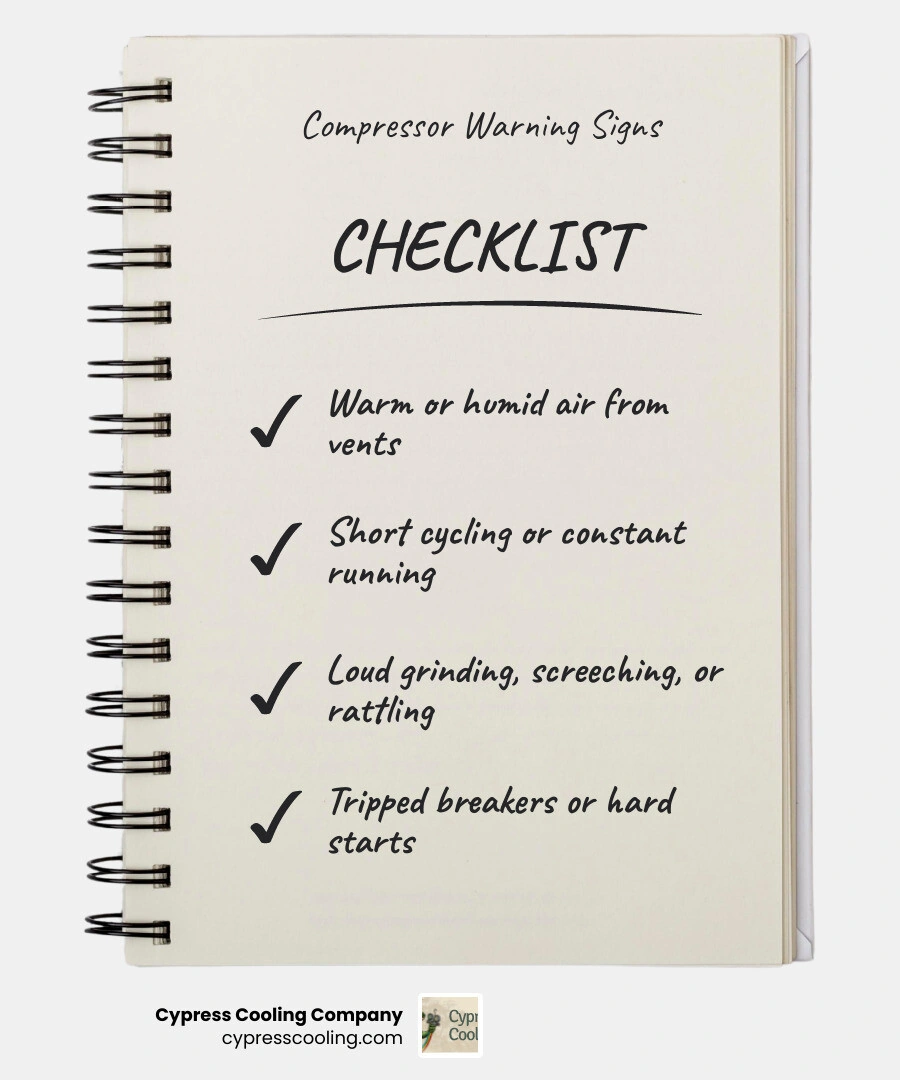
• Warm or humid air from vents — What It Means: Compressor may not be circulating refrigerant properly
• Short cycling (frequent on/off) — What It Means: Compressor overheating or under strain
• Loud grinding, screeching, or rattling — What It Means: Internal mechanical damage or loose components
• Tripped circuit breaker — What It Means: Compressor drawing too much power
• Hard starting with vibration — What It Means: Failing start capacitor or early compressor failure
• Rising energy bills — What It Means: Compressor working harder to maintain temperature
• Oily residue near outdoor unit — What It Means: Possible refrigerant or oil leak
If you live in the greater New Orleans area, your AC system works harder than almost anywhere else in the country. High humidity, salty coastal air, and long cooling seasons — often running nine months or more — put constant stress on every component in your system, especially the compressor.
Think of the compressor as the heart of your air conditioner. It pumps refrigerant through the system so your home can lose heat and moisture. When it starts to fail, the effects show up fast: sticky indoor air, rooms that never quite cool down, and energy bills that keep climbing even when nothing seems obviously wrong.
Gulf Coast conditions make things worse. Salt air corrodes coils and connections. Sand and debris clog the outdoor unit. High humidity means the system never really gets a break. Research shows that while most residential compressors last 10 to 15 years nationally, Gulf Coast homeowners often see that number drop to 8 to 12 years — sometimes less without regular maintenance.
The good news is that a failing compressor almost always gives you warning signs before it quits completely. Knowing what to look for gives you time to act.
Signs your ac compressor is going bad in a gulf coast climate vocab to learn:
• ac leaking water from ceiling what causes it in a louisiana home
• dirty condenser coil symptoms in a hot humid environment
Signs Your AC Compressor Is Going Bad in a Gulf Coast Climate

When an AC compressor starts to decline, it does not always fail in a single dramatic moment. Instead, it usually sends out subtle distress signals that slowly degrade your indoor comfort. In our damp, sweltering South Louisiana summers, these signs become incredibly pronounced because your system has to run almost continuously to keep up with the outdoor elements.
If you suspect your system is struggling, the first place you will notice the issue is inside your living spaces. You might find yourself constantly lowering the thermostat without achieving any real relief. To get a better handle on the situation, it helps to understand what is happening behind the scenes. For a great starting point on basic troubleshooting, check out our guide on AC Not Cooling But Running What to Check First.
Because of our intense humidity, a weak compressor will also cause your system to run indefinitely. When the compressor cannot compress the refrigerant gas efficiently, the refrigeration cycle slows to a crawl. This forces the system to run nonstop in a desperate bid to reach your target indoor temperature. If your unit is running for hours on end, read more about how this behavior impacts your system in our article on AC Running Constantly in Gulf Coast Heat and Humidity.
Warm Air and Poor Dehumidification as Signs Your AC Compressor Is Going Bad in a Gulf Coast Climate
The primary job of the compressor is to circulate refrigerant under high pressure, allowing it to absorb heat from your indoor air and release it outside. When the compressor begins to fail, its pumping capacity drops. This means the refrigerant cannot absorb and transfer latent heat effectively.
As a result, the air blowing from your vents will feel lukewarm or room temperature rather than crisp and cold. Even worse, your home will begin to feel sticky and humid. In South Louisiana, humidity control is just as important as temperature control. When a compressor is weak, it cannot keep the evaporator coil cold enough to pull moisture out of the air. You might notice:
• Condensation forming on the inside of your windows.
• A musty, heavy smell throughout your home.
• Bedding and clothing that feel slightly damp to the touch.
When your system loses its ability to pull moisture from the air, it is often forced to run all day long. This is a classic symptom of compressor strain. To learn more about this behavior, read Why Does My AC Run All Day Without Stopping in a Louisiana Summer.
Short Cycling and Constant Running
Short cycling occurs when your air conditioner turns on and off rapidly, never completing a full 15-to-20-minute cooling cycle. This behavior is incredibly damaging to your compressor. When a compressor is failing, it may overheat rapidly due to internal friction or electrical resistance.
To protect itself from burning out, the compressor has a built-in safety switch called a thermal overload. When the compressor gets too hot, this switch trips and shuts the compressor down. Once the unit cools down a bit, it attempts to restart, only to overheat again. This constant on-and-off cycle:
• Spikes your energy consumption by 20% to 30% because starting up requires a massive draw of electricity.
• Increases indoor humidity levels by 10% to 15% because the system never runs long enough to condense moisture on the coils.
• Accelerates mechanical wear on the fan motors and contactors.
If you notice your system starting and stopping every few minutes, you can explore the root causes in our detailed post on AC Keeps Turning On and Off What is Wrong.
How Coastal Conditions Accelerate Compressor Failure
Living near the Gulf Coast means dealing with unique environmental factors that do not exist inland. While a homeowner in a dry climate might get 15 years of trouble-free operation out of their AC, residents in places like New Orleans, Mandeville, and Slidell must contend with salt air, high humidity, and blowing sand. These factors act as a constant accelerator for mechanical wear and tear.
To combat these harsh conditions, preventative care is absolutely essential. Keeping your system clean and verified by professionals is the best way to protect your investment. You can learn more about local maintenance options on our page for AC Maintenance in New Orleans, LA.
Why Salt Air and Humidity Mimic Signs Your AC Compressor Is Going Bad in a Gulf Coast Climate
If you live close to Lake Pontchartrain or the Gulf, the air carries tiny salt particles. This salt settles directly on your outdoor condenser unit. Over time, salt air causes severe corrosion on the aluminum fins and copper headers of your condenser coils.
When these coils corrode, they lose their ability to transfer heat. The heat that was absorbed from inside your home cannot be released efficiently into the outdoor air. This forces your compressor to work at much higher operating pressures and temperatures.
Essentially, the compressor has to pump twice as hard to move the same amount of heat. This extra strain mimics the symptoms of a failing compressor (like blowing warm air and drawing high amperage) and will eventually cause the compressor's internal valves to fail prematurely. Regular professional cleanings help mitigate this damage. Discover how these services keep your system running smoothly by reading How Maintenance Extends AC Life in South Louisiana Heat.
Sand and Debris Blockages
Along the Gulf Coast, wind-blown sand and heavy regional vegetation (like pine needles and oak tassels) can easily find their way into the outdoor unit. Sand accumulates at the base of the condenser and clogs the lower portions of the coils.
This blockage restricts airflow across the condenser. If the outdoor fan cannot pull air through the coils, the heat stays trapped inside the system. The compressor will quickly overheat, leading to thermal overload shutdowns, oil degradation, and eventual mechanical seizure.
Electrical and Mechanical Warning Signs of Compressor Strain
Because the compressor is the largest electrical consumer in your home, its mechanical health is directly tied to your home's electrical system. When a compressor struggles mechanically, it demands more electrical current to turn its internal pistons or scrolls. This electrical strain manifests in very specific ways around your home.
If you want to understand how these symptoms compare to automotive systems, you can read about related concepts on Signs of a Bad A/C Compressor - AutoZone.com. However, for your home's central HVAC system, electrical issues require immediate attention to prevent permanent damage.
Hard Starts and Tripped Breakers
When your air conditioner first kicks on, it requires a brief burst of high electrical current to overcome inertia and start the compressor motor. This burst of energy is supported by a component called the start capacitor.
If the compressor is starting to fail mechanically — due to worn bearings or tight internal tolerances — it will require far more power to start than normal. This is known as a "hard start." You might notice:
1. Flickering Lights: Your indoor lights dim momentarily every time the outdoor unit turns on.
2. Violent Shaking: The outdoor unit vibrates or shakes visibly upon startup.
3. Tripped Breakers: The electrical demand exceeds the breaker's limit, causing the circuit breaker to trip.
If your circuit breaker trips, do not keep resetting it. A tripped breaker is a safety feature designed to prevent electrical fires. Repeatedly resetting it can force a struggling compressor into a catastrophic "burnout," which destroys the motor windings and releases highly acidic soot into your refrigerant lines.
Loud Noises from the Outdoor Unit
While no air conditioner is completely silent, a healthy compressor should produce a steady, predictable hum. If your outdoor unit begins making sounds that belong in a heavy metal concert rather than your backyard, your compressor is likely in trouble. Pay close attention to these specific noises:
• Screeching or Squealing: This often points to high pressure levels within the system or failing internal bearings.
• Grinding or Clattering: This indicates that the internal mechanical components (like the pistons or scroll members) are physically wearing down or have broken loose.
• Loud Buzzing or Clicking: This usually suggests an electrical issue, such as a failing relay, a bad contactor, or a compressor motor that is trying to start but cannot.
Repair vs. Replace: Making the Right Choice for Your South Louisiana Home
If your compressor is indeed failing, you face a major decision: should you replace the compressor itself, or is it time to upgrade to a completely new air conditioning system?
To help guide your decision, we have put together a quick comparison table:
• System Age — Compressor Repair / Replacement: Best for units under 8-10 years old — Full System Replacement: Recommended for units over 10-12 years old
• Warranty Status — Compressor Repair / Replacement: Ideal if parts are covered under manufacturer warranty — Full System Replacement: Best if the warranty has expired
• Refrigerant Type — Compressor Repair / Replacement: Suitable for R-410A systems — Full System Replacement: Recommended if the old system uses phased-out R-22
• Long-Term Cost — Compressor Repair / Replacement: Lower immediate cost, but risk of secondary failures — Full System Replacement: Higher upfront investment, offset by lower utility bills
• Energy Efficiency — Compressor Repair / Replacement: Keeps the system at its original SEER rating — Full System Replacement: Upgrades home to modern, high-efficiency SEER2 standards
For a comprehensive breakdown of these options, check out our AC Repair vs Replace Decision Guide. If your system is getting up there in years, you should also read our local analysis: Is a 12 to 15 Year Old AC Worth Fixing in the Greater New Orleans Area.
When to Choose AC Repair
Repairing or replacing just the compressor can be a smart choice under the right circumstances. We typically recommend repair if:
• Your unit is still under warranty: Most major manufacturers offer a 10-year warranty on the compressor. If your system is under 10 years old and you are the original owner, the replacement compressor part may be completely covered, meaning you only have to pay for labor and refrigerant.
• The rest of the system is in excellent shape: If your indoor evaporator coil, blower motor, and ductwork are relatively new and well-maintained, replacing the compressor is a highly viable path.
If you live in our service areas and need a professional diagnostic to verify your system's health, we are here to help. You can read more about our local repair services on our dedicated pages for AC Repair in Harahan, LA, AC Repair in Gretna, LA, and AC Repair in Slidell, LA.
When to Invest in AC Replacement
In many cases, investing in a new compressor for an older system is like putting a brand-new engine into a car with 250,000 miles on it — other parts are bound to fail soon anyway. Replacement is usually the wisest choice if:
• The system is over 10 to 12 years old: At this age, the indoor coil and outdoor fan motor are also nearing the end of their lifespans.
• The system uses R-22 refrigerant: R-22 has been phased out completely. If your older system has a leak or requires a compressor swap, sourcing R-22 is incredibly difficult and expensive.
• You want to lower your monthly utility bills: Modern systems are significantly more efficient than those built a decade ago.
If you are considering an upgrade, we provide expert installation throughout the region. Learn about our services on our pages for AC Replacement in Metairie, LA and AC Replacement in New Orleans, LA. To see how a new system can pay for itself over time, read our guide on How Energy Savings From a New AC Offset Replacement in Louisiana.
Frequently Asked Questions About Gulf Coast AC Compressors
To help you keep your home comfortable, we have compiled answers to some of the most common questions we hear from South Louisiana homeowners. If you want to keep your system running efficiently and lower your monthly Entergy bills, regular tune-ups are key.
Explore our local tune-up services on our page for AC Tune Up in New Orleans, LA, and find out how much you can save by reading How Much Can an AC Tune Up Reduce Your Entergy Louisiana Bill.
How long does an AC compressor last in a coastal environment?
While the national average for an AC compressor is 10 to 15 years, the harsh conditions along the Gulf Coast typically shorten that lifespan to 8 to 12 years. The combination of constant high humidity, salt air corrosion, and heavy seasonal usage forces the compressor to run longer and under higher pressures, accelerating internal mechanical wear. Regular professional maintenance is the single best way to extend your compressor's life toward the 12-to-15-year mark.
Can a variable-speed air handler mask a failing single-stage compressor?
Yes, it can. A variable-speed indoor air handler is designed to adjust its fan speed automatically to maintain comfort and manage indoor humidity (latent load). If a single-stage outdoor compressor is starting to lose its pumping capacity, the indoor air handler may run at a lower, quieter speed for much longer periods to compensate for the loss in cooling power.
While this keeps your home feeling relatively comfortable temporarily, it can mask the underlying compressor issue until the unit fails completely. It also makes professional diagnostics more challenging, as a technician must look beyond basic airflow and carefully measure refrigerant pressures and electrical draw.
How can I distinguish between a refrigerant leak and a failing compressor?
Because both issues lead to warm air blowing from your vents, they are often confused. However, there are a few key differences:
• Ice Accumulation: A low refrigerant charge often causes the indoor evaporator coil or the outdoor copper lines to freeze over and accumulate ice. A failing compressor rarely causes icing unless it has completely seized.
• Electrical Behavior: A failing compressor will often trip your circuit breaker or cause your indoor lights to flicker due to high electrical draw. Refrigerant leaks do not cause electrical issues or tripped breakers.
• Diagnostic Testing: The only way to know for sure is through professional pressure testing. A technician will measure the suction and discharge pressures; a leak will show low pressure on both sides, while a failing compressor will show low discharge pressure and high suction pressure (indicating a failure to compress).
Conclusion
Recognizing the signs your AC compressor is going bad in a gulf coast climate is the first step toward protecting your home's comfort and your wallet. Whether you are dealing with lukewarm air, strange noises from your outdoor unit, or a system that constantly trips the breaker, ignoring these warning signs will only lead to more extensive and costly damage down the road.
At Cypress Cooling Company, we believe in providing honest, professional guidance to homeowners across South Louisiana. Our philosophy is simple: we diagnose, educate, and guide without high-pressure sales tactics. We want to help you make the best decision for your home, your family, and your budget.
If you suspect your air conditioner is struggling to beat the heat, do not wait for a total breakdown in the middle of July. Schedule professional air conditioning services today and let our experienced team keep your home cool and comfortable all year long.
OUR CLIENTS HAVE TO SAY ABOUT US



Service areas
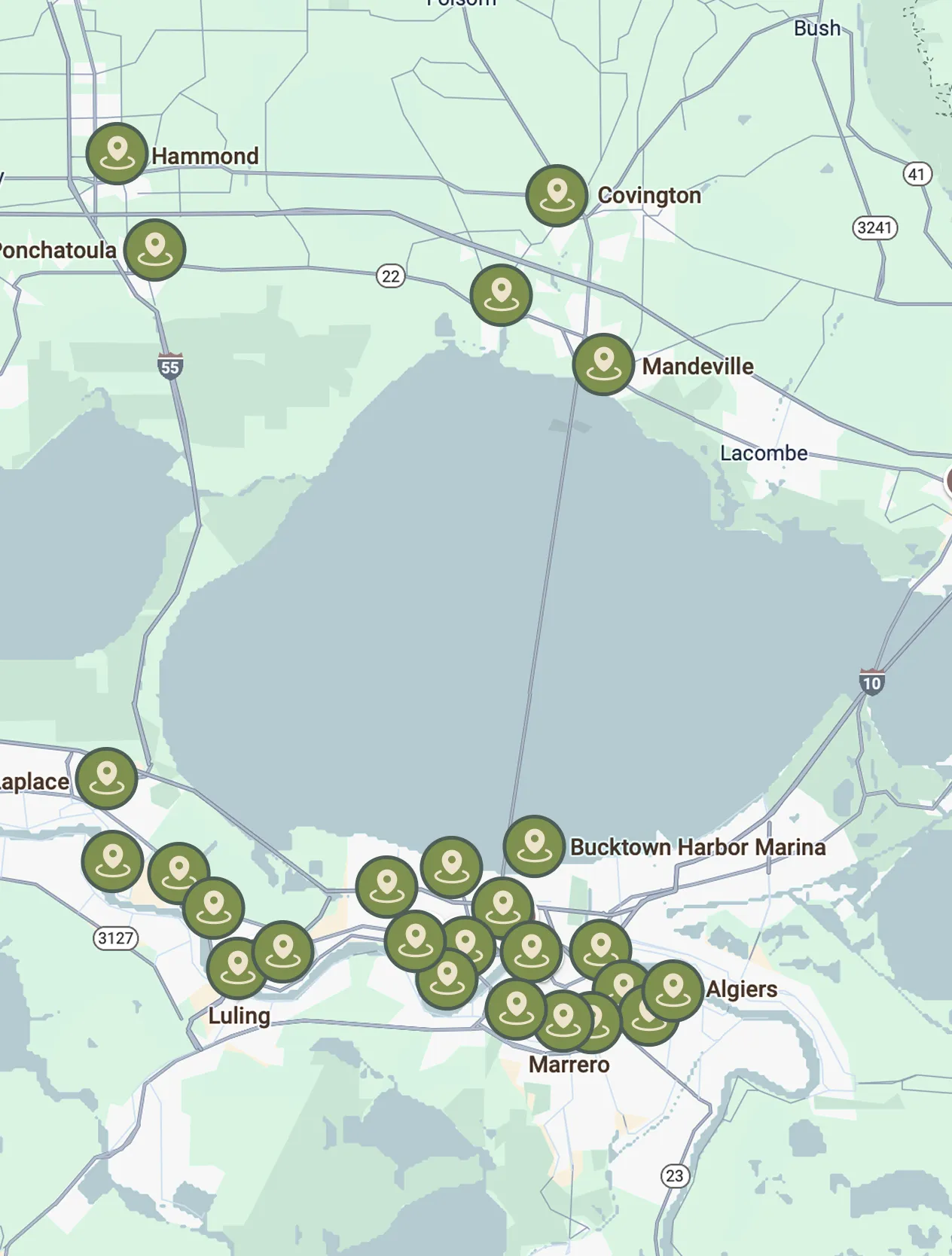
Our service areas are designed to meet the diverse needs of our clients. We focus on providing exceptional service and ensuring customer satisfaction in every location we operate.