How Maintenance Extends AC Life in South Louisiana Heat
.webp)
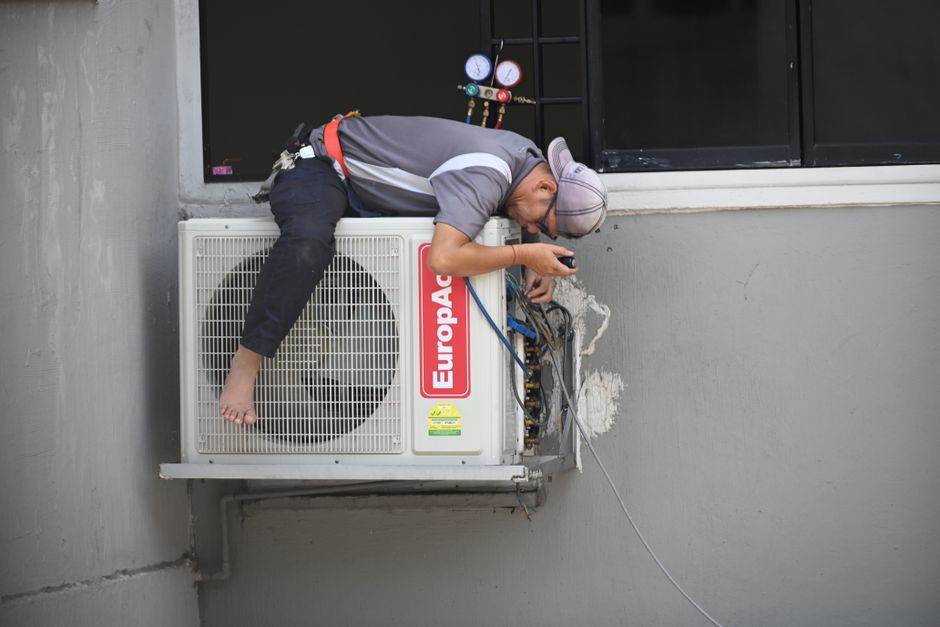
Why AC Maintenance in South Louisiana Is a Matter of When, Not If
Understanding how maintenance extends AC life in South Louisiana heat could be the difference between a system that lasts 15 years and one that fails in six.
Here's the short answer:
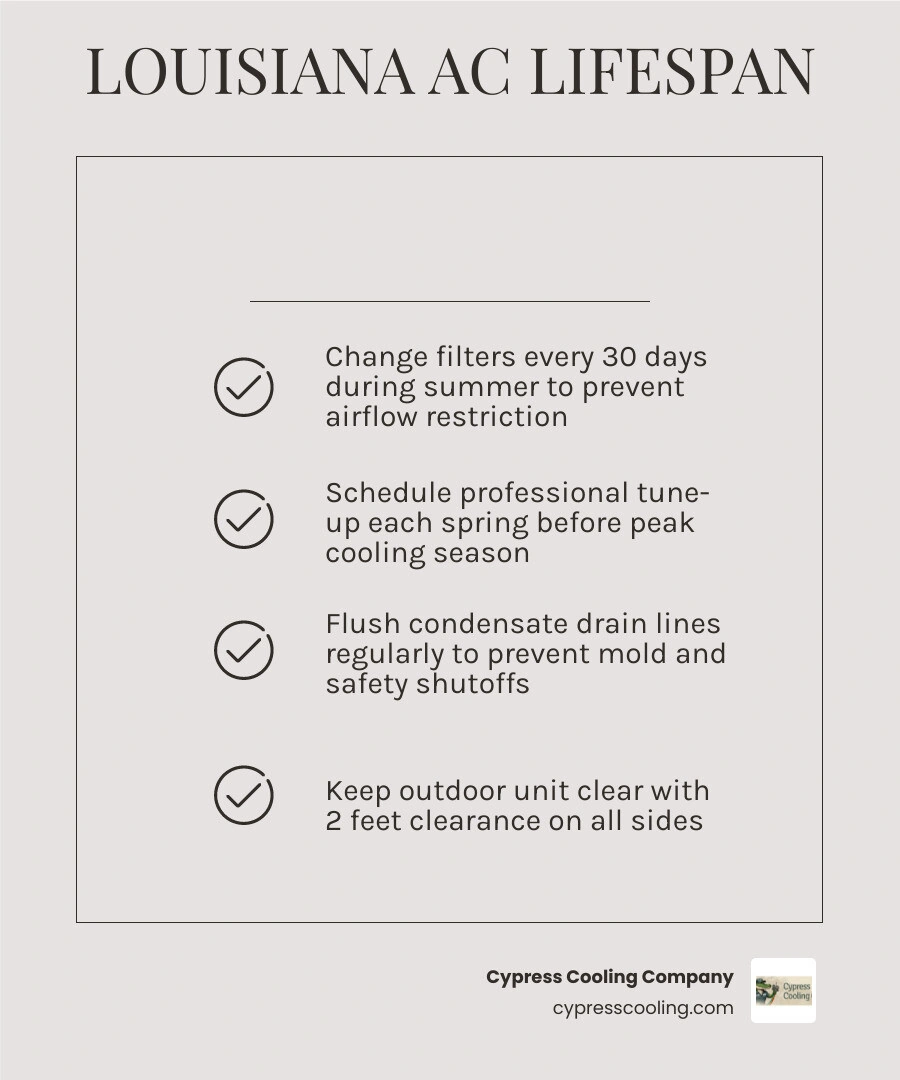
• Change filters every 30 days during summer to prevent airflow restriction and coil freeze-ups
• Schedule a professional tune-up each spring before peak cooling season begins
• Flush condensate drain lines regularly to prevent mold, water damage, and safety shutoffs
• Keep the outdoor unit clear with at least 2 feet of clearance on all sides
• Add a fall inspection for older systems, coastal homes, or homes with pets
• Seal leaky ducts to recover up to 30% of lost cooling energy
• Consider a whole-home dehumidifier to reduce compressor runtime and latent heat load
Louisiana's climate is unlike almost anywhere else in the country. With 2,800 to 3,200 cooling degree days per year — nearly triple the national average of 1,000 to 1,500 — your AC runs longer, works harder, and wears out faster than it would in most other states. Add in humidity that regularly pushes above 70 to 80 percent, salt air drifting in from the Gulf, and a cooling season that stretches from April through October, and you have conditions that can cut an AC system's lifespan nearly in half without consistent care.
A well-maintained system in South Louisiana can last 10 to 15 years. A neglected one? Often just 6 to 7 years. That's not a small difference — that's thousands of dollars and years of comfort on the line.
Why the Gulf Coast Climate is Brutal on Your Air Conditioner

In South Louisiana, we don't just have "summer"; we have a sustained atmospheric assault on mechanical equipment. The average lifespan of an air conditioner in New Orleans and surrounding areas like Metairie or Kenner is significantly shorter than the national average. While a unit in the Midwest might comfortably reach 20 years, our systems are often gasping for air by year 12.
The primary culprit is the sheer volume of work. Because we experience 220+ days per year with temperatures above 70°F, our compressors accumulate run-time at a staggering rate. This constant operation leads to thermal cycling stress—the repeated heating and cooling of components—which can cause metal fatigue and electrical failure. When you have an AC running constantly in Gulf Coast heat and humidity, every hour it operates without proper lubrication or clean coils brings it one step closer to a premature grave.
The Impact of Extreme Humidity and Salt Air
Humidity is the "silent killer" of HVAC systems in places like Mandeville and Slidell. In Louisiana, your AC has two jobs: lowering the temperature and removing moisture (latent heat). In fact, dehumidification can account for 30% or more of your system's energy consumption. When humidity levels stay above 70%, the evaporator coil is constantly dripping with water. This moist environment, combined with household dust, creates a "biofilm" or sludge that insulates the coils, forcing the system to run longer to achieve the same cooling effect.
For our neighbors in coastal parishes or near Lake Pontchartrain, salt air adds another layer of destruction. Salt spray accelerates "white rust" and pitting on aluminum fins and copper coils. This corrosion eventually leads to microscopic refrigerant leaks. Once a system loses its factory-sealed charge, the compressor has to work harder and runs hotter, which is the leading cause of total system failure. This is why AC maintenance in New Orleans must focus heavily on coil health and corrosion prevention.
How maintenance extends ac life in south louisiana heat
So, how exactly does a simple tune-up keep your machine running for an extra decade? It comes down to physics and friction. By reducing the physical stress on the system's most expensive components—the compressor and the fan motors—we prevent the "domino effect" where one small part failure destroys the entire unit.
When we perform AC maintenance in Metairie, we look at the system as a whole. A clean system moves air more easily. When air moves freely, the motors don't have to pull as much amperage. Lower amperage means less heat buildup in the wires and capacitors. By keeping everything running at "factory-spec" levels, we ensure the system isn't eating itself alive just to keep your living room at 75 degrees.
Maximizing efficiency and how maintenance extends ac life in south louisiana heat
Efficiency isn't just about your monthly utility bill; it’s a measurement of how much "pain" the system is enduring. According to Energy Star, a well-maintained system can be 15% to 30% more efficient than a neglected one. In South Louisiana, where the AC might run for 18 hours a day in July, that 30% efficiency gap represents thousands of hours of unnecessary wear on the compressor.
By cleaning the condenser coils, we remove the "blanket" of dirt and pollen that traps heat inside the unit. This allows the refrigerant to shed heat more effectively, shortening the cooling cycles. We also focus on airflow optimization. In cities like Covington, where many homes have ductwork in hot attics, even a small amount of friction can cause the system to struggle. Proper AC maintenance in Covington ensures that every watt of electricity you pay for is actually going toward cooling your home, not just fighting against dirty components.
Preventing catastrophic failure and how maintenance extends ac life in south louisiana heat
Most "emergency" breakdowns in August could have been prevented in April. The most common point of failure in our heat is the capacitor—the small cylindrical part that gives the motor the "kick" it needs to start. Extreme heat causes capacitors to bulge and lose their ability to hold a charge. If a capacitor fails, the motor may try to start but fail, leading to a "locked rotor" condition that can burn out a compressor in minutes.
During annual HVAC maintenance in Covington, we test these electrical components for "drift." If a capacitor is supposed to provide 45 microfarads but is only providing 38, we know it’s about to fail. Replacing a small part during a scheduled visit is a minor fix; replacing a compressor because a $50 part failed is a catastrophe. We also inspect contactors for "pitting" or soot buildup, which can cause the system to get stuck in the "on" position, leading to frozen coils and potential motor burnout.
Essential Maintenance Tasks for Louisiana Homeowners
Maintaining an AC in the South is a partnership between the homeowner and the professional technician. You wouldn't drive a car for 50,000 miles without changing the oil; you shouldn't run an AC for a Louisiana summer without checking the vitals.
• Filter Replacement — Frequency: Every 30-60 Days — Responsibility: Homeowner — Benefit: Prevents frozen coils and protects airflow
• Clear Debris — Frequency: Monthly — Responsibility: Homeowner — Benefit: Ensures the outdoor unit can "breathe"
• Flush Drain Line — Frequency: Every 90 Days — Responsibility: Homeowner — Benefit: Prevents ceiling leaks and mold growth
• Coil Cleaning — Frequency: Annually — Responsibility: Professional — Benefit: Maximizes heat transfer and efficiency
• Refrigerant Check — Frequency: Annually — Responsibility: Professional — Benefit: Protects the compressor from overheating
• Electrical Test — Frequency: Annually — Responsibility: Professional — Benefit: Prevents sudden mid-summer breakdowns
One of the most frequent calls we get involves an AC dripping water from ceiling. In our humidity, a standard AC can pull 15 to 20 gallons of water out of the air every day. If your drain line is clogged with "white slime" (a common Louisiana algae), that water has nowhere to go but through your drywall.
DIY Strategies for Daily Protection
Homeowners in areas like Laplace and Luling can significantly extend their system's life with a few simple habits:
1. The 30-Day Filter Rule: In the peak of July and August, don't wait three months to change your filter. High humidity makes dust "sticky," which clogs filters faster. A clogged filter is the #1 cause of a frozen evaporator coil.
2. Maintain the "Buffer Zone": Ensure there is at least 2 feet of clear space around your outdoor condenser. Cut back those azaleas and hibiscus plants. If the unit is crowded, it will recirculate its own hot air, causing it to overheat.
3. Thermostat Discipline: Avoid "yo-yoing" the temperature. Setting the thermostat to 60°F won't cool the house faster; it just forces the system to run a marathon it can't win. Aim for a consistent setting, like 78°F when you're home, and don't raise it more than 5 degrees when you're away to keep humidity under control.
4. Keep Vents Open: It’s a myth that closing vents in unused rooms saves energy. It actually unbalances the duct pressure, which can lead to leaks and cause the blower motor to work harder.
Professional Spring and Fall Tune-Up Requirements
While DIY tasks are great, there are things only a pro with specialized tools can do. A professional tune-up involves checking the "subcooling" and "superheat" of the refrigerant—technical measurements that tell us exactly how the system is performing.
In our region, we often recommend South Louisiana hybrid HVAC systems for those looking for the ultimate in longevity and efficiency. During a professional visit, we don't just "look" at the unit. We sanitize the coils to prevent biological growth, tighten electrical connections that may have loosened due to vibration, and inspect the ductwork for leaks. Leaky ducts can waste up to 30% of your cooling capacity, forcing your AC to work 30% harder for the same result.
When to Stop Repairing and Start Replacing Your System
Even with the best maintenance, every system eventually reaches the end of its road. In South Louisiana, that typically happens between years 10 and 15. If your system is over a decade old and starts requiring frequent repairs, it’s time to consult our AC repair vs replace decision guide.
We generally suggest the "50% Rule": if the cost of a single repair is more than 50% of the value of the system, replacement is usually the smarter financial move. Additionally, if your system still uses R-22 refrigerant (which is no longer produced), any leak repair will be prohibitively expensive. Modern systems using SEER2 standards are significantly more capable of handling the latent heat load of the Gulf South than units built just 10 years ago.
Warning Signs of Imminent System Failure
Your AC usually tries to tell you it's dying before it actually quits. Watch for these red flags:
• Short Cycling: If the unit turns on and off every few minutes, it’s either oversized or the compressor is struggling to maintain pressure.
• Humidity Spikes: If the air feels "clammy" even though the temperature is at 72°F, the system is no longer effectively removing moisture.
• Unusual Noises: Banging, hissing, or screeching are signs of mechanical failure in the compressor or blower motor.
• Rising Utility Bills: If your electric bill is 20% higher than it was last July (and rates haven't changed), your system's efficiency has likely tanked due to internal wear.
Frequently Asked Questions about AC Longevity
How often should I change my filters during a Louisiana summer?
In our service areas like New Orleans and Metairie, we recommend checking your filter every 30 days. During the peak of summer, the high humidity and high pollen counts mean filters clog much faster than the "3-month" rating on the box suggests. If you have pets that shed, a 30-day change is non-negotiable to prevent airflow restriction that can kill a blower motor.
Does salt air really destroy AC units in coastal parishes?
Yes. Salt air causes a chemical reaction called galvanic corrosion, which leads to aluminum pitting. In places like Gretna or Harvey, we often see "white rust" where the fins literally turn to powder. To combat this, we recommend regular professional coil rinsing and, for new installations, choosing units with specialized "coastal" coatings or sacrificial anodes designed to take the brunt of the corrosion.
Can a dehumidifier help extend my AC's lifespan?
Absolutely. By installing a whole-home dehumidifier, you take the "latent load" off your air conditioner. This allows the AC to focus solely on the temperature, which means shorter run times and less stress on the compressor. It’s one of the best ways to ensure your system reaches that 15-year mark rather than failing at year 10.
Conclusion
At Cypress Cooling Company, we’ve seen how maintenance extends AC life in South Louisiana heat. Our mission isn't just to fix broken machines; it’s to educate our neighbors in Algiers, Kenner, Slidell, and across the region on how to protect their investment. We believe in a "diagnose and guide" approach—we show you exactly what’s happening with your system so you can make the best decision for your home and your budget.
Don't wait for the first 95-degree day to find out your system is struggling. Proactive care is the only way to beat the Louisiana humidity and ensure your home remains a sanctuary all year long.
Schedule your professional AC maintenance today and let our expert team give your system the "South Louisiana proofing" it needs to survive the summer of 2026 and beyond.
OUR CLIENTS HAVE TO SAY ABOUT US



Service areas
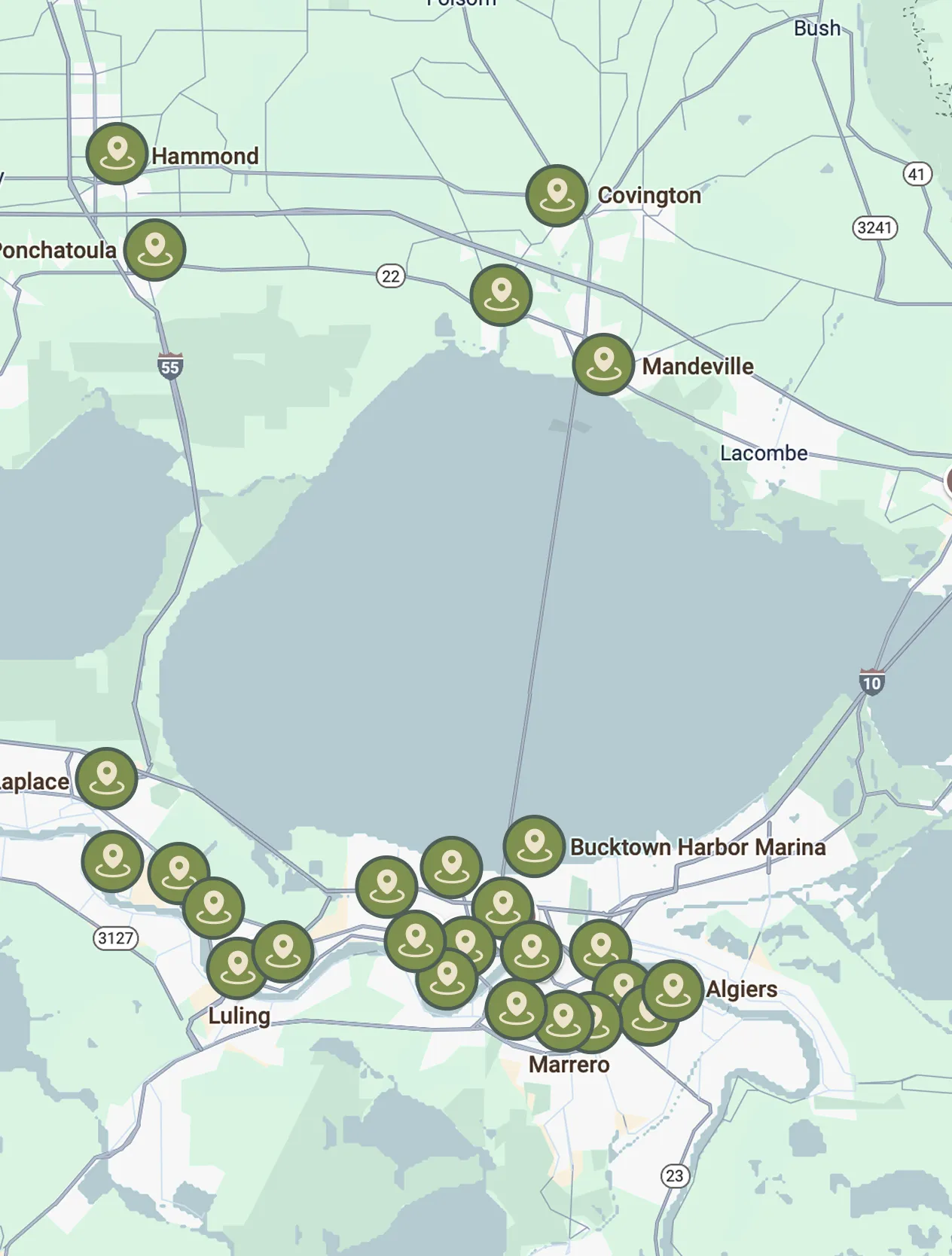
Our service areas are designed to meet the diverse needs of our clients. We focus on providing exceptional service and ensuring customer satisfaction in every location we operate.