How to Fix AC Dripping Water from Ceiling in 5 Simple Steps
.webp)
What to Do When Your AC Is Dripping Water from the Ceiling
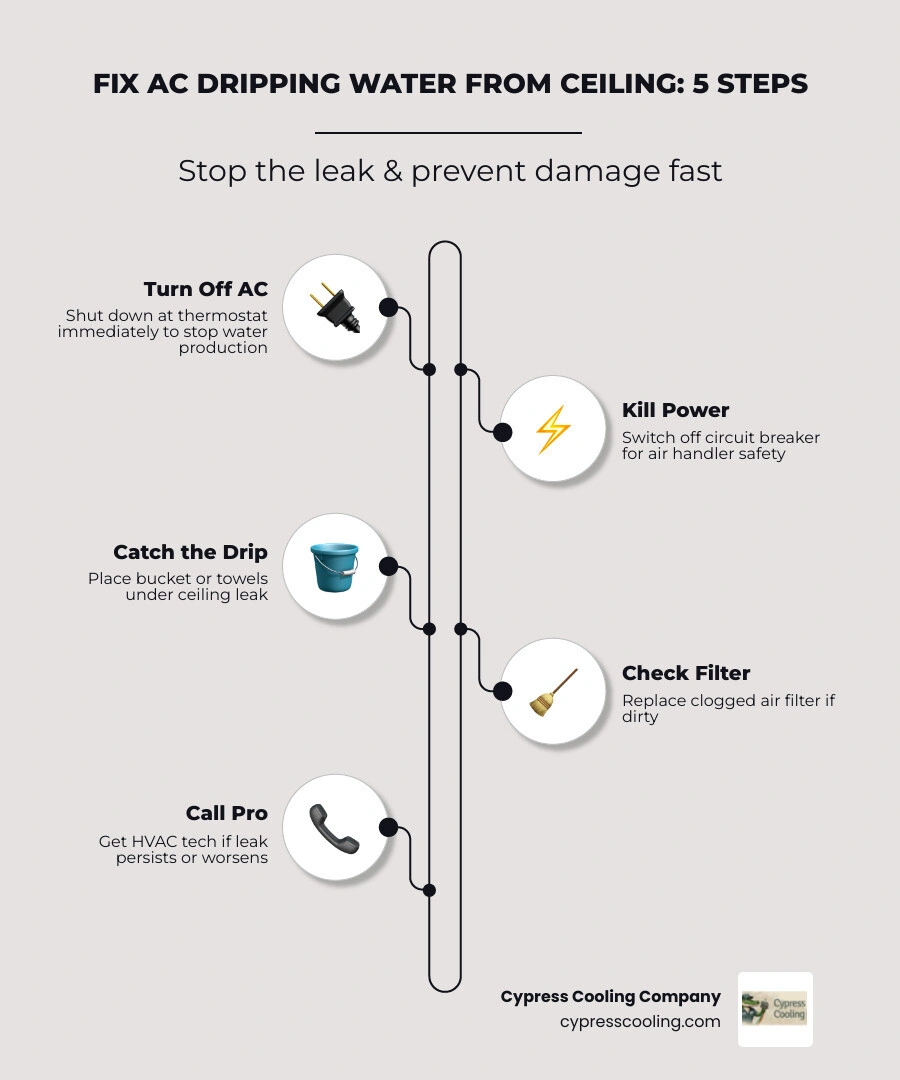
If you're dealing with ac dripping water from ceiling, here's what to do right now:
1. Turn off your AC at the thermostat immediately
2. Switch off the circuit breaker for your air handler
3. Place towels or a bucket under the drip to protect flooring and drywall
4. Check your air filter — if it's clogged, replace it
5. Call an HVAC technician if water doesn't stop or you see ceiling staining
That sound — a slow, steady drip coming from your ceiling near an AC vent — is one of those homeowner moments that stops you cold. In South Louisiana, where humidity runs high and AC systems work harder than almost anywhere else in the country, this problem is more common than most people realize.
Your air conditioner pulls moisture out of the air every time it runs. That moisture is supposed to drain outside through a condensate line. When something goes wrong — a clog, a frozen coil, a cracked drain pan — that water has nowhere to go but down. Through your ceiling.
The good news? Most causes are fixable. But acting fast matters. A small drip left alone for even a few days can turn into water-stained drywall, mold growth, and damaged insulation.
This guide walks you through exactly what to do, step by step.
Why is my ac dripping water from ceiling what to do first?

When you spot a wet patch on the ceiling or hear that dreaded "plink-plink" sound, the first thing to do is stop the source. Every second your AC continues to run, it is potentially pulling several more gallons of water out of our humid May 2026 Louisiana air and dumping it right into your drywall.
Immediate Shutdown ProceduresGo to your thermostat and switch the system to "Off." Don't just turn up the temperature; you want the entire cooling cycle to stop. Next, locate your home’s electrical panel and flip the circuit breaker for the air handler (the indoor unit). This is a vital safety step because water and electricity are a dangerous combination, and many indoor units are located in attics or closets near electrical wiring.
Preventing Immediate DamageOnce the power is off, grab a bucket and some old towels. If the ceiling is already sagging or a bubble has formed in the paint, you may need to carefully poke a small hole in the center of the bubble with a screwdriver to let the water drain into a bucket. This prevents the weight of the water from causing a larger section of the ceiling to collapse.
Taking these steps immediately is the best way to prevent long-term issues like mold growth or structural rot. If you're in a pinch and the water is spreading quickly, getting professional AC Repair in New Orleans LA is the fastest way to protect your home from extensive water damage.
Step 1: Clear a Clogged Condensate Drain Line
By far, the #1 cause of an ac dripping water from ceiling what to do scenario is a clogged condensate drain line. In the intense heat of South Louisiana, your AC acts like a massive dehumidifier. It can pull 5 to 20 gallons of water out of the air every single day. This water carries dust, pollen, and skin cells into the drain line, where the warm, wet environment becomes a breeding ground for "algae sludge"—a thick, jelly-like goo.
The Suction MethodIf you are handy with a wet/dry shop vacuum, you can often clear this yourself. Locate the PVC drain pipe on the exterior of your home (usually near the outdoor condenser unit). Create a tight seal between the vacuum hose and the PVC pipe using a rag or duct tape. Turn the vacuum on for about 30 seconds. You’ll likely see a "plug" of brown or green sludge come out, followed by a rush of water.
The Vinegar FlushOnce the line is clear, head to the indoor unit. You should see a T-shaped vent pipe. Pour about a cup of distilled white vinegar down the line. The acidity helps kill remaining algae and prevents future clogs. While you're focusing on the health of your system, it’s also a great time to consider if your home’s air quality is contributing to the dust in your lines; professional Duct Cleaning in New Orleans LA can significantly reduce the debris that ends up in your condensate system. For more information on maintaining indoor air quality, you can visit the EPA's guide on indoor air.
Step 2: Address a Frozen Evaporator Coil
It sounds counterintuitive, but your AC can actually turn into a block of ice in the middle of a 95-degree Louisiana afternoon. When the evaporator coil (the part that gets cold) drops below freezing, the moisture it pulls from the air turns into ice instead of draining away. When that ice eventually melts—usually when the system cycles off or can no longer keep up—it creates a flood that overwhelms the drain pan.
The Thawing ProcessIf you see ice on the copper lines leading to your indoor unit, do not try to scrape it off! You can easily damage the delicate aluminum fins. Instead:
1. Keep the AC "Off" at the thermostat.
2. Switch the "Fan" setting from "Auto" to "On."This blows warm house air over the ice, melting it safely. Be prepared with plenty of towels, as this will result in a lot of water moving through the system quickly. If the system freezes up again shortly after thawing, you likely need professional AC Repair in Mandeville LA to check for deeper mechanical issues.
What causes a frozen evaporator coil and ac dripping water from ceiling what to do?
A frozen coil isn't just a fluke; it's a symptom of a larger problem. The most common culprit is low refrigerant. If your system has a leak, the pressure drops, causing the coil to get much colder than it should. Since refrigerant is a hazardous chemical and handling it requires EPA certification, you must call a professional to find the leak and recharge the system. Other causes include a failing blower motor that isn't moving enough air across the coil to keep it from freezing.
How a dirty air filter leads to ac dripping water from ceiling what to do
Believe it or not, a $10 air filter can cause $3,000 in ceiling damage. If your filter is coated in dust, air can't pass through it. Without that warm air flow, the cold evaporator coil simply freezes over. We recommend checking your filter every 30 days during our long Louisiana cooling season. For most homes, a filter with a MERV rating between 8 and 11 provides the best balance of air filtration and airflow. If your ductwork is old or leaky, it may be pulling in extra attic dust that clogs filters prematurely, making Ductwork Repair Slidell LA a smart long-term investment for system health.
Step 3: Inspect the Secondary Drain Pan and Float Switch
Most AC units in our region are installed in attics. Because an attic leak is so destructive, these systems are required to have a secondary (emergency) drain pan underneath the unit. If you see water dripping from your ceiling, it means both the primary drain line and the secondary pan have failed.
Identifying Pan IssuesClimb up (safely!) and look at the metal pan under your air handler. If it’s full of water, the emergency drain is also clogged. If the pan itself is rusted through or cracked, water will leak straight onto your ceiling joists. In coastal areas or high-humidity spots like Metairie, metal pans can rust in as little as five years.
The Float SwitchModern systems feature a "float switch"—a small plastic device that sits in the pan or the drain line. When water rises, the float lifts and cuts power to the AC to prevent a flood. If your AC is dripping and hasn't shut itself off, your float switch is either missing, broken, or stuck. This is a critical safety component. While you're managing moisture in the attic, you might also find that Whole House Dehumidifiers in Metairie LA can take the strain off your AC by managing the latent heat load before it ever reaches your coils.
Step 4: Manage High Humidity and Duct Condensation
In South Louisiana, sometimes the "leak" isn't a leak at all—it's "sweat." Just like a cold glass of sweet tea on a porch in July, your metal AC ducts will sweat if they aren't properly insulated due to high relative humidity.
• Source — Internal System Leak: Inside the air handler/drain pan — Duct Condensation (Sweating): Exterior of the ductwork or vents
• Timing — Internal System Leak: Constant or when AC shuts off — Duct Condensation (Sweating): Peak humidity/hottest part of day
• Water Color — Internal System Leak: Often rusty or contains "sludge" — Duct Condensation (Sweating): Usually clear, clean water
• Solution — Internal System Leak: Clear clogs/repair pan — Duct Condensation (Sweating): Improve insulation/ventilation
If your attic is poorly ventilated, the temperature can reach 140 degrees. When that hot, moist air hits a cold, uninsulated duct, water forms on the outside and drips onto your ceiling. This is where IAQ Equipment and high-quality Dehumidifiers become essential. Ensuring your ducts are sealed and insulated through Duct Design & Repair Westwego LA can stop this "phantom leak" for good.
Step 5: Prevent Future Leaks with Routine Maintenance
The best way to handle an ac dripping water from ceiling what to do situation is to make sure it never happens in the first place. Statistics show that routine maintenance prevents 80-90% of all AC water leaks.
The Annual Tune-UpDuring a professional tune-up, a technician doesn't just "check" the system; they actively clear the drain lines, test the float switches, and clean the evaporator coils. A clean coil is less likely to freeze, and a clear drain line won't back up. We also recommend using "condensate tablets" in your drain pan—these slow-dissolve tablets kill algae before it can form a clog.
If you live in areas like Kenner or Harvey, where the air can be particularly dusty or humid, regular Duct Cleaning in Kenner LA and Duct Cleaning in Harvey LA are great ways to keep the entire system running cleanly. Think of it as "preventative medicine" for your home.
Frequently Asked Questions about AC Ceiling Leaks
Is water dripping outside the AC unit normal?
Yes! If you see water dripping from a white PVC pipe near the ground outside your home, your AC is doing its job. In May 2026, with our typical Louisiana humidity, seeing 5 to 20 gallons of water a day is perfectly normal. However, if you see water dripping from a pipe located high up near the roofline (the "eave"), that is your secondary drain line. That means your main line is clogged, and you should call for service immediately before the secondary line clogs too.
Can I run my AC if it is leaking water through the ceiling?
We strongly advise against it. Running a leaking AC can lead to:
• Structural Damage: Wet drywall can collapse, and wooden joists can rot.
• Mold: It only takes 24-48 hours for mold to start growing in wet insulation.
• Electrical Hazards: If water drips into your light fixtures or the air handler's control board, it can cause a fire or a total system short-circuit.
How do I know if the leak is from the AC or the roof?
Check the timing. If it only drips when the AC is running, it's likely the HVAC system. If it only drips during our heavy afternoon thunderstorms, it's likely a roof leak. Also, look at the water. AC condensate is usually clear (unless the pan is rusty), while roof leaks often bring in brown tannins from the wood and roofing materials.
Conclusion
A dripping ceiling is a stressful experience, but at Cypress Cooling Company, we believe in empowering South Louisiana homeowners with the right information. Whether you're in Algiers, Slidell, or anywhere in between, our goal is to help you protect your home and stay comfortable.
If you’ve tried the DIY steps and that drip just won’t stop, don't wait for the ceiling to sag. We are here to diagnose the issue and guide you toward the best solution for your home. Protecting your property from moisture damage is our top priority.
Ready to stop the drip? Contact us today or explore our full range of Air Conditioning Services to keep your home dry and cool all summer long.
OUR CLIENTS HAVE TO SAY ABOUT US



Service areas
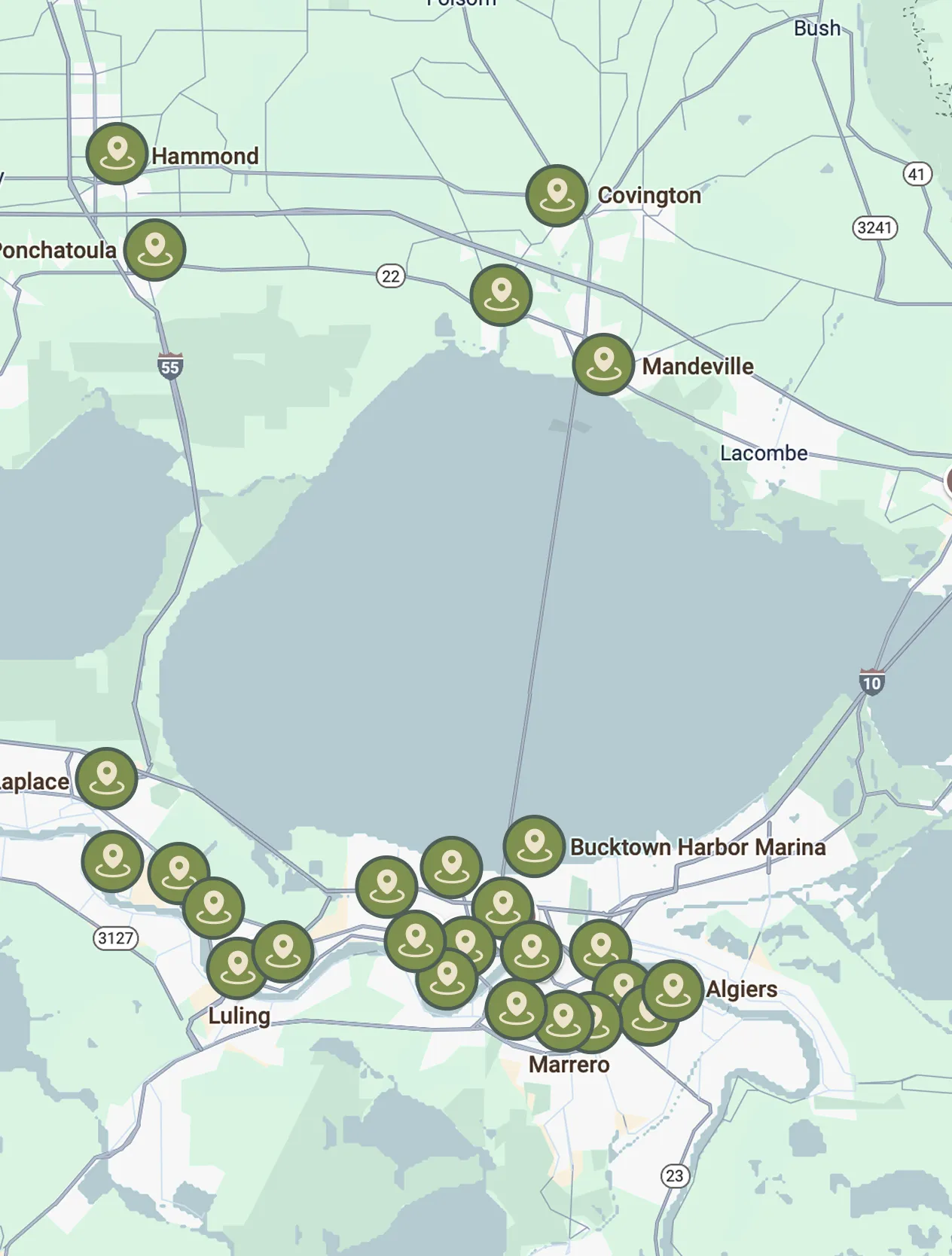
Our service areas are designed to meet the diverse needs of our clients. We focus on providing exceptional service and ensuring customer satisfaction in every location we operate.