
The Ins and Outs of AC Leaking Water from Ceiling in Louisiana Homes
.webp)
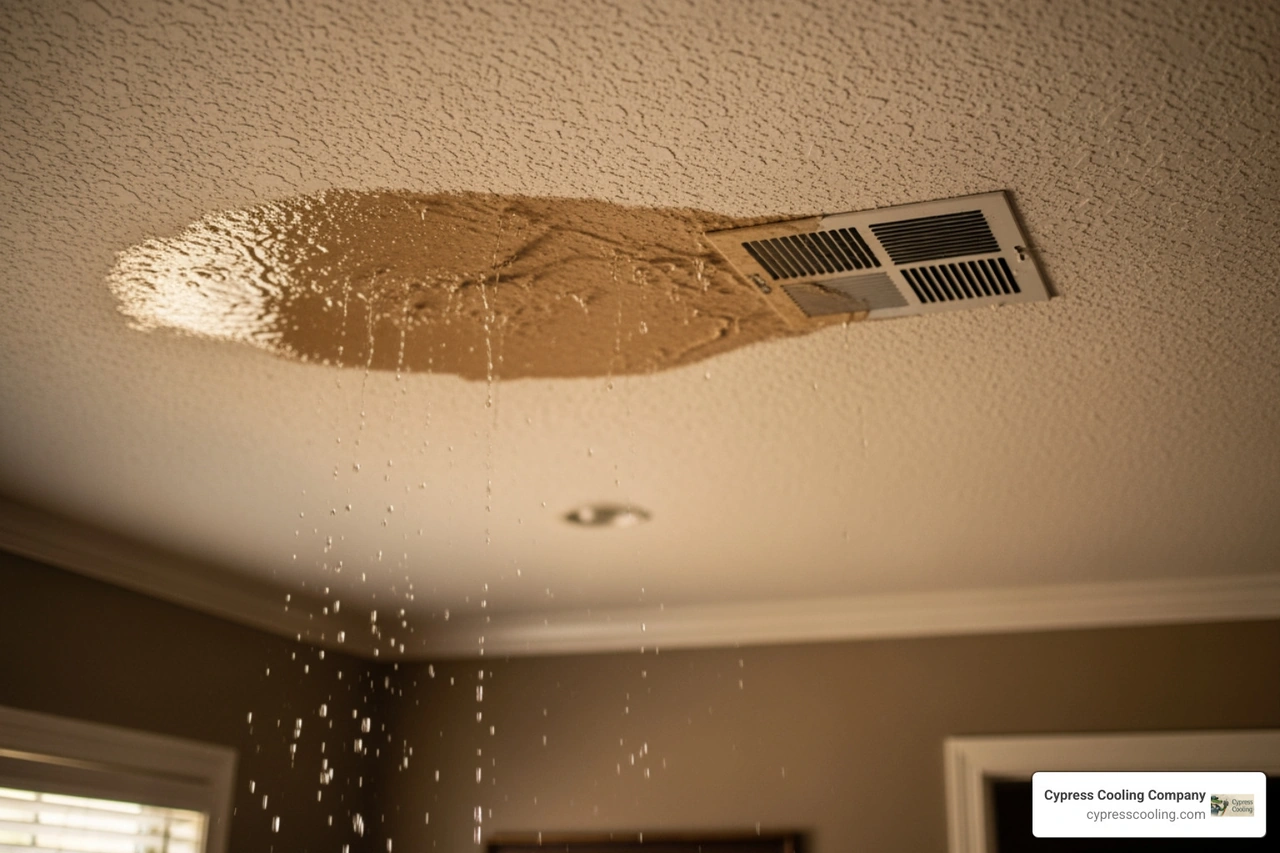
Why Your AC Is Leaking Water from the Ceiling in a Louisiana Home
If you've noticed ac leaking water from ceiling, what causes it in a Louisiana home is almost always one of a handful of drainage problems made worse by the state's extreme humidity. Here's a quick breakdown:
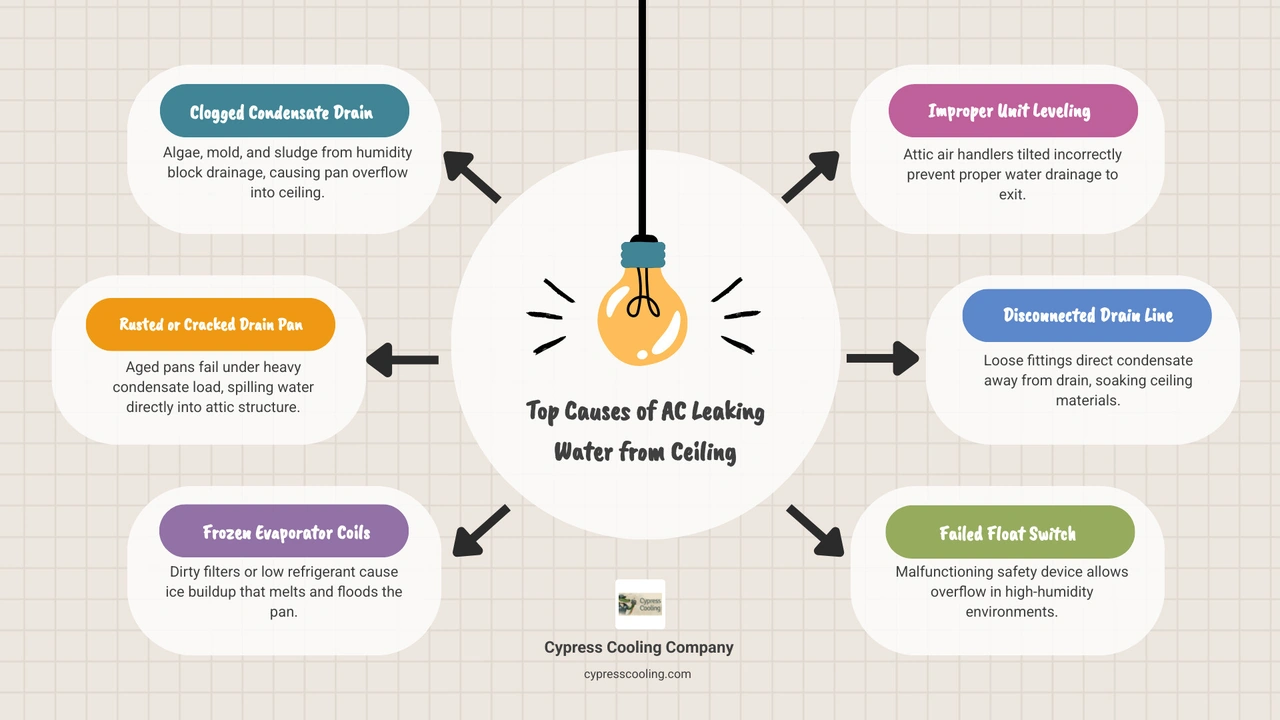
Most Common Causes at a Glance:
• Clogged condensate drain line — algae, mold, and sludge block drainage, causing the pan to overflow into your ceiling
• Rusted or cracked drain pan — older pans fail to contain water, especially after years of heavy condensate production
• Frozen evaporator coils — dirty filters or low refrigerant cause ice buildup that floods the drain pan when it melts
• Improper unit leveling — attic air handlers installed on a slight tilt can't drain correctly
• Disconnected drain line — fittings can loosen over time, sending water directly into your ceiling structure
• Failed float switch — safety shutoffs that should stop overflow sometimes malfunction in high-humidity conditions
Louisiana's climate is a major factor here. In the New Orleans and Baton Rouge areas, humidity regularly exceeds 80%, and a typical AC unit can produce anywhere from 5 to 20 gallons of condensate per day during peak summer months. That volume puts serious stress on your drainage system — and even a partial clog that might go unnoticed in a drier climate can quickly turn into a ceiling leak here.
When water starts dripping from your ceiling, it's not just an AC problem. Left unaddressed, it can lead to mold growth within 24 to 48 hours, structural damage to ceiling joists and drywall, and even electrical hazards if water reaches wiring. The good news is that most causes are diagnosable and fixable — and largely preventable with the right maintenance routine.
Common Causes of an AC Leaking Water from Ceiling in a Louisiana Home
In South Louisiana, from the historic streets of New Orleans to the bustling neighborhoods of Metairie and Covington, the most frequent culprit behind a ceiling drip is a clogged condensate drain line. Because our air is so thick with moisture, your Air Conditioning system acts as a massive dehumidifier. As it pulls water from the air, dust, pollen, and skin cells hitch a ride into the drain pan. In the dark, damp environment of your attic, this mixture creates a perfect breeding ground for algae and biofilm—a thick, snot-like sludge that eventually plugs the pipe.
When the line clogs, the water has nowhere to go but up and over the sides of the primary drain pan. According to research on Why Your Air Conditioner Is Leaking Water in Baton Rouge, this is the number one cause of system-related water damage in the region.
Another major issue we see involves the drain pans themselves. Most attic-mounted units have two: a primary pan inside the unit and a secondary "emergency" pan underneath it.
• Rusted Metal Pans: Older systems often use galvanized steel pans. Over 12 to 15 years, the constant presence of water causes these to rust through.
• Cracked Plastic Pans: Modern units often use plastic. While they don't rust, they can crack due to heat fluctuations in a Louisiana attic or if the unit was installed poorly.
Speaking of installation, improper unit leveling is a silent offender. If your air handler isn't tilted slightly toward the drain opening, water will pool in the opposite corner of the pan until it spills over the edge. Similarly, we often find disconnected drain lines. Vibrations from the blower motor can eventually wiggle a PVC joint loose if it wasn't properly glued, leading to a steady stream of water pouring directly onto your drywall.
How High Humidity Triggers an AC Leaking Water from Ceiling in a Louisiana Home
It is May 2026, and as we look at current climate trends, the humidity in places like Kenner, Slidell, and Houma isn't getting any lower. High humidity doesn't just make you feel sticky; it fundamentally changes how your AC operates. When the relative humidity stays above 75%, your evaporator coil is constantly "sweating."
This massive volume of condensate magnifies every small weakness in your drainage system. A drain line that is 50% restricted might work fine in a desert climate, but in South Louisiana, that restriction will cause a backup within hours. This is why we focus so heavily on IAQ (Indoor Air Quality); cleaner air means fewer particles entering the system to create those clogs.
When the volume of water exceeds what the primary line can handle, it should flow into the secondary pan. However, if your secondary pan is also clogged or the drain line for that pan is blocked, you're looking at a ceiling disaster. Many homeowners ask, Why Is My A/C Unit Leaking Water through My Ceiling? and the answer is often a failed float switch.
A float switch is a safety device designed to shut off your AC if water rises too high in the pan. In our humid climate, these switches can become stuck due to mineral deposits or "gunk" buildup. If the switch fails to trip, the unit keeps running, keeps producing gallons of water, and keeps flooding your ceiling. Additionally, uninsulated Ductwork in a hot attic can "sweat" just like a cold glass of sweet tea, leading to mysterious drips that aren't even coming from the drain pan.
Why Frozen Coils Result in an AC Leaking Water from Ceiling in a Louisiana Home
It sounds counterintuitive—how can something freeze in a 100-degree attic in Laplace or Destrehan? But frozen evaporator coils are a common reason for ac leaking water from ceiling what causes it in a louisiana home.
When airflow is restricted, the refrigerant in the coils stays too cold, eventually dropping below freezing. Moisture from the humid air hits those coils and instantly turns to ice. Eventually, the ice block gets so large it restricts air entirely, or the unit finally shuts off. When that massive block of ice melts, it releases a "flash flood" of water that often overwhelms the drain pan's capacity.
What triggers this freezing?
1. Dirty Air Filters: This is the most common cause. A clogged filter prevents warm air from passing over the coils. We recommend checking your filters every 30 days and sticking to a consistent Maintenance Plan.
2. Low Refrigerant Levels: If your system has a leak, the pressure drops, causing the coils to get much colder than they should. According to Why Is My AC Leaking Water? Causes & Fixes - Bryant, low refrigerant is a top-tier emergency because it can also burn out your compressor.
3. Dirty Coils: Dust buildup on the coils themselves acts as an insulator, leading to ice formation.
Regular Services are essential to ensure your coils stay clean and your refrigerant levels remain optimal, preventing the "thaw-and-flood" cycle that ruins ceilings.
Immediate Steps to Take When You Notice a Ceiling Leak
If you see a damp spot forming or water actively dripping from a light fixture or vent, you need to act fast.
1. Shut Down the System ImmediatelyDon't just turn up the thermostat; turn the entire system off. This stops the production of new condensate. If the water is near electrical components, go to your breaker panel and shut off the AC circuit entirely.
2. Clear the WaterUse a wet/dry vacuum (like a Shop-Vac) to suck up any standing water in the drain pan in your attic. This prevents more water from seeping through the ceiling. If you can reach the exterior exit of your drain line, you can also use the vacuum there to try and pull out the clog.
3. Protect Your BelongingsMove furniture, electronics, and rugs away from the drip zone. Place a bucket under the leak, but be careful—if the drywall is soft, the weight of the water could cause a large section of the ceiling to collapse.
4. Check the Filter and PanTake a quick look at your air filter. If it looks like a wool sweater, replace it. Check the pan for standing water. If the pan is full, you have a drainage issue. If the pan is dry but the ceiling is wet, you may have a Duct Repair, Sealing & Leak Detection issue where the ducts themselves are leaking or sweating.
For those in the Baton Rouge area, resources like AC Leaks Baton Rouge LA emphasize that quick extraction is the difference between a simple patch job and a multi-thousand dollar restoration project.
Long-Term Risks of Ignoring AC Water Leaks
It’s tempting to put a bucket under a small drip and "wait until Monday," but in South Louisiana, time is not on your side. The combination of warmth and moisture is an invitation for disaster.
Mold and MildewMold spores can begin to colonize damp drywall and wood in as little as 24 to 48 hours. Once mold gets into your ceiling joists or behind the wallpaper, it can become an airborne health hazard. This is why Duct Cleaning in South Louisiana is often necessary after a major leak to ensure spores haven't entered your breathing air.
Structural IntegrityDrywall loses its structural strength when wet. A "small drip" can saturate a large area of ceiling material, making it heavy enough to collapse unexpectedly. Furthermore, constant moisture can lead to wood rot in your attic's support beams.
Electrical HazardsIn many Louisiana homes, AC vents and air handlers are located near recessed lighting or ceiling fans. Water and electricity are a dangerous mix, potentially leading to short circuits or even house fires. We always recommend checking our Blog for updates on safety protocols during the storm season, as power surges can also damage the sensors that are supposed to prevent these leaks.
DIY Prevention Tips for South Louisiana Homeowners
While we are always here to help, we’d much rather you avoid the headache of a ceiling leak altogether. Here are our favorite "pro tips" for homeowners in Metairie, Gretna, and Mandeville.
• The Monthly Vinegar Flush: Once a month, pour about a cup of distilled white vinegar down your condensate drain line's access port. This kills algae and prevents the "snot" from forming. Avoid using bleach, as it can corrode metal components and damage some types of plastic piping.
• Filter Hygiene: Change your filters every 30 to 90 days. If you have pets or live in a high-pollen area like Hammond or Ponchatoula, stick to the 30-day mark. Use a high-quality MERV-rated filter to keep the "gunk" out of your system.
• Secondary Pan Check: Once a quarter, peek into your attic. The secondary pan (the big shallow one under the unit) should be bone dry. If there is water in it, your primary line is already failing.
• Algae Tablets: You can buy inexpensive condensate pan tablets that slowly dissolve and keep the water clear of slime.
DIY Maintenance vs. Professional Tune-Ups
• Filter Replacement — DIY Frequency: Monthly — Professional Frequency: During Visit — Why It Matters: Prevents frozen coils and airflow issues.
• Drain Line Flush — DIY Frequency: Monthly (Vinegar) — Professional Frequency: Annually (Nitrogen) — Why It Matters: Prevents algae clogs and ceiling overflows.
• Pan Inspection — DIY Frequency: Quarterly — Professional Frequency: Annually — Why It Matters: Catches rust or cracks before they leak.
• Refrigerant Check — DIY Frequency: Not Recommended — Professional Frequency: Annually — Why It Matters: Prevents coil freezing and compressor damage.
• Electrical Safety — DIY Frequency: Not Recommended — Professional Frequency: Annually — Why It Matters: Ensures float switches and sensors actually work.
Frequently Asked Questions about AC Ceiling Leaks
Is it normal for my AC to drip water outside?
Yes! In fact, you want to see water dripping from the primary drain line outside (usually near the ground or into a flower bed). This means the system is successfully removing humidity from your home. However, if you see water dripping from a pipe that sticks out of your soffit or roofline (the secondary line), that is a warning sign that your main line is clogged.
How often should I clean my condensate drain line in Louisiana?
Because of our extreme humidity, we recommend a DIY vinegar flush once a month during the cooling season (which, let's be honest, is most of the year in New Orleans). A professional deep clean with a nitrogen purge should be done at least once a year as part of your regular maintenance.
Can low refrigerant cause a water leak inside my house?
Absolutely. Low refrigerant changes the pressure in the system, causing the evaporator coil to drop below freezing. This creates ice. When the ice melts, it often bypasses the drain pan or overflows it, leading directly to those dreaded ceiling stains.
Conclusion
At Cypress Cooling Company, we’ve seen it all—from minor clogs in New Orleans East to major ceiling collapses in Slidell. Dealing with an ac leaking water from ceiling is a rite of passage for many Louisiana homeowners, but it doesn't have to be a catastrophe. By understanding what causes these leaks—the humidity, the clogs, and the frozen coils—you can take proactive steps to protect your home.
We believe in diagnosing, educating, and guiding our neighbors without the high-pressure sales tactics. Whether you're in Marrero, Madisonville, or anywhere in between, our team has the South Louisiana climate expertise to keep your home dry and your air cool. Don't wait for the drip to become a downpour. Schedule your professional AC inspection today and let us ensure your drainage system is ready for the 2026 summer heat.
OUR CLIENTS HAVE TO SAY ABOUT US



Service areas
Our service areas are designed to meet the diverse needs of our clients. We focus on providing exceptional service and ensuring customer satisfaction in every location we operate.

