
Duct Repair, Sealing & Leak Detection
.webp)
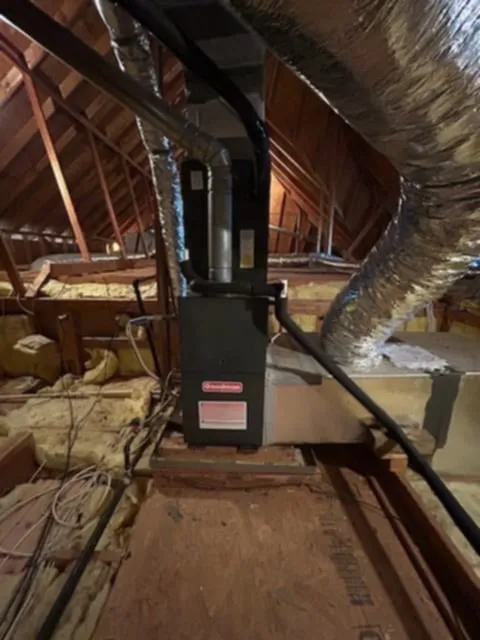
Is Your Ductwork Secretly Sabotaging Your HVAC System?
You’ve invested in a high-efficiency HVAC system, you stay on top of maintenance, yet something is still off. Certain rooms are never quite comfortable, your energy bills seem stubbornly high, and there’s more dust than you’d like. If this sounds familiar, you might be looking for the problem in the wrong place.
The issue may not be your furnace or air conditioner, but the hidden network of ducts that delivers the conditioned air. For homeowners in South Louisiana, leaky, damaged, or poorly sealed ductwork is a major source of energy waste and discomfort. According to the U.S. Department of Energy, the typical home can lose 20 to 30 percent of the air that moves through its duct system due to leaks, holes, and poor connections.
You’re essentially paying to heat and cool your attic or crawlspace. This guide will walk you through how to identify ductwork issues, compare your repair options, and understand why professional sealing is one of the smartest investments you can make for your home.
The Telltale Signs of Leaky Ducts
Duct leaks are often out of sight, but their effects are easy to spot if you know what to look for. Think of it as a quick home diagnostic check:
• Uneven Temperatures: Are there rooms that are always too hot in the summer or too cold in the winter, no matter how you adjust the thermostat? This is a classic sign that conditioned air isn’t reaching its destination.
• Spiking Utility Bills: A sudden, unexplained increase in your energy costs often points to a loss of efficiency. Your HVAC system is working overtime to compensate for the air escaping through leaks.
• Excessive Dust: Leaky return ducts can pull unfiltered air from attics, crawlspaces, or wall cavities, distributing dust, insulation fibers, and other allergens throughout your home.
• Poor Airflow: Do you notice weak or inconsistent airflow from certain vents? This indicates that air pressure is being lost somewhere in the system before it gets to the room.
These problems often originate at the most vulnerable points in your duct system: the seams, joints, and connections where sections of ductwork meet.
![Diagram showing air leaks in a typical duct system, highlighting joints, seams, and connections.]
The Big Decision: DIY Repair vs. Professional Sealing
Once you suspect a leak, the next question is how to fix it. This is where many homeowners face a choice between a quick DIY fix and a professional solution. Let’s break down the options.
The DIY Approach: When Is Tape Enough?
For a minor, easily accessible leak—like a disconnected joint on an exposed duct in your garage—a DIY repair might seem tempting. The common tools are foil-faced tape and duct mastic, a gooey sealant you paint over seams.
However, the "duct tape" sold at hardware stores is not a suitable solution. It breaks down quickly under the temperature changes and humidity common in South Louisiana, losing its adhesive properties and failing within months. True HVAC foil tape is better, but its effectiveness depends entirely on a perfectly clean surface and meticulous application.
The biggest challenge with DIY is what you can't see. Most ductwork is hidden in attics, ceilings, and crawlspaces, making it nearly impossible for a homeowner to find and seal every leak.
The Professional Advantage: A Comprehensive Solution
A professional approach goes far beyond a roll of tape. Technicians use specialized tools to accurately measure and locate leaks throughout your entire system, ensuring a comprehensive and lasting seal. The two leading professional methods are mastic sealing and Aeroseal technology.
![Side-by-side comparison chart showing the pros and cons of DIY foil tape vs. professional mastic sealing vs. Aeroseal technology.]
Mastic Sealing
This involves a technician manually applying a fibrous, paint-on sealant to all accessible joints, seams, and connections. When applied correctly by a professional, mastic creates a durable, flexible, and permanent seal that won't crack or peel over time.
Aeroseal Technology
This is a groundbreaking process that seals ducts from the inside. Here’s how it works:
1. We block your vents to pressurize the duct system.
2. A non-toxic, aerosolized sealant is blown into the ducts.
3. The sealant particles are drawn to the leaks, where they bond together and seal holes and cracks up to 5/8 of an inch wide.
The entire process is computer-monitored, providing a real-time report that certifies the results. Research has shown that Aeroseal can reduce duct leakage by up to 90%, delivering dramatic improvements in efficiency and comfort.
How Professionals Pinpoint Hidden Leaks
Wondering how we find leaks you can’t see? We don’t just guess. At Cypress Cooling, our technicians use diagnostic tools to get a complete picture of your duct system’s health.
![A technician using a fog machine or other professional equipment to detect duct leaks in an attic space.]
This often includes a blower door test or a duct blaster test, which pressurizes the system to measure the exact amount of air leakage. We can also use tools like theatrical foggers or thermal cameras to visually identify the source of even the smallest leaks in hidden areas, ensuring we address the root of the problem.
This diagnostic step is critical. It turns duct sealing from a guessing game into a precise science, guaranteeing that our repair efforts are targeted where they’re needed most. A proper diagnosis also ensures that your HVAC system isn’t being strained by undetected issues, which is a key part of our overall air conditioning services.
Frequently Asked Questions About Duct Sealing
1. Is professional duct sealing really worth the cost?
Absolutely. By eliminating the 20–30% energy loss from leaky ducts, most homeowners see a significant reduction in their monthly utility bills. The improved efficiency also reduces wear and tear on your HVAC unit, potentially extending its lifespan and helping you avoid costly repairs. Over time, the service often pays for itself. We also offer flexible financing options to make this crucial home improvement more accessible.
2. How long does the duct sealing process take?
Most professional duct sealing jobs, including Aeroseal application, can be completed in just a few hours—typically between 4 to 6 hours. You’ll be able to enjoy the benefits of a more comfortable, efficient home the very same day.
3. Will sealing my ducts improve my home’s air quality?
Yes, significantly. Leaky return ducts are a primary source of indoor air pollution, pulling in dust, mold spores, and other contaminants from your attic or crawlspace. By sealing these leaks, you ensure that the air circulating through your home comes from inside your living space and passes through your HVAC filter properly.
4. My house is brand new. Could my ducts still be leaking?
Unfortunately, yes. Even in new construction, ductwork can be installed improperly with poor connections, unsealed joints, or accidental damage during the building process. It’s not uncommon for new homes to have significant duct leakage.
Your Next Step to a More Comfortable Home
Stop paying for conditioned air that never reaches you. Fixing leaky ductwork is one of the most effective ways to lower your energy bills, improve your comfort, and enhance your home’s air quality.
If you’re ready to find out how much energy and money your ductwork is costing you, the first step is a professional assessment. We invite you to schedule a professional duct inspection with one of our certified technicians at Cypress Cooling. We’ll provide a thorough diagnosis and a clear, upfront recommendation to help you make the best decision for your home.
OUR CLIENTS HAVE TO SAY ABOUT US



Service areas
Our service areas are designed to meet the diverse needs of our clients. We focus on providing exceptional service and ensuring customer satisfaction in every location we operate.