
Ultimate Checklist for Dirty Condenser Coil Symptoms in Humid Climates
.webp)
Why Dirty Condenser Coil Symptoms in a Hot Humid Environment Are Harder to Ignore in South Louisiana
If you're noticing that your AC just can't keep up lately, dirty condenser coil symptoms in a hot humid environment could be the reason — and in South Louisiana, these warning signs tend to show up faster and hit harder than in drier climates.
Here are the most common symptoms to watch for:
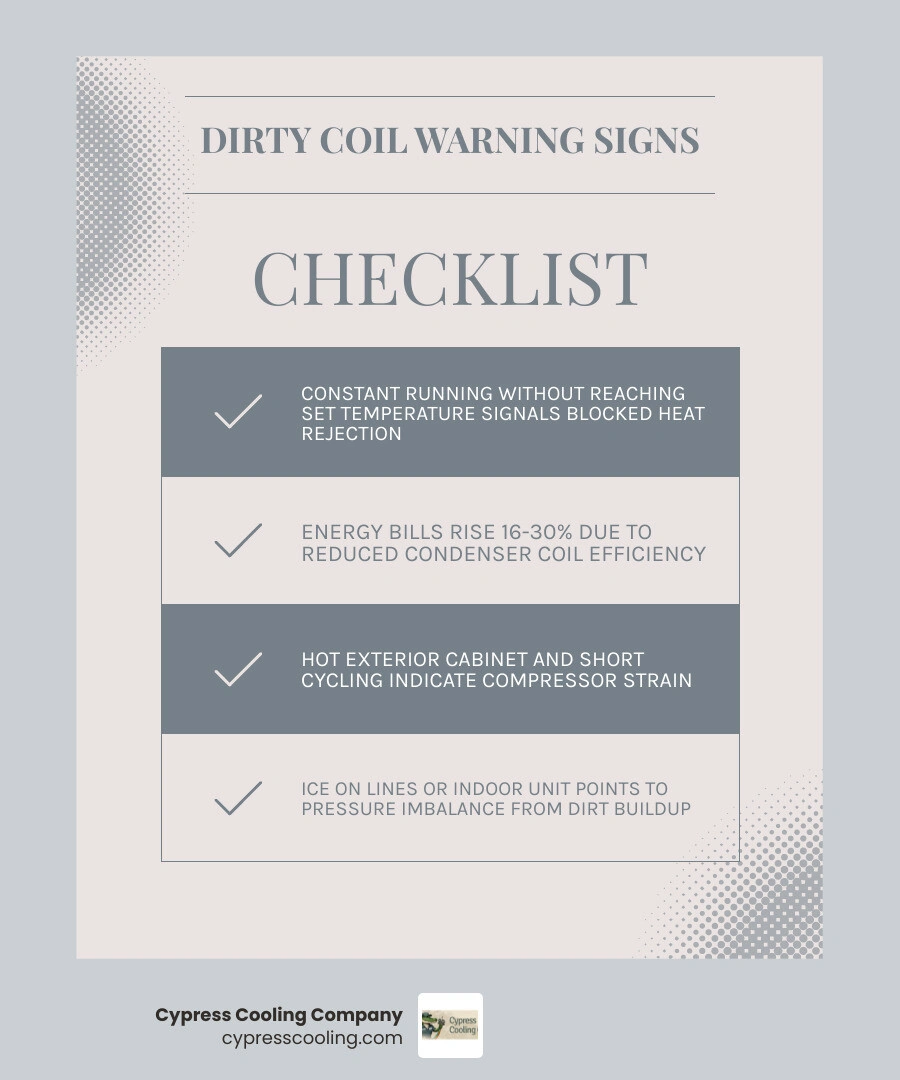
• AC running constantly without reaching the set temperature
• Skyrocketing energy bills — dirty coils can increase electricity use by 16% to 30%
• Weak airflow from vents throughout the home
• Clammy, humid air indoors even with the AC running
• Hot exterior cabinet on the outdoor unit to the touch
• Short cycling — the system turns on and off more than usual
• Ice formation on refrigerant lines or the indoor unit
• Unusual buzzing or straining noises from the outdoor unit
When heat and moisture combine the way they do across South Louisiana from May through September, a condenser coil that's coated in pollen, dust, and grime stops rejecting heat the way it should. The system works harder, runs longer, and wears out faster — sometimes cutting a 10-to-15-year system lifespan down to just 7 or 8 years. That's not a small problem. It's a slow, expensive one that gets worse the longer it goes unaddressed.
The good news is that recognizing the symptoms early gives you options before a repair turns into a full replacement.
What is a Condenser Coil and How Does It Work?
To understand why dirt is such a massive enemy to your air conditioner, it helps to know what the condenser coil actually does.
Your air conditioner doesn't actually "create" cold air; instead, it removes heat from inside your home and dumps it outside. This heat-transfer cycle relies on two main coils: the indoor evaporator coil (which absorbs the heat) and the outdoor condenser coil (which releases it).
Refrigerant travels between these two coils, acting as a heat courier. When the hot, gaseous refrigerant reaches your outdoor unit, it enters the condenser coil. The outdoor fan blows ambient air across the coil's thin aluminum fins, which are about the thickness of a soda can. This process cools the refrigerant down, rejecting the indoor heat to the outside air and turning the refrigerant back into a high-pressure liquid (a phase change known as subcooling).
When the condenser coil is clean, heat transfer is incredibly efficient. But when a layer of grime covers those delicate aluminum fins, it acts as a thermal insulator. Think of it like wearing a heavy wool parka in the middle of a July afternoon in New Orleans — your system simply cannot sweat off the heat.
Why Humid Climates Accelerate Condenser Coil Grime
Outdoor AC units in South Louisiana have a tough job. From Metairie to Slidell, our air is thick, salty, and incredibly damp. This intense humidity changes how dirt interacts with your outdoor system.
In dry climates, dust and dirt often blow right through the condenser fins or can be easily shaken loose by the outdoor fan. In South Louisiana, however, the high moisture content in the air creates a sticky, damp environment on the outdoor unit.
When you combine constant humidity with local environmental factors, you get a recipe for rapid coil clogging:
• Pollen and Cottonwood Fuzz: Springtime in areas like Covington and Mandeville brings heavy pollen and airborne seeds. When these hit a damp condenser coil, they stick instantly, forming a paper-like mat across the fins.
• Grass Clippings: Mowing the lawn sends damp, fresh-cut grass flying. If your mower blows clippings toward your outdoor unit, they stick to the wet metal and quickly decay into a thick, green barrier.
• Salt Air and Biological Growth: Near Lake Pontchartrain or the Gulf Coast, salt in the air can accelerate corrosion, while the constant dampness encourages algae or mildew to grow directly on the coil frame.
Without proper intervention, this sticky mixture of dust, pollen, and moisture creates a solid "mud wall" that completely blocks airflow. To make sure your system is ready to face these unique coastal conditions, check out our Seasonal HVAC Preparation Checklist for South Louisiana.
The Primary Dirty Condenser Coil Symptoms in a Hot Humid Environment

When heat rejection fails due to a buildup of dirt, your system experiences high head pressure. This means the compressor has to pump much harder to push refrigerant through the system, creating a cascade of noticeable issues.
According to industry guides on the Symptoms of a Dirty Condenser Coil: Understanding the Signs and Consequences - Appliance Update, neglecting this component directly degrades the thermodynamic performance of your entire system.
Constant Running and Thermostat Struggles
Because a dirty coil cannot efficiently dump heat, your air conditioner has to run much longer to lower your indoor temperature even a single degree. If your thermostat is set to 72°F but the indoor temperature stubbornly sits at 78°F all afternoon while the outdoor unit hums endlessly, your system is struggling.
This continuous operation results in massive wear and tear on your fan motor and compressor. If your AC is running non-stop in the heavy coastal heat, read our guide on how to handle an AC Running Constantly in Gulf Coast Heat and Humidity.
Skyrocketing Energy Bills
When an AC runs longer cycles to compensate for poor heat transfer, it consumes far more electricity. Studies show that a dirty condenser coil can easily increase your monthly cooling bills by 16% to 30%.
During a hot Louisiana summer, these efficiency losses can add up to hundreds of dollars in wasted electricity. If you've noticed a sudden jump in your utility costs, you can learn more about managing these spikes in our article on AC Bill Spikes in a Louisiana Summer.
Weak Airflow and Poor Indoor Dehumidification
In South Louisiana, comfort is as much about humidity control as it is about temperature. Your AC removes moisture from the air as a natural byproduct of the cooling cycle. However, when a dirty condenser coil disrupts the refrigerant cycle, the system's overall capacity drops.
The air coming out of your vents will feel weak, lukewarm, and clammy. This leaves your home feeling like a swamp, even if the thermostat says the temperature is dropping. To understand how proper airflow affects your comfort, read about HVAC Airflow Optimization Balancing.
The Hidden Risks of Ignoring a Dirty Condenser Coil
Leaving a condenser coil dirty does more than just raise your utility bills — it actively destroys your air conditioner from the inside out. According to the team at Woods Comfort Systems in their breakdown of Dirty AC Coils: Causes, Risks & How to Prevent Failure, ignoring a dirty coil is one of the primary causes of premature system failure.
[Dirty Condenser Coil] │ ▼[Poor Heat Rejection] ──► [High Head Pressure] │ ▼[Higher Operating Temps] ──► [Refrigerant Pressure Drop Indoors] │ │ ▼ ▼[Compressor Oil Breakdown] [Indoor Coil Freezes] │ │ ▼ ▼[PREMATURE COMPRESSOR FAILURE] [LIQUID REFRIGERANT SLUGBACK]
Evaporator Coil Freezing and Liquid Slugback
It sounds counterintuitive, but a dirty outdoor unit can cause your indoor evaporator coil to freeze solid. When the outdoor coil cannot release heat, the refrigerant doesn't change states properly. This causes pressure imbalances throughout the system, leading to a massive pressure drop at the indoor coil.
The indoor coil temperature plummets below freezing, causing the condensation on the coil to turn to ice. This ice blocks indoor airflow entirely. Even worse, unevaporated liquid refrigerant can travel back down the line to the compressor (a destructive process called "liquid slugback"), which can instantly destroy the compressor's internal valves.
Compressor Overheating and Oil Breakdown
The compressor is the heart of your AC, and it is also the most expensive component to replace. As head pressure climbs due to dirty coils, the compressor has to work harder, causing its operating temperature to spike.
If the compressor discharge temperature exceeds 225°F, the protective lubricating oil inside the compressor begins to break down and carbonize. Without proper lubrication, the compressor's internal parts grind together, leading to electrical shorts, motor burnout, and a very costly system breakdown.
How to Diagnose a Dirty Condenser Coil vs. Other AC Issues
Before assuming your system needs a major repair, there are a few simple diagnostic steps you can take. If you want to run through some basic checks yourself, read our helpful guide on AC Troubleshooting Before Calling a Pro.
• The Visual Inspection: Turn off your thermostat and walk outside to your condenser unit. Look closely at the metal fins. Are they covered in a gray blanket of dust, pet hair, or dried grass?
• The Light Test: Shine a flashlight through the outer grille of the condenser. If the light doesn't easily pass through to the center of the unit, the fins are clogged with deep-seated dirt.
• The Paper Suction Test: With the system running, hold a single sheet of paper against the side of the condenser. In a clean system, the fan pulls air smoothly through the sides, creating light suction that holds the paper. If the paper slides right off or flutters weakly, airflow is heavily restricted.
Identifying a Dirty Condenser Coil Symptoms in a Hot Humid Environment vs. Low Refrigerant
Many homeowners mistake a dirty coil for a low refrigerant charge because both issues cause weak cooling and long run cycles. However, there are key thermodynamic differences.
As detailed by the experts at Edge Energy in their guide on the Signs of a Dirty Condenser Coil | Edge Energy, a low refrigerant charge results in low system pressures and low subcooling. A dirty condenser coil, on the other hand, causes exceptionally high head pressures and high temperatures.
If your outdoor fan is blowing cool air instead of hot air while the compressor makes a loud, strained buzzing sound, your coils are likely dirty, not low on refrigerant.
Distinguishing Dirty Condenser Coil Symptoms in a Hot Humid Environment from Evaporator Issues
It's also important to know whether your issue is outdoors (condenser) or indoors (evaporator).
While a dirty condenser coil causes high outdoor pressures and heat buildup, a dirty indoor evaporator coil directly limits airflow inside the house and often leads to "dirty sock syndrome" — a musty, mildewy smell that pours out of your vents when the system first kicks on. If you're noticing water pooling around your indoor air handler or dripping from the ceiling, this is usually an indoor coil or drain line issue. You can read more about this in our guide on AC Leaking Water from Ceiling What Causes It in a Louisiana Home.
Preventive Maintenance and Professional Cleaning Solutions
Keeping your condenser coil clean is one of the most cost-effective ways to extend your system's lifespan and keep your energy bills low. However, how you clean it matters.
• Clearance Check — DIY Approach: Clear away leaves, tall grass, and toys within 2-3 feet of the unit. — Professional Service: Inspect total system airflow and clear surrounding debris.
• Surface Cleaning — DIY Approach: Gently brush away loose leaves and dirt with a soft brush. — Professional Service: Vacuum deep debris and clear compacted dirt from inside the cabinet.
• Deep Washing — DIY Approach: Rinse gently with a garden hose from the inside out. Never use a pressure washer. — Professional Service: Apply professional, non-acidic foaming alkaline cleaners to dissolve grease and grime.
• Fin Realignment — DIY Approach: Gently straighten bent fins with a specialized fin comb. — Professional Service: Straighten fins, measure electrical amp draws, and check subcooling levels.
While a homeowner can easily handle basic tasks like keeping the area around the unit clear, deep cleaning requires specialized tools and care.
Using a pressure washer on your outdoor unit is a common DIY mistake that can permanently flatten the delicate aluminum fins, completely blocking airflow and ruining the coil. Additionally, using the wrong chemical cleaners can corrode the copper tubing, leading to expensive refrigerant leaks.
For a comprehensive, worry-free solution that protects your warranty and your equipment, scheduling professional care is always the safest bet. Learn more about what we look for during our comprehensive visits on our page about Annual HVAC Maintenance in Covington.
Frequently Asked Questions about Condenser Coils
How often should I clean my condenser coil in South Louisiana?
For most homes in South Louisiana, we recommend having your condenser coil professionally cleaned at least once a year, ideally in the spring before the summer heat sets in. However, if you live in a high-pollen area like Mandeville, have outdoor pets that shed near the unit, or live near active construction, you may need your coils rinsed every 3 to 6 months to maintain peak efficiency.
Can a dirty condenser coil cause my indoor AC unit to freeze?
Yes. When a dirty condenser coil prevents the proper release of heat, it disrupts the entire refrigerant cycle. This leads to a severe drop in pressure and temperature at the indoor evaporator coil, causing the condensation on the indoor unit to freeze solid and block airflow.
Should I clean my condenser coil myself or call a professional?
While you can safely clear away leaves and gently rinse loose dirt off the outside of the unit with a garden hose, a deep clean is best left to the professionals. Technicians use specialized, non-corrosive foaming cleaners and can safely disassemble the cabinet to rinse the grime from the inside out without damaging the delicate fins or sensitive electrical components.
Keep Your Cool with Cypress Cooling Company
At Cypress Cooling Company, we believe in keeping things simple, honest, and educational. We serve homeowners and businesses across South Louisiana—from New Orleans and Metairie to Covington and Slidell—with a focus on diagnosing, educating, and guiding you toward the best decisions for your home comfort without high-pressure sales tactics.
If you suspect your AC is struggling with a dirty condenser coil, or if you simply want to make sure your system is running as efficiently as possible before the next heatwave, we're here to help. Explore our air conditioning services or reach out to us today to schedule a professional, honest system assessment.
OUR CLIENTS HAVE TO SAY ABOUT US



Service areas
Our service areas are designed to meet the diverse needs of our clients. We focus on providing exceptional service and ensuring customer satisfaction in every location we operate.