How to Calculate AC Energy Savings vs Cost in Louisiana
.webp)
Why Understanding How Energy Savings from a New AC Offset Replacement in Louisiana Can Save You Thousands
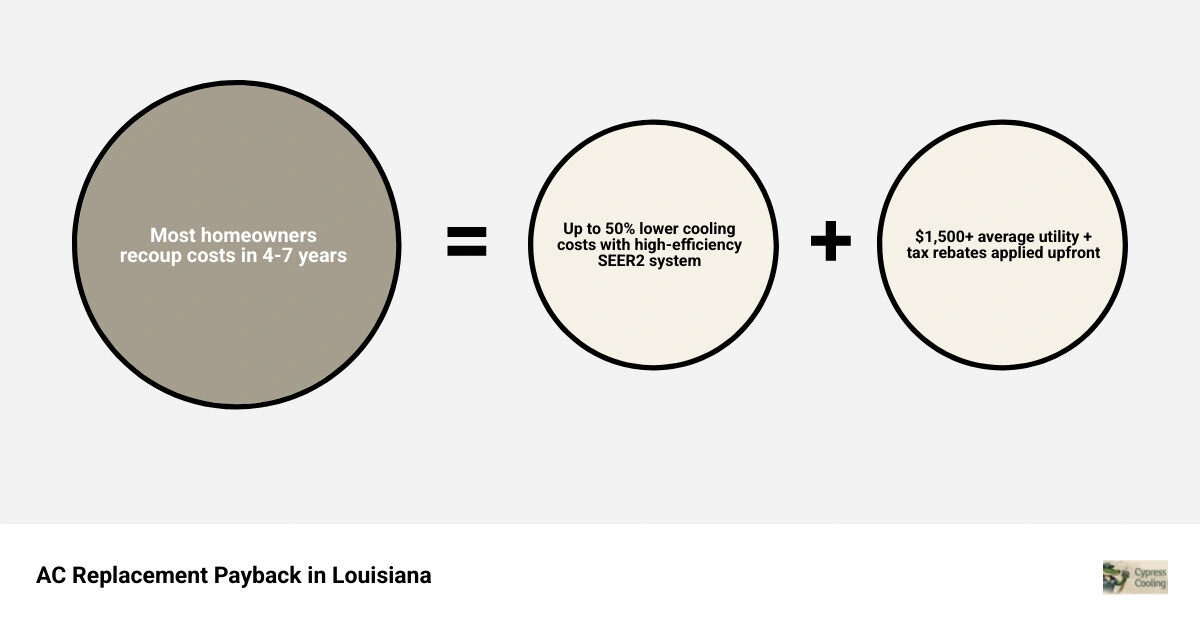
How energy savings from a new AC offset replacement in Louisiana is a question every South Louisiana homeowner should ask before writing off a new system as too expensive. The short answer: in most cases, the monthly savings on your Entergy or utility bill — combined with available rebates and tax credits — can offset the cost of replacement faster than you might expect.
Here's a quick look at what you can realistically expect:
• Upgrading from 10 SEER to 15 SEER2 — Estimated Monthly Savings: 25-33% reduction in cooling costs — Key Factor: Higher efficiency ratio
• Upgrading from older unit to 18-20 SEER2 — Estimated Monthly Savings: Up to 40-50% reduction — Key Factor: Variable-speed technology
• Adding duct sealing with new system — Estimated Monthly Savings: Additional 20-30% savings — Key Factor: Reduced air loss
• Stacking utility rebate + 25C tax credit — Estimated Monthly Savings: Up to $5,500 off upfront cost — Key Factor: SWEPCO/Cleco + IRA
Louisiana's cooling season runs 8 to 9 months a year. That means an aging, inefficient AC unit isn't just uncomfortable — it's draining your wallet almost year-round. According to the U.S. Department of Energy, upgrading to a high-efficiency system can cut your monthly heating and cooling bills by 20 to 40 percent. For homes running older equipment, the savings can reach 50 percent.
This guide walks you through exactly how to calculate whether — and how quickly — a new AC pays for itself in South Louisiana's hot-humid climate.
Discover more about how energy savings from a new ac offset replacement in louisiana:
• ac repair vs replace — decision guide
• is a 12 to 15 year old ac worth fixing in the greater new orleans area
• should i repair or replace my air conditioner in south louisiana
The Financial Impact of an Outdated Cooling System

When you live in South Louisiana, your air conditioner is the hardest working appliance in your home. In locations like Metairie, Kenner, and Covington, systems run for thousands of hours every year. If your system is over a decade old, it was manufactured under older efficiency standards and has suffered years of natural wear and tear.
As an air conditioner ages, its mechanical parts wear down, coils corrode, and motors lose efficiency. This means the system must run longer and consume more electricity just to keep your home at a comfortable temperature. This continuous operation leads directly to AC Bill Spikes in a Louisiana Summer.
Additionally, many older systems struggle with underlying issues that cause them to run continuously without cycling off. If you have ever wondered, "Why Does My AC Run All Day Without Stopping in a Louisiana Summer?", the answer is often a combination of component degradation and an outdated design that cannot handle our high cooling loads.
Another financial risk of keeping an outdated system is the type of refrigerant it uses. Older units rely on R-22 (Freon), which has been phased out entirely. If an R-22 system develops a leak, sourcing the restricted refrigerant is incredibly expensive, turning a simple repair into a major financial headache.
Deciding to Repair or Replace Your Aging Unit
When faced with a sudden breakdown, homeowners in communities like Slidell, Gretna, and Mandeville must decide whether to patch up their old unit or invest in a replacement. A helpful benchmark for this decision is the 5000 Rule.
To use the 5000 Rule:
1. Determine the exact age of your current air conditioner.
2. Multiply that age by the cost of the proposed repair.
3. If the resulting number is greater than 5,000, replacing the system is generally the smarter financial choice.
For example, if a 12-year-old system in Luling needs a repair that costs $500, multiplying 12 by 500 equals 6,000. Because this exceeds 5,000, investing that money into a brand-new, efficient system is a better long-term financial move than paying for a temporary fix.
For a complete breakdown of when to make this transition, consult our AC Repair vs. Replace Decision Guide and read our expert analysis on Should I Repair or Replace My Air Conditioner in South Louisiana?.
Understanding How Energy Savings from a New AC Offset Replacement in Louisiana Work
Modern air conditioning systems are far more efficient than those built 10 to 15 years ago. The primary way we measure this efficiency is through the Seasonal Energy Efficiency Ratio 2 (SEER2), which calculates the cooling output of a system divided by its total electric energy input over a typical cooling season.
Upgrading to a higher SEER2 rating yields immediate, measurable reductions in your monthly power usage.
• 10 SEER — New System Rating (SEER2): 14.3 SEER2 — Estimated Cooling Energy Reduction: ~30%
• 10 SEER — New System Rating (SEER2): 16.0 SEER2 — Estimated Cooling Energy Reduction: ~38%
• 12 SEER — New System Rating (SEER2): 18.0 SEER2 — Estimated Cooling Energy Reduction: ~40%
• 14 SEER — New System Rating (SEER2): 20.0 SEER2+ (Variable-Speed) — Estimated Cooling Energy Reduction: ~45% to 50%
As outlined in this comparison of New AC vs. Old AC: Energy Efficiency & Cost Savings, upgrading from an obsolete SEER 10 unit to a modern, code-compliant system can cut your cooling energy consumption by a third or more almost overnight.
A major driver of these savings is variable-speed compressor technology. Standard, older air conditioners operate on an "all-or-nothing" basis. They turn on at 100% capacity, cool the home quickly, and shut off. This constant on-and-off cycling uses massive amounts of electricity.
In contrast, modern variable-speed systems adjust their output dynamically between 25% and 100% capacity. They run at lower, whisper-quiet speeds for longer periods, maintaining a steady indoor climate while using a fraction of the power required by single-stage systems.
Calculating How Energy Savings from a New AC Offset Replacement in Louisiana Offset Your Initial Investment
To perform a payback analysis and see how energy savings from a new ac offset replacement in louisiana offset your initial investment, you can use a simple, straightforward formula:
$$\text{Payback Period (Years)} = \frac{\text{Net Replacement Cost (After Rebates & Tax Credits)}}{\text{Annual Energy Bill Savings}}$$
To calculate your annual savings:
1. Log into your utility provider's portal (such as Entergy or Cleco) and sum up your monthly electricity bills over the last 12 months to find your annual energy expense.
2. Estimate your savings based on your target SEER2 rating. For example, if you spend $3,000 annually on electricity and your cooling costs make up 60% of that ($1,800), upgrading to a system that reduces cooling energy by 40% will save you approximately $720 per year.
3. Divide your net installation cost by your annual savings to find your exact payback timeline.
Over time, this return on investment only grows, especially as utility rates rise. By lowering your base energy usage, you insulate your household budget against future energy rate hikes.
Why How Energy Savings from a New AC Offset Replacement in Louisiana Depend on Climate Zone 2A
South Louisiana sits entirely within ASHRAE Climate Zone 2A, which is classified as a hot-humid environment. In our region, which includes high-humidity coastal zones like Marrero, Westwego, and Slidell, your air conditioner has two jobs: lowering the air temperature (sensible cooling) and removing moisture from the air (latent cooling).
An air conditioner must run long enough to pull humidity out of the air. If a system is oversized—a common mistake made by contractors using basic "rules of thumb" instead of precise calculations—it will cool the home too quickly and shut off before removing the humidity. This results in a home that feels cold and damp, often prompting homeowners to lower the thermostat even further, which spikes energy bills.
Variable-speed systems excel in Climate Zone 2A because they run at lower speeds for longer periods. This continuous, low-energy operation ensures superior dehumidification, keeping your home comfortable at a higher thermostat setting and maximizing your actual energy savings.
Maximizing Your Return with Rebates and Tax Credits
You do not have to shoulder the transition to a high-efficiency system alone. There are several federal, state, and local utility programs designed to lower your upfront costs, making the payback period significantly shorter.
Federally, the Inflation Reduction Act (IRA) offers the 25C Energy Efficient Home Improvement Credit. This program allows homeowners to claim a tax credit of up to 30% of the installation cost for qualifying equipment.
• For qualifying central air conditioners, the maximum tax credit is $600.
• For qualifying air-source heat pumps, the credit jumps up to $2,000.
Additionally, the state of Louisiana administers the Home Energy Rebates Programs | State of Louisiana, which provides point-of-sale discounts and performance-based incentives for energy-saving home upgrades. By stacking these federal tax credits with state and local utility incentives, you can dramatically reduce your net investment.
Leveraging Louisiana Utility Rebate Programs
Depending on where you live in South Louisiana, your local utility provider offers specific rebate programs to encourage energy-efficient upgrades:
• Energy Smart (Entergy New Orleans): This program offers substantial rebates for high-efficiency air conditioners, heat pumps, and ductless mini-splits. You can learn more about these options through the A/C Energy-Saving Solutions - Save Money with Energy Smart NOLA portal and the New Orleans Energy Efficiency Programs - myEntergy page.
• Entergy Louisiana: While some statewide Entergy program incentives may periodically pause or adjust as they transition to new program partners, it is vital to check current listings for active promotional periods. Homeowners can find seasonal opportunities via the End-of-year HVAC savings through Energy Smart - Entergy updates.
• Cleco Power Wise: Cleco offers homeowners up to $3,500 in rebates for upgrading to high-efficiency heat pump systems.
These programs typically require you to work with an approved "Trade Ally" contractor. The rebates are often paid directly to the contractor and applied as an instant discount on your invoice, removing the hassle of waiting for a check in the mail.
Choosing Between a Straight AC and a Heat Pump
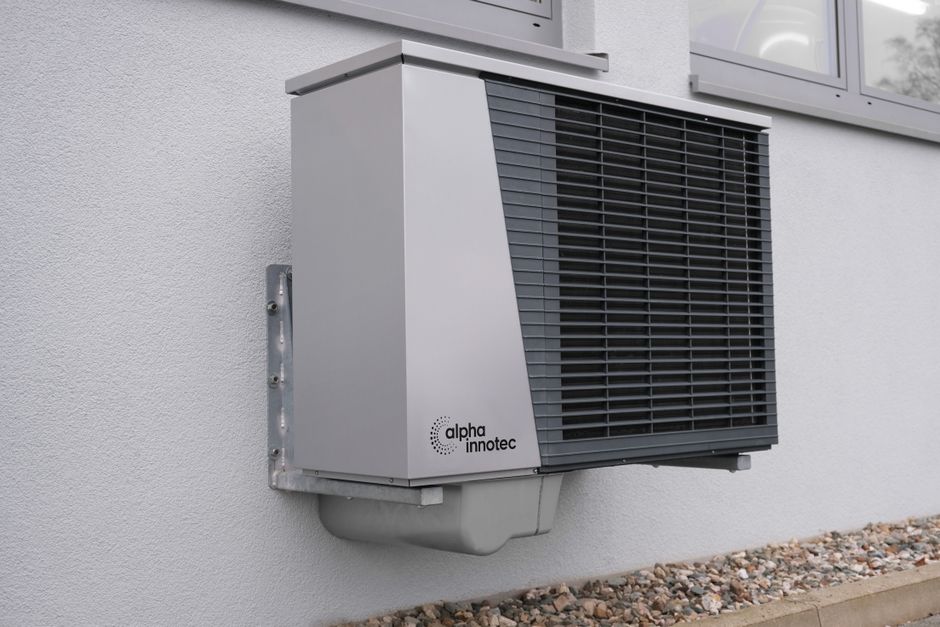
For many South Louisiana homeowners, choosing between a traditional central air conditioner and an electric heat pump is a key decision. A heat pump works exactly like an air conditioner in the summer, but reverses its operation in the winter to pull heat from the outdoor air and move it indoors.
Because our winters in places like Destrehan, Kenner, and River Ridge are relatively mild, heat pumps are incredibly efficient. Traditional electric resistance heating (heat strips) operates at a 1:1 efficiency ratio, whereas a heat pump can deliver up to three times more heat energy than the electricity it consumes.
To explore which system configuration makes the most sense for your property, read our detailed comparison on choosing a Heat Pump vs. Separate AC and Heating System for a South Louisiana Home. Plus, because heat pumps qualify for the larger $2,000 federal tax credit, they are often the most financially advantageous choice.
Best Practices for Ensuring Your New System Delivers Peak Efficiency
Simply purchasing a high-efficiency system is not enough to guarantee low utility bills. The quality of the installation and the condition of your home’s infrastructure play an equal role in your actual energy savings.
• Manual J Load Calculations: To ensure your system is sized perfectly for your home, your contractor must perform a Manual J load calculation. This calculation factors in your home's square footage, insulation levels, window orientations, and local climate data to determine the precise heating and cooling capacity your home requires.
• Ductwork Sealing: According to the U.S. Department of Energy, the typical residential duct system loses 20% to 30% of its conditioned air through leaks, gaps, and poor connections. Sealing your ductwork during an AC replacement ensures that the air you pay to cool actually makes it into your living spaces.
• Smart Thermostats: Installing a smart thermostat can save you up to 10% annually on your cooling costs. These devices learn your schedule, adjust temperatures automatically when you are away, and allow you to monitor your home's humidity levels remotely.
• Regular Maintenance: Keeping your new system clean and well-maintained preserves its high-efficiency rating. Routine tasks like changing air filters, cleaning outdoor condenser coils, and scheduling twice-yearly professional tune-ups can improve operating efficiency by 5% to 15%.
Frequently Asked Questions About AC Replacement Savings
What is the typical payback period for a new AC in Louisiana?
For most South Louisiana homeowners, the payback period for a high-efficiency AC upgrade ranges between 5 and 8 years. This timeline can be shortened significantly by taking advantage of federal tax credits, local utility rebates, and performing necessary home weatherization upgrades like duct sealing.
How much can I expect to save on my monthly energy bills?
Homeowners upgrading from an older, inefficient system to a modern SEER2-compliant unit typically see a 20% to 40% reduction in their monthly cooling costs. In the peak of a Louisiana summer, this can translate to substantial monthly savings on your utility bill.
What SEER2 rating should I target for maximum savings in Louisiana?
For our hot-humid climate, targeting a system with a rating of 16 to 18 SEER2 offers the best balance of upfront equipment cost and long-term energy savings. Systems in this range often feature two-stage or variable-speed compressors, which provide the advanced dehumidification required for our region.
Conclusion
Calculating how energy savings from a new ac offset replacement in louisiana shows that upgrading your cooling system is a powerful investment in your home's comfort and financial future. By combining modern SEER2 efficiency, variable-speed technology, and local utility rebates, you can keep your home perfectly comfortable without breaking the bank.
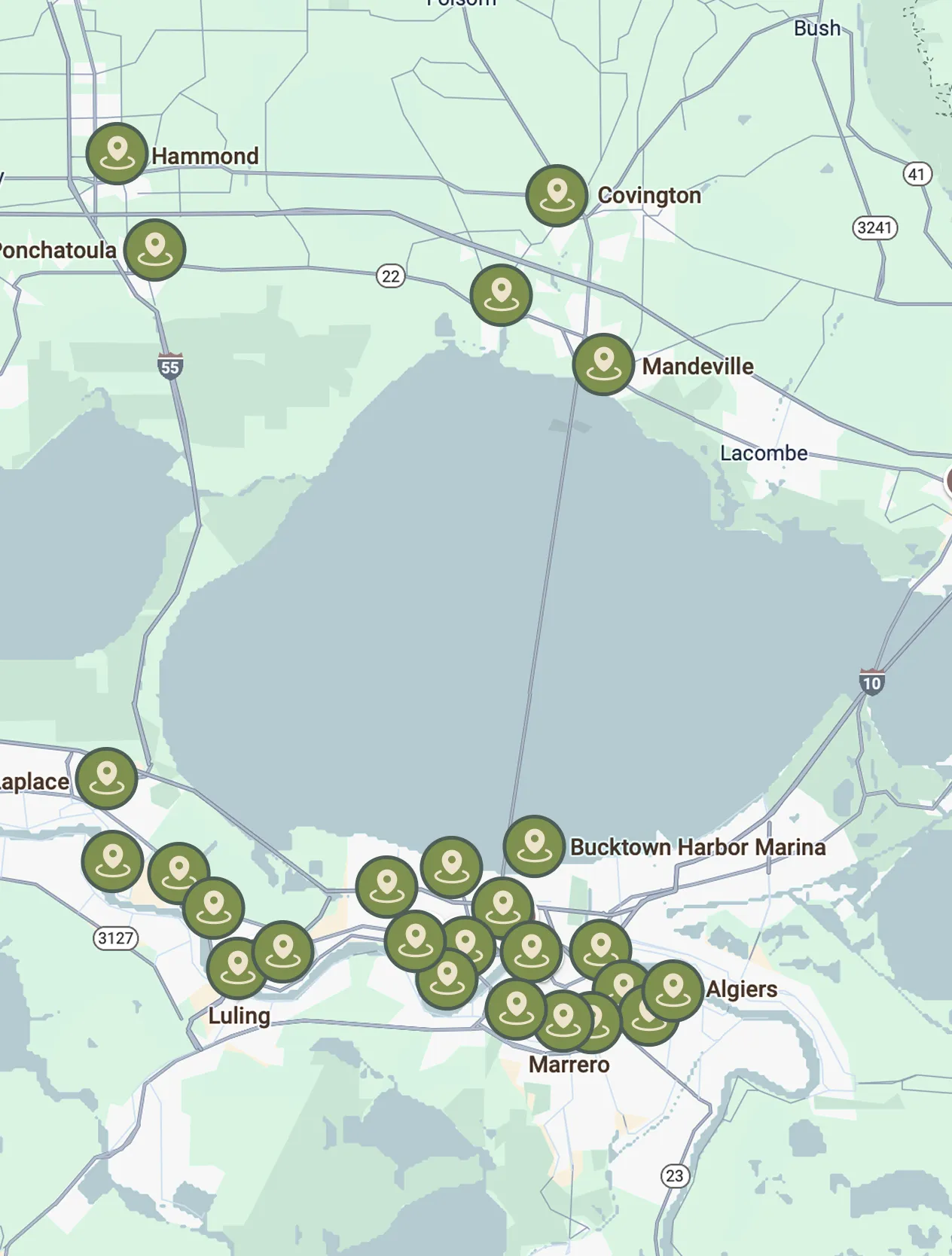
At Cypress Cooling Company, we serve residential and commercial properties throughout South Louisiana, including Metairie, Covington, Slidell, Kenner, Mandeville, Gretna, and the surrounding areas. Our core philosophy is simple: we diagnose, educate, and guide without high-pressure sales tactics.
If you want an honest, straightforward assessment of your current system's efficiency, contact us today to learn more about Cypress Cooling Company's air conditioning services. We are here to help you make the best decision for your home, your family, and your budget.
OUR CLIENTS HAVE TO SAY ABOUT US



Service areas
Our service areas are designed to meet the diverse needs of our clients. We focus on providing exceptional service and ensuring customer satisfaction in every location we operate.