How Poor Duct Design Causes AC to Run Constantly in a Louisiana Home
.webp)

Why Poor Duct Design Causes Your Louisiana AC to Run Nonstop
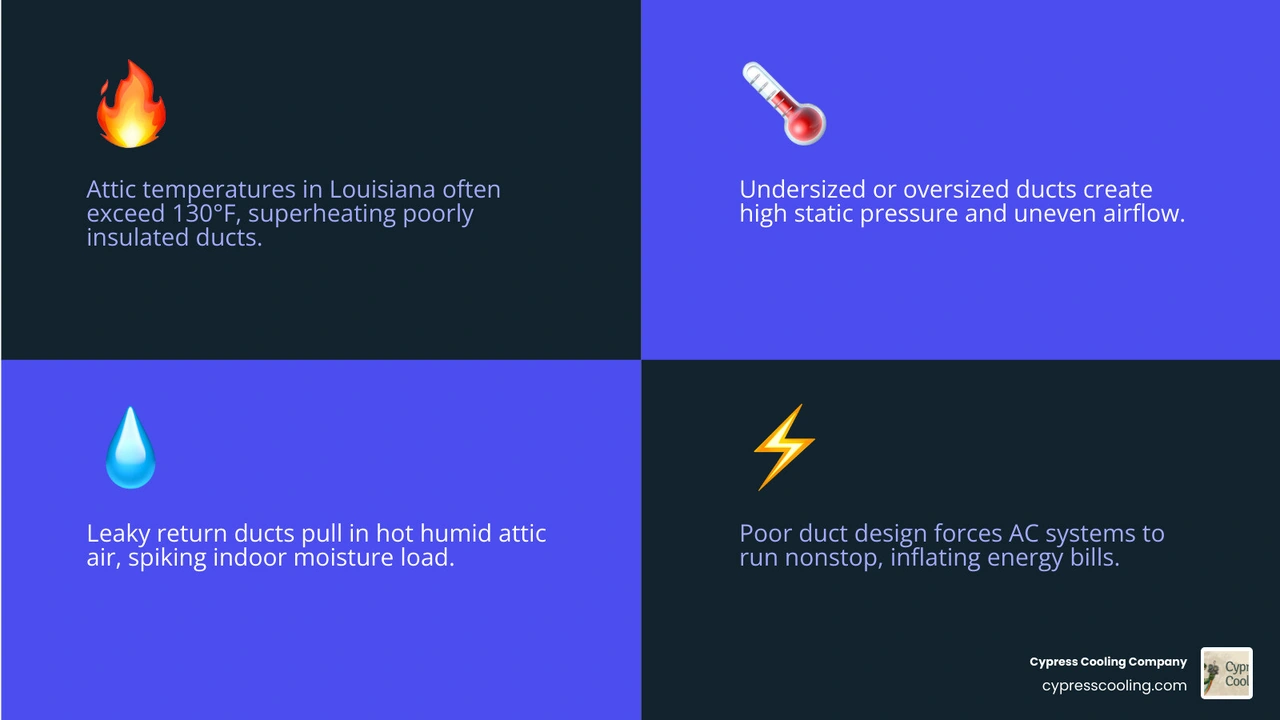
How poor duct design causes AC to run constantly in a Louisiana home comes down to one core problem: when your duct system can't move the right amount of air to the right places, your air conditioner never gets credit for the work it does — so it just keeps running.
Here's a quick breakdown of the main ways poor duct design forces your AC into nonstop operation:
• Undersized ducts restrict airflow, creating high static pressure that starves rooms of cool air
• Oversized ducts move air too slowly, causing uneven temperatures and poor humidity removal
• Unbalanced supply and return air leaves some rooms permanently warm while the system runs continuously trying to satisfy the thermostat
• Poor duct layout means conditioned air travels too far, losing cooling capacity before it ever reaches the room
• Ducts routed through hot attics without proper insulation absorb heat, delivering warm air instead of cool air
• Leaky return ducts pull in hot, humid attic air, adding to the cooling load and spiking indoor humidity
In a South Louisiana home, these problems hit harder than almost anywhere else in the country. Attic temperatures regularly climb past 130°F in summer. The cooling season runs ten to twelve months a year. And the relentless humidity means your AC has to work twice as hard — removing moisture from the air and lowering the temperature. When the duct system can't support that workload, the compressor just runs and runs.
The result? Rooms that never cool down, energy bills that keep climbing, and an AC unit aging faster than it should.
How poor duct design causes ac to run constantly in a louisiana home word roundup:
• ac never reaches set temperature during a heat wave what is wrong
• ac running constantly in gulf coast heat and humidity
• how high humidity in the new orleans area makes your ac work harder
Understanding How Poor Duct Design Causes AC to Run Constantly in a Louisiana Home
To understand why your cooling system is running 24/7, we have to look past the outdoor condenser unit and look inside the hidden pathways of your home. Your air conditioner does not operate in a vacuum. It relies on a balanced closed-loop breathing system: pulling warm air out of your living spaces, cooling and dehumidifying it, and pushing it back in.
When this breathing system is designed poorly, it creates high static pressure. Think of static pressure like blood pressure in a human body. If the "arteries" (your ducts) are too narrow or poorly routed, the "heart" (your blower motor) has to work significantly harder to push air through. This airflow restriction means that even if your outdoor unit is producing perfectly cold air, that air cannot actually reach your living spaces in sufficient volume.
When the cool air is restricted, your thermostat—which is waiting for the room temperature to drop to your setpoint—never gets the signal that the job is done. As a result, the system experiences AC Running Constantly in Gulf Coast Heat and Humidity.
Many homeowners ask themselves, "Why Is My Air Conditioner Running Constantly?" during our long summers. While a dirty air filter or low refrigerant can cause this, a fundamental flaw in the duct design is often the silent culprit. If your duct system was installed without precise calculations, the blower motor is constantly fighting high resistance, reducing the system's overall efficiency by 20% to 50%. This structural bottleneck prevents the home from cooling down, forcing the compressor to run nonstop.
The Difference Between Leaky Ducts and Poor Duct Design
It is common to confuse leaky ducts with poor duct design, but they are entirely different issues—though they frequently occur together in South Louisiana homes.
Duct leakage refers to physical gaps, cracks, or disconnected joints where conditioned air escapes into unconditioned spaces (like your attic or crawlspace), or where hot attic air is sucked into the return system. According to ENERGY STAR, the typical home loses 20% to 30% of its conditioned air through these leaks.
Poor duct design, on the other hand, is an engineering failure. It means the physical layout, sizing, and routing of the ductwork are fundamentally wrong for the home's heating and cooling loads. Even if a poorly designed duct system is sealed perfectly with mastic and has zero leaks, it will still perform terribly because the physics of airflow are working against it. If the friction rate is too high, or if the run lengths exceed the blower's capability, the air simply will not move efficiently.
• Primary Cause — Leaky Ducts: Degraded tape, physical damage, poor joint sealing, pest activity. — Poor Duct Design: Lack of Manual D calculations, undersized trunks, sharp bends, incorrect return placement.
• Airflow Impact — Leaky Ducts: Cool air escapes before reaching vents; unconditioned air enters the loop. — Poor Duct Design: Restricts overall air volume, creates high static pressure, starves distant rooms.
• Humidity Impact — Leaky Ducts: Pulls hot, wet attic air directly into the return system. — Poor Duct Design: Fails to move air slowly enough over the coil or reduces total runtime efficiency.
• The Fix — Leaky Ducts: Professional sealing with mastic and mechanical fasteners. — Poor Duct Design: Re-engineering the layout, resizing trunks, adding returns, or replacing runs.
When we perform Duct Repair, Sealing & Leak Detection, we often find that sealing the leaks is only half the battle. If the system was built with undersized return ducts or excessive runs of sagging flexible ductwork, we must address the underlying design flaws to truly stop the AC from running constantly.
Common Duct Design Flaws in Gulf Coast Homes
In places like New Orleans, Metairie, Kenner, and Slidell, many homes have unique architectural layouts—from historic shotgun homes to raised pier-and-beam cottages. Unfortunately, many of these homes have had central air conditioning retrofitted into spaces that were never designed to hold ductwork.
Some of the most common design mistakes we encounter include:
• Excessive and Sagging Flex Duct: Flexible ductwork is highly common because it is fast and easy to install. However, if it is not pulled completely taut or supported every 4 feet, it sags. These sags act like speed bumps for airflow. Additionally, the ribbed interior of flex duct naturally creates more friction than smooth sheet metal, dramatically reducing air velocity.
• Sharp 90-Degree Bends: When flex duct is pinched or bent at sharp angles to fit into tight attic spaces, it chokes off the airflow entirely. Air needs sweeping, gradual turns to maintain its velocity.
• Undersized Return Air Plenums: Many older homes in South Louisiana were built with a single central return grate. If this return is too small, the system cannot pull in enough air to cool it. This starves the blower motor, creates a loud whistling noise at the grate, and prevents the system from cycling off.
• Lack of Room-to-Room Balance: If bedrooms have supply vents but no return vents (or transition grates), closing the bedroom doors builds up positive pressure. This blocks new cool air from entering the room, forcing the system to run continuously to cool a room that has become an isolated "pressure box."
If your home suffers from these issues, you may need targeted Ductwork Repair in New Orleans to reroute restricted lines, install additional returns, or replace crushed sections of ductwork.
How Poor Duct Design Causes AC to Run Constantly in a Louisiana Home: The Attic Factor
In South Louisiana, the attic is a hostile environment. During July and August, when outdoor temperatures hover in the mid-90s, roof surface temperatures can exceed 150°F, turning your attic into an oven that easily reaches 130°F to 140°F.
Running your ductwork through this super-heated zone is a massive thermal challenge. If your ducts are poorly designed or insulated with outdated materials (such as old R-4 insulation instead of modern R-8 code requirements), a process called thermal transfer occurs. The cool air inside your ducts absorbs the intense heat from the attic before it ever reaches your living spaces.
This thermal loss means the air coming out of your vents might be 65°F instead of the crisp 55°F air your system is actually producing. Your AC has to run significantly longer to achieve the same cooling effect. Furthermore, the extreme temperature difference between the cold duct surface and the hot, humid attic air causes moisture to condense on the outside of the ducts.
When this happens, you will notice your vents and ducts dripping water. This phenomenon is explained in detail in this video on Why Air Conditioning Ducts, Units, and Vents Sweat. This condensation can ruin drywall, compress your attic insulation, and create mold colonies that threaten your indoor air quality.
Additionally, the stack effect—where warm air naturally rises and escapes through attic vents—creates negative pressure in the lower levels of your home. If your return ducts in the attic have even minor design separations, they will pull that super-heated, dusty attic air directly into your air stream, forcing your AC to run nonstop to fight the attic's heat. This is why many local properties experience comfortable downstairs areas while the upstairs feels like an oven due to attic duct issues.
How Poor Duct Design Causes AC to Run Constantly in a Louisiana Home: The Humidity Connection
In our Gulf Coast climate, air conditioning is just as much about moisture removal as it is about lowering the temperature. Your AC unit must tackle two types of heat loads: sensible load (the temperature you read on a thermometer) and latent load (the moisture content in the air).
To remove humidity effectively, air must pass over the cold evaporator coil at a very specific speed. If the duct design is poor:
1. Air moves too fast: If the ducts are undersized, the air velocity increases. The air rushes over the evaporator coil too quickly, preventing the moisture from condensing onto the coil. The water stays suspended in the air, leaving your home feeling sticky and humid even if the temperature drops slightly.
2. Air moves too slow: If the ducts are oversized, the air loses pressure and velocity. It cannot circulate through the home effectively, leading to stagnant pockets of high humidity.
When the relative humidity inside your home remains high (above 55% or 60%), your skin cannot evaporate sweat efficiently. This makes Louisiana homes feel hot even when the AC runs all day. Homeowners respond by lowering the thermostat to 70°F or lower just to feel comfortable. This forces the system to run continuously, driving up utility bills and putting immense wear on the compressor. Proper moisture management starts with correct airflow calculations during Duct Design & Installation in New Orleans.
Professional Standards for Correcting Airflow and Duct Sizing
When we design or modify a duct system, we do not rely on guesswork or rules of thumb. True comfort and system efficiency require adherence to professional standards established by the Air Conditioning Contractors of America (ACCA).
• Manual J (Load Calculation): Before we can design a single duct run, we must calculate the exact heating and cooling needs of each individual room. This calculation takes into account the room's square footage, ceiling height, local climate, insulation levels, window sizes, and solar orientation.
• Manual D (Duct Design): Once we know how many BTUs each room requires, we use Manual D to calculate the exact duct sizes needed to deliver the correct volume of air (measured in Cubic Feet per Minute, or CFM). This ensures balanced static pressure across the entire system.
• Airflow Balancing: After installation or modification, we perform balancing to adjust volume dampers on each branch run. This ensures that a south-facing room with large windows gets more airflow than a shaded, north-facing room, preventing hot spots and uneven temperatures.
By utilizing these precise engineering standards, we can execute professional HVAC Airflow Optimization & Balancing to lower static pressure, maximize equipment lifespan, and ensure your home cools down quickly so your AC can finally take a break.
Frequently Asked Questions about Louisiana Duct Design
How do I know if my AC runs constantly due to bad duct design or a failing compressor?
You can perform a few basic checks before calling a professional:
• Check the Temperature Split: Measure the temperature of the air entering your return grate and compare it to the temperature of the air coming out of your closest supply vent. The difference (split) should be between 16°F and 20°F. If the split is good but your home is still hot, your AC is doing its job, but your duct design or insulation is likely losing that cool air before it reaches the rooms.
• Assess Airflow Strength: Hold a hand up to your supply registers. If some rooms have a strong blast of cold air while others have a weak whisper of air, you are likely dealing with unbalanced duct design, crushed flex lines, or high static pressure.
• Listen to Your System: If your system makes a loud rushing or whistling sound at the return grate, your return ductwork is likely undersized, starving your system of air.
What is Manual D and why is it required in Louisiana?
Manual D is the industry-standard methodology for residential duct design. The Louisiana State Uniform Construction Code (LSUCC) incorporates the International Energy Conservation Code (IECC), which mandates that all new and replacement duct installations follow ACCA Manual D calculations.
This requirement exists because improper duct design is one of the leading causes of energy waste and high utility bills in our state. A system designed to Manual D standards ensures that your HVAC equipment operates at its rated efficiency, manages humidity properly, and does not run continuously.
Can I fix poor duct design without replacing the entire system?
Yes, in many cases, we can correct duct design issues without a complete system replacement. Common retrofits include:
• Adding a second return air duct to relieve static pressure and improve airflow.
• Replacing crushed, sagging, or poorly routed flex duct runs with properly supported lines.
• Installing manual volume dampers in the duct branches to balance airflow between rooms.
• Sealing and insulating existing metal ductwork to prevent thermal loss in the attic.
Conclusion
If your air conditioner is running constantly, spinning your electric meter, and failing to keep your South Louisiana home comfortable, the solution might not be a new outdoor unit. The root cause is very often hiding in your attic or crawlspace in the form of poor duct design.
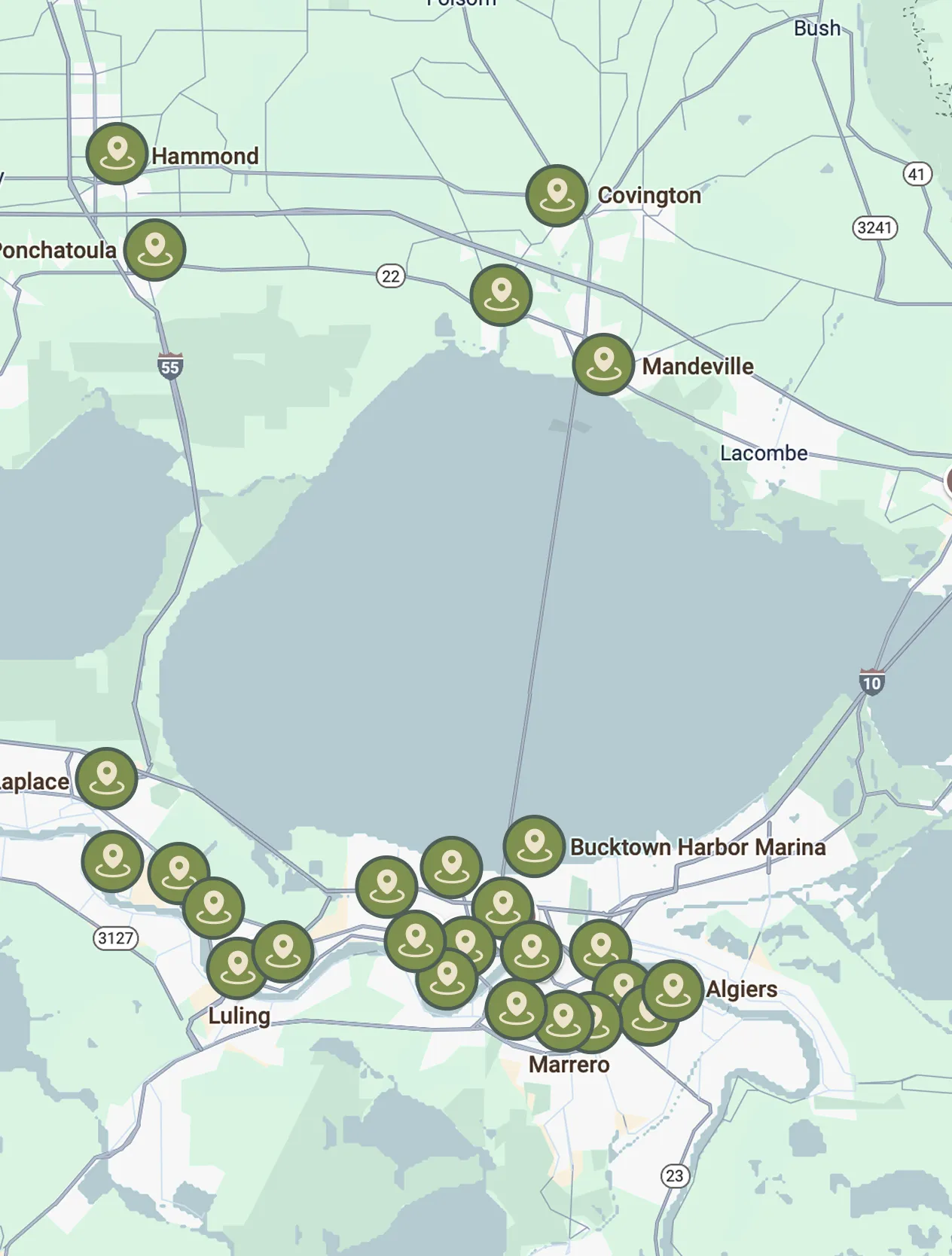
At Cypress Cooling Company, we serve homeowners across South Louisiana—including New Orleans, Metairie, Kenner, Destrehan, Luling, Mandeville, Covington, and Slidell. Our core philosophy is to diagnose, educate, and guide you toward the right solution without high-pressure sales tactics. We believe in fixing the actual engineering problems in your home to deliver long-term comfort and efficiency.
If you are ready to stop the endless cycle of high energy bills and uneven cooling, contact us today to schedule an inspection of your ductwork and explore our professional air conditioning services. Let's get your home's breathing system working exactly the way it should.
OUR CLIENTS HAVE TO SAY ABOUT US



Service areas
Our service areas are designed to meet the diverse needs of our clients. We focus on providing exceptional service and ensuring customer satisfaction in every location we operate.