How to Lower Air Conditioning Bill in Humid Louisiana
.webp)

Why Your AC Bill Feels Impossible to Control in South Louisiana's Heat and Humidity
If you're trying to figure out how to lower air conditioning bill in a hot humid south Louisiana climate, you're not alone — and the answer isn't just "turn up the thermostat." Louisiana's subtropical summers combine brutal heat with humidity that regularly climbs above 80%, forcing your AC to work twice as hard just to keep your home livable.
Here are the most effective ways to lower your AC bill in South Louisiana:
1. Set your thermostat to 78°F when home and raise it a few degrees when away
2. Replace air filters every 30 days during peak summer months
3. Seal air leaks around doors, windows, and ductwork
4. Use ceiling fans counterclockwise to feel cooler at higher thermostat settings
5. Control indoor humidity by setting your fan to AUTO and using exhaust fans after showers
6. Close blinds on west- and south-facing windows during peak afternoon sun
7. Schedule a professional AC tune-up before the hottest months hit
8. Upgrade to a higher SEER2 system if your unit is more than 10–15 years old
The problem most Louisiana homeowners face isn't just heat — it's what HVAC professionals call the latent load. That's the moisture your AC has to pull out of the air before it can even start cooling your home. In states like Louisiana, roughly 30% or more of your AC's energy goes toward removing humidity rather than dropping the temperature. That's a major reason why energy bills here can represent up to 27% of monthly electricity use, compared to the national average of around 6%.
The good news is that a combination of smart habits, routine maintenance, and targeted upgrades can make a real, measurable difference — without sacrificing comfort.

Basic how to lower air conditioning bill in a hot humid south louisiana climate terms:
• ac bill spikes in a louisiana summer
• how much can an ac tune-up reduce your entergy louisiana bill
Proven Strategies: How to Lower Air Conditioning Bill in a Hot Humid South Louisiana Climate
To win the battle against high utility bills in places like New Orleans, Metairie, Slidell, and Mandeville, we have to look at how our cooling systems actually work. In our subtropical climate, your air conditioner has two distinct jobs: sensible cooling (lowering the actual air temperature you see on the thermometer) and latent cooling (removing the heavy, sticky moisture from the air).
When relative humidity is high, the air holds onto heat. This makes your living space feel much warmer than it actually is. If your home has high humidity, you might find yourself constantly nudging the thermostat down to 71°F or 70°F just to feel comfortable. By implementing strategic home adjustments and system optimizations, we can tackle both the heat and the moisture to maximize energy efficiency.
Thermostat Settings: How to Lower Air Conditioning Bill in a Hot Humid South Louisiana Climate
The U.S. Department of Energy recommends setting your thermostat to 78°F during the summer months when you are home and active. We know what you are thinking: "78 degrees in July? Are you trying to melt my household?"
But here is the secret: every degree you raise your thermostat above 72°F can save you anywhere from 3% to 8% on your monthly cooling costs. If you can comfortably adjust to 75°F or 78°F—especially when pairing the temperature with a ceiling fan—the savings over a long South Louisiana summer are massive.
To make this transition easier, we highly recommend upgrading to a smart thermostat. These devices do not just let you set a schedule; they adapt to your daily routines. For New Orleans area commuters, you can program a temperature setback (raising the target temperature by 5 to 7 degrees) while you are away at work, and have the system gently ramp back down just before you pull into the driveway.
This prevents your system from running at maximum capacity during the hottest hours of the afternoon when nobody is home. However, be careful not to set the temperature too high when you leave (avoid going above 82°F to 85°F), as an extreme setback in our humid climate makes it incredibly difficult for your system to recover and remove the accumulated moisture. This can lead to your AC Running Constantly in Gulf Coast Heat and Humidity just to catch up.
To learn more about how small adjustments can add up, check out this guide on How Thermostat Settings Affect Comfort & Energy Bills in Louisiana.
Humidity Control: How to Lower Air Conditioning Bill in a Hot Humid South Louisiana Climate
In our region, temperature is only half the story. If your indoor relative humidity climbs above 60%, your skin cannot effectively evaporate sweat, which is your body's natural cooling mechanism. This is why a humid 74°F home can feel significantly warmer and stickier than a dry 77°F home.
One of the easiest, zero-cost ways to improve humidity control is to make sure your thermostat's fan setting is set to AUTO rather than ON. When the fan is set to ON, the blower runs continuously, even when the outdoor compressor is turned off. This continuous airflow blows over the wet evaporator coil inside your home, re-evaporating all the moisture your system just pulled out of the air right back into your living spaces. Leaving the fan on AUTO ensures that once the cooling cycle ends, the condensation has time to drip down into the drain line and exit your home.
For homes struggling with persistent moisture, installing Whole House Dehumidifiers in New Orleans LA can be a total game-changer. These systems work alongside your central AC to target latent heat directly, pulling gallons of water out of your air daily without lowering the temperature. By keeping your indoor relative humidity in the ideal 45% to 55% range, you can comfortably set your thermostat several degrees higher without feeling sticky.
For a deeper dive into how our local climate impacts your system's workload, read about How High Humidity in the New Orleans Area Makes Your AC Work Harder.
Essential AC Maintenance for Gulf Coast Efficiency
An air conditioner is a heavy-duty machine. In South Louisiana, where our cooling season can stretch from late March all the way into November, your unit faces some of the highest operational demands in the country. Regular maintenance is not just about avoiding sudden breakdowns; it directly dictates how much power your system draws from the grid.
Air Filter Replacement and Coil Cleaning
We cannot stress this enough: your air filter is the gatekeeper of your system's efficiency. A dirty, clogged filter restricts airflow, forcing your system's blower motor to work overtime to circulate air. This restricted airflow can cause your evaporator coil to freeze over, completely halting the cooling process.
During peak summer, we recommend checking your filter every 30 days. If you have pets, kids, or suffer from seasonal allergies, replacing it monthly is a must. For the best balance of air quality and system performance, look for filters with a MERV rating between 8 and 11. Going too high (like MERV 13 or above) without a system designed for it can actually restrict airflow as much as a dirty filter!
Equally important is keeping your coils clean. Your indoor evaporator coil and outdoor condenser coil rely on clean metal surfaces to transfer heat. Over time, the outdoor unit accumulates grass clippings, dirt, pollen, and salt air (especially in coastal areas like Lafitte or near Lake Pontchartrain). This buildup acts as an insulating blanket, trapping heat inside the system and driving up your energy consumption by 5% to 15%.
Rinsing the outdoor condenser unit gently with a garden hose to clear away debris can help, but a professional deep clean is necessary to safely clear the delicate fins. If you want to keep your system in top shape, explore our options for AC Maintenance in New Orleans LA.
Professional Tune-Ups and System Lifespan
Think of a professional HVAC tune-up like an oil change and alignment for your car. During a comprehensive inspection, a technician will check refrigerant levels, tighten electrical connections, measure motor currents, and verify that your system is operating at peak efficiency. Even a minor refrigerant undercharge or overcharge can cause your system to run longer cycles, consuming far more electricity while delivering less cooling.
Scheduling a spring tune-up is one of the most reliable ways to lower your monthly utility bills. In fact, keeping your system properly calibrated can significantly reduce your energy usage during the hottest months. Curious about the math? Check out our article on How Much Can an AC Tune-Up Reduce Your Entergy Louisiana Bill.
Investing in a regular Maintenance Plan is the best way to protect your equipment. By catching minor issues before they turn into major failures, you extend the overall lifespan of your system—which typically lasts 10 to 12 years in our harsh climate compared to 15 to 20 years in drier states. Ready to schedule your check-up? Book your AC Tune-Up in New Orleans LA today.
Sealing Air Leaks and Optimizing Home Insulation
No matter how efficient your air conditioner is, it cannot save you money if your home is constantly exchanging its cool, dry indoor air for the hot, soup-like atmosphere outside. Air sealing and insulating are your primary defenses against outdoor heat gain.
Finding and Fixing Ductwork Leaks
Your ductwork is the delivery highway for your home's comfort. Unfortunately, the average home loses 20% to 30% of its conditioned air through leaks, loose connections, and tears in the duct system. If your ducts run through a blistering hot attic—which can easily reach 130°F or higher in a Kenner or Metairie summer—any leak is a dual disaster. Not only are you blowing expensive, cool air directly into your attic, but when the system cycles off, the negative pressure can pull hot, dusty, humid attic air directly into your living spaces.
Sealing ductwork with professional mastic sealant or metal-backed tape is incredibly effective. In cases of severe deterioration, old, uninsulated flex ducts may need to be replaced entirely to restore proper airflow and system balance.
If you suspect your ductwork is failing, you can read about our options for Ductwork Replacement New Orleans LA and see how proper Duct Design and Installation New Orleans LA can permanently lower your energy bills.
Window Treatments and Solar Heat Gain
Windows are beautiful, but they are also major sources of heat gain. In fact, up to 30% of a home's unwanted summer heat enters through the windows. To combat this, keep your blinds, drapes, or shades fully closed on south- and west-facing windows during the peak afternoon hours.
For even greater savings, consider these highly effective window strategies:
• Blackout Curtains: Heavy, light-colored drapes can reduce solar heat gain by up to 33%.
• Solar Screens: Installed on the exterior of your windows, solar screens can block up to 70% of solar radiation before it even touches the glass.
• Reflective Window Film: A budget-friendly DIY project, applying heat-reflective film to your glass can cut solar heat gain by up to 30% while still letting in natural light.
For more practical ways to shield your home from the sun, take a look at these tips on how to Stay cool and save: 6 ways to lower your AC bill.
Low-Cost Habits and Smart Upgrades for Long-Term Savings
Slashing your cooling costs does not have to cost a fortune. By combining simple, everyday habits with smart technology, you can enjoy a more comfortable home and a lighter utility bill.
Strategic Ceiling Fan Usage
Ceiling fans are incredibly energy-efficient, costing only about one cent per hour to run compared to the substantial draw of a central air conditioner. However, it is vital to remember the golden rule of fans: fans cool people, not rooms.
Ceiling fans work by creating a wind-chill effect across your skin, making you feel up to 4°F cooler than the actual ambient room temperature. This allows you to raise your thermostat to 78°F while still feeling like it is 74°F.
Always ensure your ceiling fans are spinning counterclockwise in the summer to push a refreshing breeze straight down. And remember to flip the switch off when you leave the room—running a fan in an empty room is just wasting electricity!
If you have rooms in your home that are rarely used, or family members with wildly different temperature preferences, we can also explore professional zoning. By installing dampers in your ductwork, Zoning Systems New Orleans LA allow you to direct cooling only where it is needed, preventing you from wasting energy on empty guest rooms or formal dining areas.
Upgrading to High-Efficiency SEER2 Systems
If your current air conditioner is getting older and constantly requiring repairs, it may be time to consider an upgrade. Modern systems are designed under strict federal SEER2 (Seasonal Energy Efficiency Ratio 2) standards. In Louisiana, the legal minimum for a new split-system AC is 14.3 SEER2, but upgrading to a unit rated at 16 to 18 SEER2 can offer a rapid return on investment due to our long, intense cooling seasons.
The real magic of modern efficiency lies in variable-speed compressors. Unlike older single-stage systems that cycle on and off at 100% capacity (consuming a massive surge of electricity every time they start up), variable-speed systems can run continuously at lower capacities (like 30% or 40%). This steady, low-energy operation allows the system to run longer, quieter cycles. These extended cycles are incredibly effective at removing humidity, keeping your home perfectly dry and comfortable while slashing your energy consumption.
If you are curious about how the numbers work out, you can read about How Energy Savings from a New AC Offset Replacement in Louisiana. For homes looking for maximum year-round efficiency, we also specialize in Heat Pump Installation in New Orleans LA.
To make these upgrades even more accessible, we can help you take advantage of local utility incentives. Learn How to Apply for Entergy Louisiana Rebate on a New AC System to maximize your upfront savings. We also invite you to explore our latest Promotions and flexible Financing options to find a solution that fits your budget.
Frequently Asked Questions About Louisiana Cooling Costs
Navigating energy bills in South Louisiana can be confusing. Here is a quick breakdown of common habits and their potential savings impact:
• Raising thermostat from 72°F to 78°F — Estimated Energy Savings: 15% – 25% on cooling costs — Ease of Implementation: Instant & Free
• Replacing dirty air filters monthly — Estimated Energy Savings: 5% – 15% system efficiency — Ease of Implementation: Easy & Low Cost
• Using ceiling fans (and raising thermostat) — Estimated Energy Savings: Up to 10% on cooling bills — Ease of Implementation: Easy & Low Cost
• Sealing duct leaks and air gaps — Estimated Energy Savings: 10% – 20% on heating & cooling — Ease of Implementation: Moderate
• Upgrading to a 16+ SEER2 variable-speed AC — Estimated Energy Savings: 20% – 40% on monthly electric bills — Ease of Implementation: Investment
What is the best thermostat setting for a Louisiana summer?
For the ideal balance of comfort and energy savings, we recommend setting your thermostat to 78°F while you are home, paired with a counterclockwise ceiling fan. When you are away from home for more than four hours, raise the setting to 82°F.
Why does my house feel sticky even when the AC is running?
This common issue is usually caused by "short-cycling." If your AC system is oversized for your home, it will cool the air very quickly and shut off before it has run long enough to pull moisture out of the air. This leaves you with cold, clammy, and sticky indoor air.
To learn more about why this happens and how to fix it, read our article on Why Does My AC Run All Day Without Stopping in a Louisiana Summer.
Is it cheaper to leave the AC on all day?
Yes, within reason. It is a myth that turning your AC off completely when you leave saves money, because your walls, furniture, and air will absorb massive amounts of heat and humidity while you are gone. When you turn the system back on, it has to work at maximum capacity for hours to remove that heavy latent load. Instead, use a moderate setback of 5 to 7 degrees when you are away to keep the humidity under control while reducing energy consumption.
Conclusion
Conquering your utility bills in South Louisiana does not mean you have to sweat through the summer. By understanding how humidity affects your comfort, keeping up with basic maintenance like filter changes, and utilizing smart habits, you can keep your home cool, dry, and cost-effective.
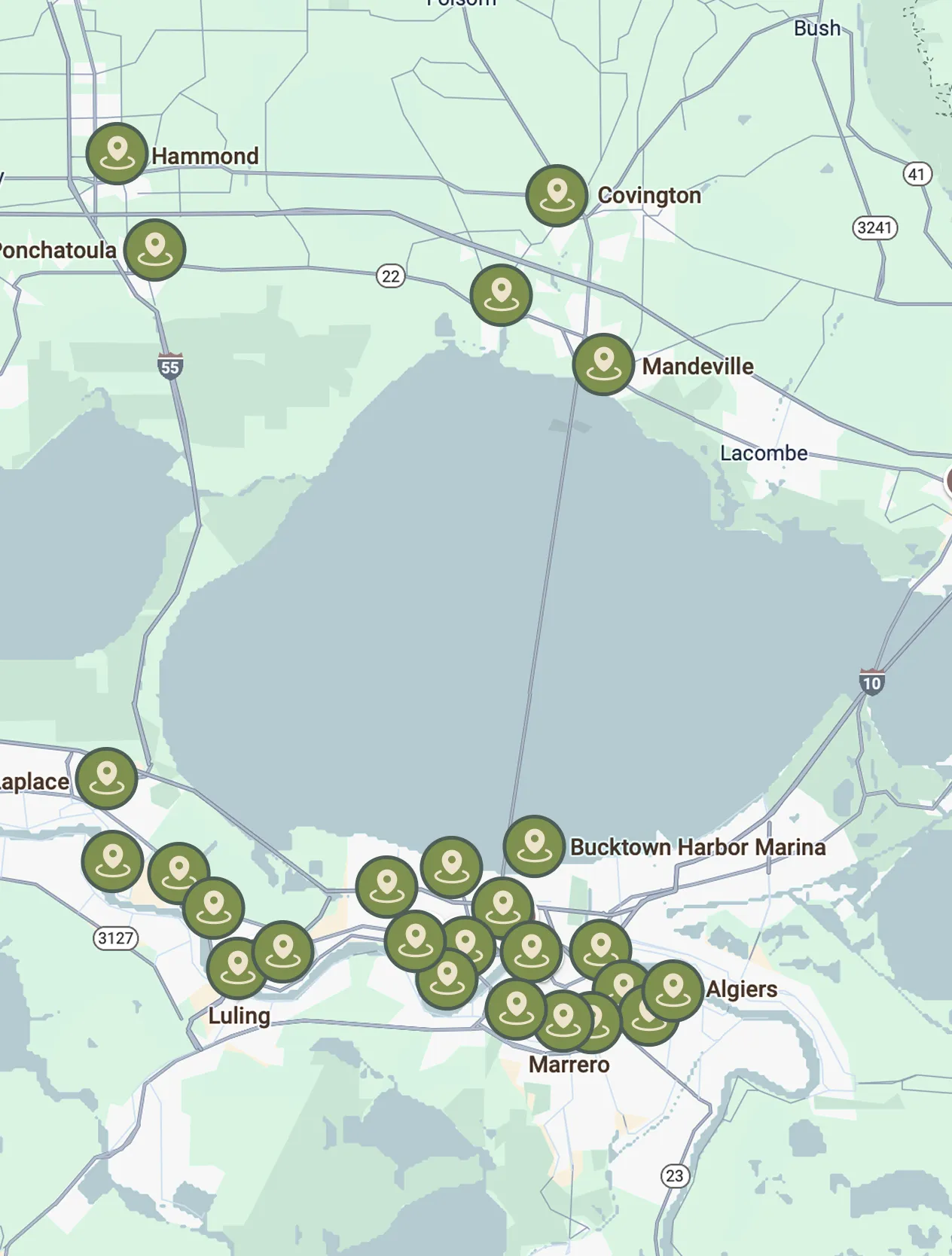
At Cypress Cooling Company, we are proud to serve homeowners across South Louisiana—including New Orleans, Metairie, Kenner, Slidell, Covington, Mandeville, and the surrounding areas. Our core philosophy is simple: we diagnose, educate, and guide without high-pressure sales tactics. Whether you need a quick tune-up, a ductwork inspection, or advice on upgrading your comfort system, we are here to help.
Ready to take control of your summer energy bills? Contact us today to schedule your Professional Air Conditioning Services and start enjoying a cooler, more efficient home!
OUR CLIENTS HAVE TO SAY ABOUT US


Service areas
Our service areas are designed to meet the diverse needs of our clients. We focus on providing exceptional service and ensuring customer satisfaction in every location we operate.