A Practical Guide to How Long AC Lasts in South Louisiana
.webp)

How Long AC Lasts in South Louisiana (And Why It's Shorter Than You'd Expect)
How long does AC last in South Louisiana? Here's a quick answer before we dive deeper:
• Central Split-System AC — South Louisiana Lifespan: 10-15 years — National Average: 15-20 years
• Air-Source Heat Pump — South Louisiana Lifespan: 8-12 years — National Average: 10-15 years
• Ductless Mini-Split — South Louisiana Lifespan: 10-16 years — National Average: 12-20 years
• Package Unit — South Louisiana Lifespan: 8-12 years — National Average: 12-15 years
• Coastal Parish Units — South Louisiana Lifespan: 8-12 years — National Average: N/A
If your system is approaching or past those numbers, it's worth paying close attention.
Most homeowners are surprised to learn their AC has already burned through more of its useful life than they realized. A system that might run 1,000 hours a year in a northern state is running 3,000 to 4,000 hours a year here. That's not just extra wear — that's years of mechanical life disappearing in a single Louisiana summer.
The combination of relentless heat, extreme humidity, salt air near the coast, and the ever-present threat of flooding creates one of the harshest environments for HVAC equipment in the entire country. Louisiana averages 2,800 to 3,200 cooling degree days per year — nearly double the national average of 1,000 to 1,500. Your AC isn't just working harder here. It's aging faster.
This guide breaks down exactly why that happens, what you can do about it, and how to know when it's time to stop repairing and start replacing.

Realistically, How Long Does AC Last in South Louisiana?

When you look up the average lifespan of an air conditioner online, you will often see a reassuring range of 15 to 20 years. Unfortunately, those numbers do not reflect the reality of living in communities like New Orleans, Metairie, or Kenner. In South Louisiana, a standard central split-system air conditioner realistically lasts 10 to 15 years.
Why is there such a massive gap between our local reality and the national average? It all comes down to what we call "mechanical miles."
Think of your air conditioner like a vehicle. If you buy a truck and only drive it on short, gentle weekend trips, it will last you decades. But if you are using that same truck for a daily, heavy-duty commute through rough terrain, the odometer is going to climb rapidly, and parts will wear out much sooner.
Our cooling season in South Louisiana doesn't just last for three months of summer; it regularly stretches from late March through November. Because of this extended schedule, local systems rack up between 3,000 and 4,000 operating hours annually. Compare that to a system in a northern state that only runs for 800 to 1,000 hours a year, and it becomes easy to see why our systems reach retirement age so much faster.
Every extra hour of operation means more wear on the compressor, more thermal stress on the electrical contacts, and more friction on the fan motors. By the time a local unit reaches its tenth birthday, it has done the equivalent work of a twenty-year-old system in a milder climate. Understanding this accelerated wear is essential when deciding Should I Repair or Replace My Air Conditioner in South Louisiana.
System Type Variations: How Long Does AC Last in South Louisiana by Equipment?
Not all air conditioning systems are built the same way, and different configurations handle our subtropical climate in different ways. Here is how the most common system types hold up under local conditions:
• Central Split-Systems (10–15 Years): This is the traditional setup with an indoor evaporator coil and an outdoor condenser. Because the heavy mechanical work is split, and the indoor components are protected from the worst of the weather, these systems offer a balanced lifespan. However, they are highly dependent on the integrity of your ductwork. Leaky ducts in hot, unconditioned attics can force these units to run even longer, shortening their lifespan toward the lower end of the range.
• Air-Source Heat Pumps (8–12 Years): Heat pumps are incredibly efficient, but they suffer from a local lifespan penalty because they never get a season off. While a traditional central AC gets to rest during our brief winter months while a gas furnace takes over the heating, a heat pump reverses its cycle to provide warmth during our damp winter cold snaps. Because they operate year-round, they accumulate wear much faster, making an early replacement more common. If you are wondering if your older system is reaching this point, it is helpful to ask: Is a 12 to 15 Year Old AC Worth Fixing in the Greater New Orleans Area?
• Ductless Mini-Splits (10–16 Years): Mini-splits are excellent options for historic homes in places like the Carrollton neighborhood or older properties in Gretna that lack space for ductwork. Because they do not suffer from duct loss and often utilize highly advanced, variable-speed inverter compressors, they experience less start-and-stop wear. Their lifespan is highly dependent on keeping the indoor filters clean, as their smaller blowers are sensitive to dust and pet dander.
• Package Units (8–12 Years): Commonly installed on flat roofs or ground-level slabs for commercial properties or certain residential styles, package units house all their components in a single outdoor cabinet. Because the entire system—including the delicate evaporator coil and electrical controls—is completely exposed to the blistering Louisiana sun, heavy downpours, and nesting pests, package units generally have the shortest lifespans in our region.
Coastal vs. Inland: How Long Does AC Last in South Louisiana’s Microclimates?
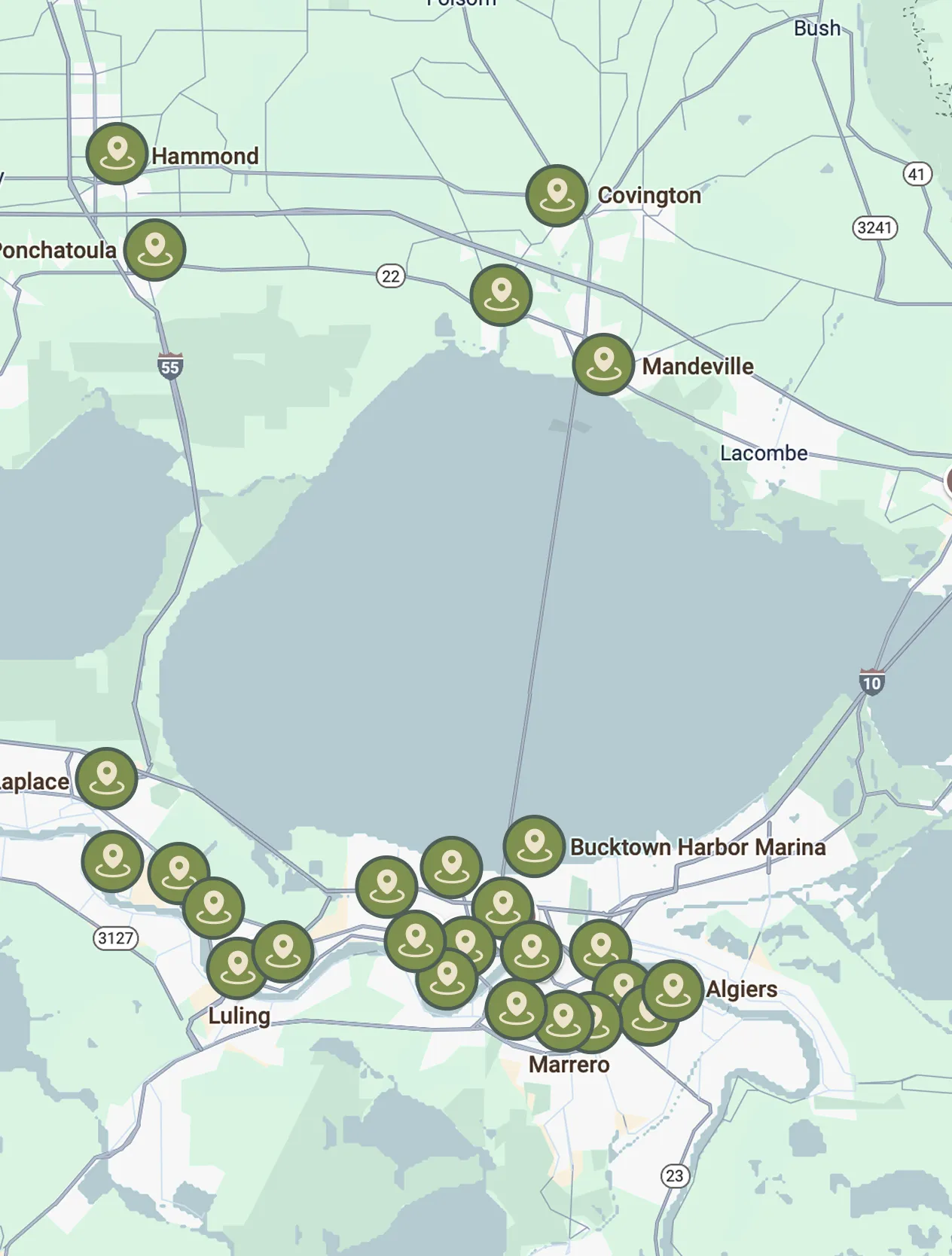
Even within South Louisiana, geography plays a huge role in how long your equipment will survive. There is a distinct difference between a system running in an inland community like Hammond or Ponchatoula and one operating closer to the water in Slidell, Westwego, or near Lake Pontchartrain in Mandeville.
In coastal and near-coastal areas, salt air corrosion is the primary enemy. Wind-blown salt particles from the Gulf of Mexico and surrounding lakes cling to the delicate aluminum fins of outdoor condenser coils. When moisture from our high humidity mixes with this salt, it triggers a chemical reaction called galvanic corrosion.
This process causes the aluminum fins to turn to dust and separate from the copper refrigerant tubes. Once this bond is broken, the outdoor unit can no longer release heat efficiently. The compressor has to work twice as hard to cool your home, leading to overheating, soaring utility bills, and premature compressor failure. In coastal zones, this corrosive process can easily drag an AC unit's lifespan down to 8 to 12 years.
To combat this, homeowners in coastal parishes should look for systems with factory-applied epoxy or phenolic coil coatings. These protective barriers shield the metal from salt and chemical exposure.
Additionally, sulfur compounds in low-lying, swampy areas can accelerate the blackening and pitting of copper lines. If you live in an area prone to these microclimates, regular professional maintenance is non-negotiable. For a full look at how we protect systems across the region, explore our Professional AC Services.
Environmental Stressors That Shorten HVAC Lifespan in the Bayou State
To truly understand why our cooling systems struggle, we have to look at the physics of a Louisiana summer. The primary challenge isn't just the temperature on the thermometer; it is the latent heat load—more commonly known as humidity.
Air conditioning systems perform two distinct tasks: they lower the air temperature (sensible cooling) and they remove moisture from the air (latent cooling). In South Louisiana, where relative humidity routinely exceeds 80%, roughly 30% or more of your air conditioner's total energy consumption is spent simply pulling water out of the air before it can even begin to lower the temperature.
This massive moisture load creates several major physical stressors on your system:
1. Biofilm and "Dirty Sock Syndrome": Because the indoor evaporator coil is constantly saturated with water, it becomes a breeding ground for dust, pollen, and microscopic organisms. Over time, a sticky biofilm can build up on the coil. This acts as an insulating blanket, preventing efficient heat transfer and forcing the system to run longer. It also leads to a musty, locker-room odor when the system cycles on—a common local issue known as "Dirty Sock Syndrome."
2. Condensate Drain Clogs: All that pulled moisture has to go somewhere. Your system drains gallons of water every single day through a narrow condensate pipe. In our warm climate, algae and slime grow rapidly inside these dark, wet pipes. If the line is not regularly cleared, it will clog, causing water to back up. This can result in severe water damage to your ceilings or trip safety float switches that shut down your cooling entirely.
3. Short-Cycling from Improper Sizing: Many local homes suffer from oversized air conditioners. There is a common misconception that "bigger is better" when it comes to beating the heat. However, an oversized unit will cool the home's temperature down so quickly that it shuts off before it has run long enough to pull moisture out of the air. This leaves you with a home that feels cold but incredibly sticky and clammy. It also causes the system to turn on and off constantly (short-cycling), which places immense wear on the compressor and electrical components.
4. Flooding and Storm Surge: From localized heavy downpours in Metairie to tropical storm surges in low-lying areas, flooding is a constant risk. If an outdoor condenser is submerged in water, the electrical controls, fan motor, and compressor can be permanently ruined. Elevating your outdoor unit on a sturdy, code-compliant platform is a vital step for safeguarding your investment in South Louisiana.
Maintenance Strategies to Maximize Your AC’s Lifespan
While the local climate is tough, your air conditioner's lifespan isn't set in stone. The difference between a system that fails at year 9 and one that runs smoothly until year 15 almost always comes down to consistent maintenance.
Fortunately, you don't need a mechanical background to perform the most critical maintenance task: changing your air filters.
During our peak cooling months (typically June through September), you should check your air filter every 30 days. High humidity makes filters damp, which causes dust, pet hair, and dander to stick to them much faster. A clogged filter starves the system of airflow, causing the indoor coil to drop below freezing. This leads to ice forming on your system, which can destroy your compressor—the most expensive part of your AC.
To check if your filter needs replacing, use the simple "light test." Hold the filter up to a light fixture or the sun. If you cannot easily see the light shining through the fibers, it is clogged and needs to be replaced immediately. We recommend using mid-range filters (MERV 8 to 11) to balance clean air with healthy airflow.
Another excellent DIY habit is keeping your outdoor condenser clear. Maintain at least two feet of clearance around the outdoor unit by trimming back sweetgum branches, jasmine vines, and tall weeds. Once a month, take your garden hose and gently wash away grass clippings, dirt, and pollen from the outdoor coils. Note: Never use a pressure washer, as the intense pressure will bend the delicate aluminum fins, permanently restricting airflow.
To prevent sudden water damage and system shutdowns, flush your condensate drain line every few months. Pouring a cup of plain white vinegar down the drain line access port helps prevent algae and slime from taking hold.
While these DIY steps are incredibly valuable, they do not replace professional care. A comprehensive professional tune-up involves checking refrigerant levels, testing electrical capacitors (which commonly fail during intense heatwaves), cleaning the deep layers of the coils, and ensuring the blower motor is calibrated correctly.
For homeowners looking to protect their systems, scheduling regular AC Maintenance in New Orleans LA is the single best way to prevent unexpected summer breakdowns. To make sure your home is fully prepared before the heat hits, refer to our detailed Seasonal HVAC Preparation Checklist for South Louisiana.
Knowing When to Repair vs. Replace Your Aging AC Unit
Every homeowner eventually faces the difficult decision: do you keep patching up an old system, or is it time to invest in a replacement? When your system breaks down in July, making a rational decision under pressure can be tough.
To help make this choice easier, we recommend using classic industry guidelines like the 50% Rule and considering the age of your system relative to the frequency and severity of repairs.
• The 50% Rule: If one major repair represents about half the investment of moving to a new system, replacement is often the smarter long-term direction.
• The Age and Repair Frequency: As a system gets older, even minor repairs can begin to add up in stress, downtime, and uncertainty. If you find yourself frequently scheduling repairs on a system that is over a decade old, it may be time to consider whether a new, energy-efficient unit would provide more reliable comfort.
Beyond these guidelines, you must also consider refrigerant obsolescence. If your system was installed before 2010, it may run on R-22, commonly known as Freon. The U.S. Environmental Protection Agency explains that R-22 has been phased out under federal rules because of its ozone-depleting impact: EPA information on HCFC refrigerants and R-22 phaseout. For older R-22 systems, repairing refrigerant leaks is often only a temporary bandage for a system that is already near the end of its practical service life.
Upgrading to a modern system also brings major energy efficiency benefits. Modern units must meet strict SEER2 (Seasonal Energy Efficiency Ratio 2) standards. Upgrading from an old, degraded 10 SEER unit to a modern 16+ SEER2 system can reduce your monthly cooling bills by 20% to 40%. In a climate where we run our systems for nine months of the year, those monthly savings add up quickly.
To help navigate this decision, read our AC Repair vs Replace Decision Guide and explore How Energy Savings from a New AC Offset Replacement in Louisiana.
Warning Signs Your AC is Nearing End-of-Life
Your air conditioner will rarely fail completely without giving you some advanced warning. Recognizing these early warning signs can save you from spending a miserable, hot weekend waiting for emergency service:
• Unexplained Utility Bill Spikes: If your electricity bills are 15% to 30% higher than they were during the same month last year, and your utility rates haven't changed, your system is losing its operating efficiency. The compressor or fan motor is likely drawing more power to perform the same amount of cooling.
• Inconsistent Temperatures: If your living room feels like an icebox while your bedroom remains warm and stuffy, your system is struggling to distribute air evenly. This often points to duct issues or a failing blower motor.
• Strange Noises: Squealing, grinding, or loud clattering sounds from the outdoor unit are clear signs of mechanical trouble. A shrieking noise often indicates high pressure in the compressor, which requires immediate professional attention.
• Musty Odors: If a persistent damp, musty smell fills your home whenever the system cycles on, mold or biofilm may be growing inside your ductwork or on your evaporator coil.
• Frequent Breakdowns: If you find yourself calling for service multiple times a season to replace capacitors, contactors, or fan motors, your system is telling you that its components are reaching the end of their physical life.
When these signs start adding up, it is time to look into your options. Homeowners can explore our reliable services for AC Replacement in New Orleans LA or find out about professional AC Installation in Metairie LA to restore reliable comfort to their homes.
Frequently Asked Questions about Louisiana AC Lifespan
Can an air conditioner last 20 years in South Louisiana?
While it is technically possible, a 20-year-old air conditioner in South Louisiana is an extreme exception to the rule. To reach this age, a system must be perfectly sized from day one, paired with pristine ductwork, and receive meticulous twice-yearly professional maintenance throughout its entire life. Even if a system does manage to survive for 20 years, its efficiency will have degraded significantly, meaning you will likely be paying a premium on your monthly utility bills to keep it running.
Why does my home feel sticky even when the AC is running?
This sticky, clammy feeling is usually caused by an oversized air conditioner that is short-cycling. Because the system is too large for the home, it lowers the air temperature rapidly and shuts off before the evaporator coil has time to get cold enough to remove moisture. To fix this, you need a system that is properly sized using a professional Manual J load calculation, which takes into account your home's insulation, windows, and layout rather than just square footage.
How often should I change my air filters during a Louisiana summer?
You should check your air filter every 30 days between June and September. The combination of heavy system run times and high indoor humidity causes dust to stick to filters quickly, which can restrict airflow and strain your system. If you have multiple pets or suffer from severe allergies, you may need to replace your filter as often as every three weeks during the peak of summer.
Conclusion
Living in South Louisiana means accepting that our air conditioners have to work harder than they do almost anywhere else in the country. While the local climate is incredibly tough on mechanical equipment, understanding the unique stressors—from coastal salt air to high latent humidity—gives you the power to protect your investment.
At Cypress Cooling Company, we believe in a different approach to home comfort. We serve residential and commercial properties throughout South Louisiana, including Metairie, Kenner, Gretna, Covington, Slidell, and the entire Greater New Orleans area. Our core philosophy is simple: we diagnose, educate, and guide without selling.
We don't believe in high-pressure sales tactics or pushy recommendations. Our goal is to give you the honest facts about your system, explain your options clearly, and let you make the best decision for your home and your budget. Whether your system needs a simple tune-up to survive the summer or you are ready to explore energy-efficient replacement options, we are here to help you build climate resilience in your home.
Schedule professional air conditioning services today and experience the difference of working with a team that puts your comfort and education first.
OUR CLIENTS HAVE TO SAY ABOUT US


Service areas
Our service areas are designed to meet the diverse needs of our clients. We focus on providing exceptional service and ensuring customer satisfaction in every location we operate.