
How to Diagnose Frozen Evaporator Coil in Humid Climates
.webp)
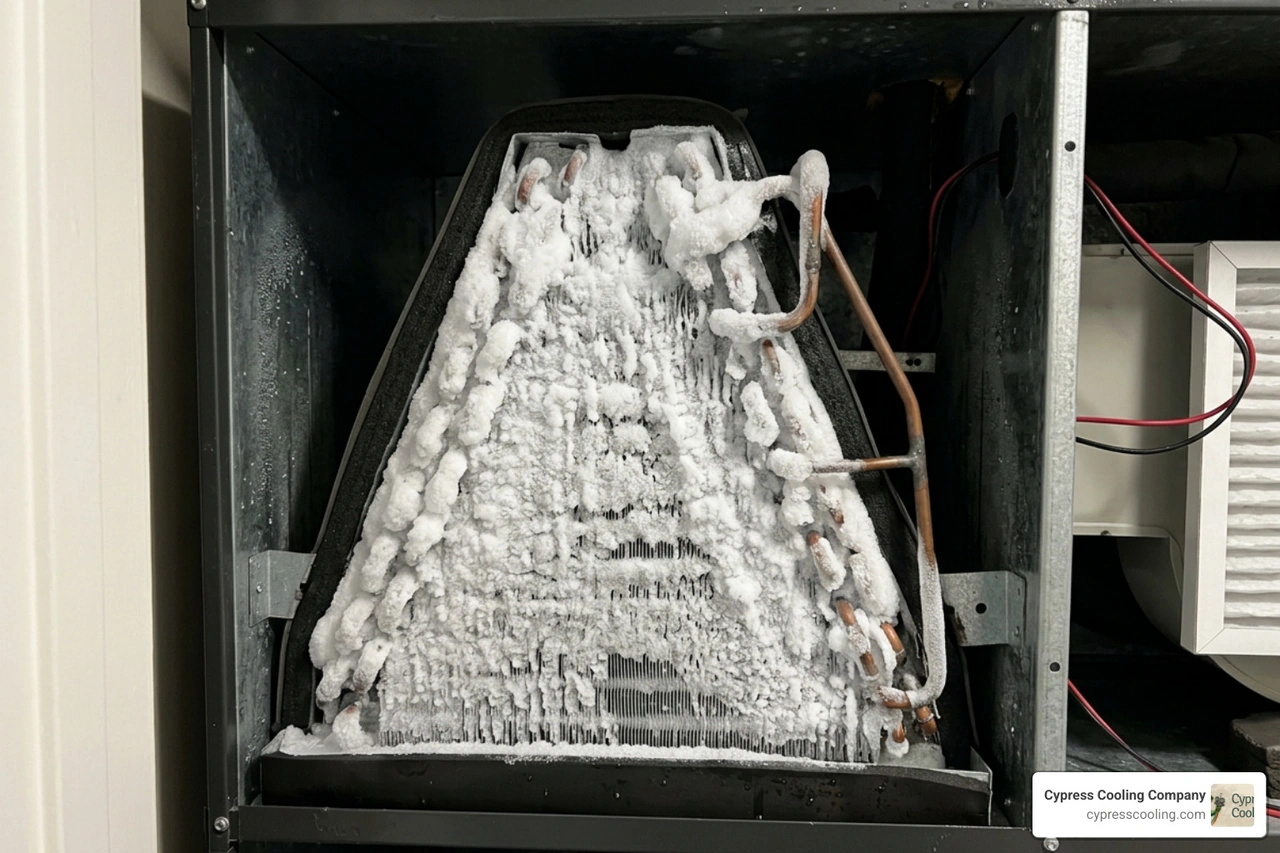
Why a Frozen Evaporator Coil in a Humid Climate Happens — and What Causes It
A frozen evaporator coil in a humid climate what causes it is one of the most common questions South Louisiana homeowners ask during the cooling season — and for good reason. When your AC is running but the house still feels warm and sticky, a frozen coil is often the culprit.
Here's a quick answer before we go deeper:
The most common causes of a frozen evaporator coil in a humid climate are:
1. Restricted airflow — dirty air filters, blocked vents, or a weak blower fan prevent warm air from reaching the coil
2. Dirty evaporator coil — a layer of dust and buildup acts like insulation, stopping heat absorption
3. Low refrigerant — a slow leak drops coil pressure and temperature below freezing
4. Closed or blocked supply registers — common in two-story homes where upper vents get shut off
5. Failing blower motor — reduces airflow even when filters are clean
High humidity makes all of these worse. Your AC in South Louisiana is pulling far more moisture out of the air than a system in a drier climate — sometimes 5 to 20 gallons of water per day on a hot, humid day. That extra moisture load means there's more water vapor available to freeze on the coil the moment something goes wrong with airflow or refrigerant pressure.
Unlike inland or drier regions, humid Gulf Coast climates give your system almost no margin for error. A filter that might last 60 days in a drier state can clog in 30 to 45 days here — especially during pollen season. One partially blocked vent or a slightly undercharged refrigerant system can tip the coil below 32°F and start the freeze cycle.
The good news: most frozen coil calls are resolved in a single visit once the system thaws and the root cause is addressed. Airflow problems are the most common trigger and also the most straightforward to fix.

Frozen evaporator coil in a humid climate what causes it terms to remember:
• ac troubleshooting before calling a pro
• ac not cooling but running what to check first
• ac running but house feels humid what to check
What Is an Evaporator Coil and Why Does It Freeze?
To understand why your air conditioner is currently acting like an ice machine, we have to look at the science of the cooling cycle. The evaporator coil is the indoor component of your HVAC system, usually tucked away in your attic, closet, or crawl space inside the air handler. Its primary job is heat absorption.
Inside the copper or aluminum tubing of the evaporator coil, pressurized refrigerant undergoes a phase change from a liquid to a cold gas. As your blower fan pushes warm, humid indoor air across these cold metal fins, the refrigerant absorbs the heat from the air.
At the exact same time, a second crucial process occurs: dehumidification. When the warm, moist air from your home hits the cold surface of the coil, it drops below its dew point. This causes water vapor to condense on the metal fins, running down into a drain pan and out of your house. It is the exact same thermodynamic principle that causes a cold glass of sweet tea to "sweat" on a hot July afternoon in Metairie or Mandeville.
However, if the temperature of that coil drops to 32°F or below, that condensation instantly turns to frost. According to academic research on the subject, such as the Scientific research on frost formation on evaporators, frost growth occurs in distinct stages, beginning with drop-wise condensation, moving to crystal nucleation, and eventually forming a dense, insulating ice layer.
Once a thin layer of ice forms, it restricts airflow. Because air can no longer pass through the ice-clogged fins, the coil gets even colder, causing more moisture to freeze. This snowball effect (quite literally) continues until your indoor unit is encased in a solid block of ice. When this happens, you will find your AC running constantly in Gulf Coast heat without actually lowering the temperature inside your home.
Frozen Evaporator Coil in a Humid Climate What Causes It?
When we look specifically at a frozen evaporator coil in a humid climate what causes it, the sheer volume of moisture in our South Louisiana air is the primary catalyst. In places like Kenner, Covington, and New Orleans, the latent heat load—the heat associated with moisture in the air—is incredibly high.
When your air conditioner runs, it has to work twice as hard: first to wring the heavy moisture out of the air, and second to lower the actual air temperature. This massive moisture load means that if there is even a minor mechanical or airflow issue, the coil has an abundant, non-stop supply of water vapor ready to freeze.
In a dry climate like Arizona, a system with slightly restricted airflow might run inefficiently but avoid freezing because there is simply not enough water vapor in the air to build a thick ice barrier. In South Louisiana, that same airflow restriction will result in a fully iced-over system within hours.
As detailed in the industry guide Why A/C Systems Freeze, any drop in pressure or airflow drops the refrigerant's boiling point, sending the coil temperature plummeting below freezing. When that ice eventually melts, it can quickly overwhelm your condensate system, leading to a frustrating situation where you find your AC leaking water from ceiling spaces, causing drywall damage in your home.
Let’s look at the specific triggers that cause this transition from condensation to solid ice.
Airflow Restrictions: The Primary Frozen Evaporator Coil in a Humid Climate What Causes It Trigger
By far, the most frequent culprit behind a frozen coil is restricted airflow. Your air conditioner needs a steady, high-volume stream of warm indoor air passing over the evaporator coil to keep it warm enough to prevent freezing. If that air supply is choked off, the refrigerant inside the coil stays too cold, and ice begins to form.
The main causes of restricted airflow include:
• Dirty Air Filters: This is the absolute number-one cause of frozen coils. In our heavy pollen and high-humidity environment, filters clog much faster than the manufacturer's rated intervals. A matted, gray filter acts like a wall, blocking air from entering the system.
• Blocked or Closed Vents: If you close too many supply registers in unused rooms—a common practice in two-story homes in neighborhoods across Slidell or Houma—you alter the static pressure of your ductwork. This starves the system of the airflow it needs.
• Dirty Evaporator Coils: If dust bypasses a cheap or improperly fitted filter, it settles on the wet surface of the evaporator coil. This dust forms a thick, muddy layer that insulates the coil, preventing it from absorbing heat from the air.
• Failing Blower Fan: If your blower motor is operating below its rated RPM, or if the blower wheel is caked in grime, it won't push enough cubic feet of air per minute (CFM) across the coil.
According to the Trane guide on frozen AC coils, keeping your return vents completely clear of furniture and replacing filters on a strict schedule are the easiest ways to prevent these airflow bottlenecks from ruining your compressor.
Low Refrigerant: A Common Frozen Evaporator Coil in a Humid Climate What Causes It Issue
A very common misconception among homeowners is that if an AC is freezing up, it must have "too much cold juice" (refrigerant). In reality, the exact opposite is true. Low refrigerant—almost always caused by a slow, tiny leak in the copper lines or coil connections—is a major cause of ice buildup.
Here is the physics of why this happens: when your system loses refrigerant, the pressure inside the evaporator coil drops. According to basic thermodynamic gas laws, a drop in pressure causes a corresponding drop in temperature.
As the refrigerant enters the coil at a much lower pressure, its boiling point drops below 32°F. It begins to boil off and expand much too early in the coil. This creates a localized super-cold zone right at the beginning of the evaporator coil. Any moisture hitting this section freezes instantly. As ice builds up on this first section, it blocks the air passing through, which then causes the rest of the coil to drop below freezing, leading to a total system freeze-up.
As explained in the Technical analysis of frosted evaporator coils, a low refrigerant freeze is highly destructive. Running a system in this state can cause liquid refrigerant to flood back down the suction line into your outdoor compressor, causing permanent mechanical damage known as liquid slugging.
How to Diagnose and Safely Thaw a Frozen AC Coil
If you suspect your system has frozen, you can perform a quick diagnostic walk-through before calling in the professionals.
1. Check the Airflow: Feel the air coming out of your supply vents. Is it weak, lukewarm, or barely blowing at all?
2. Listen to the System: Do you hear a faint whistling, a struggling blower motor, or the sound of water dripping inside your walls or attic?
3. Inspect the Physical Lines: Look at the insulated copper line running from your outdoor condenser unit into your home. Is it covered in a sleeve of white frost or solid ice?
4. Look at the Drain Pan: Is your secondary condensate drain pan full of water, or is your float switch tripped, shutting off the system?
If you see ice, you must take immediate action to thaw the system safely. Continuing to run your AC with a frozen coil can destroy your compressor—the most expensive component in your entire system.
The Safe Thawing Process
• Step 1: Shut the AC Off. Turn your thermostat system setting to "OFF". This stops the cooling cycle and prevents further ice formation.
• Step 2: Turn the Fan to "ON". Switch your thermostat's fan setting from "AUTO" to "ON". This keeps your indoor blower motor running constantly, forcing warm indoor air over the ice to melt it naturally and safely.
• Step 3: Prepare for Meltwater. A frozen coil holds a massive amount of water. Ensure your condensate line is clear, and place towels around your indoor air handler—especially if it is located in your attic—to prevent a scenario where you have an AC dripping water from ceiling areas.
• Step 4: Check the Filter. While the system is thawing, slide out your air filter. If it is gray, clogged, or dusty, throw it away and replace it with a fresh one.
• Step 5: Let It Thaw Completely. Do not attempt to scrape, chip, or use a high-heat heat gun to melt the ice. You risk puncturing the delicate aluminum or copper fins, turning a simple airflow issue into an expensive coil replacement.
• Airflow Issue — Primary Symptoms: Weak airflow, even temperature drop, dirty filter, quiet blower — Common Root Cause: Clogged filter, dirty coil, blocked registers, blower failure — How to Solve: Replace filter, open vents, schedule professional cleaning
• Refrigerant Leak — Primary Symptoms: Normal airflow but warm air, ice starting at the bottom of the coil, hiss sound — Common Root Cause: Copper line corrosion, loose fittings, manufacturing defect — How to Solve: Must be diagnosed and repaired by an EPA-certified technician
Preventing Frozen Coils in High-Humidity Environments
In South Louisiana, proactive prevention is your best defense against a frozen AC system. Because our air is so heavily saturated with moisture, regular system upkeep isn't just a recommendation—it's an absolute necessity.
Here is how you can keep your system running cleanly and ice-free:
• Change Filters Every 30 to 45 Days: Do not rely on the "90-day" rating printed on box filters. During peak pollen seasons in South Louisiana, filters clog incredibly fast.
• Keep Vents and Registers Open: Ensure at least 80% of your home's supply registers are open and completely unblocked by furniture, rugs, or drapes. Your system needs to breathe to keep its operating pressures stable.
• Keep Your Outdoor Condenser Clear: Trim back weeds, grass, and bushes at least two feet away from your outdoor unit. A dirty outdoor coil can raise system pressures and temperatures, throwing off the entire refrigerant cycle.
• Schedule Annual Maintenance: Having a professional inspect your system before the peak summer heat sets in is invaluable. A technician can check your blower motor's performance, measure your system's static pressure, and catch tiny refrigerant leaks before they turn into a solid block of ice.
To understand how professional preventative care keeps your system safe from summer breakdowns, read more about how maintenance extends AC life and explore what we do during our comprehensive, multi-point professional AC tune-ups.
Frequently Asked Questions About Frozen AC Coils
How long does it take for a frozen evaporator coil to thaw?
With your AC turned off and the indoor blower fan set to "ON", most frozen coils will thaw completely within 1 to 3 hours. However, if the ice buildup is exceptionally severe—encasing the entire air handler in a solid block—it can take up to 24 hours to melt completely.
For more details on managing water runoff during a heavy freeze, consult the technical guide on Cooling Coil Evaporator Coil Ice Repair.
Can I run my AC if only the outdoor lines are frozen?
No, absolutely not. If you see ice forming on the copper lines outside your house, it means your indoor evaporator coil is already completely frozen over. Running your system in this condition forces your outdoor compressor to pump cold, liquid refrigerant instead of warm gas. This can cause liquid slugging, which will destroy the internal valves of your compressor and require a highly expensive system replacement.
Why does my house feel so humid when the AC is running?
When your evaporator coil begins to freeze, it loses its ability to transfer heat and remove moisture from the air. Instead of condensing water and draining it away, the ice on the coil acts as a barrier. The air passing over the ice picks up moisture and blows it right back into your living spaces.
If your home is starting to feel sticky and warm, check out this guide on AC running but house feels humid what to check to troubleshoot the issue before it escalates.
Conclusion
A frozen evaporator coil is a frustrating issue, but understanding what causes it in our unique South Louisiana climate is the first step toward restoring your home's comfort. Whether it's a simple matter of a forgotten air filter or a trickier refrigerant leak, taking quick action to turn off the system and let it thaw will protect your valuable HVAC equipment from long-term damage.
At Cypress Cooling Company, we believe in helping our neighbors across South Louisiana—from Metairie and Kenner to Covington and Mandeville—understand how their systems work. We diagnose, educate, and guide you through your options without high-pressure sales tactics.
If your system is repeatedly freezing up, or if you need a professional to locate a stubborn refrigerant leak and restore your home's cooling, we are here to help. Schedule professional air conditioning services with our friendly, experienced team today.
OUR CLIENTS HAVE TO SAY ABOUT US



Service areas
Our service areas are designed to meet the diverse needs of our clients. We focus on providing exceptional service and ensuring customer satisfaction in every location we operate.