
How to Check If AC Refrigerant Is Low: 5 Simple Tests
.webp)
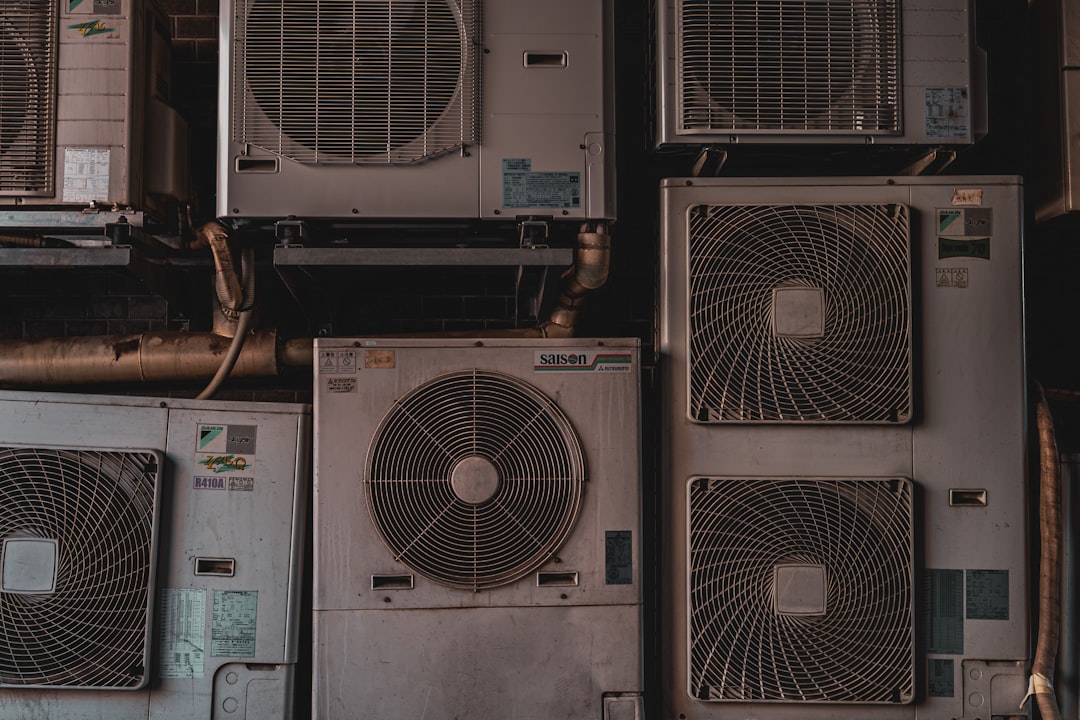
Is Your AC Struggling to Keep Up? Here's How to Tell If Refrigerant Is Low
If you want to know how to check if AC refrigerant is low before calling a technician, here are five quick things you can check right now:
1. Feel the air from your vents — if it's warm or only mildly cool, refrigerant may be low
2. Check for ice buildup on the refrigerant lines or indoor coil
3. Listen for hissing or bubbling sounds near the outdoor unit or refrigerant lines
4. Measure the temperature split — air coming from your vents should be at least 15–20°F cooler than the air going into your return
5. Touch the larger suction line at the outdoor unit — it should feel cold and be sweating slightly
South Louisiana summers are no joke. When your AC starts losing the battle against the heat and humidity in Kenner, LA, your first instinct might be to call a technician right away. But sometimes, a few simple checks around your home can tell you a lot before anyone sets foot on your property.
One of the most common reasons an AC stops cooling properly is low refrigerant. Unlike fuel in a car, refrigerant doesn't get used up — your AC runs in a closed loop, so if levels are low, it almost always means there's a leak somewhere in the system. According to the EPA, incorrect refrigerant levels can reduce your AC's efficiency by 5–20%, and ignoring the problem can lead to compressor damage that's far more expensive to fix.
The good news is that several warning signs are easy to spot without any special tools. Knowing what to look for can help you give your technician a clearer picture of the problem — or confirm whether you actually need one right away.
Simple guide to how to check if ac refrigerant is low before calling a technician:
• ac keeps turning on and off what is wrong
• ac not cooling but running what to check first
• ac troubleshooting before calling a pro
Understanding the Role of Refrigerant in Your AC System
To understand how to spot a low refrigerant charge, it helps to understand what this chemical actually does. Many homeowners believe that an air conditioner generates cool air by blowing over some sort of ice block. In reality, your AC is a heat-removal machine. It acts like a giant sponge, absorbing heat from inside your home and squeezing it out into the humid South Louisiana air.
This "sponge" is the refrigerant. It travels through a closed loop of copper tubing, constantly shifting back and forth between a liquid and a gas state.
• The Evaporator Coil (Indoor Unit): The cold liquid refrigerant passes through the indoor coil. Your indoor fan blows warm, humid indoor air over this coil. The refrigerant absorbs the heat from your air, causing the chemical to boil and evaporate into a gas. As the heat is removed, the air blowing back into your home becomes cool and dry.
• The Compressor and Condenser Coil (Outdoor Unit): The warm refrigerant gas travels outdoors to the compressor. The compressor squeezes the gas, raising its temperature and pressure. It then flows into the condenser coil, where the outdoor fan blows across the coil to dissipate the heat. As it cools down, the refrigerant condenses back into a liquid, ready to return indoors and repeat the process.
For decades, the residential HVAC standard was R-22 (often called Freon). However, due to its ozone-depleting properties, R-22 was phased out. R-410A became the standard, but as of June 2026, the industry is transitioning to even more environmentally friendly options with lower Global Warming Potential (GWP), such as R-32 and R-454B.
Because your air conditioner is a hermetically sealed system, it should never lose refrigerant under normal operating conditions. If the level is low, there is a leak. If you want to know what happens if you ignore this issue, take a look at our detailed guide on What Happens If You Ignore a Refrigerant Leak in a South Louisiana Home.
How to Check If AC Refrigerant Is Low Before Calling a Technician: 5 Simple Tests
Before you pick up the phone to call an HVAC company, you can perform a few simple diagnostic checks yourself. These non-invasive tests require no specialized gauges or tools and can help you determine if the problem is a low refrigerant charge or something simpler, like a dirty air filter.
If your air conditioner is running constantly but your house remains warm, you should first walk through our guide on AC Not Cooling But Running What to Check First.
Why You Should Learn How to Check If AC Refrigerant Is Low Before Calling a Technician
Taking a few minutes to check your system yourself helps you make informed decisions. It allows you to:
• Rule out simple fixes: Sometimes, a completely clogged air filter mimics the symptoms of low refrigerant by restricting airflow and freezing the coils. Checking this first can save you the time of scheduling a service call.
• Provide accurate information: When you do call us, being able to say, "My vents are blowing 72-degree air when it's 75 in the house, and the copper line outside is covered in ice," helps our team prepare for your visit.
• Protect your equipment: Catching a leak early prevents your compressor from running dry and overheating, saving you from a major system failure. For residents in our service areas, keeping your system running smoothly is our top priority. Learn more about our regional maintenance options by visiting our page on AC Service in Kenner LA.
5 Simple Steps on How to Check If AC Refrigerant Is Low Before Calling a Technician
Here is a step-by-step breakdown of how you can safely evaluate your system's refrigerant status without a manifold gauge set.
Step 1: The Temperature Split Test (Delta T)
This is the most reliable scientific test a homeowner can perform.
1. Make sure your AC has been running for at least 15 to 20 minutes so the system has stabilized.
2. Take a standard digital thermometer (an infrared laser thermometer or a simple kitchen probe thermometer works great).
3. Measure the temperature of the air at your return vent (where the air filter is located). Let's say it reads 75°F.
4. Measure the temperature of the air coming directly out of one of your supply vents (the registers blowing cool air).
5. Subtract the supply temperature from the return temperature.
The difference is known as the "Delta T." In a properly functioning system, the temperature split should be between 15°F and 20°F (or roughly 8°C to 11°C). If the temperature split is less than 15°F, your system isn't cooling efficiently, which is a classic sign of a low refrigerant charge. (Note: If the split is higher than 21°F, you likely have an airflow restriction, such as a severely dirty air filter or blocked ductwork).
Step 2: The Physical Ice Inspection
When refrigerant levels drop, the pressure inside the evaporator coil drops as well. According to basic physics, lower pressure leads to lower temperatures. If the pressure falls too low, the temperature of the evaporator coil will drop below freezing (32°F).
Moisture in our humid South Louisiana air will instantly freeze when it contacts the freezing coil. Check the following areas for ice:
• The indoor evaporator coil (you may need to open the access panel on your indoor air handler).
• The brass valves and exposed copper lines connected to your outdoor condenser unit.
• If you see ice forming on these lines—even when it is 90°F outside—your system is either starving for airflow or low on refrigerant.
Step 3: The "Beer Can Cold" Suction Line Test
Go outside to your outdoor condenser unit. You will see two copper lines running from the house into the unit: one is smaller and warm to the touch (the liquid line), and the other is larger, insulated black, and carries the low-pressure gas back to the compressor (the suction line).
Gently peel back a small section of the insulation on the larger copper line and touch it (be careful not to touch any electrical components). In a properly charged system, this line should feel "beer can cold" and be sweating with condensation due to our high local humidity. If the line is warm, dry, or covered in frost, the system is likely low on refrigerant.
Step 4: Listen for Hissing or Bubbling Noises
Because refrigerant lines are pressurized, a leak will often make itself heard.
• Hissing: A high-pitched hissing sound near your indoor coil or outdoor lines usually indicates that refrigerant gas is actively escaping through a small puncture or crack.
• Bubbling: If the leak is located in a section of the line carrying liquid refrigerant, it may produce a gurgling or bubbling sound, similar to drinking through a straw when the glass is almost empty.
Step 5: Inspect for Oil Stains Along the Lines
Refrigerant doesn't travel alone; it circulates with a special oil designed to keep the compressor lubricated. When refrigerant leaks out of a copper line or joint, it carries a small amount of this oil with it.
Perform a visual inspection of the copper lines, especially around the brass service valves on the outdoor unit and the joints near the indoor evaporator coil. If you notice dark, greasy oil stains that accumulate dirt and dust, you have likely found the exact location of a refrigerant leak. For more details on checking your system without specialized gauges, you can read the How to Check AC Gas Level Without Gauge – Complete Guide.
The Risks of Running an AC with Low Refrigerant
It can be tempting to ignore a slightly underperforming AC, especially if it's still blowing semi-cool air. However, running your system with a low refrigerant charge is a recipe for severe mechanical damage.
The compressor is the heart of your air conditioning system, and it is also one of the most expensive components to replace. As mentioned, the compressor relies on the cool return gas to keep its motor winding temperatures low, and it relies on the circulating oil for lubrication. When refrigerant is low:
• The compressor runs hotter than designed, causing the internal motor insulation to degrade.
• The lack of proper oil return causes friction to build up inside the compressor, eventually leading to mechanical seizure.
• The system will begin "short-cycling" (turning on and off rapidly), which places immense electrical stress on your compressor and fan motors. If you suspect your compressor is already struggling, check out our guide on Signs Your AC Compressor Is Going Bad in a Gulf Coast Climate.
Additionally, a low refrigerant charge forces your system to run longer cycles—or run continuously without stopping—to try and meet the thermostat setting. This dramatically increases your monthly electricity consumption. Over time, this constant strain shortens the overall lifespan of your system. If you are trying to decide whether to repair your current unit or upgrade to a new one, refer to our AC Repair vs Replace Decision Guide.
Why Homeowners Should Never Attempt a DIY Refrigerant Recharge
With the rise of online DIY tutorials, some homeowners consider purchasing refrigerant online or at a local store to "top off" their systems themselves. However, attempting a DIY recharge is unsafe, illegal, and highly likely to ruin your system.
• Federal Law and Regulations: Under Section 608 of the Clean Air Act, it is a federal violation for anyone who is not an EPA-certified technician to purchase or handle regulated refrigerants. The EPA enforces strict rules to prevent these chemicals from being vented into the atmosphere, and fines for violations can be exceptionally high.
• Safety Hazards: Refrigerants are stored under intense pressure and have extremely low boiling points. Direct skin contact can cause severe frostbite or chemical burns. Furthermore, inhaling concentrated refrigerant vapors can displace oxygen in your lungs, leading to cardiac arrhythmia or asphyxiation.
• The Risk of Overcharging: More is not always better. While low refrigerant is bad, overcharging a system is equally destructive. If liquid refrigerant floods back into the compressor (which is designed only to compress gas), it can instantly destroy the internal valves.
• Voiding Your Warranty: Most major HVAC manufacturers require proof of professional installation and maintenance. Attempting to add refrigerant yourself will immediately void your equipment warranty, leaving you financially responsible for any subsequent component failures.
When you need a professional to handle these complex repairs safely, it's best to look at the Most Common AC Repairs in South Louisiana. For additional insights into why professional diagnostic tools are necessary, you can read the guide on How To Check Your Air Conditioner's Refrigerant Level - TCL.
Frequently Asked Questions about AC Refrigerant
Can an AC run with low refrigerant?
Technically, yes, an AC can continue to run with low refrigerant, but it should not. Doing so forces the compressor to work under extreme thermal and mechanical stress. The system will run longer, consume significantly more energy, and fail to dehumidify your home properly. Over time, running a system low on charge will cause the evaporator coil to freeze solid, which completely blocks airflow and can lead to liquid refrigerant slugging back into the compressor, destroying it. If your system is starting and stopping frequently due to this stress, read our article on AC Keeps Turning On and Off What Is Wrong.
Does AC refrigerant ever need to be topped off under normal conditions?
No. An air conditioner is a closed, sealed system. The refrigerant is simply cycled back and forth to transfer heat; it is never consumed, degraded, or "burned up" like engine oil or fuel. If your system is low on refrigerant, it means there is a physical hole or crack in the copper tubing, joints, or coils. Simply adding more refrigerant without finding and repairing the leak is a temporary, expensive, and environmentally irresponsible band-aid.
What are the environmental impacts of a refrigerant leak?
Older chlorofluorocarbon (CFC) and hydrochlorofluorocarbon (HCFC) refrigerants, like R-22, have ozone-depletion potential and contribute directly to the erosion of the Earth's ozone layer. While modern hydrofluorocarbon (HFC) refrigerants like R-410A do not deplete the ozone layer, they still possess high Global Warming Potential (GWP) ratings. For example, R-410A has a GWP of 2,088, meaning it is over two thousand times more potent than carbon dioxide at trapping heat in the atmosphere. This is why the HVAC industry is transitioning to low-GWP alternatives like R-32 and R-454B. Fixing leaks promptly prevents these greenhouse gases from escaping into our atmosphere.
Conclusion
Understanding how to check if AC refrigerant is low before calling a technician empowers you as a homeowner. By performing simple checks—like measuring your temperature split, inspecting your copper lines for ice, and listening for unusual sounds—you can gather valuable information about your system’s health.
However, because refrigerant handling requires specialized EPA certification, specialized manifold gauges, and precise superheat and subcooling calculations, the actual repair and recharging process must be left to licensed professionals.
At Cypress Cooling Company, our philosophy is to diagnose, educate, and guide without high-pressure sales tactics. We serve homeowners across South Louisiana, including Kenner, Metairie, New Orleans, Destrehan, Luling, and Laplace. If your troubleshooting steps point to a refrigerant leak, let our experienced team find the leak, repair it permanently, and restore your home’s comfort.
Contact us today to schedule your professional AC Repair in Kenner LA, or explore our complete range of residential cooling solutions by visiting Cypress Cooling Company Air Conditioning Services.
OUR CLIENTS HAVE TO SAY ABOUT US



Service areas
Our service areas are designed to meet the diverse needs of our clients. We focus on providing exceptional service and ensuring customer satisfaction in every location we operate.