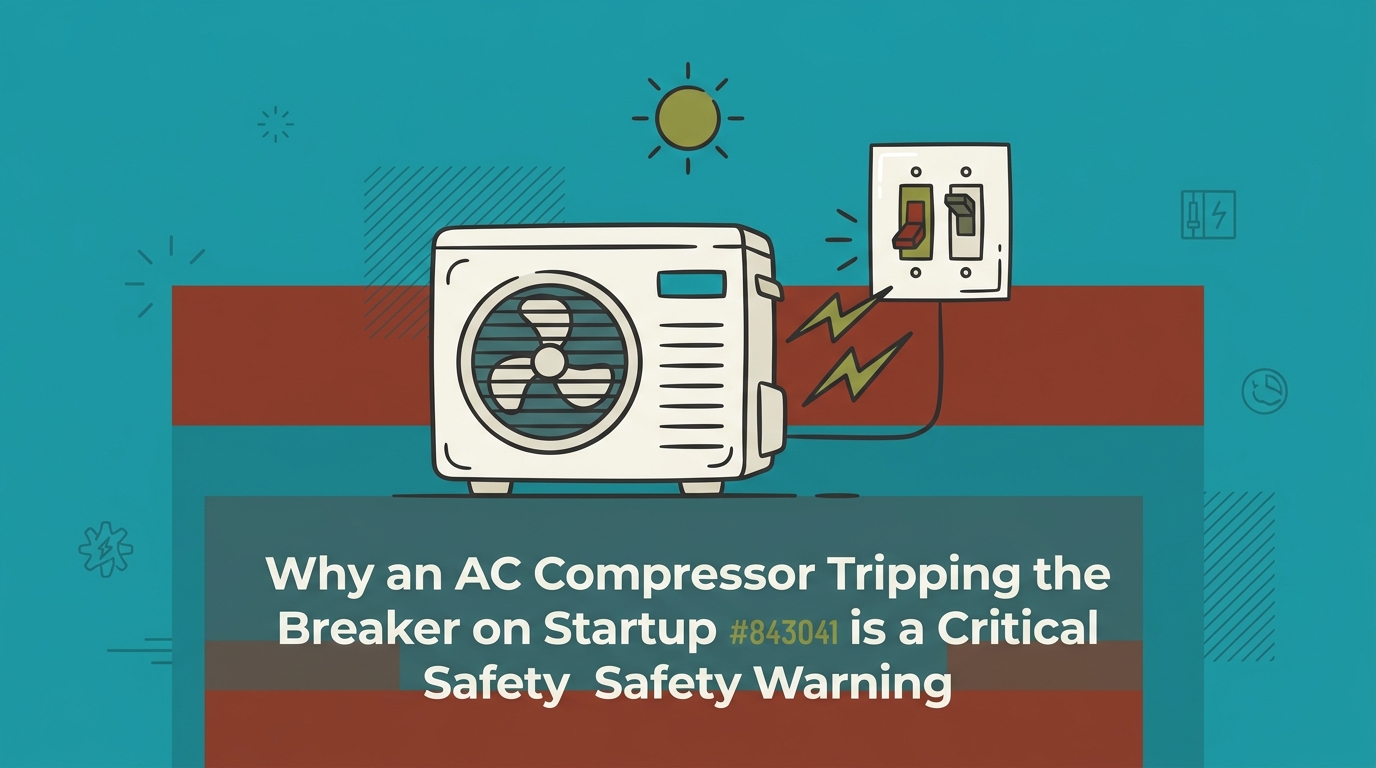
Why an AC Compressor Tripping the Breaker on Startup is a Critical Safety Warning

The Hidden Fire Hazards Inside an Overworked Air Conditioner
According to the National Fire Protection Association (NFPA), electrical failures are a leading cause of home fires, which means your list of home maintenance tips and troubleshooting steps must prioritize electrical safety above all else. If you hear a click from your air conditioner followed immediately by a dark house, your system is sending you an urgent warning. That tripped circuit breaker is not a nuisance to simply reset and ignore. It is a deliberate safety mechanism doing exactly what it was designed to do: stop a dangerous electrical overload before it starts a fire.
If you are dealing with a breaker issue right now, explore our air conditioning services or reach out for professional AC repair services to keep your home safe.
As we enter the mid-fall October transition, residential cooling systems have just survived months of continuous, grueling operation. Parts are worn, wires have endured extreme heat, and electrical tolerances are pushed to their absolute limits. During this specific time of year, systems are highly susceptible to end-of-season electrical component failure.
Your electrical panel monitors the exact amount of electrical current flowing to your outdoor condenser. When internal components inside the air conditioner begin to fail, they stop using electricity efficiently and start pulling a massive, uncontrolled electrical load. If the breaker did not trip, that excess electricity would overheat the wires, melt the surrounding insulation, and potentially ignite surrounding materials. Ignoring this symptom or repeatedly flipping the breaker back on forces raw electricity back into a failing component. This can quickly turn a minor, easily fixable electrical fault into catastrophic damage to the compressor itself—or worse, an electrical fire inside your walls.
Understanding Startup Amperage: Why Your System Demands So Much Power
To understand why an air conditioner trips the breaker specifically on startup, you have to understand how a compressor works. The compressor is the heavy-duty engine of your cooling system. It is responsible for squeezing the refrigerant gas and pushing it through the entire house. Pumping that pressurized gas requires a massive amount of physical force, which means it requires a massive amount of electrical power to get moving.
In fact, a compressor requires up to three times its normal running amperage just to start up. This massive electrical draw is known in the HVAC industry as Locked Rotor Amps (LRA).
• Startup (LRA) — Electrical Demand: Extremely High (Up to 3x normal) — Duration: Less than 1 second — What It Means for Your Breaker: Safe if brief; trips breaker if sustained.
• Continuous Running — Electrical Demand: Moderate / Stable — Duration: Minutes to Hours — What It Means for Your Breaker: Normal operation, well within safety limits.
Under normal, healthy conditions, this massive high draw lasts only a fraction of a second. The motor kicks on, the internal parts start spinning, and the electrical demand immediately drops down to a safe, steady running level. Your circuit breaker is designed to tolerate this brief, split-second surge without tripping.
However, when internal components fail, the compressor struggles to get moving. Because it cannot start spinning, it just sits there, continuing to pull that massive electrical load directly from your home's electrical panel. Here in Metairie, where systems run hard and fast, a stuck compressor will pull Locked Rotor Amps for far too long. The breaker senses this sustained, dangerous surge and trips to cut the power, protecting your home's wiring from melting under the intense heat of the electrical draw.
Failing Capacitors: The Most Common Culprit After a Brutal Summer
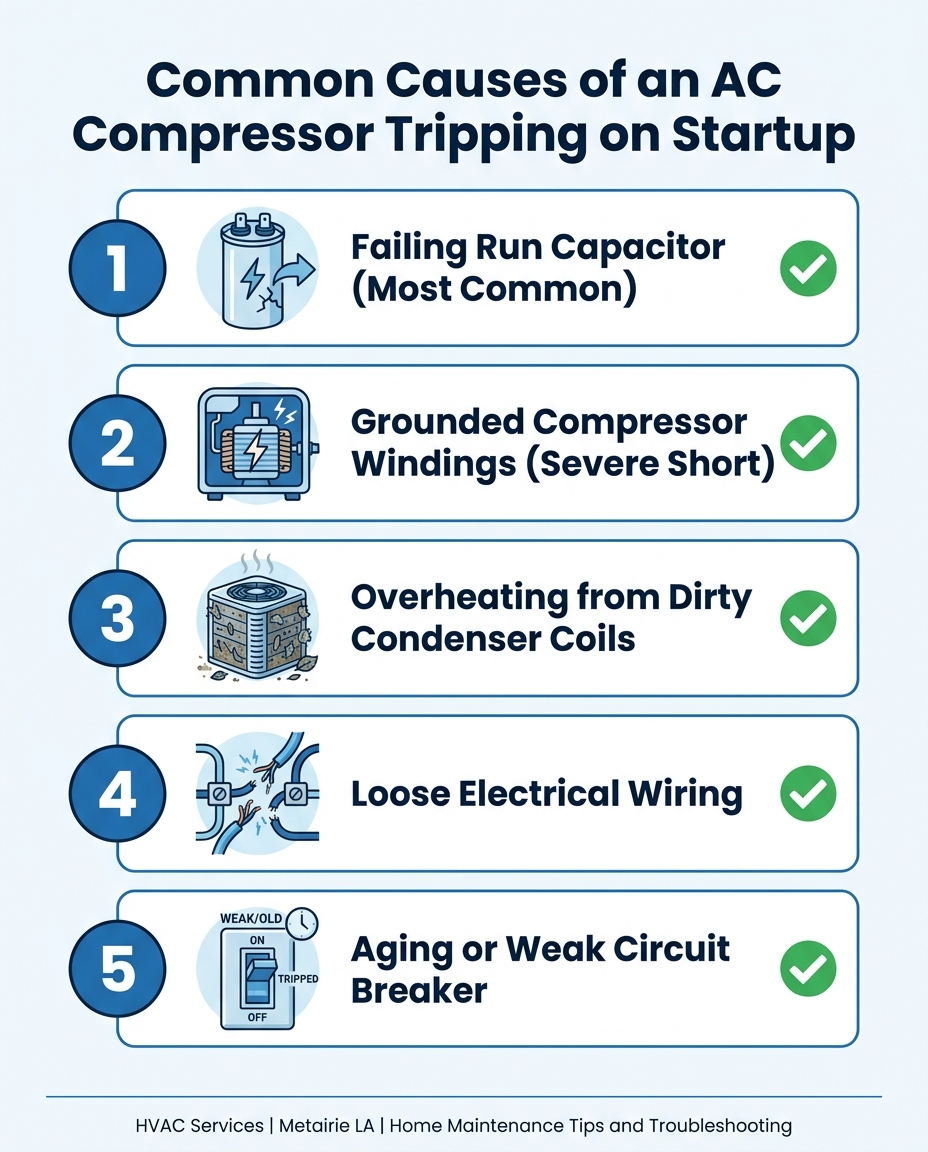
The most frequent reason a compressor struggles to start is a degraded run capacitor. This small, cylindrical component is the unsung hero of your outdoor unit, and its failure is the leading cause of tripped breakers during the mid-fall October transition.
The Problem: Sluggish Startup
When your thermostat calls for cooling, the compressor needs that massive jolt of electricity to overcome its resting inertia. Your home's standard electrical supply cannot deliver that much power instantly on its own. The run capacitor acts as a powerful, localized battery. It stores up a concentrated charge of electricity and delivers it in one massive jolt to kickstart the compressor motor. If the capacitor is weak or completely dead, the compressor tries to start using only the standard household current. It pulls and pulls, drawing excessive amperage directly from the electrical panel, which immediately trips the breaker.
The Cause: Heat Degradation
Capacitors are highly sensitive to heat. Metairie's relentless summer heat forces the AC to run almost non-stop, baking the capacitor inside the metal condenser cabinet. Over months of near-continuous operation, the internal fluids of the capacitor degrade, and it loses its ability to hold and deliver a charge. By the time fall arrives, the overworked capacitor simply gives out. One local homeowner experienced persistent AC problems that went unresolved after several unsuccessful attempts by previous technicians. Once our team was called out, we successfully figured out the underlying electrical issues—tracing it back to a failing capacitor—and resolved the problem the same day.
The Solution: Professional Replacement
Replacing a blown capacitor is a fast, common repair. A professional technician can safely discharge the old capacitor, test the electrical draw, and install a properly rated replacement. Catching a weak capacitor early restores safe operation and prevents the compressor from suffering permanent damage due to repeated hard starts.

Grounded Compressors: When Internal Windings Break Down
While a bad capacitor is an easy fix, a tripping breaker can also point to a much more severe issue: a short to ground within the compressor itself. This is a fatal failure for the cooling system and requires immediate professional diagnostics.
Inside the heavy steel shell of the compressor, there is an intricate network of copper electrical windings. These copper wires carry the electrical current that generates the magnetic field needed to spin the motor. Because these wires are packed tightly together, they are coated in a thin, specialized layer of enamel insulation to prevent the electricity from jumping between them or touching the metal casing.
Over time, extreme heat, friction, and acidic buildup in the refrigerant lines can erode this thin insulation. When the bare copper wire touches the side of the steel compressor casing, it creates a direct, massive electrical short. This is known as a grounded compressor. The moment the thermostat sends power to the unit, the electricity bypasses the motor entirely and shoots straight into the metal frame. The circuit breaker detects this massive, instantaneous surge and trips immediately to prevent a fire.
During a previous winter in Metairie, a local customer with a zoned AC system lost function completely due to a sudden electrical issue. Our technician diagnosed the zoned system, explained the internal electrical failure clearly, and safely resolved the issue to restore the unit. If you suspect your compressor has suffered a major internal short, learning what to do when your circuit breaker trips is your first line of defense. A grounded compressor cannot be repaired; the entire compressor (and often the entire outdoor unit) must be replaced by a licensed professional.
How Relentless Humidity and Dirty Coils Choke Your Condenser
Electrical failures do not happen in a vacuum. They are usually the final result of prolonged mechanical stress. One of the biggest drivers of this stress is the heavy dehumidification load placed on the system by the local climate.
Air conditioners do not just cool the air; they expend massive amounts of energy strictly on removing moisture. Metairie's extreme humidity levels require the AC to run much longer cycles just to wring the heavy water vapor out of the indoor air. This prolonged operation generates intense heat. The outdoor unit, known as the condenser, is responsible for releasing all that collected heat into the outside air through its aluminum coils.
If those outdoor condenser coils are caked with dirt, grass clippings, and debris from summer storms, the system cannot release heat effectively. The dirt acts like a thick, insulating blanket wrapped around the unit. Because the heat cannot escape, the temperature and pressure inside the compressor skyrocket.
To keep pumping refrigerant against this immense pressure, the compressor has to work much harder, which significantly increases its electrical draw. Eventually, this sustained thermal and electrical overload pushes the current past the breaker's safety limit. The breaker trips as a protective measure to stop the compressor from literally melting its internal wiring. Regular cleaning of the outdoor coils is a non-negotiable maintenance task to prevent this exact type of electrical overheating.
The Extreme Danger of Resetting a Tripped Breaker
When the house gets warm, the natural instinct is to march out to the garage or side yard, find the electrical panel, and flip the breaker back on. If it trips again, some homeowners will try flipping it a third or fourth time, hoping the system will finally catch. This is an incredibly dangerous mistake.
A tripping breaker is doing its job by preventing an electrical fire; it is not a nuisance to be bypassed. Here is why you must leave it alone and call for AC repair in Metairie:
1. You risk permanent compressor damage: If the issue is just a blown capacitor, the compressor is still healthy. But repeatedly forcing raw electricity into a motor that cannot start will eventually burn out the internal windings, destroying a compressor that could have been saved.
2. You risk an electrical fire: Every time you reset the breaker against a dead short, the wires inside your walls heat up. Do this enough times, and the wire insulation will melt, potentially igniting the wooden studs in your home.
3. You risk electrocution: High-voltage HVAC components carry enough stored electricity to cause severe injury or death, even when the power is turned off. Homeowners should never attempt to bypass the breaker or test high-voltage AC components themselves.
4. You weaken the breaker itself: Circuit breakers degrade every time they trip under a heavy load. Forcing it to trip repeatedly during the mid-fall October transition can break the internal spring mechanism, rendering the safety device useless.
Immediate professional dispatch is required to safely test the electrical load and identify the short. Working with Cypress Cooling Company means you get emergency same-day dispatch, providing the peace of mind you need when dealing with dangerous electrical faults that require immediate, safe resolution.
Don't Carry Summer Electrical Damage Into the Winter Heating Season
As the weather begins to cool down, it is tempting to ignore a struggling AC unit, assuming you won't need it for much longer. However, unresolved electrical issues in the fall can severely impact your winter readiness.
Many local HVAC systems share electrical circuits, blower motors, and internal control boards between the air conditioning unit and the heating system. An unresolved electrical short, a degraded capacitor, or a weakened circuit breaker from the summer can easily prevent your heating system from operating safely when you need it most.
During the mid-fall October transition, scheduling a comprehensive pre-winter inspection ensures that all shared electrical components are tested, tightened, and secure before the first cold snap arrives. A technician will measure the exact amperage draw of your motors, test the integrity of the wiring, and ensure the control board is communicating properly. Enrolling in a preventative maintenance plan prevents unexpected breakdowns on damp, chilly winter nights, ensuring your home stays safe and warm without electrical interruptions.
Protect Your Home and HVAC System Before the Cold Snaps Arrive
Electrical issues within an HVAC system are serious safety hazards that require trained experts. A tripping breaker on startup is your system's final warning that a component is drawing dangerous levels of power. Do not ignore the warning signs, and never force a system to run by repeatedly resetting the panel.
Ensure your home is safe and your system is ready for the changing seasons. As we move deeper into the mid-fall October transition, reach out to a local professional to safely diagnose the electrical issue, restore your comfort, and give you the peace of mind that your home is fully protected against electrical fire hazards.
Frequently Asked Questions
Why does my AC trip the breaker as soon as it turns on?
Your AC trips the breaker immediately on startup because it is pulling far more electrical current than the circuit is designed to handle safely. This massive surge is usually caused by a failed run capacitor that cannot deliver the necessary starting jolt, or a grounded compressor where the internal wiring has shorted out against the metal casing. The breaker cuts the power instantly to prevent the wiring inside your walls from overheating and catching fire.
Can a bad capacitor cause the breaker to trip?
Yes, a bad run capacitor is the most common reason an AC unit trips the breaker. The capacitor acts like a battery, storing a massive charge to help jump-start the heavy compressor motor. When it fails, the compressor tries to pull all that required starting energy directly from your home's electrical panel, which exceeds the breaker's limit and causes it to trip to protect the circuit.
How do I know if my AC compressor is shorted?
If your compressor is shorted (often called a short to ground), the breaker will typically trip the exact second the thermostat calls for cooling, often with a loud hum or a sparking sound at the outdoor unit. Because the internal copper windings have lost their insulation and are touching the metal casing, the electricity bypasses the motor entirely. A licensed technician must use a specialized multimeter to test the electrical resistance of the windings to confirm a fatal short.
Is it safe to reset a tripped AC breaker?
It is generally safe to reset a tripped AC breaker exactly one time, as a random power surge can occasionally cause a nuisance trip. However, if the breaker trips a second time, it is incredibly dangerous to reset it again. Repeatedly forcing electricity into a failing component can permanently destroy the compressor, melt the wiring inside your walls, and create a severe electrical fire hazard.
Why do AC electrical issues often peak during the fall transition?
Electrical issues peak in the fall because the HVAC system has just endured months of continuous, heavy operation through the hottest parts of the year. Components like capacitors and wiring have been subjected to extreme heat and vibration, causing them to degrade. By the time the weather begins to shift, these overworked, stressed electrical parts finally give out under the strain of starting up the heavy compressor motor.
OUR CLIENTS HAVE TO SAY ABOUT US



Service areas
Our service areas are designed to meet the diverse needs of our clients. We focus on providing exceptional service and ensuring customer satisfaction in every location we operate.