
How to Fix AC Tripping Breaker in 5 Simple Steps
.webp)
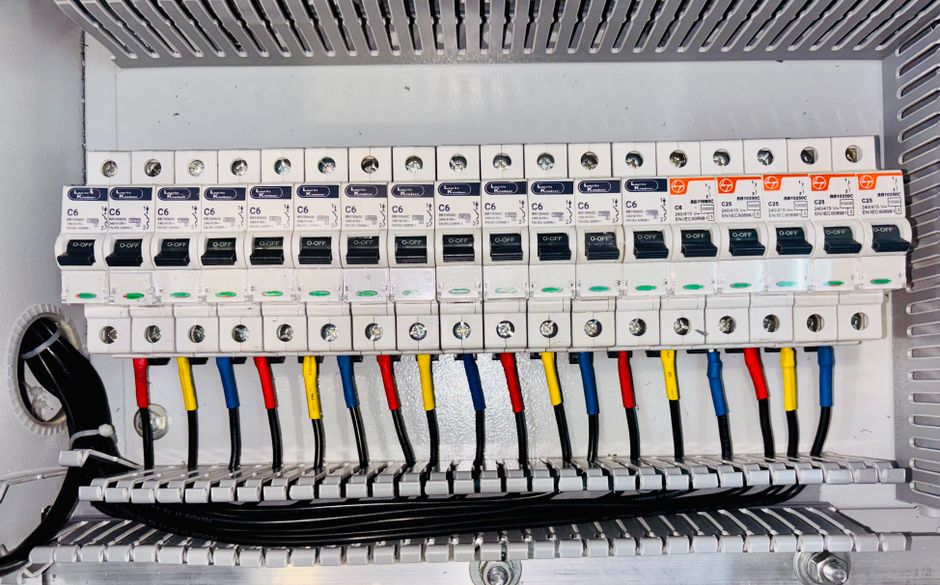
What to Do When Your AC Trips the Circuit Breaker
If you're dealing with a circuit breaker tripping when AC turns on, what to do first depends on whether it's a one-time event or a repeating problem. Here's a quick answer:
Quick Fix Summary:
1. Turn your thermostat to Off before touching the breaker panel.
2. Reset the tripped breaker once — push it fully to Off, then back to On.
3. Wait 15–30 minutes before turning the AC back on.
4. Replace a dirty air filter if you haven't done so recently.
5. If the breaker trips a second time, stop resetting it and call a licensed HVAC technician.
It's a familiar scenario for South Louisiana homeowners: the temperatures climb into the 90s, you flip on the AC, and within seconds — silence. The breaker has tripped again.
Your circuit breaker isn't the enemy here. It's doing exactly what it's designed to do — shutting off power when your AC draws more current than the circuit can safely handle. A typical residential central air conditioner can pull 3–5 times its normal running amperage during startup, sometimes spiking well past 60 amps on a circuit rated for far less. That kind of surge can trip a breaker instantly.
The real question isn't just why it tripped — it's whether the cause is something simple you can fix today, or a sign of a deeper electrical or mechanical problem that needs a professional eye.
This guide walks you through both.

Similar topics to circuit breaker tripping when ac turns on what to do:
• ac keeps turning on and off what is wrong
• ac not cooling but running what to check first
• ac troubleshooting before calling a pro
Circuit Breaker Tripping When AC Turns On What to Do
When you are faced with a circuit breaker tripping when ac turns on what to do is a matter of safety first. Your home’s electrical panel utilizes a dedicated double-pole breaker (typically rated for 30 to 40 amps for central residential systems) to supply 240-volt power to your outdoor condenser unit. When this breaker trips, it indicates that the electrical current flowing through the circuit has exceeded its safe limit, prompting the breaker to cut the power to prevent overheating and potential fire hazards.
If you are currently experiencing this issue, the very first step is to resist the urge to repeatedly flip the breaker back on. Each time a breaker trips, it is telling you there is an active safety issue. Forcing it to reset over and over can permanently damage your air conditioner's expensive compressor, melt wiring insulation, or even ignite an electrical fire.
To safely begin, we recommend performing some basic AC troubleshooting before calling a pro. Understanding the root cause of the trip is essential, as detailed in this helpful guide on why your AC keeps tripping the breaker. Often, the issue stems from a combination of the intense South Louisiana heat—which naturally raises refrigerant pressures and electrical current draw—and neglected maintenance.

Understanding Overloads vs. Short Circuits
Before diving into troubleshooting steps, it is helpful to understand the difference between the two primary reasons a circuit breaker trips: an electrical overload and a short circuit.
An overload occurs when your air conditioner runs for a while but gradually draws more and more current until it slowly pushes the breaker past its limit. This typically happens over 10 to 30 minutes of runtime. A short circuit or ground fault, on the other hand, is an instantaneous event. When there is a direct path from a hot wire to a neutral wire or ground, the current spikes to extreme levels instantly, causing the breaker to trip the millisecond the AC attempts to start up.
• Timing of Trip — Electrical Overload Trip: Occurs after 10 to 30 minutes of runtime — Short Circuit / Ground Fault Trip: Occurs instantly (the millisecond the AC turns on)
• Typical Current Draw — Electrical Overload Trip: Sightly exceeds the breaker rating (e.g., 45A on a 40A breaker) — Short Circuit / Ground Fault Trip: Extremely high spike (often exceeding 100+ amps)
• Primary Root Cause — Electrical Overload Trip: Restricted airflow, dirty coils, or weak capacitors — Short Circuit / Ground Fault Trip: Damaged wiring, grounded compressor, or shorted motor windings
• Safety Risk — Electrical Overload Trip: High thermal wear on wiring and components — Short Circuit / Ground Fault Trip: Immediate fire hazard, risk of electrical shock, or component destruction
Recognizing these patterns can help you narrow down the issue. For instance, if your system starts up, runs for a short bit, and you notice your lights flickering in house when AC runs, you are likely dealing with a high inrush current or an overload condition rather than an instant short circuit.
5 Simple Steps to Troubleshoot a Tripping AC Breaker
If your AC breaker has tripped, follow these five logical troubleshooting steps to determine if you can resolve the issue yourself or if it is time to call our team.
Step 1: Follow the One-Reset Rule
The "One-Reset Rule" is the golden standard of electrical safety. You should only attempt to reset a tripped AC breaker once after performing basic visual checks.
To do this safely:
1. Go to your thermostat and turn the system to Off.
2. Walk to your electrical panel, locate the tripped AC breaker (it will likely be sitting in the middle position between "On" and "Off"), and push it completely to Off until you hear a distinct click.
3. Flip the breaker back to On.
4. Go back to your thermostat, set it to Cool, and wait 15 to 30 minutes to see if the system runs normally.
If the breaker trips again immediately or shortly after, do not reset it a second time.
Step 2: Check for a Clogged Air Filter
A dirty air filter is the number one cause of gradual AC breaker trips. When a filter is heavily clogged with dust, pet dander, and South Louisiana humidity, it severely restricts airflow across your indoor evaporator coil.
This restriction forces your blower motor to work twice as hard to pull air through, increasing its electrical current draw by 20% to 30%. This extra draw can easily push your overall system amperage past the breaker’s safety threshold. If your system is shutting down frequently, check out our guide on what to do when your AC keeps turning on and off to see how airflow restrictions play a massive role.
Step 3: Inspect the Outdoor Condenser Coils
Your outdoor condenser unit is responsible for releasing the heat collected from inside your home. Over time, grass clippings, dirt, pollen, and debris coat these coils, acting as an insulating blanket.
When heat cannot escape efficiently, the compressor has to work much harder and run at higher pressures, drawing significantly more electricity. Keeping these coils clean is a fundamental part of a professional AC tune-up in South Louisiana. You can gently spray down the outdoor coils with a garden hose (with the power turned off!) to remove loose dirt, but avoid using high pressure, which can bend the delicate aluminum fins.
Step 4: Look for Frozen Evaporator Coils
If your indoor evaporator coil freezes over due to low refrigerant or restricted airflow, it can lead to a dangerous condition known as "liquid flood-back."
Air conditioners are designed to compress gas, not liquid. When liquid refrigerant floods back to the outdoor compressor, it creates extreme mechanical resistance. The compressor motor will strain heavily to turn, pulling massive amounts of electrical current until the breaker trips to protect the motor from burning out. If you suspect this is happening, turn the system off completely to let it thaw.
Step 5: How to handle a circuit breaker tripping when ac turns on what to do next
If you have replaced your filter, cleared your outdoor unit, let any ice melt, and the breaker still trips upon startup, you have reached the limit of safe DIY troubleshooting.
At this point, the issue is almost certainly a failing electrical component or a mechanical failure inside the condenser unit. Continuing to reset the breaker can ruin your compressor or damage your home's electrical panel. It is time to schedule a professional AC service in New Orleans, LA to have a certified technician diagnose the system safely.
Electrical Component Failures That Cause Breaker Trips
When mechanical issues like dirty filters are ruled out, internal electrical component failures are usually the culprits behind a tripping breaker.
Failing Capacitors and Hard-Starting Compressors
Your air conditioner relies on capacitors—small, cylindrical devices that store and release electrical energy—to give the fan and compressor the extra boost of power they need to start running. Run capacitors typically last 8 to 12 years, but our intense South Louisiana summers can shorten that lifespan.
When a start or run capacitor begins to fail or loses its capacitance, the compressor struggles to spin up. Instead of drawing its normal startup amperage, the struggling compressor can pull 3 to 5 times its normal running current, often exceeding 60 amps on a 20-amp or 30-amp circuit. This is known as a "hard-starting" compressor.
Installing a hard-start kit (which includes a heavy-duty start capacitor and relay) can reduce compressor startup current by 50% to 75%, preventing breaker trips on older units and extending the life of your system. You can learn more about these common electrical issues in our summary of the most common AC repairs in South Louisiana.
Grounded Compressors and Shorted Motors
A grounded compressor is one of the most severe failures an HVAC system can face. This occurs when the electrical windings inside the compressor motor break down, allowing the live electrical current to make direct contact with the metal frame of the compressor.
Because metal is an excellent conductor, this creates a direct path to ground. A grounded compressor can instantly draw over 100 amps upon startup, far exceeding the breaker's rating and causing an immediate, violent trip the millisecond the thermostat calls for cooling. Unfortunately, a grounded compressor cannot be repaired and typically requires a full compressor replacement or a complete system upgrade.
Modern GFCI and AFCI Breaker Sensitivity
If your home has been built or remodeled recently, your electrical panel may feature Ground Fault Circuit Interrupter (GFCI) or Arc Fault Circuit Interrupter (AFCI) breakers. While standard breakers only protect against overloads and short circuits, these modern safety devices are designed to detect tiny fluctuations in current or dangerous electrical arcing.
However, because these modern breakers are incredibly sensitive, they are prone to "nuisance trips" caused by normal motor startup noise or waveform distortion. If you have an AFCI breaker that keeps tripping, it is helpful to understand why your AFCI breaker keeps tripping and how standard electrical noise can sometimes fool these sensitive microchips.
Additionally, understanding how GFCI and AFCI breakers function can help you determine if the issue is a genuine electrical hazard or simply a nuisance trip caused by a highly sensitive breaker. If you suspect your modern breaker is overreacting, a licensed electrician can test the circuit using specialized diagnostic tools, as discussed in detail in this guide on arc fault breaker troubleshooting.
Frequently Asked Questions About AC Breaker Issues
Why is my circuit breaker tripping when ac turns on what to do?
When your circuit breaker tripping when ac turns on, what to do is turn the thermostat off, reset the breaker once, and check for simple issues like a clogged air filter or dirty outdoor coils. If the breaker trips again immediately, it points to a failing start capacitor, a shorted motor winding, or a grounded compressor, which requires professional diagnostic tools to resolve safely.
Can a refrigerant leak cause my AC circuit breaker to trip?
Yes. A refrigerant leak causes your system to run continuously to meet the thermostat demand. This continuous running leads to compressor overheating. As the compressor gets hotter, its internal electrical resistance increases, forcing it to draw more and more current until it eventually overloads the circuit and trips the breaker.
Is it safe to keep resetting a tripping breaker?
No, it is highly unsafe. A circuit breaker is a safety device designed to prevent electrical fires. Repeatedly resetting a tripping breaker forces high-voltage current through a compromised circuit, which can melt wire insulation, permanently destroy your AC compressor, and create a severe fire hazard in your home.
Conclusion
A tripping AC breaker is always a sign that your electrical or HVAC system is working under extreme stress. While a dirty air filter or dusty outdoor unit is sometimes the simple culprit, recurring trips are a clear warning sign of failing capacitors, motor issues, or electrical shorts that require expert attention.
At Cypress Cooling Company, we understand how stressful it is to lose your air conditioning in the middle of a hot South Louisiana summer. Whether you are located in New Orleans, Covington, Metairie, Slidell, Mandeville, or any of our surrounding communities, our licensed technicians are here to help. We pride ourselves on our commitment to diagnose, educate, and guide you without high-pressure sales tactics.
If your AC breaker keeps tripping, do not take unnecessary risks with your home's safety. Contact us today to schedule our professional air conditioning services and get your home back to cool, comfortable safety.
OUR CLIENTS HAVE TO SAY ABOUT US



Service areas
Our service areas are designed to meet the diverse needs of our clients. We focus on providing exceptional service and ensuring customer satisfaction in every location we operate.

