
When to Replace Your Marrero Home's Ductwork Along With Your A/C Replacement
.webp)
The Myth of the 'Magic Box': Why a New A/C Isn't Always a Standalone Cure
Slapping a brand-new, top-of-the-line condenser outside your house does not automatically guarantee a cooler, drier indoor environment. Knowing exactly when to replace your Marrero home's ductwork along with your A/C replacement is often the deciding factor between total home comfort and years of frustrating performance issues. Many homeowners operate under the misconception that a shiny new outdoor unit acts as a "magic box" that will single-handedly cure hot spots, humidity problems, and high energy bills.
The reality is far more complicated. If you attach a modern, high-efficiency 18-SEER A/C unit to failing, compromised infrastructure, you are essentially putting a sports car engine into a vehicle with flat tires. The engine might run beautifully, but you will never reach your destination efficiently. As we enter the late-summer cooling season, many local homeowners face a critical decision point when their aging system finally gives out: do you just swap the equipment, or do you upgrade the entire air distribution network?
Making the right choice requires understanding how these components rely on each other. To ensure your investment actually delivers the comfort you expect, it is highly recommended to explore comprehensive system upgrades and professional ductwork services before making a final decision.
The Mechanics of Airflow: How Modern Blowers Interact with Old Vents
To understand why upgrading your equipment isn't always enough, it helps to look at your HVAC system like the human body. The air conditioner itself—the compressor and the air handler—acts as the heart of your home. It pumps the lifeblood of conditioned air. Your ductwork acts as the lungs and the circulatory system, delivering that air to every room. If the lungs are constricted or leaking, the strongest heart in the world cannot deliver oxygen where it needs to go.
Modern cooling equipment operates very differently than the systems built decades ago. Today's high-efficiency 18-SEER A/C unit is designed to move specific volumes of air at precise speeds to maximize dehumidification and efficiency. Here is how modern blowers interact with your home's air distribution network:
1. Variable-speed technology: Newer blowers adjust their speed based on cooling demand, requiring clear, unrestricted pathways to function properly.
2. Increased air volume: High-efficiency systems often push more air to achieve their rated cooling capacity, which can overwhelm older, narrower supply lines.
3. Precision moisture removal: Modern units rely on specific airflow timing across the indoor coil to pull humidity out of the air before it circulates back into your living space.
When you connect these advanced blowers to older, undersized residential vents, you create an immediate bottleneck. For a deeper dive into how this relationship impacts your daily comfort, you can read more about how duct design affects AC performance.
Why Static Pressure Matters for Your New System
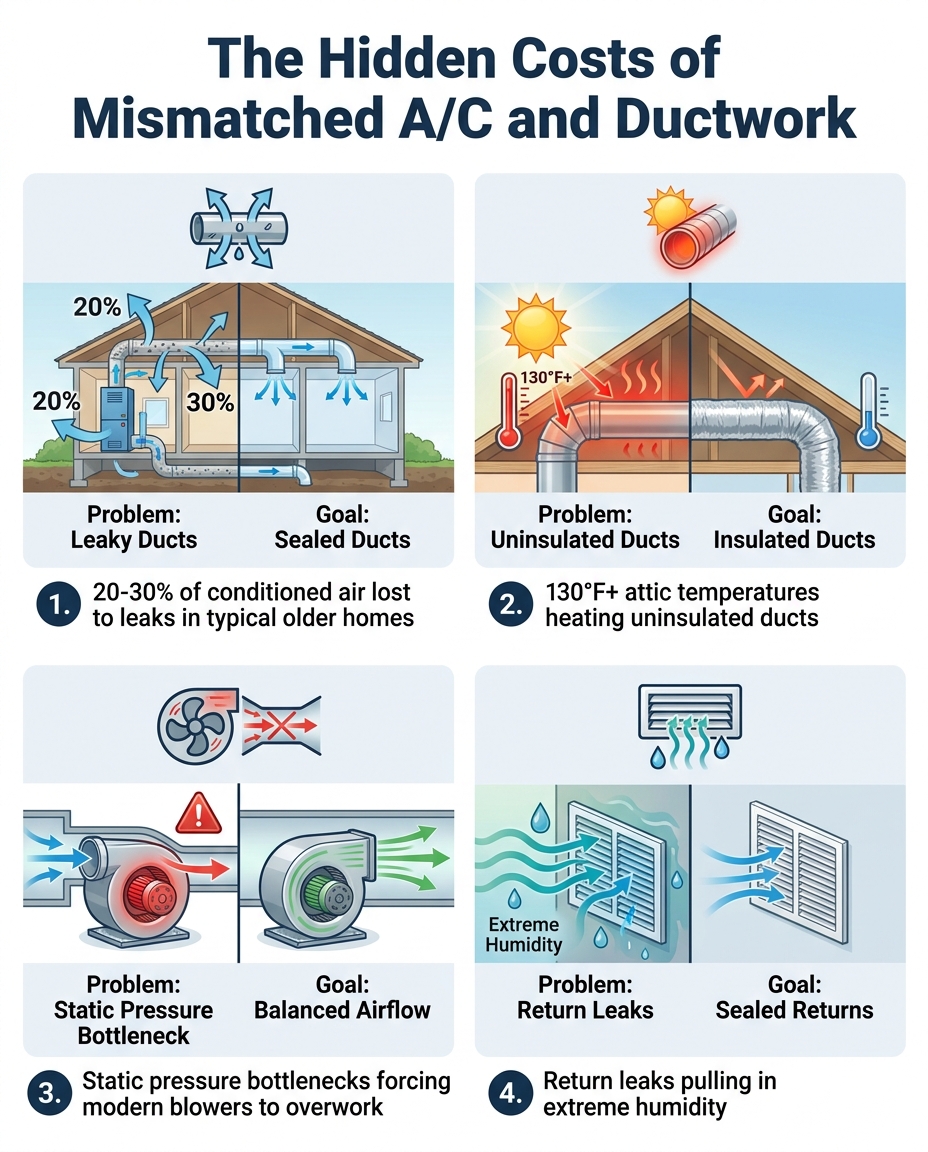
Static pressure is the measurement of resistance to airflow within your duct system. Think of it like blood pressure for your house. Modern variable-speed blowers require very specific static pressure parameters to operate safely. If your vents are too small, crushed, or poorly designed, the resistance skyrockets.
When a new blower encounters high static pressure, the motor has to work overtime just to push air into your rooms. This constant strain causes the motor to overheat, drastically reducing its lifespan and leading to premature, costly breakdowns. You end up paying for high-efficiency performance but receiving a system that constantly struggles against its own infrastructure.
Battling the Attic Oven: Thermal Loss in South Louisiana
The physical condition of your air distribution network is only half the battle. The environment where those materials live plays a massive role in your daily comfort. In our region, ductwork is typically routed through unconditioned spaces like attics or crawlspaces, exposing it to extreme environmental penalties.
During the peak of August late-summer heat and high humidity, Marrero attics can easily exceed 130 to 150 degrees Fahrenheit. This creates a massive thermal load that constantly attacks your cooling system. When cold, conditioned air travels through poorly insulated channels in a sweltering attic, thermal loss occurs. The air warms up significantly before it ever reaches your living room.
The Insulation Gap: Decades ago, building codes required minimal insulation around air channels. Today, modern installations utilize R-8 insulation standards to protect the cold air inside from the extreme heat outside. If you are running a brand-new air conditioner through degraded materials from the 1990s, you are throwing away a large percentage of your cooling power to the attic.
The Return Leak Disaster: Thermal loss is bad, but return leaks are worse. The return side of your system pulls air from inside your home back to the unit to be cooled. If there are holes, cracks, or disconnected joints in the return lines sitting in your attic, the system acts like a vacuum cleaner. It sucks 150-degree, moisture-laden air directly from the attic and forces your new A/C to try and cool it. This completely destroys the unit's ability to dehumidify, leaving your home feeling sticky, damp, and uncomfortable regardless of what the thermostat says.
Side-by-Side Comparison: Upgrading the Unit Alone vs. Full System Replacement
When faced with an aging cooling system, it is crucial to weigh the long-term outcomes of your replacement options. Installing modern technology onto 30-year-old ductwork creates a drastically different living environment than replacing the "lungs" alongside the "heart."
• Cooling Efficiency — Scenario A: New A/C on Old Ductwork: Wasted capacity due to thermal loss in the attic and restricted airflow. — Scenario B: Full System Replacement: Maximum efficiency; conditioned air reaches rooms at the intended temperature.
• Humidity Control — Scenario A: New A/C on Old Ductwork: Poor. Return leaks pull in outside moisture, leaving the house feeling sticky. — Scenario B: Full System Replacement: Optimal. The system correctly cycles indoor air, pulling out maximum moisture.
• Equipment Lifespan — Scenario A: New A/C on Old Ductwork: Shortened. High static pressure forces the new blower motor to overwork constantly. — Scenario B: Full System Replacement: Extended. The unit operates within manufacturer specifications with zero unnecessary strain.
• Indoor Noise Levels — Scenario A: New A/C on Old Ductwork: Loud. Forcing high air volume through undersized vents creates whistling and rushing sounds. — Scenario B: Full System Replacement: Quiet. Properly sized channels allow air to flow smoothly and silently.
• Dust and Allergens — Scenario A: New A/C on Old Ductwork: High. Leaks in unconditioned spaces pull attic dust and fiberglass into the home. — Scenario B: Full System Replacement: Low. A sealed, airtight network keeps environmental contaminants out of your breathing air.

Red Flags: Signs Your Ductwork is Sabotaging Your Comfort
You don't need to be an HVAC technician to spot the warning signs of a failing air distribution network. Your home will usually tell you when the "lungs" are struggling. If you are preparing for an equipment upgrade, look for these actionable symptoms that indicate your current infrastructure is compromised.
• Severe indoor humidity: If your home feels sticky, or you notice condensation on windows, your system is failing to dehumidify. This often happens when attic leaks pull humid outside air directly into the return lines.
• Uneven cooling between rooms: If your master bedroom is freezing but the guest room is sweltering, airflow is not reaching its destination. This points to undersized channels, crushed lines, or major leaks.
• Excessive dust accumulation: If you find yourself dusting furniture just days after a deep clean, your system may be pulling dirt, insulation, and debris from the attic or crawlspace into your living areas.
• Visible damage in unconditioned spaces: Sagging lines, degraded silver tape, rust, or completely disconnected joints in the attic are clear indicators that the network has reached the end of its lifespan.
• Unusual odors when the system kicks on: Musty or stale smells often indicate that moisture has penetrated the insulation, creating an environment for organic growth inside the air channels.
Ignoring these signs can lead to severe comfort issues. A typical pattern we see locally involves homes struggling with August late-summer heat and high humidity. In one recent case, a homeowner noticed their house was extremely hot during the day, with indoor humidity so severe the floors were physically sweating. A professional evaluation revealed a disconnected vent in the attic that was dumping conditioned air into the rafters while pulling unconditioned heat into the house. Once the connection was reattached and properly sealed, the air conditioner cooled the house effectively, even at a higher thermostat setting.
The Whole-Home Evaluation: Protecting Your Investment
When investing in your home's infrastructure, guessing is not a strategy. Swapping a metal box outside and hoping for the best is a gamble that often results in buyer's remorse. This is why a comprehensive system evaluation prior to installation is absolutely critical.
At Cypress Cooling Company, our approach to whole-home comfort ensures you do not waste your efficiency potential on bottlenecked infrastructure. We evaluate the "lungs" of the house right alongside the "heart." By measuring static pressure, inspecting insulation values, and testing for hidden leaks, we can map out exactly how your home breathes. Evaluating the entire configuration prevents future breakdowns and guarantees that your new equipment will actually deliver the comfort you are paying for.
This thorough diagnostic process reassures you that you only pay for necessary upgrades that genuinely improve your daily life. For instance, during a recent summer tune-up on an aging AC unit, a comprehensive evaluation allowed the technician to explain the system's exact operational limits and provide specific suggestions for reconfiguration. This gave the homeowner a clear, confident understanding of their system's needs before they ever committed to a replacement. If you are ready to evaluate your home's true cooling potential, reaching out for professional Marrero AC services is the best first step.
Frequently Asked Questions About Upgrading Your Cooling Infrastructure
Should I replace ductwork when replacing AC?
The short answer is that it depends on the age, condition, and sizing of your current infrastructure. If your network is over 15 to 20 years old, poorly insulated, or undersized for modern high-efficiency blowers, replacing it simultaneously is highly recommended. Attaching a brand-new unit to failing materials will restrict airflow, reduce efficiency, and shorten the lifespan of your new equipment.
Why is my house still humid with a brand new AC?
If you have a new unit but your home still feels sticky, the culprit is often leaky return lines. When the return side of your system has cracks or disconnected joints in the attic, it pulls hot, moisture-laden air directly into the home. Your new air conditioner simply cannot extract moisture fast enough to overcome a constant influx of unconditioned attic air.
Can you reuse old ductwork with a new high-efficiency AC?
You can reuse existing materials only if a professional evaluation confirms they are properly sized, tightly sealed, and adequately insulated to handle modern airflow demands. However, 30-year-old ductwork is rarely equipped to handle the static pressure requirements of today's variable-speed blowers. Reusing severely degraded materials will force your new system to overwork and underperform.
Does old ductwork ruin a new AC unit?
Yes, compromised air channels can absolutely cause premature failure in new equipment. High static pressure from undersized or crushed vents forces the new blower motor to strain constantly to push air through the house. Over time, this extreme resistance causes the motor to overheat and burn out long before it should.
How do I know if my ductwork is undersized for a modern blower?
The most common signs of undersized channels include loud rushing or whistling noises coming from your vents, frequent system cycling, and uneven temperatures throughout the house. A professional technician can definitively diagnose this by measuring the static pressure of your system. If the pressure exceeds the manufacturer's specifications for the new blower, the network must be modified or replaced.
Secure True Whole-Home Comfort with a Complete System Upgrade
Achieving true, lasting comfort in your Marrero home requires more than just a new piece of equipment sitting in the yard; it requires a fully integrated, tightly sealed, and properly sized air distribution system. As the brutal heat of late summer takes its toll on aging systems, now is the time to look at the big picture. Don't let failing infrastructure suffocate your next cooling investment. Secure your peace of mind and schedule a comprehensive evaluation today by exploring your options for professional air conditioning replacement.
OUR CLIENTS HAVE TO SAY ABOUT US



Service areas
Our service areas are designed to meet the diverse needs of our clients. We focus on providing exceptional service and ensuring customer satisfaction in every location we operate.