
Cypress Air Conditioning Advice: Diagnosing Fall Heating Odors
.webp)
Why Your First Fall Heating Cycle Causes Strange Odors
At Cypress Cooling Company, that strange, burning smell coming from the vents is one of the most common homeowner questions answered by our technicians as the weather finally cools down. You turn on the heat for the first time in months, expecting cozy warmth, but instead, the house fills with an alarming odor that smells like burning dust or a damp, musty locker room. This jarring experience often leaves homeowners scrambling to figure out if their system is in danger or if the smell is just a harmless byproduct of the changing seasons.
In our years of serving the Metairie community, we've found that securing comprehensive HVAC services and reliable air conditioning solutions is the best way to ensure a seamless shift between seasons. The core decision you face right now is determining whether that odor is a temporary, harmless occurrence or a sign of microbial growth hiding inside your ductwork.
During the mid-fall heating startup, your system undergoes a drastic internal shift. For months, the internal components have been dedicated to chilling the air and managing high humidity. When the thermostat is finally switched to heating mode, the sudden introduction of high temperatures disrupts the internal environment of the equipment. Dust that has settled peacefully over the summer is suddenly subjected to intense heat, and any residual moisture from the cooling season is rapidly warmed. Understanding how this transition affects your specific equipment is the first step in diagnosing those strange fall heating odors.
Understanding the Mechanics of Your Heat Pump Air Handler
To accurately diagnose the smells coming from your vents, our team typically explains exactly what happens inside a heat pump air handler when the seasons change. Unlike a standard air conditioner that only cools, a heat pump reverses its operation to provide warmth. This means the same internal components that spent the summer dripping with condensation are now responsible for distributing heated air throughout your living space.
The Role of the Indoor Coil
The indoor coil acts as the central focal point for all airflow and temperature exchange in your home. During the summer, warm air from your rooms blows over this cold coil, causing moisture to condense and drip away. Over the course of a long cooling season, this coil remains constantly damp. When fall arrives and the system switches to heating, this exact same coil becomes hot. Any lingering moisture, dust, or organic matter resting on the metallic fins is instantly subjected to a massive temperature swing.
Particulate Accumulation During Inactivity
While the cooling elements work overtime during the summer, the dedicated heating elements—such as auxiliary electric heat strips—sit completely idle. Because air is constantly moving past these dormant components, they act as a magnet for household particulate matter.
• Dust and dirt: Microscopic particles bypass the filter and settle on the metallic surfaces.
• Pet dander: Hair and skin cells accumulate on the heating strips over several months.
• Airborne volatile organic compounds (VOCs): Vapors from cleaning supplies and cooking oils coat the internal mechanics.
Because the physical components inside the unit are highly sensitive to seasonal shifts, this layer of accumulated debris guarantees a noticeable reaction when the heating elements finally ignite. The mechanics of your system dictate that the first heating cycle will almost always produce a distinct smell as the internal environment resets itself for winter.
Dust Burn-Off: A Temporary and Normal Occurrence
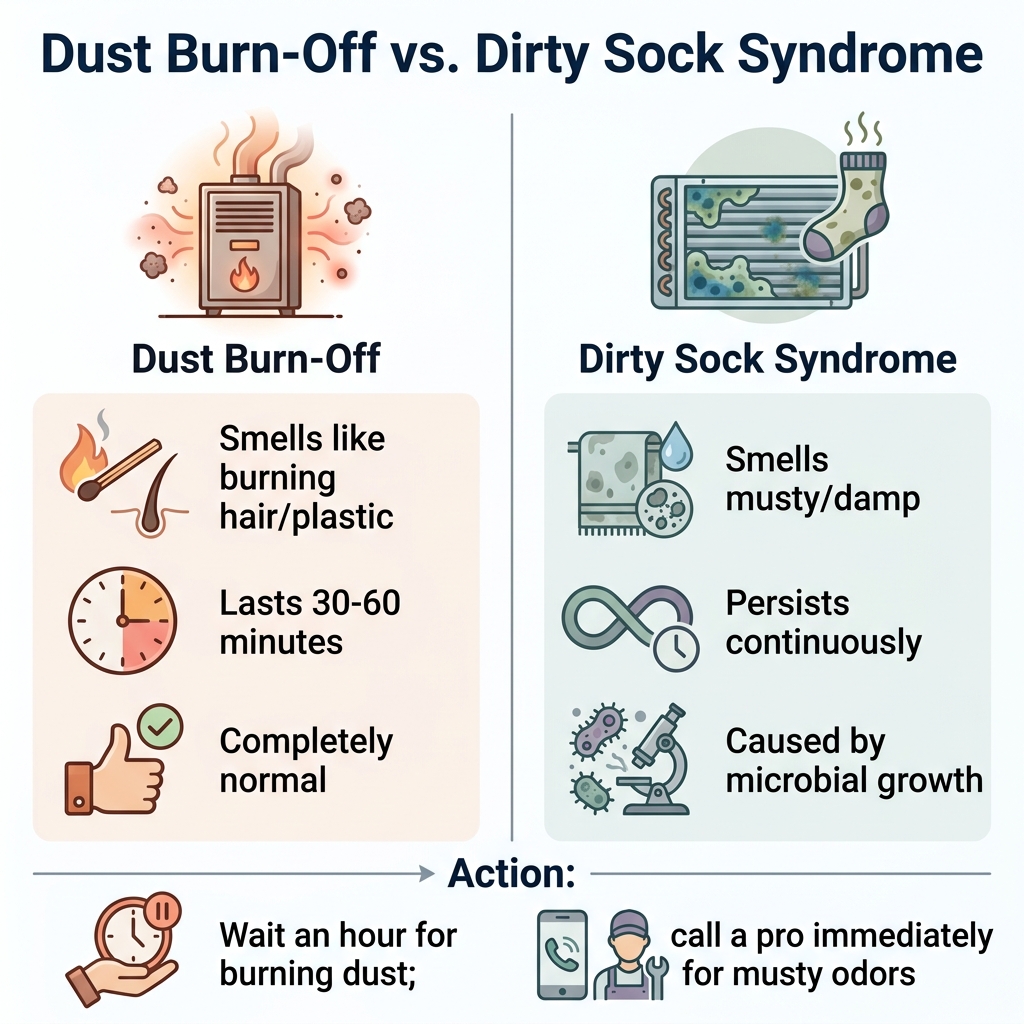
When we field frantic calls about homes smelling like burning hair, toasted dust, or even slightly like hot plastic during the first cold snap, we usually assure homeowners they are likely experiencing dust burn-off. This is a completely normal, harmless event that happens in almost every home. When the electric heat strips or heat exchangers activate for the first time, they quickly incinerate the microscopic layer of dust and dander that accumulated during their summer hibernation.
What to Expect During Dust Burn-Off
The intensity of the smell usually depends on how long the heating elements sat dormant and the overall air quality inside the home during the summer. For most systems, the timeline is very predictable. The burning odor will peak within the first ten minutes of the heating cycle and should entirely dissipate within 30 to 60 minutes. Once the initial layer of debris is cleared, the heating elements will operate without producing any further smells for the rest of the winter.
Proactive Steps for Homeowners:
• Change the air filter: Always install a fresh, high-quality pleated filter before the first heating cycle to prevent new dust from circulating.
• Ventilate the home: Open a few windows for the first hour of operation to let the burnt dust smell escape quickly.
• Monitor the vents: Check to ensure the smell is fading, not growing stronger, as the system runs.
Distinguishing Normal Burn-Off from Emergencies
• Odor Profile — Normal Dust Burn-Off: Toasted dust, singular match strike — Potential Electrical Malfunction: Acrid melting plastic, harsh ozone
• Duration — Normal Dust Burn-Off: Fades completely within 60 minutes — Potential Electrical Malfunction: Persists continuously or worsens over time
• Smoke — Normal Dust Burn-Off: None (invisible odor only) — Potential Electrical Malfunction: Visible haze or light smoke near the vents
• System Function — Normal Dust Burn-Off: Blowing warm air steadily — Potential Electrical Malfunction: System short-cycles or trips the breaker
By understanding these distinct characteristics, you can confidently let your system run its course during that initial start-up, knowing that the temporary inconvenience is simply the equipment doing its job.
Dirty Sock Syndrome: When Summer Humidity Leaves a Mark
While a burning dust smell is harmless, a damp, musty odor that smells like a high school locker room points to a biological issue known as Dirty Sock Syndrome. This occurs when microbial growth takes hold on the indoor evaporator coil. The science behind this phenomenon is directly tied to the heavy workload your system handles during the hotter months.
The Impact of Gulf Coast Climate Factors
In the Gulf Coast region, our team sees how exceptionally high summer humidity levels significantly increase condensate production on AC evaporator coils. The system pulls gallons of water out of your indoor air every single day. This creates an environment inside the dark, enclosed air handler that is constantly damp. When the cooling season ends, this residual moisture provides the perfect breeding ground for biological growth on the delicate aluminum fins of the coil.
When you turn on the heat for the first time, the sudden blast of warm air activates these dormant microbes, instantly circulating a strong, sour odor throughout every room in your house. Unlike dust burn-off, Dirty Sock Syndrome will not fade away after an hour. The smell will return every time the system cycles on, severely impacting your indoor air quality.
Addressing this issue requires professional intervention. Just last fall, our Cypress Cooling Company crew responded to a Metairie homeowner struggling with severe heating odor issues traced back to a faulty, contaminated evaporator coil. A prompt, professional replacement of the coil restored the system efficiently, proving to them that dealing with deep-seated coil issues is not a DIY task. Attempting to scrub the coil yourself can easily bend the fins, restrict airflow, and destroy the equipment.
If your home is plagued by this persistent musty smell, relying on expert Metairie AC services ensures that the biological growth is neutralized safely using specialized, non-corrosive chemical treatments that protect the integrity of your equipment.

Why Heat Pumps Face Unique Transitional Challenges
Not all heating systems react to the seasonal transition in the same way. If your home utilizes a heat pump rather than a traditional gas furnace, we always warn that you face a unique set of mechanical challenges when dealing with fall odors. Heat pumps are incredibly efficient, but their operational design makes them far more susceptible to persistent musty smells.
Operating Temperatures: Gas Furnaces vs. Heat Pumps
A traditional gas furnace utilizes combustion to generate heat. The heat exchanger inside a gas furnace reaches extreme temperatures—often exceeding 400 degrees Fahrenheit. When a gas furnace fires up for the first time in the fall, these extreme temperatures instantly incinerate any dust, debris, or biological matter resting on the components. The burn-off is rapid, intense, and highly effective at sanitizing the internal airflow path.
Heat pumps, on the other hand, do not rely on combustion. They transfer ambient heat from the outside air into your home. As a result, the indoor coil of a heat pump operates at much lower temperatures—typically between 100 and 130 degrees Fahrenheit. While this is plenty warm to heat your home comfortably, it is not nearly hot enough to rapidly burn off debris or neutralize microbial growth.
The Consequence of Lower Temperatures
Because heat pumps cannot "bake" the indoor coil clean, any biological growth left over from the humid summer will simply sit on the warm, damp coil, continuously off-gassing that dirty sock odor into your ductwork. This lower operating temperature is the primary reason why heat pumps require meticulous seasonal maintenance to keep the coils pristine.
Additionally, if a heat pump is struggling to reach the desired temperature due to a dirty coil, it may begin to short-cycle. Monitoring your system's behavior is critical during this time. If you notice strange odors accompanied by erratic behavior, understanding why your AC keeps turning on and off can help you diagnose airflow restrictions before they cause permanent compressor damage.
Deciding When to Wait and When to Call a Professional
When the first cold snap hits and your vents start emitting strange smells, knowing exactly when to take action protects both your equipment and your family's comfort. Our rule of thumb for Metairie homeowners is straightforward: if the smell is a dry, burning dust odor, give the system exactly one hour to clear it out. If the smell is damp, sour, or musty, do not wait—take immediate action.
The Dangers of DIY Interventions
We cannot stress enough the dangers of attempting to clean an evaporator coil yourself. Both ASHRAE standards and EPA guidelines dictate that biological contaminants inside HVAC systems must be handled using specific protocols. Over-the-counter foaming cleaners or harsh household bleaches will quickly corrode the delicate aluminum fins on your coil, leading to massive refrigerant leaks. Furthermore, accessing the coil often involves opening sealed plenums and navigating high-voltage electrical components.
The Value of Professional Diagnostics
A thorough professional inspection goes far beyond just spraying down a dirty coil. A licensed technician from our team will evaluate the entire air handler, check the condensate drain lines for lingering summer blockages, and ensure the electrical heat strips are pulling the correct amperage. In one recent instance during a cold snap, our technicians diagnosed an electrical issue within a complex zoned system that caused a complete failure; we clearly explained the root cause, swiftly repaired the electrical fault, and provided actionable maintenance tips to prevent future breakdowns.
Leveraging local expertise with a deep understanding of high-humidity Gulf Coast cooling challenges ensures that your system is diagnosed accurately. We know exactly how the heavy summer moisture load impacts your specific equipment. By enrolling in a proactive preventative maintenance plan with us, you can ensure your system is professionally cleaned and prepped before the season changes, completely eliminating the surprise of fall heating odors.
Frequently Asked Questions About Fall HVAC Odors
Why does my heater smell like burning dust?
During the long summer months, airborne dust, pet dander, and household debris naturally settle onto the dormant heating elements inside your air handler. When you activate the heat for the first time in the fall, those components heat up rapidly and incinerate the accumulated layer of debris. This rapid combustion creates a temporary smell similar to burning hair or hot dust, which is a completely normal part of the seasonal transition.
How long does the heater smell last?
A normal dust burn-off smell typically lasts between 30 to 60 minutes during the initial heating cycle. Once the fine layer of settled dust is cleared from the heat exchangers or electric strips, the odor will naturally dissipate. If the burning smell persists beyond a few hours, or if it smells strongly of electrical ozone or melting plastic, shut the system down and request a professional inspection from our team immediately.
Is dirty sock syndrome dangerous?
While Dirty Sock Syndrome is generally not considered life-threatening, we regularly warn customers that it severely impacts the overall indoor air quality of your home. The musty odor is caused by active microbial growth on the indoor coil, which means the system is actively blowing biological particulates into your living space. Prolonged exposure to these particulates can easily exacerbate allergies, asthma, and other respiratory sensitivities.
Why does my heat pump smell musty?
Heat pumps are particularly prone to musty odors because they handle both cooling and heating duties. The heavy moisture from summer cooling allows microbial growth to establish itself on the evaporator coil. Because heat pumps operate at lower heating temperatures than traditional gas furnaces, they fail to reach the extreme heat necessary to neutralize and burn off that biological growth during the fall.
Can I clean my evaporator coil myself?
Cleaning an evaporator coil yourself is highly discouraged due to the extreme fragility of the aluminum fins and the complexity of the surrounding electrical components. Improper cleaning techniques can easily crush the fins, severely restricting airflow, or introduce corrosive chemicals that cause permanent refrigerant leaks. Proper sanitization of biological growth requires specific, non-acidic chemical treatments that must be handled by licensed professionals.
Secure Your Comfort for the Changing Seasons
True peace of mind comes from knowing exactly what is circulating in your home's air when the seasons change. While a brief burning dust smell is nothing to fear, persistent musty odors demand immediate attention to protect your indoor air quality and the lifespan of your equipment. If your system is struggling to transition smoothly into the heating season, do not ignore the warning signs. Schedule a professional inspection with Cypress Cooling Company today to ensure your system is clean, safe, and ready to provide reliable comfort all winter long.
OUR CLIENTS HAVE TO SAY ABOUT US



Service areas
Our service areas are designed to meet the diverse needs of our clients. We focus on providing exceptional service and ensuring customer satisfaction in every location we operate.

