
Cypress Air Conditioning: Home Maintenance Tips and Troubleshooting for the Fall Transition
.webp)

The Anxiety of the First Fall Heating Startup
Mastering effective home maintenance tips and troubleshooting becomes an immediate priority when you flip your thermostat to 'heat' for the first time in months, only to have a distinct, unsettling burning smell fill the hallway. At Cypress Cooling Company, our team regularly fields calls every October from panicked Metairie homeowners wondering if something is seriously wrong with their unit or if this is just a normal part of the changing seasons. The transition from heavy summer cooling to initial fall heating is a stressful period for any home comfort system, and the sudden odor of burning dust can trigger instant anxiety.
If you are experiencing strong odors or sudden operational failures, exploring our professional air conditioning services can help you verify that your equipment is functioning safely and efficiently.
Navigating Unpredictable October Weather
In regions with erratic fall climates, October weather is famously unpredictable. In our years servicing the Metairie area, we've seen how common it is for homeowners to run their air conditioners at full capacity during a humid eighty-degree afternoon, only to switch the system over to heating when temperatures drop sharply into the fifties overnight. This rapid back-and-forth operation places unique stress on your HVAC equipment. Components that have been saturated with condensation for half the year are suddenly subjected to high heat, creating a perfect storm for strange smells, odd noises, and unexpected humidity imbalances.
The Core Decision Point: Normal vs. Hazardous
When that initial burning smell hits your vents, you face an immediate decision point: determining whether the odor is a normal seasonal symptom or a legitimate safety risk requiring immediate attention. Shutting the system down out of an abundance of caution is a natural reaction, but it can leave your home uncomfortably chilly. Conversely, ignoring a smell that indicates an electrical fault can lead to severe equipment damage. Understanding the physical mechanics behind your system's operation is the first step in making a safe, informed decision about whether to let the cycle run or call our dispatch team for emergency support.
The Strain of the Seasonal Shift
HVAC systems are mechanical workhorses, but they prefer consistency. The shift from a cooling cycle to a heating cycle changes the internal airflow dynamics, engages different electrical relays, and activates components that have sat completely dormant since the previous winter. This abrupt awakening is exactly why our technicians see the vast majority of system failures and strange symptoms occur right at the seasonal transition. Being prepared for these quirks ensures you are never caught off guard when the weather finally turns cold.
The Science of Dormant Dust: Why Your Heater Smells Like Burning
To understand why your heater smells like a dusty campfire during a mid-fall October heating startup, you have to look at what your system has been doing for the past six months. Throughout the long, hot summer, your air conditioner's blower motor has been running almost constantly. As it circulates air through your home, it continuously pulls in microscopic airborne debris.
The Accumulation Phase: Summer's Leftovers
Even if you are diligent about changing your air filters, some particulate matter inevitably slips through. This debris consists of pet dander, dead skin cells, fabric fibers from carpets and furniture, and microscopic cooking grease. Because the heating components—whether they are gas-fired heat exchangers or electric resistance heat strips—are completely inactive during the summer, they act as passive landing pads. Over hundreds of hours of summer operation, a fine, invisible layer of biological particulate matter and dust settles directly onto these cold heating elements.
The Physical Burn-Off Process
When you finally switch your thermostat to heat, those dormant elements rapidly rise in temperature, often exceeding 400 degrees Fahrenheit within seconds. The accumulated layer of summer dust has nowhere to go. It is instantly incinerated by the heat exchanger or electric strips. The blower fan then pushes the resulting smoky, earthy-smelling air directly through your ductwork and into your living spaces. What you are smelling is not the heater itself breaking down, but rather the rapid oxidation of months' worth of settled household dust.
The 15 to 30-Minute Standard Metric
The timeframe is your most reliable diagnostic tool:
• 0 to 10 minutes: The smell will be at its absolute strongest as the bulk of the dust is incinerated.
• 10 to 20 minutes: The odor should noticeably begin to fade as the heating elements burn clean.
• 20 to 30 minutes: The smell should dissipate entirely, leaving only warm, neutral-smelling air circulating through the home.
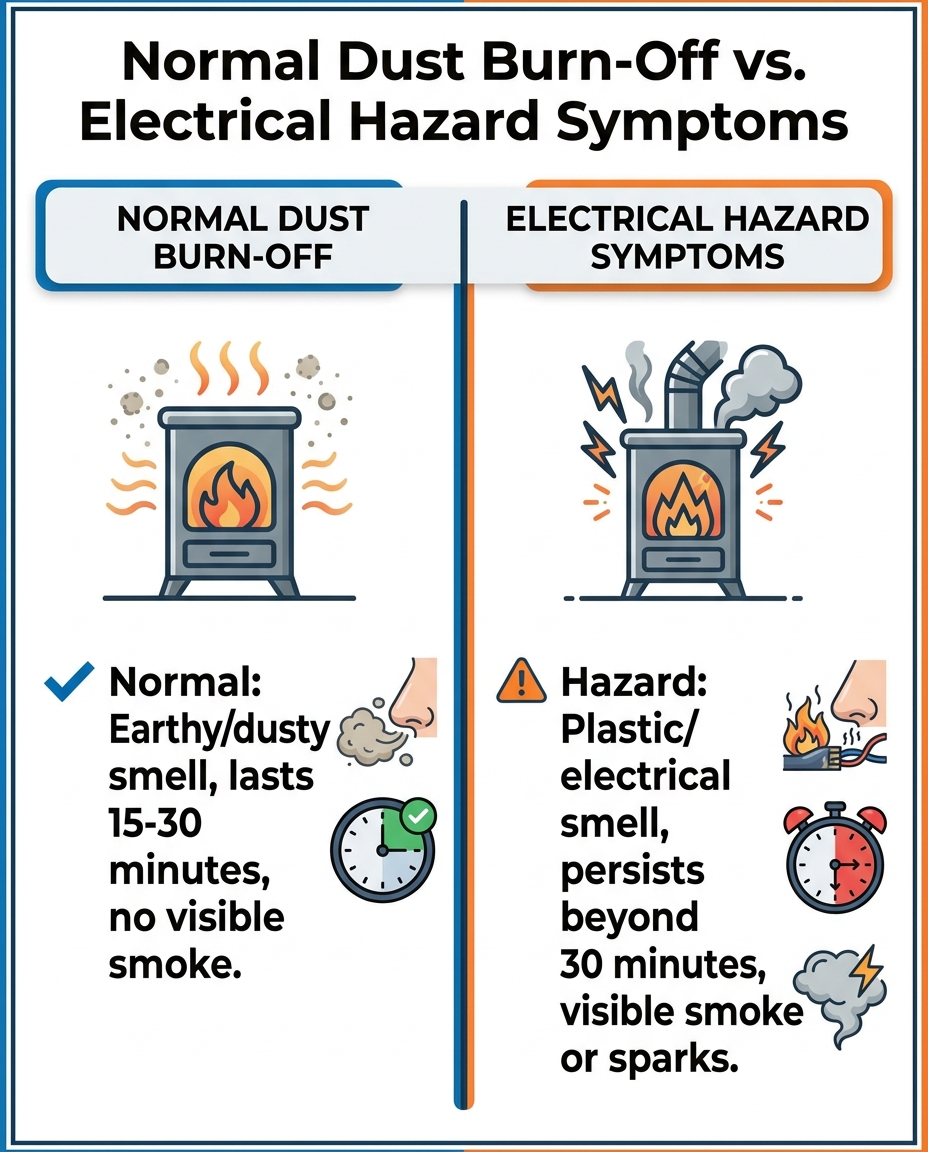
If the odor fades within this standard 15 to 30-minute window, you are experiencing a perfectly normal, predictable part of the mid-fall heating startup. The system is simply cleaning itself off for the winter season.
Normal Odors vs. Electrical Hazards: A Go/No-Go Decision Framework
While burning dust is harmless, not all heating odors are benign. Knowing how to differentiate between standard seasonal burn-off and a dangerous electrical fault is critical for your safety. In our experience working throughout the Metairie and Gulf Coast area, we see firsthand how systems endure heavy wear-and-tear from extreme summer heat. Electrical components like capacitors, relays, and blower motors can degrade, making transition-season failures a distinct possibility.
Sensory Clues: Earthy vs. Acrid Odors
The smell of burning dust is generally described as earthy, slightly musty, or similar to a warm hair dryer. It is unpleasant but not sharp. In contrast, an electrical hazard produces a highly distinct, acrid odor. If you smell melting plastic, burning rubber, or the sharp, metallic tang of electrical ozone, you are not dealing with dust. These odors indicate that wire insulation is melting or that a motor is actively overheating and drawing too much amperage.
The Go/No-Go Decision Matrix
• Earthy, dusty smell from vents — Type of Odor: Warm dust, hair dryer — Duration: Fades within 30 minutes — Required Action (Go / No-Go): GO: Normal operation, allow cycle to finish.
• Musty, slightly damp smell — Type of Odor: Stale air, wet socks — Duration: Persists during operation — Required Action (Go / No-Go): GO: Safe, but requires coil cleaning soon.
• Sharp, melting plastic smell — Type of Odor: Acrid, electrical ozone — Duration: Gets stronger over time — Required Action (Go / No-Go): NO-GO: Shut down immediately at thermostat.
• Visible smoke or sparking — Type of Odor: Heavy smoke, burning rubber — Duration: Immediate — Required Action (Go / No-Go): NO-GO: Shut down, cut breaker, call professional.
The Strict Rule Against DIY Electrical Work
If your system triggers a "No-Go" scenario, you must turn the unit off at the thermostat immediately. Do not attempt to open the furnace cabinet, reset electrical breakers repeatedly, or probe the wiring yourself. Modern HVAC systems utilize high-voltage connections and complex circuit boards that pose a severe shock hazard. DIY electrical troubleshooting is highly dangerous and can easily void your equipment's warranty. Instead, rely on our local experts at Cypress Cooling Company. We offer same-day dispatch guarantees during peak transitions, ensuring that potential fire or electrical hazards are addressed rapidly by licensed professionals.

Why Humidity Control Struggles During the October Transition
Beyond unusual odors, the fall transition introduces a secondary, highly frustrating problem: a sudden loss of indoor humidity control. The Gulf Coast is notorious for its high dew points, which require robust, continuous moisture management even when the actual demand for cooling begins to drop in the fall.
The Mechanics of Fall Short-Cycling
During the peak of summer, your air conditioner runs in long, sustained cycles. These extended run times allow the indoor evaporator coil to extract massive amounts of moisture from the air. However, October weather often brings high daytime humidity coupled with mild temperatures. Because the house doesn't get excessively hot, the thermostat reaches its target temperature very quickly. The AC turns on, runs for five minutes, satisfies the thermostat, and shuts off. This is known as short-cycling. Because the system isn't running long enough to properly dehumidify the air, the home quickly becomes a damp, uncomfortable environment.
Physical Symptoms in the Home
When short-cycling takes over, the physical symptoms in your living space become obvious. You may notice sweating hardwood floors, clammy bedsheets, and condensation forming on the inside of your windows. We frequently see older homes struggling with these airflow and humidity imbalances, as they often lack the tight thermal envelopes of modern construction, allowing heavy outdoor moisture to seep inside effortlessly.
The erratic nature of transition weather can also push stressed systems to the breaking point. The constant starting and stopping places immense strain on capacitors and compressors. Our technicians recently helped a local homeowner who experienced a sudden AC failure on an early Sunday morning during just such a volatile weather shift. Fortunately, our team responded promptly, arriving on-site within an hour to diagnose the underlying short-cycling stress, and we had the system functioning smoothly again in no time.
Restoring Balance with Professional Solutions
When your HVAC equipment cannot run long enough to dehumidify naturally, relying strictly on temperature control is a losing battle. Integrating professional indoor air quality solutions, such as whole-home dehumidifiers or variable-speed air handlers, allows you to stabilize the home's environment. These systems can extract moisture independently of the cooling cycle, keeping your Gulf Coast home crisp and comfortable regardless of how erratic the October weather becomes.
The Impact of Lingering Summer Condensation on Heating Startup
While northern climates generally experience a clean, dry break between cooling and heating seasons, southern environments face a messy overlap. Six or more months of heavy, continuous summer cooling leaves a significant amount of lingering condensation inside your system's ductwork, drain pans, and evaporator coils.
When Moisture Meets Heat
When you initiate your first heating cycle, this trapped moisture interacts directly with the newly activated heat. As the warm air blows over the damp evaporator coil and through the slightly humid ductwork, it can create a distinct, musty odor that mixes with the burning dust smell. This combination is often referred to as "dirty sock syndrome." It occurs because the sudden blast of heat rapidly evaporates the lingering summer moisture, carrying the scent of harmless, dormant coil bacteria into your living space.
The Threat of Frozen Coils in Fall
Counterintuitively, the fall transition is also a prime time for evaporator coils to freeze. If you switch back to cooling on an unseasonably warm afternoon, but your air filter is clogged with summer debris, the system will lack the necessary airflow to keep the coil warm. The lingering moisture on the coil drops below freezing, turning into a block of solid ice. If you suspect your system is struggling to breathe, understanding the basics of diagnosing a frozen evaporator coil can help you identify the problem before the ice expands and damages the surrounding components.
Airflow Management and Mold Prevention
Proper airflow management is your best defense against moisture-related issues during the transition weeks. Ensuring that all return vents are unblocked, replacing your air filter before switching to heat, and having your condensate drain line flushed will prevent standing water from becoming a breeding ground for mold. When the system can breathe freely, it dries out faster, eliminating musty odors and ensuring a much smoother transition into the winter months.
Proactive Fall Maintenance: When to Call a Professional
Basic troubleshooting—like changing your filter, observing the 30-minute burn-off rule, and monitoring your thermostat—can solve many minor transition issues. However, there is a distinct line where DIY observation must give way to professional intervention. When symptoms persist, or when the system simply refuses to stabilize, bringing in an expert is the only way to protect your investment.
Signs Basic Troubleshooting Isn't Enough
You should call our team immediately if your system exhibits any of the following persistent signs:
• Repeated breaker trips: If the HVAC system trips your electrical panel more than once, there is a hard ground or failing motor.
• Continuous short-cycling: If the unit turns on and off every three minutes regardless of the thermostat setting.
• Complete lack of airflow: If you hear the system running but feel no air coming from the vents.
• Persistent odors: If the burning smell or musty odor lasts for days instead of minutes.
Complex issues require a trained eye. When transition problems drag on, the frustration can mount quickly. We recently worked with a local resident dealing with ongoing AC problems that hadn't been resolved after multiple previous attempts. Once our experienced team at Cypress Cooling Company was called in, we accurately diagnosed the underlying airflow and transition issues, did everything required to correct the mechanical faults, and successfully repaired the system on the exact same day.
The Value of Comprehensive Pre-Winter Inspections
The most effective way to eliminate the anxiety of the fall transition is to stop problems before they start. A comprehensive pre-winter inspection allows a technician to clean the dormant dust off the heating elements safely, test all electrical relays, clear the summer condensation from the drain lines, and verify that the system is fully prepared for cold weather. Relying on our trusted Metairie AC services ensures that your equipment is evaluated by technicians who truly understand the specific demands of the local climate.
By scheduling a proactive tune-up, you shift from reacting to strange smells to enjoying reliable comfort. Taking advantage of our professional preventative maintenance plan guarantees that your system will transition smoothly, operate safely, and keep your home perfectly balanced all winter long.
Frequently Asked Questions
Why does my heater smell like burning dust when I turn it on?
Your heater smells like burning dust because microscopic airborne particles settle on the dormant heating elements throughout the summer. When you turn the heat on for the first time in the fall, those elements get extremely hot and instantly incinerate the accumulated debris. This harmless process pushes a temporary, earthy-smelling smoke through your ductwork.
How long should a heater smell when first turned on for the winter?
The standard burn-off period for a heater is typically between 15 and 30 minutes. During the first ten minutes, the odor will be at its peak, and it should steadily dissipate as the cycle continues. If the smell remains strong after half an hour, it may indicate a deeper issue requiring professional attention.
Is it safe to run the heater if it smells like it's burning?
It is safe to run the heater if the smell is strictly earthy or dusty and fades within 30 minutes. However, if the odor smells like melting plastic, burning rubber, or electrical ozone, it is not safe. You should shut the system down immediately at the thermostat to prevent potential electrical fires or equipment damage.
Why is my house so humid when the heat is on?
High indoor humidity during the fall often results from the HVAC system short-cycling in mild weather. Because the home reaches its target temperature quickly, the unit shuts off before it has time to extract moisture from the air. Additionally, lingering summer condensation inside the ductwork can be evaporated by the new heat, temporarily raising indoor humidity levels.
What are the signs of an electrical hazard in my HVAC system?
The most obvious signs of an electrical hazard include a sharp, acrid smell of melting plastic, visible smoke or sparks coming from the vents or equipment cabinet, and the system repeatedly tripping your home's circuit breaker. You may also hear loud buzzing or humming noises from the outdoor unit or indoor air handler that indicate a failing motor or relay.
How does Gulf Coast humidity affect fall heating transitions?
Gulf Coast humidity drastically complicates the transition because systems are forced to manage heavy moisture loads even when cooling demand drops. The lingering condensation left over from months of intense summer cooling interacts with dormant heating elements, often causing musty odors and increasing the risk of frozen evaporator coils if airflow is restricted.
Understanding the difference between normal startup symptoms and actual hazards gives you the confidence to navigate the seasonal shift safely. By mastering these home maintenance tips and troubleshooting strategies, you can make a clear, informed decision on when to let your system run and when to call our professionals, ensuring your home remains comfortable and secure all season long.
OUR CLIENTS HAVE TO SAY ABOUT US



Service areas
Our service areas are designed to meet the diverse needs of our clients. We focus on providing exceptional service and ensuring customer satisfaction in every location we operate.

