Heat Pump vs. Gas Furnace: The October Heating Decision Guide for Metairie Homes


The Truth About Heating Your Home in South Louisiana
At Cypress Cooling Company, a common misconception we encounter when reviewing options comparisons for homeowners is that every southern property requires a heavy-duty, traditional furnace to stay comfortable through the short winter months. Because national heating advice is heavily skewed toward northern climates that experience deep freezes and extended blizzards, many homeowners assume they need the maximum heating power available. In reality, our team regularly sees that oversized heating equipment does not do you any favors when the local climate rarely drops below freezing. Installing a system with too much capacity often leads to short-cycling, where the unit turns on and off rapidly, never running long enough to properly condition the air or remove excess moisture.
The core decision you face during an October pre-winter heating replacement comes down to balancing the year-round efficiency of a modern heat pump against the traditional, instant heating power of a gas furnace. Both systems have distinct operational mechanics, and understanding how they interact with high humidity and mild temperatures is critical. You are not just buying a box that blows hot air; you are investing in a comprehensive climate control strategy that will dictate your indoor comfort and energy consumption for the next ten to fifteen years.
Making an informed choice before the first significant cold snap hits allows you to evaluate your home's existing infrastructure without the pressure of an emergency breakdown. Whether you are leaning toward the electrical efficiency of a heat pump or the robust output of a gas unit, securing reliable heating services ensures the installation matches your home's precise thermal requirements. The right system for your neighbor might not be the right system for you, which is why a detailed, technical evaluation of your specific ductwork, electrical panel, and insulation levels is the necessary first step we take on every job.
Evaluating Your Aging System During Fall Maintenance
October is the ideal time to assess the true condition of an older unit. A comprehensive fall inspection frequently reveals severe wear and tear that accumulated during the grueling summer months. When an air conditioner runs nearly nonstop from May through September, the internal components endure thousands of hours of thermal stress, vibration, and electrical load. By the time autumn arrives, a system that seemed fine in the spring might be operating on borrowed time.
Checking the drain lines and coils: One of the most critical aspects of fall maintenance is evaluating the indoor evaporator coil and the condensate drain system. Throughout a humid summer, these components extract gallons of moisture from your indoor air. This dark, damp environment is a prime breeding ground for biological growth. If our technicians find significant buildup or corrosion on the coils during an October checkup, the system's efficiency has likely plummeted, and the metal itself may be compromised.
Monitoring performance degradation: One local homeowner scheduled a seasonal tune-up with us for an older unit this past summer. Our technician performed a detailed tune-up, explained the system's performance readings, and shared specific usage tips to maximize the unit's remaining lifespan. When those performance readings—such as refrigerant pressure, compressor amp draw, and temperature drop across the coil—start failing consistently, it signals that the equipment is reaching the end of its useful life.
Identifying end-of-life symptoms: You can spot the warning signs before a total failure occurs. If your system requires frequent refrigerant top-offs, the compressor makes a harsh grinding noise upon startup, or the blower motor struggles to push air through the vents, a simple repair is no longer the most cost-effective path. Transitioning from reactive repairs to a proactive replacement strategy is much easier when you are already enrolled in a preventative maintenance plan that tracks your equipment's health year over year.
How Metairie's Mild Winters Change the Heating Math
The standard cold-weather heating advice broadcast across the country simply does not apply to South Louisiana. When evaluating heating systems, the primary factor that dictates efficiency is the outdoor ambient temperature. In northern states, where winter temperatures routinely plunge below zero, traditional air-source heat pumps can struggle because there is very little ambient heat left in the outside air to extract and transfer indoors. In those regions, a gas furnace is often the default recommendation.
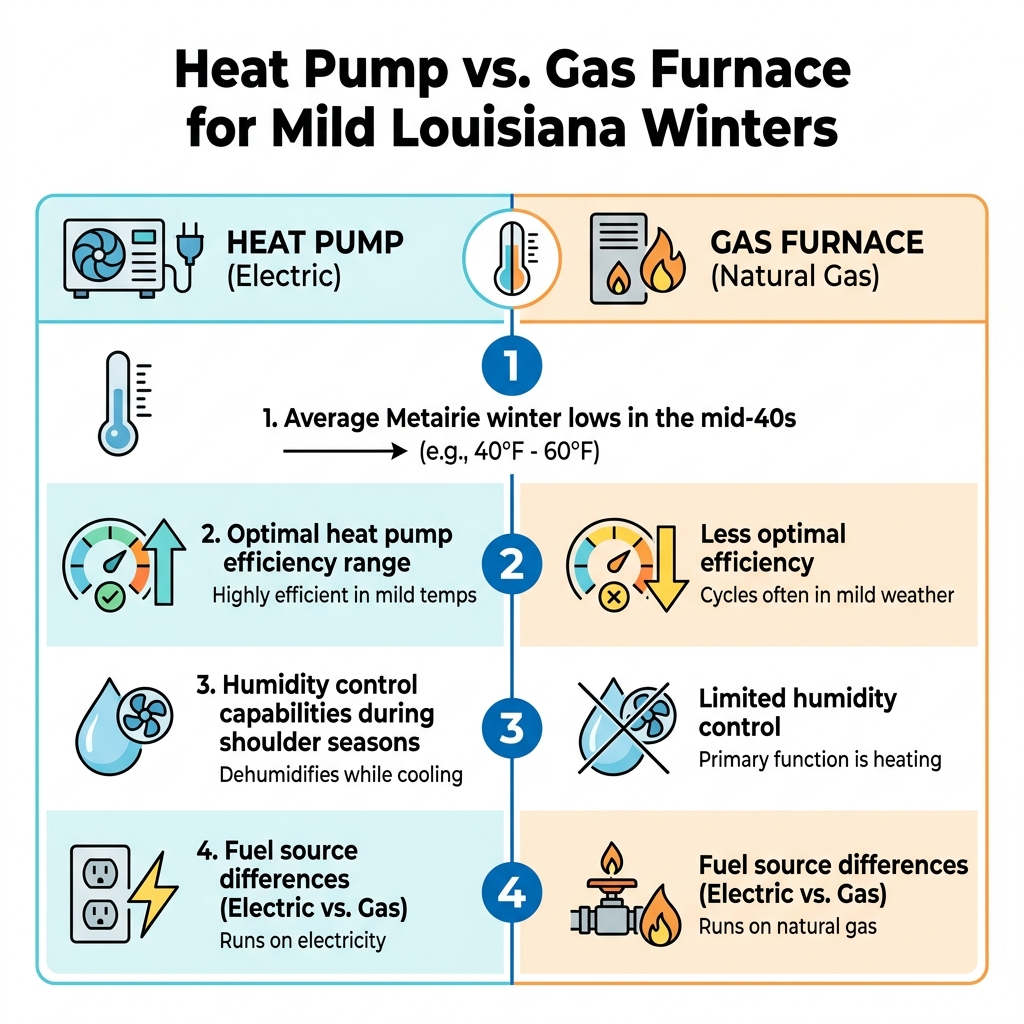
However, Metairie, Louisiana, presents a completely different thermal environment. Metairie's average winter lows typically hover in the mid-40s. This temperature range is incredibly significant from an engineering standpoint. Standard air-source heat pumps operate at their absolute peak efficiency when outdoor temperatures are between 40 and 60 degrees Fahrenheit. At these temperatures, the system can extract heat from the outside air with minimal electrical effort, providing exceptional warmth without the need for combustion.
Because the mid-40s average lows make this region the ideal environment for heat pump efficiency, the traditional furnace versus heat pump debate is completely altered. A heat pump operating in a mild climate can produce three to four times more energy in the form of heat than it consumes in electricity. This high coefficient of performance (COP) means that for every unit of electrical energy you pay for, you receive multiple units of heating energy in return. In our years of serving this community, we've seen firsthand that relying on advice meant for a home in Michigan or New York will lead you to over-invest in combustion technology that you simply do not need to stay comfortable during a mild southern winter.
The Case for Heat Pumps: Humidity Control and Efficiency
Modern heat pumps offer distinct advantages that are uniquely suited to the local climate, particularly during the unpredictable shoulder seasons of October and November. Rather than generating heat through the combustion of fossil fuels or the extreme resistance of electrical heating elements, heat pumps use refrigerant to absorb and move heat from one place to another. This fundamental difference in operation is what makes them so efficient.
When considering heat pump systems, it is helpful to understand the specific mechanical benefits they bring to a southern home:
1. Efficient Heat Transfer Mechanics: In the winter, the system reverses its flow of refrigerant. It absorbs the latent heat present in the mild 40-degree outdoor air, compresses the refrigerant to increase its temperature, and transfers that concentrated heat inside to your living space. Because moving heat requires significantly less energy than creating it, the electrical consumption remains remarkably low.
2. Seamless Dual-Functionality: A heat pump is essentially an air conditioner equipped with a reversing valve. This means a single piece of equipment handles both your summer cooling and your winter heating. You do not have to maintain a separate air conditioning condenser and a separate indoor gas furnace. Consolidating your climate control into one streamlined system reduces long-term maintenance complexity.
3. Superior Shoulder-Season Dehumidification: October and November often bring days that are not quite cold enough for heavy heating, but remain uncomfortably humid. Modern, variable-speed heat pumps excel in these conditions. They can run at lower capacities for longer periods, which allows the indoor coil to extract maximum moisture from the air without over-cooling or over-heating the house. This precise humidity management prevents the home from feeling clammy, which is a common complaint with older, single-stage HVAC systems.
4. Elimination of Combustion Risks: Because heat pumps rely entirely on electricity, there is no risk of carbon monoxide leaks, no need for exhaust flues penetrating your roof, and no requirement for natural gas lines running through the attic or crawlspace.
When Does a Traditional Gas Furnace Make Sense?
Despite the overwhelming efficiency advantages of heat pumps in mild climates, there are still specific scenarios where a traditional gas furnace remains the most logical choice for a homeowner. Providing a balanced, neutral look at both technologies requires acknowledging the practical limitations of retrofitting existing homes.
When our team evaluates older properties across Metairie, the most common reason we recommend sticking with a gas furnace is the home's existing infrastructure. If your property was built with gas heating in mind, you already have the necessary gas lines, exhaust venting, and safety mechanisms in place. Transitioning to a heat pump often requires a high-amp electrical upgrade. Older homes may only have a 100-amp electrical panel, whereas a modern heat pump—especially one equipped with auxiliary electric heat strips for emergencies—often requires a 200-amp service panel to operate safely. The cost of upgrading the electrical panel can sometimes outweigh the long-term energy savings of the heat pump.
Additionally, there is a distinct difference in the quality of the heat delivered. A gas furnace combusts fuel to create intense heat, resulting in supply air temperatures that can reach 120 to 140 degrees Fahrenheit at the register. This provides a very fast, intensely warm blast of air that many homeowners prefer. A heat pump, by contrast, delivers air that is typically between 90 and 100 degrees Fahrenheit. While this is plenty warm enough to heat a room to a comfortable 72 degrees, the air coming out of the vent can feel relatively cool to the touch compared to a furnace. Personal preference for that instant, aggressive heat often drives the decision to stay with gas.
Side-by-Side: Heat Pump vs. Gas Furnace in Mild Climates
To clarify the differences, here is a technical breakdown of how the two systems compare when operating in a southern climate:
• Upfront Installation Requirements — Air-Source Heat Pump: May require 200-amp electrical panel upgrade; no gas lines or exhaust flues needed. — Traditional Gas Furnace: Requires active natural gas line, proper exhaust venting, and carbon monoxide safeguards.
• Efficiency in 40-Degree Weather — Air-Source Heat Pump: Exceptionally high (often 300%+ efficient) because it transfers abundant ambient heat. — Traditional Gas Furnace: Standard efficiency (typically 80% to 95% efficient) based on fuel combustion ratings.
• Heat Delivery Temperature — Air-Source Heat Pump: Gradual, steady heat delivery (supply air typically 90°F - 100°F). — Traditional Gas Furnace: Rapid, intense heat delivery (supply air typically 120°F - 140°F).
• Lifespan in High-Humidity Zones — Air-Source Heat Pump: 10 to 15 years; the outdoor unit works year-round for both heating and cooling. — Traditional Gas Furnace: 15 to 20 years; the furnace only operates during the short winter season, reducing wear.
• Maintenance Needs — Air-Source Heat Pump: Requires bi-annual maintenance (spring and fall) since it operates continuously all year. — Traditional Gas Furnace: Requires annual fall maintenance to check heat exchangers, burners, and gas connections.

Installation Considerations and Energy Incentives
Transitioning from intense summer cooling to a newly installed mild heating system involves several technical considerations. The ductwork that successfully pushed cold, dense air through your home in July might need adjustments to properly distribute the warmer, lighter air generated by a new heating system. Our professional installation team at Cypress Cooling Company will perform a detailed load calculation to ensure the new equipment is perfectly sized for the square footage, window layout, and insulation values of your home.
When planning an October pre-winter heating replacement in Metairie, Louisiana, you should also factor in potential financial incentives that can offset the initial installation costs. Modern, high-efficiency heating equipment often qualifies for various incentive programs designed to reduce energy consumption. Federal tax credits and generic energy rebates may apply to qualifying heat pump installations, depending on the specific seasonal energy efficiency ratio (SEER2) and heating seasonal performance factor (HSPF2) ratings of the equipment.
Because utility incentive programs and tax regulations frequently change, it is crucial to consult with a local professional who understands the current landscape of available rebates. An experienced technician can guide you toward equipment that not only meets your comfort needs but also maximizes your eligibility for these programs. Working with knowledgeable Metairie HVAC technicians ensures that the system is installed strictly according to manufacturer specifications, which is a common requirement for claiming any energy-related financial incentives.
Protecting Your Investment: Post-Installation Support
Selecting the right equipment is only half the battle; the long-term success of your new heating system depends heavily on the quality of the post-installation support. Having a reliable service partner matters just as much as the brand or model of the equipment you choose. A high-end heat pump or a top-tier gas furnace will still underperform if it is not properly maintained or if minor calibration issues are ignored during the first few months of operation.
Creating a preventative maintenance game plan for newly installed systems is the best way to protect your investment. This involves scheduling routine checkups to verify that the refrigerant charge remains accurate, the electrical connections are tight, and the airflow is unobstructed. During a recent holiday weekend, one of our customers experienced an unexpected AC capacitor failure. Our responding technician quickly diagnosed the blown capacitor, replaced it, and immediately performed preventive maintenance to prevent a recurrence. That level of responsiveness and forward-thinking care is exactly what we provide to ensure your system survives the transition between seasons.
Peace of mind comes from knowing that if your system struggles during its first cold startup, help is readily available. The Cypress AC Guarantee and 24/7 emergency repair availability serve as critical safety nets for whichever system you ultimately choose. Knowing how long AC units typically last in South Louisiana reinforces the importance of this ongoing relationship. A company that stands behind its installations with robust guarantees ensures that your home remains comfortable, safe, and energy-efficient for the entire lifespan of the equipment.
Frequently Asked Questions About Metairie Heating Replacements
Is a heat pump better than a furnace in Louisiana?
For most homes in southern Louisiana, a heat pump is highly advantageous due to the mild winter climate. Because average winter temperatures rarely drop below freezing, heat pumps can operate at peak electrical efficiency, transferring ambient heat indoors rather than burning fuel. However, homes already equipped with extensive gas lines and older electrical panels might still find a gas furnace to be a more practical replacement option.
At what temperature does a heat pump become inefficient?
Standard air-source heat pumps typically begin to lose efficiency when outdoor temperatures drop below 25 to 30 degrees Fahrenheit. At these lower temperatures, there is less ambient heat available in the air to extract, forcing the system to rely on supplemental electric resistance heat strips. Fortunately, since local winter lows usually hover in the 40s, heat pumps in this region rarely hit this inefficiency threshold.
Do I need a gas furnace in the South?
You do not strictly need a gas furnace in the South, as heat pumps are more than capable of handling the region's mild heating demands. A gas furnace is usually only recommended if you strongly prefer the intense, rapid heat it provides, or if your home's existing infrastructure makes transitioning to an electric heat pump cost-prohibitive due to required electrical panel upgrades.
Does a heat pump dehumidify better than an AC?
A variable-speed heat pump can offer superior dehumidification compared to a standard, single-stage air conditioner. Because a heat pump can run at lower speeds for longer cycles during the mild shoulder seasons, it has more time to pull moisture out of the indoor air without overcooling the home, resulting in a much more comfortable indoor environment.
What are the pros and cons of replacing a furnace with a heat pump?
The primary pros include significantly higher energy efficiency during mild winters, the convenience of having a single system for both heating and cooling, and the elimination of carbon monoxide risks. The main cons are the potential need for an expensive electrical panel upgrade to handle the increased amperage, and the fact that the heat delivered at the vent feels cooler than the blast of air from a gas furnace.
How does an October pre-season checkup prepare my system for winter?
An October checkup allows a technician to identify and resolve any lingering damage caused by the heavy summer cooling season before the equipment is switched over to heating mode. The technician will clean the coils, check the reversing valve on heat pumps, inspect the heat exchanger on gas furnaces, and ensure the system is calibrated to handle the upcoming temperature drop safely and efficiently.
Make an Informed Decision for Your Louisiana Home
Choosing between a heat pump and a gas furnace requires a careful evaluation of your home's existing infrastructure, your electrical capacity, and your desire for optimal humidity control during the mild shoulder seasons. While heat pumps offer unmatched efficiency and excellent dehumidification for our specific climate, traditional gas furnaces still hold value for homes already piped for natural gas that prefer rapid, intense heat delivery.
Ultimately, a clear, technical comparison tailored to mild winters is the key to making an informed choice that will serve your household for the next decade. If your current equipment is showing signs of failure, do not wait for a breakdown in the middle of a cold snap. Reach out to our team at Cypress Cooling Company to review your options, verify any applicable generic tax credits, and secure a reliable heating solution that perfectly matches your home's thermal requirements.
OUR CLIENTS HAVE TO SAY ABOUT US



Service areas
Our service areas are designed to meet the diverse needs of our clients. We focus on providing exceptional service and ensuring customer satisfaction in every location we operate.