
Why Does My Heater Smell Like Burning Dust? Cypress Air Conditioning Answers Your Fall FAQs
.webp)
Is That Burning Smell Normal During the First Fall Heating Cycle?
You finally switch your thermostat to heat during the October first cold snap, only to be hit with a strong burning odor—prompting one of the most common homeowner questions answered by our dispatchers every fall. That sudden, acrid smell pumping through your vents is enough to make anyone panic and run for the fire extinguisher. However, before you assume the worst, it is important to know that this is a highly predictable, heavily documented seasonal event. As the team at Cypress Cooling Company, we hear the concern in our customers' voices every year, but after months of relying solely on your cooling equipment, the transition to heating always produces some initial odors as the system wakes up from its long hibernation.
The critical decision you face in that moment is determining if the smell is a harmless seasonal occurrence or a dangerous electrical issue that requires immediate intervention. For the vast majority of Metairie homes we service, this temporary burning odor is a completely normal part of the shift in weather. While you might be entirely focused on our top-tier air conditioning services during the sweltering summer months, the arrival of fall requires a different kind of attention to keep your home safe, efficient, and comfortable. Understanding exactly what our technicians see happening inside your ductwork and heating chambers can give you the peace of mind you need to comfortably transition your home into the colder months.
The Mechanics of Dust Burn-Off After Months of Cooling
To understand why your furnace smells like it is burning on the first chilly morning, you have to look at what our team sees firsthand inside your HVAC system during the long, six-to-eight-month continuous cooling season. While your air conditioner is running non-stop to battle the summer heat, the heating components—specifically the heat exchanger and the burner assemblies—sit completely inactive in the dark.
What Accumulates on the Heat Exchanger?
Over those long months of inactivity, a surprising amount of debris makes its way into your dormant heating chamber. Every time your blower motor pushes cold air through the house, it also circulates microscopic household particulates. On our routine maintenance calls, we commonly find:
• Pet dander and hair: Microscopic skin cells and fur from dogs and cats easily bypass standard fiberglass filters.
• Airborne dust and lint: Fibers from clothing, carpets, and furniture constantly circulate through the return vents.
• Cooking oils and aerosols: Vaporized particles from the kitchen eventually settle inside the ductwork and on metal components.
• Dead skin cells: A major component of household dust that naturally accumulates on stationary surfaces.
Because the heat exchanger remains cold all summer, these particles build up, forming a thin, invisible blanket over the internal heating elements. The longer our Metairie cooling season lasts, the thicker this layer of settling dust becomes.
The Incineration Process Explained
When the first cold front finally arrives and you adjust your thermostat to call for heat, those dormant metal components heat up incredibly rapidly, often reaching temperatures well over 140 degrees Fahrenheit in a matter of minutes. This sudden, intense temperature spike instantly vaporizes the settled dust, dander, and lint.
Because this flash-incineration happens directly inside the primary air stream, your blower motor immediately pushes that distinct burning odor through your ductwork and out of the supply registers into every room of your house. HVAC manufacturers actually expect this process; it is a standard, engineered part of system operation. However, we always recommend our customers reduce the severity of this annual burn-off by enrolling in our preventative maintenance plan to keep those internal components clean and inspected year-round.
Why Gulf Coast Humidity Amplifies the October Dust Burn-Off
The dust burn-off phenomenon happens everywhere in the country, but in our years of servicing HVAC systems across Metairie and the surrounding parishes, we've noticed it is uniquely intense in South Louisiana. With extreme moisture content in the air during our subtropical Gulf Coast summers, the dust inside your ductwork behaves very differently than it does in dry, arid climates. In dry regions, loose dust is powdery and easily blown away by the fan before it can accumulate heavily. Here, high indoor humidity causes airborne dust to become damp, heavy, and sticky.
As this damp particulate matter circulates through your home, it clings heavily and stubbornly to the inactive heating components. Instead of a light, easily dispersed dusting, your heat exchanger develops a thicker, almost paste-like layer of biological particulates and lint. When that first fall heating cycle initiates, burning through that stubborn, sticky layer takes more thermal energy and creates a much stronger, longer-lasting odor than you would experience in a drier climate.
At Cypress Cooling Company, our specialized local service is built on a deep understanding of these high-humidity Gulf Coast climates. We know exactly how homes in Metairie experience these seasonal transitions. We recognize that local systems require specific, tailored care to handle the heavy strain of our extreme heat and humidity, ensuring that when the weather finally breaks, your heating system is ready to perform safely.
Recognizing Danger: Electrical Burning vs. Routine Dust Elimination
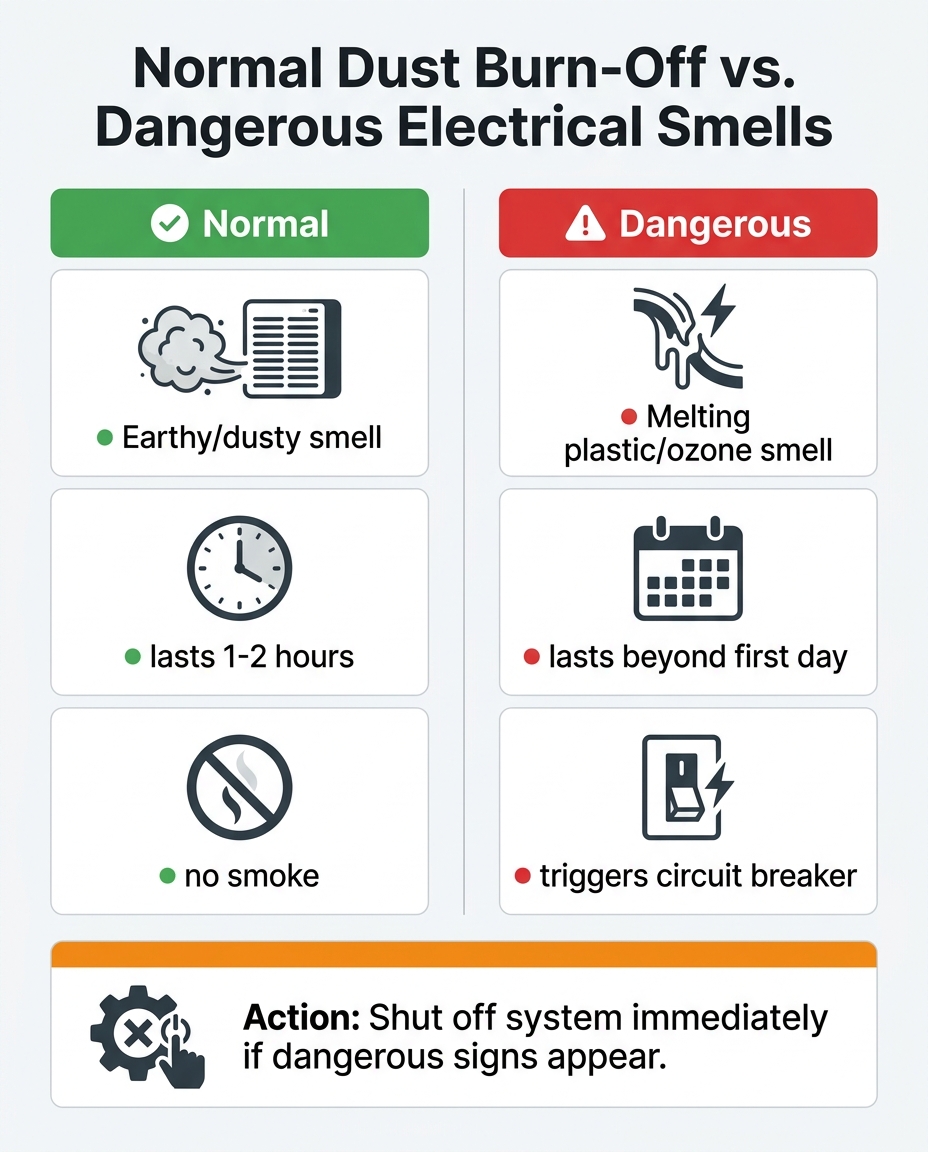
While a dusty odor is expected, you must be able to quickly distinguish between harmless dust elimination and a hazardous mechanical or electrical failure. A normal dust burn-off smells a lot like a hot, dusty space heater or an old cast-iron radiator. It is an earthy, dry smell that dissipates rapidly once the initial layer of dust is gone. On the other hand, dangerous odors smell like melting plastic, sharp ozone, or acrid smoke. These are clear indicators of electrical faults, failing blower motors, or compromised wiring.
If you ever detect the smell of melting wires, see visible smoke, or notice sparks, you must shut off your system immediately at the thermostat and call for professional Metairie HVAC services. Electrical issues do not resolve themselves and pose a severe fire risk. Just last fall, our team responded to a frantic call from a local homeowner whose zoned system stopped working completely due to a hidden electrical issue. One of our technicians arrived promptly, identified a melting wire harness, and safely repaired the electrical fault before it could cause further damage.
Signs of Normal Seasonal Burn-Off
The quick fix: Simply monitor the system for the first hour. Normal burn-off fades within 1 to 2 hours of continuous operation. The smell is strictly earthy or dusty, not chemical, and there is absolutely no visible smoke or soot coming from the vents.
Warning Signs of Electrical Failure
The quick fix: Shut the system down at the breaker. Warning signs include the smell of burning rubber or melting plastic, the system repeatedly tripping the circuit breaker, or an odor that persists well beyond the first day of heating.
• Odor Type — Normal Dust Burn-Off: Earthy, dusty, similar to a hot radiator — Dangerous Electrical Issue: Acrid, melting plastic, burning rubber, ozone
• Duration — Normal Dust Burn-Off: Fades within 1 to 2 hours — Dangerous Electrical Issue: Persists for hours or worsens over time
• Visible Signs — Normal Dust Burn-Off: None; air remains clear — Dangerous Electrical Issue: Smoke, soot around vents, or visible sparks
• System Behavior — Normal Dust Burn-Off: Runs smoothly and heats the home — Dangerous Electrical Issue: Trips breakers, makes grinding noises, shuts down

Proactive Steps for Cleaner Air During the Seasonal Transition
While some minor burn-off is inevitable due to the nature of forced-air systems, our technicians often find that severe or choking smells point to poor air filtration during the summer months. If your filter was clogged, cheap, or inefficient, a larger volume of dust bypassed the media and settled directly on your heat exchanger. Managing household particulates aggressively reduces the strain on your system during the transition and keeps your indoor air significantly cleaner.
Taking a proactive approach before you switch the thermostat to heat can save you from the worst of the seasonal odors. Here are the most effective steps our experts recommend to prepare your home:
1. Change your air filter immediately: Before the first fall heating cycle begins, remove your old summer filter. A fresh filter ensures optimal airflow, preventing the furnace from overheating while reducing the amount of burning particulate pushed into your living spaces.
2. Upgrade your filtration media: Standard fiberglass filters only catch large debris. Upgrading to a pleated filter with a higher MERV rating will trap pet dander, pollen, and finer dust particles before they can settle on the heating components.
3. Investigate advanced purification: Exploring dedicated indoor air quality solutions, such as whole-home air purifiers or UV light systems, can help capture and neutralize microscopic particles and biological growth before they ever reach your dormant heating elements.
4. Clear the area around your furnace: Ensure that no boxes, cleaning supplies, or combustible materials have been stored near the indoor unit over the summer. Restricted airflow around the unit can cause the system to overheat and produce entirely different, dangerous burning smells.
Beyond the Smell: Other Fall System Behaviors to Monitor
The burning dust smell is just one of several behaviors you might notice as the seasons change and your HVAC system shifts gears. When heating and cooling loads fluctuate during mild fall days, your system might exhibit other quirks that warrant careful monitoring to ensure everything is operating safely and efficiently.
A pattern we see often during Metairie's mild October weeks is short cycling, where the system turns on and off rapidly without completing a full heating or cooling cycle. This often happens when the outdoor temperature is too mild for the heater to run a full cycle, causing the thermostat to satisfy too quickly. However, it can also signal underlying issues like a dirty flame sensor or restricted airflow. If you are wondering why your AC keeps turning on and off during these transitional weeks, it might be a thermostat calibration issue that requires professional adjustment.
You should also listen closely for normal expansion and contraction noises. As hot air rapidly fills cold metal ductwork in your attic or crawlspace, the metal expands. You will likely hear popping, pinging, or ticking sounds coming from the walls or ceilings. This is normal thermal expansion. However, dangerous grinding, loud squealing, or persistent scraping sounds indicate failing bearings or a struggling blower motor. Always monitor your airflow consistency across different rooms as the system shifts modes, and remember that any persistent unusual behavior we've outlined warrants a professional diagnostic.
Frequently Asked Questions About Fall Heating Startup
Homeowners naturally have concerns when firing up heavy machinery inside their homes after months of dormancy. Our lead technicians have compiled the most urgent inquiries to provide clear, authoritative guidance based on EPA guidelines, standard manufacturer operating manuals, and our extensive experience in the field.
Why does my heater smell like burning dust?
Dust, pet dander, and household lint accumulate on the heat exchanger and burners during the summer months when the heating system is inactive. When you turn on the heat for the first time in the fall, these settled particulates are instantly incinerated by the high temperatures. This flash-burning process creates the distinct dusty odor that is pushed through your ductwork into your home.
Is it safe to run the heater if it smells like burning?
Yes, it is generally safe if the odor is a brief, earthy, dusty smell that begins to fade shortly after startup. This is a standard part of system operation. However, it is absolutely not safe if the system smells like electrical burning, melting plastic, or acrid smoke, or if the smell persists for hours without diminishing. In those cases, shut the unit off immediately.
How long does the burning smell last when turning on the heater?
In our experience, a normal dust burn-off smell typically lasts for 1 to 2 heating cycles, which translates to a maximum of a few hours of operation. Once the initial layer of settled summer dust has been incinerated off the heat exchanger, the smell should dissipate completely. If it lasts beyond the first day of heating, you need a professional inspection.
What does an electrical fire smell like in a furnace?
An electrical fire or failing component produces sharp, acrid odors that heavily resemble melting plastic, burning rubber, or a distinct metallic ozone smell. Unlike burning dust, these odors are harsh on the nose and throat and are often accompanied by system malfunctions, such as the unit shutting down prematurely or tripping the circuit breaker.
Should I open my windows during the first heating cycle?
Yes, briefly ventilating the home can help clear the harmless dust burn-off odor much more quickly. Opening a few windows for 15 to 20 minutes while the system runs its first cycle allows fresh air to circulate and pushes the vaporized particulates out of your living space, making the seasonal transition much more comfortable.
Ensure Safe and Odor-Free Heating This Winter
Navigating seasonal transitions does not have to be a stressful experience. While a brief dusty smell is a perfectly normal part of firing up the furnace for the first time, persistent odors, sharp electrical smells, or strange mechanical noises should never be ignored. A professional pre-winter inspection provides the ultimate peace of mind, verifying system safety, cleaning critical components, and ensuring your equipment operates at peak efficiency.
If you have more common homeowner questions answered by our troubleshooting guide, or if you want our Metairie-based technicians to eliminate the guesswork entirely, schedule a comprehensive tune-up with our team. Reach out to the local experts at Cypress Cooling Company today to secure your comfort, protect your indoor air quality, and ensure a safe, warm environment for the upcoming colder months.
OUR CLIENTS HAVE TO SAY ABOUT US



Service areas
Our service areas are designed to meet the diverse needs of our clients. We focus on providing exceptional service and ensuring customer satisfaction in every location we operate.

