
Custom Ductwork Design & Installation
.webp)
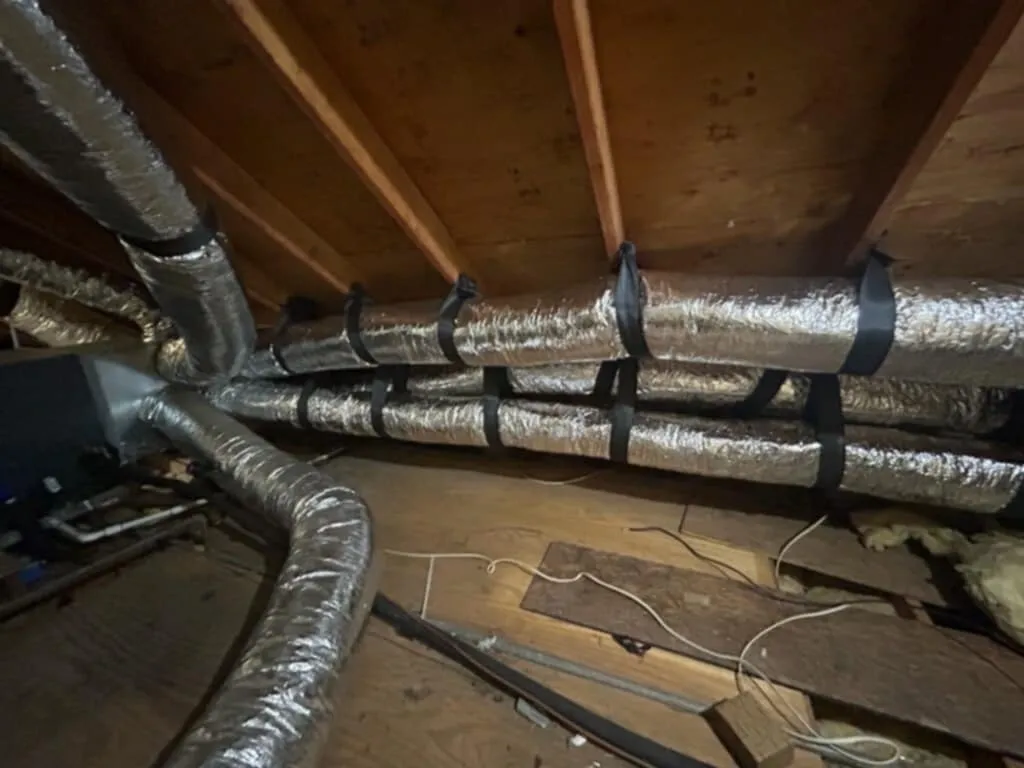
Beyond the Vents: A Louisiana Homeowner’s Guide to High-Performance Ductwork
You’ve likely spent considerable time researching the perfect air conditioner or furnace. You've compared SEER ratings and BTUs, but if your home still suffers from uneven temperatures, surprising humidity, or utility bills that just don't make sense, the answer might not be in your HVAC unit. It’s in the hidden network of pathways that delivers your comfort: your ductwork.
For too many homeowners, ductwork is an out-of-sight, out-of-mind component. Yet, this system is the single most critical factor in determining how efficiently your HVAC unit actually performs. A poorly designed or installed duct system can sabotage even the most advanced equipment. This guide will walk you through the essential considerations for designing and installing a duct system that truly works for your South Louisiana home.
The Unsung Hero of Your HVAC System
Think of your HVAC unit as the heart of your home’s comfort system. Your ductwork is the circulatory system, responsible for delivering heated or cooled air precisely where it’s needed. When it fails, the whole system suffers.
In fact, the U.S. Department of Energy estimates that typical duct systems lose 20% to 30% of the air that moves through them due to leaks, holes, and poor connections. In a hot and humid climate like ours, that’s a staggering amount of wasted energy and money leaking directly into your attic or crawlspace.
A properly designed and sealed system isn't just an upgrade; it's a fundamental necessity for achieving real comfort and efficiency.
![Diagram illustrating airflow loss from leaky ductwork in an attic.]
The Blueprint for Comfort: Sizing and Layout Done Right
There's a science to effective ductwork, and "rules of thumb" or guesswork simply won't cut it. The industry standard for professional residential duct design is the ACCA Manual D. This isn't just a guideline; it's a detailed methodology that uses room-by-room load calculations, friction loss rates, and airflow velocity to create a true blueprint for your home.
Why a Manual D Calculation is Non-Negotiable
• Undersized Ducts: When ducts are too small, your system has to work much harder to push air through. This creates high static pressure, leading to noisy vents, strained equipment, and reduced airflow. Over time, this strain can cause premature system failure, leading to more frequent and costly calls for air conditioning repair.
• Oversized Ducts: Ducts that are too large cause air to move too slowly. This means the conditioned air may not reach the furthest rooms effectively, leading to poor air mixing and frustrating hot and cold spots.
The layout is just as critical. A professional design minimizes sharp turns and excessively long runs, which, according to the Department of Energy, can dramatically increase static pressure and hamper performance.
For Louisiana's common home styles—whether it's a raised home with a crawlspace or a slab foundation with an expansive attic—the layout must be customized to ensure smooth, efficient delivery from the unit to every single vent.
Choosing Your Materials: A Practical Comparison
The material used to construct your ducts has a significant impact on durability, airflow, and even the sound of your system. There is no single "best" material—the right choice depends on the specific application within your home.
![Side-by-side comparison of different duct materials: galvanized steel, flexible duct, and fiberglass duct board.]
Galvanized Steel (Sheet Metal)
Sheet metal is the traditional choice for a reason. Its rigid structure and smooth interior surface provide the least resistance to airflow, making it highly efficient.
• Pros: Extremely durable, long-lasting, and non-porous.
• Cons: Requires separate insulation wraps, which is absolutely essential in our humid climate to prevent condensation ("sweating") and energy loss. Labor costs can be higher due to the custom fabrication required.
• Best For: Main trunk lines and any accessible straight runs where maximum airflow and longevity are the priority.
Flexible Ducts (Flex)
Flex ducts are common in modern homes due to their versatility. They consist of a coiled wire covered by a plastic liner and insulation.
• Pros: Inexpensive and easy to install around obstacles and in tight spaces.
• Cons: According to the North American Insulation Manufacturers Association (NAIMA), flex ducts can be easily crushed, kinked, or installed with too many bends, which severely restricts airflow. The ribbed interior also creates more friction than smooth metal.
• Best For: Final connections from the main trunk line to individual room vents, but only when installed correctly—pulled taut and properly supported to avoid sags.
Fiberglass Duct Board
Constructed from rigid panels of fiberglass, this material offers a two-in-one solution for both air passage and insulation.
• Pros: Provides excellent thermal and acoustic insulation, helping to quiet the sound of air moving through the system. It's also lightweight.
• Cons: Not as durable or damage-resistant as sheet metal. Seams must be meticulously sealed to prevent air leakage and fiber degradation.
• Best For: Straight runs in conditioned or unconditioned spaces where both thermal performance and noise reduction are important.
The Cypress Cooling Difference: Sealing, Insulation, and Installation
The quality of a duct system is ultimately determined by the quality of its installation. At Cypress Cooling, we treat ductwork as the foundational element it is, focusing on three key areas that separate a high-performance system from a standard one.
1. Meticulous Sealing: ENERGY STAR standards are clear: all seams, joints, and connections must be sealed with mastic, a gummy, paint-on sealant. Unlike duct tape, which dries out and fails over time, mastic creates a permanent, flexible seal that lasts the life of the system. This step is crucial for preventing the 20–30% air loss common in other systems.
![Photo of a Cypress Cooling technician meticulously sealing a duct joint with mastic.]
1. Proper Insulation: In South Louisiana, any ductwork running through an unconditioned attic or crawlspace must be properly insulated. This prevents the hot, humid air from warming your cooled air in the summer and stops condensation from forming on the ducts, which can lead to moisture issues and mold growth.
2. Verified Performance: A professional installation should end with verification. We perform tests to ensure the system is balanced and delivering the correct amount of air to each room, confirming that the design on paper works perfectly in practice.
Frequently Asked Questions About Ductwork Installation
How long does a full ductwork replacement usually take?
For an average-sized home, a complete replacement typically takes 1 to 3 days. We work efficiently to minimize disruption to your home and restore your comfort as quickly as possible.
Can you connect new ductwork to my existing HVAC unit?
Absolutely. We design the new duct system to perfectly match the specifications of your existing equipment, ensuring it operates at its peak designed efficiency. If your unit is older, a new duct system can often make it perform like new again.
What does custom ductwork design and installation cost?
The cost varies based on the size of your home, the materials chosen, and the complexity of the layout. While it is a significant investment, it pays you back through lower energy bills, improved comfort, and longer equipment life. We offer flexible financing options to help make this essential home improvement fit your budget.
How do I know if I need a full replacement or just sealing and repairs?
If your ducts are over 15 years old, severely damaged (kinked, torn), or you're experiencing major comfort issues, a replacement is often the most cost-effective solution. For newer systems with minor issues, targeted sealing and repairs can make a significant difference. A professional assessment is the best way to know for sure.
Invest in the Foundation of Your Home's Comfort
Your ductwork is more than just a series of tubes; it's the delivery network that determines the performance of your entire HVAC investment. A system designed with precision, built with the right materials, and installed with expert care is the only way to ensure every dollar you spend on cooling and heating translates directly into comfort.
Don't let your comfort and energy dollars leak through the cracks of a failing duct system. Our team is ready to provide a comprehensive assessment and design a solution tailored to the unique needs of your home.
Ready to feel the difference a high-performance duct system can make? Schedule a consultation with our experts today to get started.
OUR CLIENTS HAVE TO SAY ABOUT US



Service areas
Our service areas are designed to meet the diverse needs of our clients. We focus on providing exceptional service and ensuring customer satisfaction in every location we operate.

