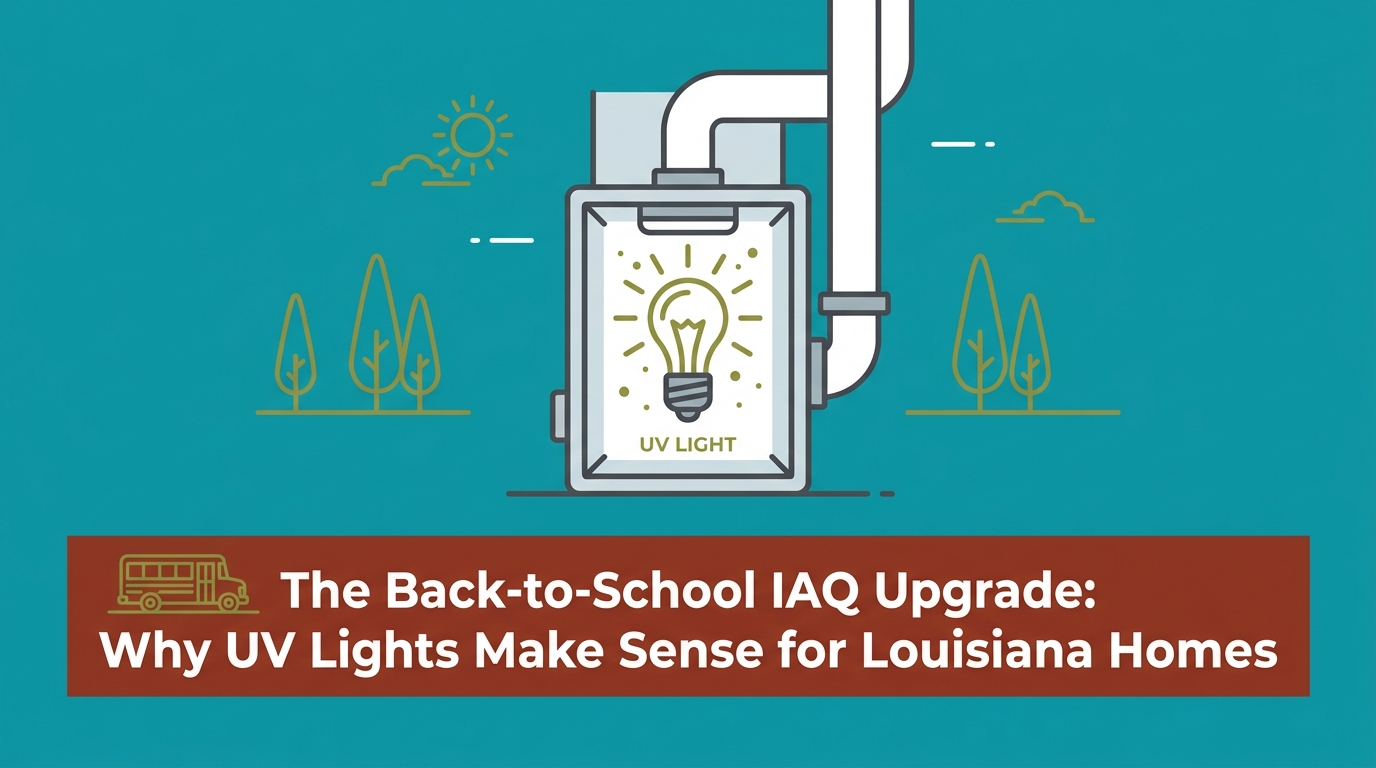
The Back-to-School IAQ Upgrade: Why UV Lights Make Sense for Louisiana Homes
.webp)
August Brings New Germs and Peak Humidity to Local Homes
August is here, and as families prepare for the busy weeks ahead, considering The Back-to-School IAQ Upgrade: Why UV Lights Make Sense for Louisiana Homes becomes an essential step for protecting your household. Here at Cypress Cooling Company, our team knows that the late-summer season always brings a sudden spike in household germ exposure. Kids return to crowded classrooms, pick up new seasonal viruses, and bring those pathogens straight through your front door. At the exact same time, we see local air conditioning systems working overtime to combat the intense, lingering summer heat, creating dark and incredibly damp conditions inside your ductwork.
If you are looking to improve your home's respiratory environment, learning about Indoor Air Quality and the right IAQ Equipment with a trusted local expert is the best place to start.
This time of year forces homeowners to make an important decision. Do you continue relying on basic fiberglass air filters to manage this sudden influx of biological contaminants, or do you upgrade to a whole-home UV purifier installed directly inside your system's plenum? Standard filters are great for catching dust, but in our experience, they do very little to stop microscopic viruses from circulating through your living spaces. When you combine the August back-to-school transition with an air conditioning unit that is constantly sweating from the heat, you create a perfect storm for poor indoor air quality.
The Collision of Pathogens and AC Usage
As we frequently see on late-summer service calls, right now, your cooling equipment is running almost non-stop. Every time the blower motor kicks on, it pulls air from your rooms, pushes it over a cold evaporator coil, and distributes it back into the house. If that air is filled with new school germs, your HVAC system essentially acts as a distribution network.
• Increased biological load: More people entering and leaving the house means more bacteria and viruses introduced daily.
• Constant air circulation: A constantly running blower fan ensures that whatever is in the air reaches every single room.
• Dark, damp environments: The inside of your system is shielded from natural sunlight and coated in condensation, allowing biological matter to thrive.
To truly protect your household during the August back-to-school transition in Metairie LA, you need a defense mechanism that actively neutralizes these threats rather than just trying to catch them in a passive net.
The Late-Summer Moisture Trap Inside Your HVAC System
To understand why air quality drops so sharply in late summer, you have to look at the environmental baseline of a Louisiana HVAC system. Our technicians know firsthand that the Gulf Coast frequently experiences relative humidity levels above 75% in August. This extreme moisture drastically increases the risk of biological growth inside the dark, damp components of your cooling equipment. When warm, humid indoor air blows across your freezing cold evaporator coil, it generates a massive amount of condensation.
Under normal conditions, this water drips safely into a pan and drains outside. However, during peak cooling demand, the sheer volume of moisture can overwhelm the system. The interior of your HVAC plenum—the main box where air is distributed into your ductwork—becomes a natural breeding ground for mold, mildew, and bacteria.
The Anatomy of a Damp Plenum
When moisture sits inside the system, it does not just stay there. It mixes with the air you breathe. Biological growth inside the equipment releases tiny spores into the circulating indoor air, compounding respiratory issues and triggering allergy symptoms.
Signs that your system is struggling with excessive moisture:
• Musty odors: A damp, "dirty sock" smell coming from your vents when the AC turns on.
• Visible condensation: Sweat forming on the outside of your ductwork or around the air handler.
• Frequent drain clogs: A drain line that constantly backs up due to algae and sludge buildup.
• Water leaks: Overflowing drip pans that cause water damage to your ceilings or floors.
At Cypress Cooling Company, we see how quickly these moisture issues can escalate during peak cooling weeks. For example, one local homeowner recently experienced water dripping directly from their ceiling on a hot summer afternoon. Our team responded immediately to diagnose the issue, finding an overwhelmed, clogged drip pan caused by excessive condensation and biological buildup. After ordering and installing a new pan, we had their system back online so they wouldn't go a second day without cooling. This situation highlights just how much water your system manages daily in Metairie LA, and why keeping that internal environment clean is so critical.
Why the Fall Semester Challenges Your Air Quality
The transition into the fall semester creates a unique challenge for your home's air quality. It is not just about the weather; it is about the sudden change in your family's daily routine. When we visit homes during this season, we often explain that when you connect the seasonal introduction of external pathogens to the existing vulnerabilities of a humid HVAC system, you begin to see why proactive protection is necessary.
The HVAC system acts as the respiratory system of your house. It breathes air in through the return vents and exhales it through the supply vents. When the August back-to-school transition hits, this respiratory system is put under immense stress. Here is how the process unfolds in a typical household we service:
1. The Germ Introduction: Kids return to crowded classrooms, school buses, and extracurricular activities. They interact with dozens of other children and bring a fresh wave of external viruses and bacteria home on their clothes, hands, and backpacks.
2. The Circulation Phase: Once inside, these microscopic pathogens become airborne. The HVAC system pulls this contaminated air into the return grilles. Instead of settling safely on the floor, the germs are pulled directly into the heart of your cooling equipment.
3. The Compounding Effect: This is where the real problem begins. The new external germs mix with the internal mold spores and bacteria already breeding inside your damp, late-summer plenum.
4. The Distribution: The blower fan then pushes this newly mixed, highly contaminated air back out into every single room of your house, spreading the pathogens far beyond the entryway or the kids' bedrooms.
If your only line of defense is a standard fiberglass filter, you are leaving your home vulnerable. Passive filtration is simply not enough to stop this compounding effect. You need an active defense mechanism that can destroy these pathogens before they have the chance to circulate.
Passive Trapping vs. Active Neutralization: Beyond Standard Filters
When homeowners ask our team at Cypress Cooling Company about improving their indoor air quality in Metairie LA, their first instinct is often to buy a more expensive air filter. While our technicians agree that upgrading your filter is a good step for catching larger debris, it is important to understand the limitations of standard passive filtration.
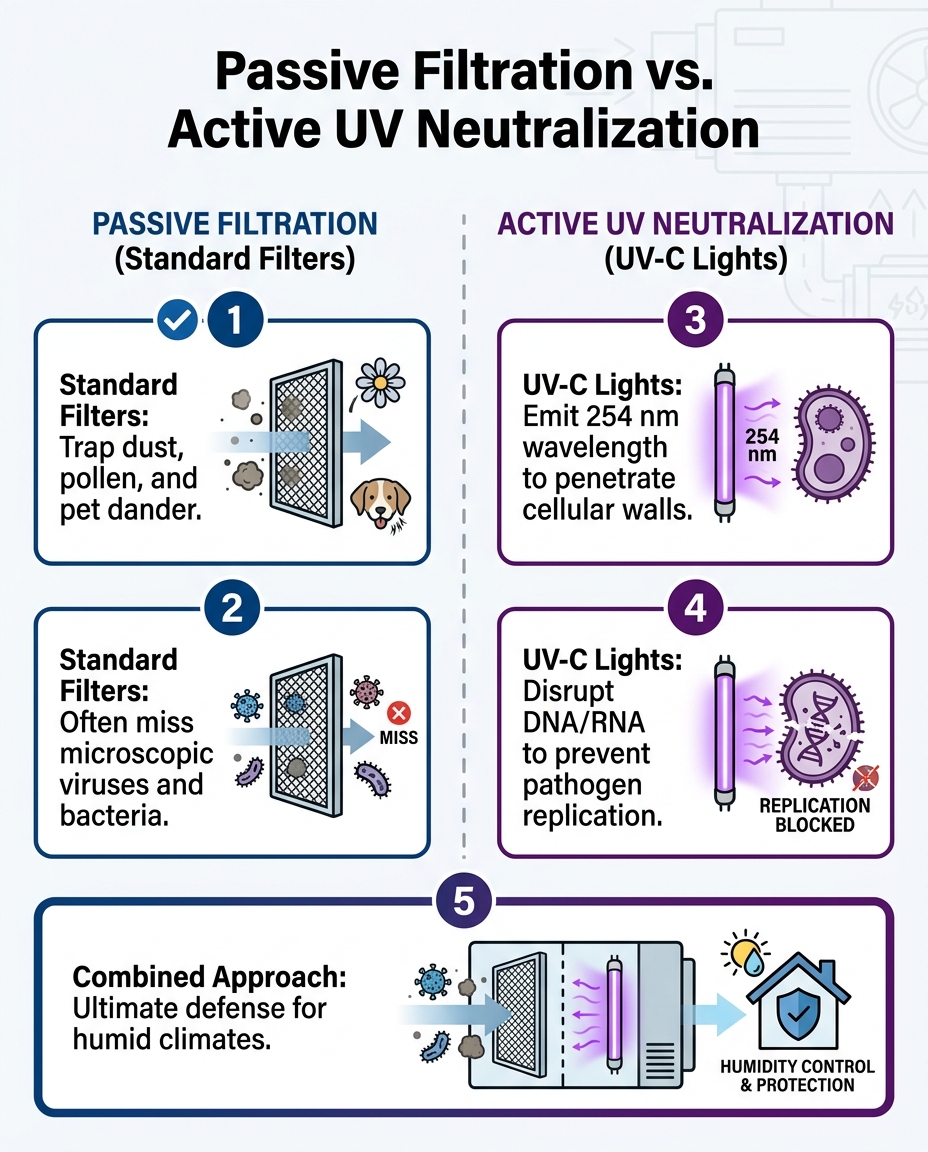
Standard air filters are designed to trap larger particulates. They are highly effective at catching dust, lint, pollen, and pet dander. However, microscopic viruses and bacteria are incredibly small—often hundreds of times smaller than a grain of pollen. Because of their size, these biological contaminants easily pass right through the woven fibers of a standard filter and continue their journey into your ductwork. Even if a filter manages to catch a mold spore or a cluster of bacteria, that biological matter is now trapped on a surface that is constantly exposed to humid air. If the environment is damp enough, those trapped pathogens can actually continue to breed right on the filter itself.
This is where active neutralization changes the game. UV-C light attacks the source of the problem rather than just trying to catch the debris. If you are already dealing with the symptoms of a dirty condenser coil, we strongly recommend adding an active purification method to prevent biological buildup from making the situation worse.
Comparing Your IAQ Options
• Primary Mechanism — Standard Air Filters (Passive): Traps airborne particles in a woven media mesh. — UV-C Purifiers (Active): Shines high-intensity ultraviolet light to neutralize threats.
• Target Contaminants — Standard Air Filters (Passive): Dust, dirt, pollen, pet dander, and large lint. — UV-C Purifiers (Active): Viruses, bacteria, mold spores, and microbial growth.
• Response to Humidity — Standard Air Filters (Passive): Can become damp and breed trapped mold spores. — UV-C Purifiers (Active): Thrives in damp plenums by keeping coils sanitized.
• Effect on Pathogens — Standard Air Filters (Passive): Holds them in place (if caught). — UV-C Purifiers (Active): Disrupts their DNA so they cannot replicate.
By moving beyond passive trapping, you ensure that the air blowing into your living spaces is actually sanitized, not just strained for dust.

How UV-C Technology Disrupts Pathogens in the Plenum
To truly appreciate why a whole-home UV purifier is worth the investment, it helps to understand the specific science behind how it works. This is not just a bright blue light bulb; it is a highly engineered piece of sanitation equipment that utilizes a very specific spectrum of light to protect your home during the August back-to-school transition.
UV-C technology operates on the 254-nanometer (nm) wavelength. This specific wavelength is invisible to the human eye, but it is incredibly destructive to microscopic organisms. When bacteria, viruses, and mold spores pass through the intense field of UV-C light inside your Air Conditioning system, the light energy physically penetrates their cellular walls.
The Science of 254 Nanometers
Once the UV-C light breaches the cellular wall of a pathogen, it targets the organism's core genetic material.
• DNA and RNA Disruption: The light scrambles the DNA and RNA of the virus or bacteria.
• Loss of Replication: Once the genetic code is broken, the pathogen is rendered sterile. It can no longer replicate or infect a human host.
• Continuous Sanitation: Because the light is installed inside the main airflow, this neutralization process happens continuously every single time your air conditioner runs.
This technology is so effective that the American Society of Heating, Refrigerating and Air-Conditioning Engineers (ASHRAE) officially recommends Ultraviolet Germicidal Irradiation (UVGI) for in-duct sanitation—a standard we proudly stand behind at Cypress Cooling Company. It is the same core technology used to sanitize hospital operating rooms and water treatment facilities, scaled down to fit perfectly inside your residential cooling equipment. Instead of hoping a filter catches a microscopic virus, the UV light ensures that even if the virus passes through the system, it is completely harmless by the time it reaches your living room.
Professional Installation and Ductwork Integration
While the science behind UV-C light is fascinating, the technology only works if it is installed correctly. Proper placement of the UV purifier is absolutely critical for its efficacy, which is why this upgrade requires professional installation and a thorough understanding of your home's unique airflow dynamics in Metairie LA.
For a UV light to effectively neutralize fast-moving airborne pathogens, it must be positioned perfectly. Our certified technicians at Cypress Cooling Company typically install the lights in one of two places: directly over the indoor evaporator coil or within the main supply plenum. Placing the light over the coil ensures that the dampest, most mold-prone component of your entire system is constantly bathed in sanitizing light. Placing it in the supply plenum maximizes the "exposure time" for moving air, ensuring that pathogens are irradiated right before they are pushed into your Ductwork Services and living spaces.
Why Proper Placement Dictates Performance
Attempting a DIY installation of a UV purifier is highly dangerous and strongly discouraged by our team.
• UV Exposure Risks: Direct exposure to UV-C light can cause severe damage to human eyes and skin. Professionals use specialized viewports and safety shut-off switches to ensure the light only operates when the system is sealed.
• Component Damage: UV light is powerful enough to degrade certain plastics and synthetic materials inside your air handler if positioned incorrectly. A professional knows exactly how to shield sensitive wires and drain pans.
• System Sealing: Your ductwork must be completely sealed. If your ducts have leaks, unpurified air from your attic or crawlspace can bypass the UV zone entirely, rendering the light useless.
A trained technician will ensure that all circulating air is forced to pass directly through the purification zone, guaranteeing that your family receives the maximum benefit from the technology.
Scheduling Your Late-Summer IAQ Assessment
Bridging the gap between understanding the technology and actually improving your home's air requires action. As we navigate the August back-to-school transition, now is the time to schedule a comprehensive indoor air quality assessment and system tune-up. Clearing out the summer wear and tear before the fall season officially begins is the smartest way to protect your equipment and your health.
When you schedule an assessment with Cypress Cooling Company, you are getting more than just a quick filter change. You are tapping into our deep local expertise on Gulf Coast HVAC hygiene. Our local technicians understand exactly how extreme regional humidity taxes system sanitation, and they know what biological warning signs to look for inside your equipment.
What to Expect During Your Assessment
A professional visual inspection of the coil and plenum is the only way to know for sure if you have existing biological growth. During a recent late-summer service call, a homeowner asked our team to perform a routine tune-up on their older AC unit. Our technician took the time to explain the entire tune-up process, provided daily usage tips, and offered specific suggestions for reconfiguring the system to improve airflow and sanitation. The customer received detailed, actionable recommendations tailored exactly to their home's layout.
A comprehensive IAQ assessment includes:
• Visual Coil Inspection: Checking the dark, damp evaporator coil for early signs of mold or algae buildup.
• Drain Pan Evaluation: Ensuring the condensate line is flowing freely and not holding stagnant water.
• Airflow Mapping: Determining the best placement for a UV purifier based on your specific ductwork design.
• Customized Solutions: Providing reassurance that a tailored approach offers much better protection than generic, one-size-fits-all products.
By mapping out the best IAQ upgrades for your specific HVAC layout, you can head into the new school year with total confidence that your home's air is clean, safe, and actively protected against seasonal germs.
Frequently Asked Questions About HVAC UV Lights
Do HVAC UV lights really work?
Yes, HVAC UV lights are highly effective at neutralizing biological contaminants. They use a specific 254 nm wavelength to penetrate the cellular walls of viruses, bacteria, and mold spores. Once the DNA is disrupted, the pathogens can no longer replicate or cause illness, making the air circulating through your home significantly cleaner.
Where should UV lights be placed in an HVAC system?
For maximum effectiveness, UV lights should be installed directly over the indoor evaporator coil or inside the main supply plenum. Placing the light over the coil prevents mold from growing on the dampest part of the system. Placing it in the plenum ensures that all moving air is irradiated just before it enters your ductwork.
Do UV lights kill mold in air conditioners?
Yes, UV-C lights are excellent at preventing and destroying mold growth inside air conditioners. By shining continuously on the wet evaporator coil and drip pan, the light creates a hostile environment where mold spores cannot survive or reproduce. This keeps the internal components clean and stops musty odors from spreading.
Are whole house UV air purifiers worth it?
If you live in a highly humid climate or suffer from seasonal allergies, a whole-house UV purifier is absolutely worth the investment. Unlike portable room purifiers, an in-duct UV system cleans the air for the entire house simultaneously. It also protects your HVAC equipment from biological buildup, which can improve system efficiency over time.
How long do HVAC UV bulbs last in a highly humid climate?
Most professional-grade HVAC UV bulbs we install are designed to last between 9,000 and 12,000 hours, which equates to about one year of continuous use. Even in highly humid climates, the bulb's lifespan remains consistent, though the glass may need to be wiped down during routine maintenance to ensure the light intensity isn't blocked by dust.
Now is the time to take control of your home's air quality before the fall semester brings new challenges through your front door. A professionally grounded, active defense system makes all the difference in Louisiana's humid climate. Contact Cypress Cooling Company today to schedule your system assessment and learn how the right IAQ Equipment can keep your family breathing easier all year long.
OUR CLIENTS HAVE TO SAY ABOUT US



Service areas
Our service areas are designed to meet the diverse needs of our clients. We focus on providing exceptional service and ensuring customer satisfaction in every location we operate.