
Why Refrigerant Leaks Spike During July Heatwaves in Algiers
.webp)
Surviving the Surge: When Extreme Summer Heat Pushes Your AC to the Limit
As the peak summer weather settles over the region, understanding why refrigerant leaks spike during July heatwaves in Algiers is critical for homeowners whose systems suddenly struggle to keep up. At Cypress Cooling Company, we know firsthand that a sudden cooling failure during the hottest weeks of the year is rarely a spontaneous event. Instead, it is usually a pre-existing issue pushed to the absolute breaking point. Continuous, round-the-clock operation places immense thermal stress on older equipment, turning minor, unnoticed vulnerabilities into major breakdowns. Recognizing this tipping point early allows you to intervene before a slow drip becomes a catastrophic compressor failure. In our experience servicing local homes, understanding the mechanics behind this escalation is the very first step in protecting your home's comfort system.
If you rely on aging air conditioning systems, securing prompt AC repair in Algiers is the best way to prevent a total shutdown.
The Physics of the Breakdown: Thermal Stress and Continuous Operation
During extreme temperature spikes, residential cooling systems rarely cycle off. They run continuously to combat the relentless outdoor heat load. This non-stop operation generates sustained high pressure within the system's copper lines and internal components. Older systems, which naturally experience wear and tear over time, are particularly vulnerable to this sustained mechanical stress. The constant expansion and contraction of metals under varying thermal loads weakens already fragile connection points. Just recently, our technicians helped an Algiers homeowner who faced severe AC problems during a summer heatwave that other companies failed to fix; however, our team was able to get the system running the same day by identifying how continuous operation had stressed the unit's aging components.
How Constant Pressure Affects Aging Components
To understand why this happens, we often explain the physical forces at work inside your air conditioner when it runs without a break during a July heatwave:
1. Sustained high pressure: Increased system pressure forces refrigerant against the walls of aging copper coils, testing the limits of the metal.
2. Intense mechanical vibration: Vibrations from continuous compressor operation further stress weakened solder joints and connection points throughout the unit.
3. Thermal expansion: The combination of intense outdoor heat, internal operating pressure, and relentless vibration creates the perfect storm for component fatigue.
When these three factors combine, the structural integrity of the copper lines begins to fail. We see it all the time: what might have been a perfectly sound system in the milder spring months suddenly becomes a liability when pushed to 100% capacity day after day.
From Slow Drip to Major Loss: How Micro-Leaks Expand
The Problem: Micro-leaks are tiny, often microscopic fissures in the evaporator coil or refrigerant lines that can go completely unnoticed for months. Under normal, moderate operating conditions, a system might lose only a negligible amount of cooling capacity over a long period. You might not even notice a difference in your home's comfort level.
The Cause: However, the extreme pressure and thermal stress of continuous summer operation in Algiers force these microscopic fissures to expand rapidly. The metal expands under the heat, stretching the tiny holes wider. The elevated pressure inside the lines then forces the refrigerant out at a much faster rate. What was once a slow, undetectable drip accelerates into a significant loss of critical fluid, a pattern our team encounters frequently.
The Solution: Catching this transition early is vital. Once the refrigerant level drops below a certain threshold, the system's ability to absorb heat is severely compromised. By monitoring your system's performance during the first major heatwave of the season, you can identify the subtle signs of a widening leak before the system completely fails.
• Mild Spring Weather — System Pressure: Normal / Intermittent — Micro-Leak Behavior: Negligible seepage — Cooling Impact: Unnoticeable
• Average Summer Day — System Pressure: Moderate / Cycling — Micro-Leak Behavior: Slow, steady loss — Cooling Impact: Slight drop in efficiency
• July Heatwave — System Pressure: Maximum / Continuous — Micro-Leak Behavior: Rapid expansion of fissures — Cooling Impact: Severe loss of cooling capacity
The Humidity Factor: Why Low Refrigerant Leads to Frozen Coils
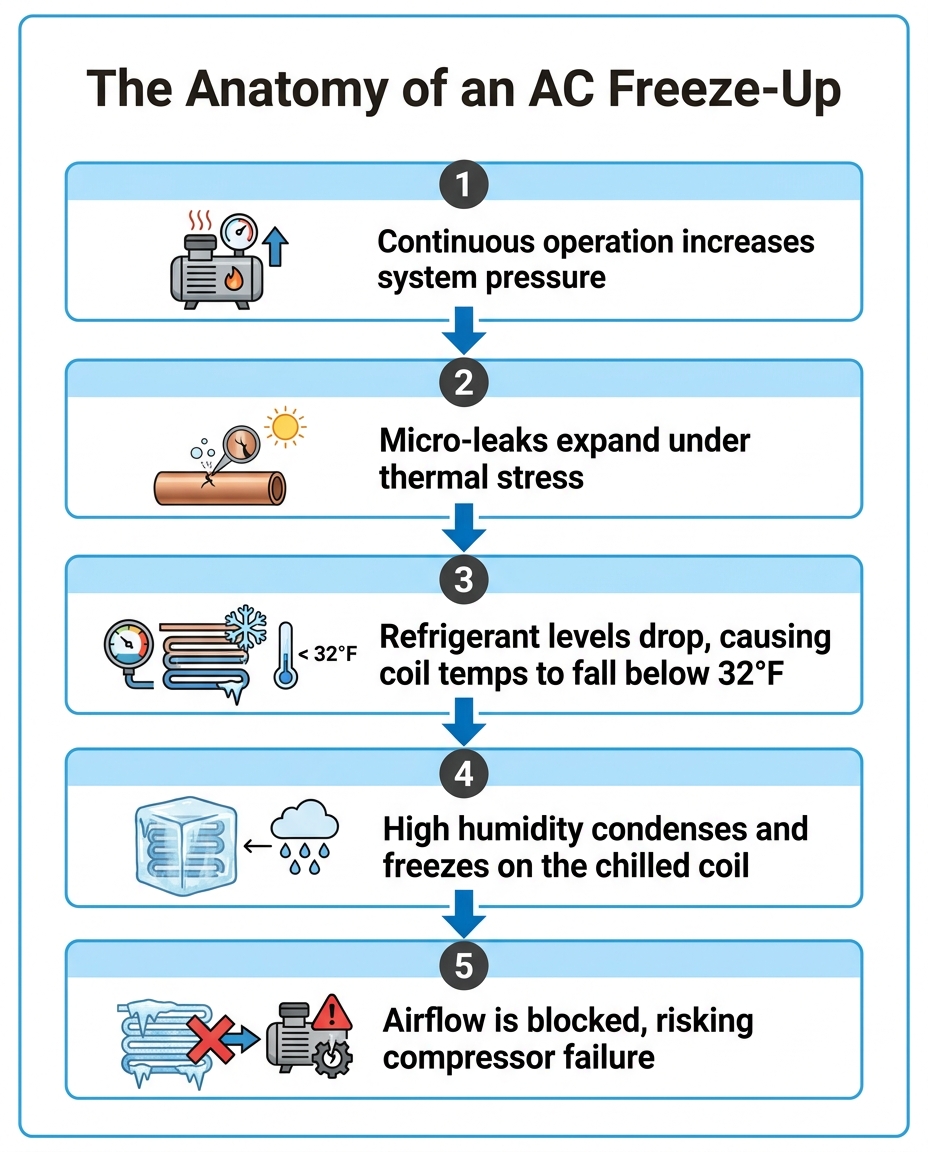
As refrigerant levels drop due to an expanded leak, the pressure inside the indoor evaporator coil decreases. According to the laws of thermodynamics, this drop in pressure paradoxically causes the temperature of the coil to plummet well below 32 degrees Fahrenheit. This is where our sticky Louisiana climate plays a massive role.
The extreme humidity in Algiers provides an endless supply of moisture in the air. As the warm, moisture-laden indoor air passes over this super-chilled coil, the water vapor rapidly condenses on the cold metal fins. Because the coil is below freezing, this condensation immediately turns to ice. In a dry climate, a system low on refrigerant might just blow warm air for days. But with our local humidity levels, we consistently see the moisture condense and freeze incredibly fast, eventually encasing the entire component in a thick block of ice.
A frozen coil completely blocks airflow through your ductwork, halting the cooling process entirely. Worse, it prevents the refrigerant from absorbing heat, sending cold liquid back down the line to the compressor. This liquid slugging puts the costly outdoor compressor at an extremely high risk of total mechanical failure during a July heatwave.

Early Warning Signs Your System is Approaching the Tipping Point
You do not have to wait for your air conditioner to turn into a block of ice before taking action. In our daily service calls, we look for several actionable signs that a system is actively losing refrigerant and approaching a critical tipping point. If you notice any of these symptoms, it is time to evaluate the health of your cooling equipment.
• Unusually long cycles: The system runs constantly but struggles to lower the indoor temperature to your thermostat setting.
• Lukewarm airflow: Air blowing from the vents feels room temperature rather than crisp and cold, indicating a lack of heat absorption.
• Strange noises: A faint hissing or bubbling sound can sometimes be heard near the indoor or outdoor unit, pointing directly to a pressure leak.
• Energy spikes: Unexplained spikes in energy consumption indicate the system is working overtime to compensate for lost cooling capacity.
If you observe these symptoms, you can learn more about how to check if your AC refrigerant is low to better understand what your system is experiencing. Recognizing these signs early in an Algiers summer can save you from a major breakdown.
Why Early Detection Matters
Catching a leak while it is still just causing lukewarm air means our technicians can locate and seal the fissure before the system freezes. Once the coil freezes, the diagnostic process is delayed because the ice must completely melt before the system can be safely tested. Early detection keeps you comfortable and protects the most expensive components of your air conditioning system.
The Danger of the 'Top-Off' and Why Professional Repair is Non-Negotiable
A common misconception we hear from homeowners is that an air conditioner simply "uses up" its freon and occasionally needs a refill. This is completely false. An air conditioning system is a closed loop; if the fluid level is low, there is a leak that must be addressed. Simply adding more cooling fluid without sealing the expanded fissure is a temporary and wasteful band-aid that guarantees future breakdowns.
Handling, recovering, and charging these chemicals requires strict adherence to EPA Section 608 regulations. Attempting DIY repairs or handling these pressurized chemicals poses significant safety risks and can permanently damage the compressor. We strongly advise that you never attempt to add refrigerant to a system yourself.
Instead, our licensed professionals use specialized diagnostic tools to solve the root problem. During a July heatwave, our technicians utilize electronic sniffers that detect the specific chemical signature of the leaking gas. We may also inject UV dyes into the system, which circulate and illuminate under a blacklight at the exact site of the micro-leak. This allows for a permanent seal, ensuring that the system is actually repaired rather than just temporarily topped off.
Emergency Response: What to Do When the Coil Freezes Over
If you miss the early warning signs and your system does freeze up, taking the right immediate steps can mean the difference between a simple repair and a costly compressor replacement. Just last July 4th holiday weekend, our emergency dispatch team responded to a local customer who experienced a total system failure when a capacitor blew under intense heat. Our technician arrived promptly, diagnosed the issue, and restored cooling the same day while performing necessary preventive checks. This highlights the importance of fast, professional intervention.
If you notice ice on the refrigerant lines or a complete lack of airflow, follow these steps immediately:
1. Turn it off: Switch your thermostat from 'cool' to 'off' immediately to stop the compressor from running and prevent mechanical damage.
2. Turn the fan on: Switch the fan setting on your thermostat from 'auto' to 'on'. This forces warm indoor air over the frozen coil, helping to accelerate the thawing process.
3. Wait patiently: Do not attempt to chip, pick, or scrape the ice away with tools. The copper and aluminum fins are incredibly delicate, and a single slip can puncture the coil, ruining it completely.
4. Call for backup: Contact a local emergency response team that can dispatch technicians rapidly to diagnose the underlying leak once the ice clears.
Cypress Cooling Company's rapid, reliable local emergency service and same-day dispatch capabilities ensure that homeowners in Algiers are rescued when ACs freeze up during peak heatwaves. We always remind our customers that keeping up with routine AC maintenance is the best way to prevent these emergencies, but knowing how to react is crucial when the unexpected happens.
Frequently Asked Questions About Summer Refrigerant Issues
Why does my AC freeze up when it's hot outside?
Your AC freezes up because low refrigerant causes the pressure inside the evaporator coil to drop, which forces the temperature of the coil below freezing. When hot, humid air passes over this super-chilled coil, the moisture condenses and instantly turns to ice. This process happens much faster during a July heatwave due to the high moisture content in our local air.
Can extreme heat cause an AC leak?
Extreme heat does not spontaneously create a leak out of nowhere, but it does exacerbate existing vulnerabilities. The continuous operation required to cool your home during a heatwave increases system pressure and thermal stress, causing tiny, pre-existing micro-leaks to expand rapidly, which is a pattern we see often.
How do you know if your AC is leaking freon?
The most common signs of a refrigerant leak we encounter include your system running for unusually long cycles, lukewarm air blowing from your vents, and a sudden spike in your monthly energy bills. You might also hear a faint hissing or bubbling sound coming from the indoor or outdoor unit.
Is it safe to run my AC if I suspect a refrigerant leak?
No, it is not safe for the equipment. Running an air conditioner with low refrigerant forces the compressor to work twice as hard to circulate enough fluid, which can lead to overheating and catastrophic mechanical failure. It is always best to turn the system off and call a professional.
Why is ice forming on my outside unit during a heatwave?
Ice on the outside unit usually means the indoor coil has already frozen over, and the freezing process has traveled down the refrigerant lines to the outdoor compressor. This is a severe symptom of restricted airflow or a significant loss of refrigerant and requires immediate professional attention from our team.
Don't Wait for the Freeze-Up: Secure Your Comfort Today
Early intervention is the absolute key to preventing catastrophic compressor failure during the hottest days of the year. When you understand how a July heatwave in Algiers turns a minor micro-leak into a major system freeze-up, you can take proactive steps to protect your home. We urge you not to ignore the early warning signs of long run cycles or lukewarm air.
Schedule an expert diagnostic check with our team at the very first sign that your system is struggling to keep up with the summer heat. By addressing the root cause of the pressure loss with a professional, permanent seal, we can restore your system's efficiency, protect your equipment from permanent damage, and ensure your home stays consistently comfortable all season long.
OUR CLIENTS HAVE TO SAY ABOUT US



Service areas
Our service areas are designed to meet the diverse needs of our clients. We focus on providing exceptional service and ensuring customer satisfaction in every location we operate.