
Why Late-Summer Capacitor Failures Are the Number One AC Repair We See in Gretna
.webp)
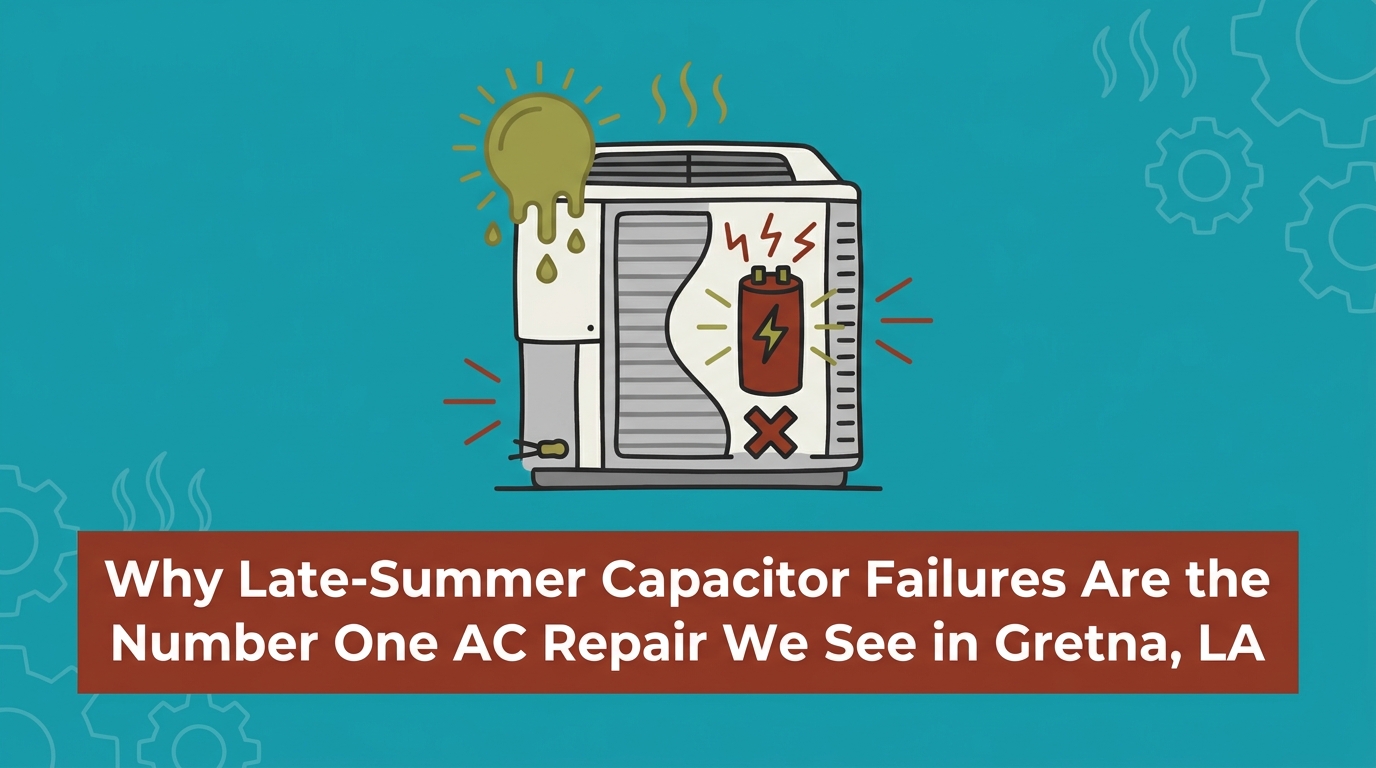
Surviving August: When Gretna's Heat Finally Pushes Your AC to the Brink
Late August in South Louisiana is relentless, which is exactly why late-summer capacitor failures are the number one AC repair we see in Gretna. The humidity settles in thick, temperatures stay high well into the evening, and your air conditioning system has likely been running non-stop since March. By this point in late summer, your cooling equipment is pushed to its absolute mechanical limits. Your system might start making a strange humming noise, or you might notice the vents blowing warm air. These are the subtle warning signs of a capacitor beginning to fail after enduring months of brutal heat. Recognizing these symptoms now is the critical decision point that can prevent a complete system shutdown and save your expensive compressor from catastrophic failure.
If your system is showing signs of electrical strain, our team provides comprehensive HVAC services, including specialized AC repair and service to keep your home cool.
The Reality of Late-Summer Thermal Load
Most homeowners assume that if their air conditioner survived July, it will easily make it through the rest of the year. The reality is much different. Mechanical wear and tear is cumulative. Every hour your system runs, the electrical components generate internal heat. When the outside air temperature refuses to drop below eighty degrees at night, your condenser unit never gets a chance to properly cool down. This sustained thermal load acts like a pressure cooker for the sensitive electrical parts housed inside the metal cabinet.
By the time August rolls around, the internal components have essentially been baking for thousands of hours. The insulation on wires begins to degrade, contactors become pitted from thousands of electrical arcs, and most importantly, the capacitors begin to lose their ability to hold a charge. This is not a random breakdown; it is a highly predictable consequence of the extreme weather patterns we experience locally. Understanding this specific seasonal vulnerability allows you to stay ahead of the curve and address minor electrical degradation before it leaves you sweating in your own living room.
What Does an AC Capacitor Actually Do?
To understand why this specific part fails so often in Gretna, you first need to understand its critical role in your cooling system. A capacitor is a small, cylindrical component that acts very much like a heavy-duty, rechargeable battery for your air conditioner. While your home's electrical grid provides a steady stream of power, the compressor and fan motors inside your AC unit require a massive, instantaneous jolt of electricity to overcome inertia and start spinning.
This initial power demand can be up to three to five times higher than the energy required to keep the motors running once they have started. Your home's standard electrical wiring cannot deliver this much power all at once without tripping a breaker. That is where the capacitor steps in. It stores electrical energy while the system is idle and then dumps it all at once into the motors the second your thermostat calls for cooling.
The Heavy Lifters of Your Cooling System
There are typically two main types of capacitors working inside a standard residential condenser unit. Understanding the difference helps clarify why a failure causes such distinct symptoms.
• Start Capacitor — Primary Function: Provides the massive initial torque needed to start the compressor motor. — Symptom of Failure: The system clicks or hums, but the compressor never actually turns on.
• Run Capacitor — Primary Function: Maintains a steady, even flow of electrical current to keep the motors spinning efficiently. — Symptom of Failure: The system runs sluggishly, draws excessive amperage, or shuts down randomly.
• Dual Run Capacitor — Primary Function: Combines both functions for the compressor and the condenser fan in one unit. — Symptom of Failure: The fan might spin while the compressor stays off, resulting in warm air from vents.
A critical safety warning: Because capacitors are designed to store massive amounts of electrical energy, they remain incredibly dangerous even after the main power to the air conditioner has been turned off at the breaker. A charged capacitor can deliver a lethal shock. Interacting with, testing, or attempting to replace a capacitor involves extremely high voltage and requires a licensed professional with the proper diagnostic tools to discharge the component safely. This is absolutely never a do-it-yourself project.
The Cumulative Toll of Louisiana Heat on Electrical Components
The Problem: Capacitor failure is rarely a sudden event; it is a slow degradation caused primarily by relentless heat. Inside the metal casing of a capacitor is a specialized dielectric fluid or oil that insulates the internal conductive layers. This fluid is designed to withstand normal operating temperatures, but extreme heat breaks down its chemical structure over time. As the fluid degrades, it loses its insulating properties, causing the capacitor to bulge, leak, or completely lose its ability to store an electrical charge.
The Cause: The specific climate of South Louisiana dramatically accelerates this breakdown. Our high humidity levels mean that the air holds onto heat much longer than in drier climates. To effectively cool and dehumidify your home, your air conditioner is forced into much longer continuous run times. By late summer, a local AC system has run for thousands of hours under peak thermal stress. Because the evening temperatures rarely drop enough to provide a meaningful cool-down period, the internal dielectric fluid is constantly operating near its maximum thermal limit.
The Solution: The best way to combat this predictable wear is through proactive professional testing. Because the degradation happens slowly, a technician can measure the electrical capacity (measured in microfarads) of your capacitor long before it actually fails. If you want to learn more about preventing capacitor failure in extreme heat, the key is scheduling a thorough diagnostic check during the late summer months. By identifying a capacitor that has dropped below its rated tolerance, you can swap out the weakened part before it leaves you stranded without air conditioning.
Top Warning Signs of a Struggling Capacitor
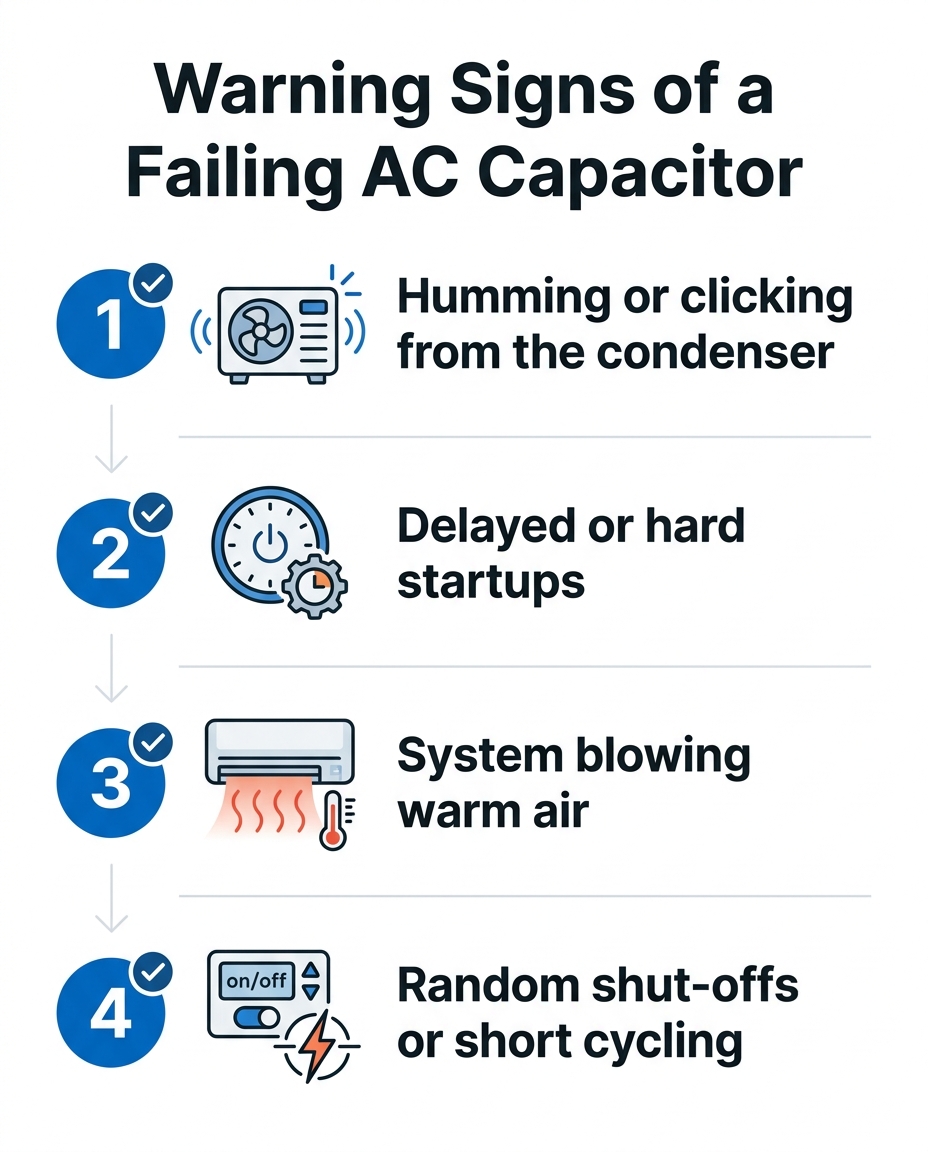
Recognizing the symptoms of a failing capacitor can be the difference between a quick, routine service call and a miserable weekend spent in a hot house. Because the capacitor is responsible for starting the motors, the warning signs are usually highly audible and mechanical. If you notice any of these issues in late August, your system is likely crying out for help.
• Humming or clicking noises: If you stand near your outside condenser unit when the thermostat clicks on, you might hear a distinct humming, buzzing, or rapid clicking sound. This is the sound of the contactor engaging and the motor trying to start, but failing because the capacitor cannot provide the necessary electrical boost.
• Hard starts and delayed cooling: A "hard start" occurs when the air conditioner stutters, shakes, or takes an unusually long time to turn on. You might notice the lights in your house dimming momentarily when the AC kicks on. This indicates the compressor is struggling to pull enough amperage because the capacitor is weak.
• Blowing warm air indoors: If your indoor vents are blowing unconditioned air, it often means the indoor blower motor is working, but the outdoor compressor has failed to start. In many cases, this traces back to a blown dual-run capacitor.
• Random shut-offs and short cycling: A failing run capacitor will cause the compressor or fan motor to overheat quickly. When the internal thermal overload switch detects this dangerous heat, it shuts the system down prematurely to prevent a fire. The system will then try to start again a few minutes later, repeating this damaging cycle.

The Cascading Effect: How a Bad Capacitor Threatens the Compressor
Ignoring the warning signs of a struggling capacitor is one of the most dangerous mistakes a homeowner can make for their HVAC system. The capacitor itself is a relatively simple and straightforward component to replace. However, the damage it can cause when it fails is severe, cascading rapidly through the rest of your cooling equipment.
When a capacitor dies, the compressor motor does not simply give up. It continues to try and start every time the thermostat tells it to. Because it lacks the massive torque boost from the capacitor, the motor enters a state known as "locked rotor." In this state, the compressor draws incredibly dangerous amounts of amperage from your electrical panel in a desperate attempt to overcome physical inertia. This massive electrical draw generates intense, rapid heat inside the compressor windings.
From a Minor Repair to a Major Overhaul
If the system is allowed to short-cycle and repeatedly attempt these hard starts, the insulation on the copper windings inside the compressor will literally melt away. Once those internal wires touch, the compressor shorts out entirely and is permanently destroyed. The compressor is the heart of your air conditioning system, pumping the refrigerant through the lines to remove heat from your home.
Replacing a weak capacitor in late summer is a minor, routine repair. Replacing a burnt-out compressor is a major system overhaul that often requires replacing the entire outdoor condenser unit. By paying attention to the subtle humming noises and hard starts, you are effectively protecting the most critical and expensive component of your entire HVAC system from a completely preventable death.
Emergency Capacitor Replacements When You Need Them Most
Because capacitors are pushed to their breaking point by cumulative heat, they almost never fail on a cool Tuesday morning. They fail when the system is working its absolute hardest—which usually means the middle of a sweltering weekend afternoon or late at night after running constantly all day. Sudden electrical failures during these peak times can cause indoor temperatures to rise to dangerous levels within hours.
We see this pattern constantly. For example, one local homeowner reached out when their upstairs AC unit died in the middle of the night on a Saturday. Our technician responded within 20 minutes on Sunday morning to diagnose the issue, ultimately getting a completely new unit installed by Tuesday to restore their cooling. When a system goes down hard over the weekend, rapid professional response is the only thing standing between you and a miserable, sleepless night.
The Professional Diagnostic Process
When an emergency technician arrives at your home, they do not just guess at the problem. They will shut off the high-voltage power, safely discharge any remaining stored electricity, and use a specialized multimeter to test the exact microfarad output of the capacitor. If the reading falls outside the manufacturer's specified tolerance range, the part is condemned.
In many emergency situations, technicians carry universal dual-run capacitors on their trucks. These versatile parts allow the technician to wire the system safely and restore your cooling immediately, bringing the temperature in your home down right away while they source the exact OEM replacement part if necessary. If you are dealing with a sudden weekend breakdown, you need a reliable Gretna AC repair team that understands the urgency of Louisiana heat and carries the right diagnostic equipment to get your system back online safely.
Proactive Steps to Protect Your Cooling System
The best way to handle a late-summer breakdown is to prevent it from happening in the first place. While you cannot control the brutal August weather, you can control how well-prepared your cooling equipment is to handle the thermal load. Shifting your focus from reactive emergency repairs to proactive care is the smartest strategy for any homeowner.
1. Schedule late-season electrical testing: Do not wait for the system to break. Have a professional test the microfarad output of your capacitors during an end-of-season checkup. Catching a drop in performance early allows you to replace the part on your schedule, not during a weekend emergency.
2. Ensure proper airflow around the condenser: The outdoor unit needs to breathe to dissipate heat. Clear away any tall grass, leaves, or debris that has accumulated around the cabinet over the summer. Restricted airflow forces the system to run hotter, accelerating electrical degradation.
3. Change your indoor air filters: A clogged indoor filter forces the blower motor to work harder, which puts additional strain on the entire electrical system, including the run capacitors. Fresh filters ensure smooth, efficient operation.
4. Invest in ongoing professional care: A team serving this area understands the specific toll the South Louisiana climate takes, allowing them to anticipate and test for these specific late-summer wear patterns. Routine care catches the small issues before they cascade.
Taking these proactive steps is your best defense against sudden late-season breakdowns. By prioritizing preventative AC maintenance, you ensure that your system has the electrical resilience to survive the toughest months of the year without stranding your family in the heat.
Frequently Asked Questions
What are the signs of a bad AC capacitor?
The most common signs of a bad AC capacitor include a humming or clicking noise from the outdoor unit, the system taking a long time to start, or the vents blowing warm air. You might also notice the air conditioner shutting off randomly before the house is completely cooled. These symptoms occur because the compressor and fan motors are struggling to get the electrical boost they need to operate properly.
Will the AC fan run if the capacitor is bad?
It depends on which part of the capacitor has failed, but often the indoor fan will continue to run while the outdoor compressor stays off. If you have a dual-run capacitor and the side controlling the compressor fails, the system will circulate air through your home, but that air will not be cooled. If the side controlling the outdoor condenser fan fails, the compressor might overheat and shut down entirely.
How long do AC capacitors last in hot weather?
In extremely hot and humid climates like South Louisiana, a standard AC capacitor typically lasts between five to ten years. The relentless heat and long cooling seasons force the system to run for thousands of hours, which accelerates the breakdown of the internal dielectric fluid. Routine maintenance and electrical testing can help you track this degradation and replace the part before it fails completely.
What happens if you don't replace a bad AC capacitor?
If you do not replace a bad AC capacitor, you risk permanently destroying your compressor. Without the capacitor's electrical boost, the compressor motor will draw excessive amperage in a desperate attempt to start, causing it to overheat rapidly. Repeatedly forcing a struggling compressor to start will melt its internal wiring, turning a minor electrical repair into a major, costly system replacement.
Why do capacitors fail more frequently in late summer?
Capacitors fail more frequently in late summer due to the cumulative thermal stress placed on the system over the preceding months. By August, the air conditioner has been running constantly with very few cool-down periods, causing the internal insulating fluid inside the capacitor to break down. This extended exposure to high heat makes late summer the peak season for electrical component failures.
Can I replace my AC capacitor myself?
No, you should never attempt to replace an AC capacitor yourself. Capacitors are designed to store massive amounts of high-voltage electricity and can deliver a lethal shock even after the main power to the unit has been turned off at the breaker panel. Only a licensed HVAC professional with the proper training and tools should safely discharge, test, and replace electrical components in your cooling system.
Keeping Your Home Cool Through the Hottest Months
Understanding why late-summer capacitor failures are the number one AC repair we see in Gretna gives you a distinct advantage. By listening for the warning signs and acting quickly, you protect your system from severe damage. If you need a clear, non-technical explanation of your system's electrical health and validation that your compressor is safe, our team is ready to help. Reach out to schedule your professional diagnostic and ensure your home stays perfectly cool no matter how high the temperatures climb.
OUR CLIENTS HAVE TO SAY ABOUT US



Service areas
Our service areas are designed to meet the diverse needs of our clients. We focus on providing exceptional service and ensuring customer satisfaction in every location we operate.