The Impact of Power Surges on Your Hammond AC's Control Board
.webp)
The Hidden Threat of August Storms to Your AC's Electronics
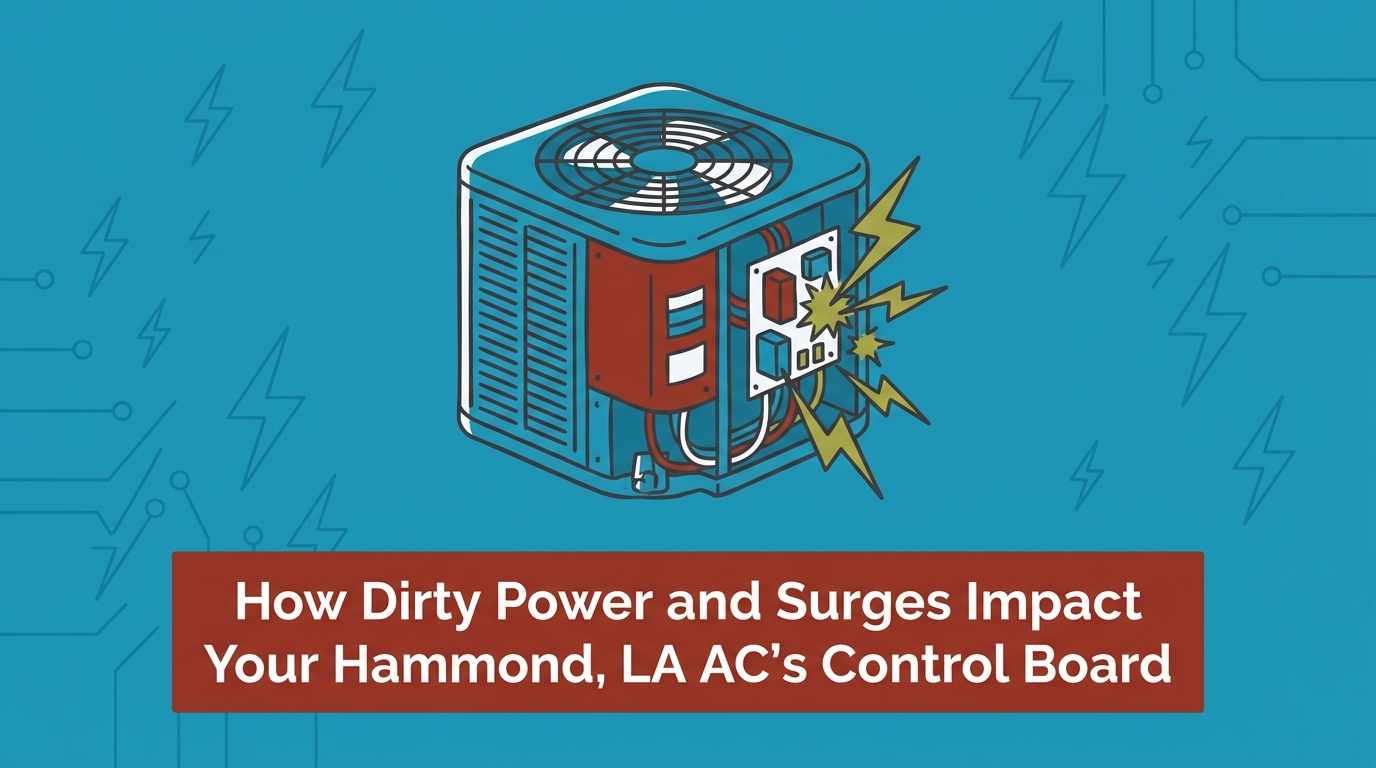
August late-summer heat is bearing down on the Gulf Coast, and as the back-to-school transition begins and afternoon thunderstorms roll in, understanding the impact of power surges on your Hammond AC's control board becomes critical to keeping your home comfortable. While most homeowners instinctively worry about high winds or hail damaging their outdoor condenser units, our team at Cypress Cooling Company knows that the most common and expensive threats to modern cooling systems are entirely invisible. Electrical instability passing through your home's wiring presents a persistent danger to the sensitive electronics that govern your air conditioner.
Your cooling system is not just a collection of mechanical gears, fans, and motors. It relies on a highly sophisticated electronic brain to coordinate every cycle, monitor safety limits, and maintain indoor temperatures. When erratic electrical currents hit this system, the damage is rarely a sudden, catastrophic break. Instead, it is a slow, cumulative degradation of sensitive microprocessors. Before you face a complete system failure during peak heat, it is vital to recognize how these electrical fluctuations wear down your equipment and what you can do to stop it. For comprehensive HVAC services, we firmly believe proactive defense is always more effective than reactive replacement.
The decision point for most homeowners comes down to observation. If you notice strange electrical behavior, short cycling, or a thermostat that seems to lose its mind, you are likely witnessing the early stages of control board degradation. Addressing these erratic symptoms early on can save the surrounding mechanical components from secondary damage and keep your system running smoothly through the end-of-season cooling period.
What Is an AC Control Board and Why Is It Vulnerable?
To understand why electrical fluctuations are so dangerous, you have to look at how modern air conditioning systems operate. In decades past, a central air conditioner was a relatively simple mechanical device driven by heavy-duty contactors and basic wiring. Today, high-efficiency cooling equipment relies on printed circuit boards (PCBs) populated with microprocessors, sensitive relays, and delicate circuitry. Your air conditioner is essentially a specialized computer designed to move heat.
The control board serves as the central communication hub between your indoor thermostat, the outdoor compressor, and the indoor blower motor. It receives temperature requests, calculates the optimal fan speed, initiates the compressor startup sequence, and monitors internal sensors to ensure the system is operating safely. Because these microprocessors are designed to handle very precise voltage levels, they are highly sensitive to any deviation in the electrical supply coming from the Hammond local power grid.
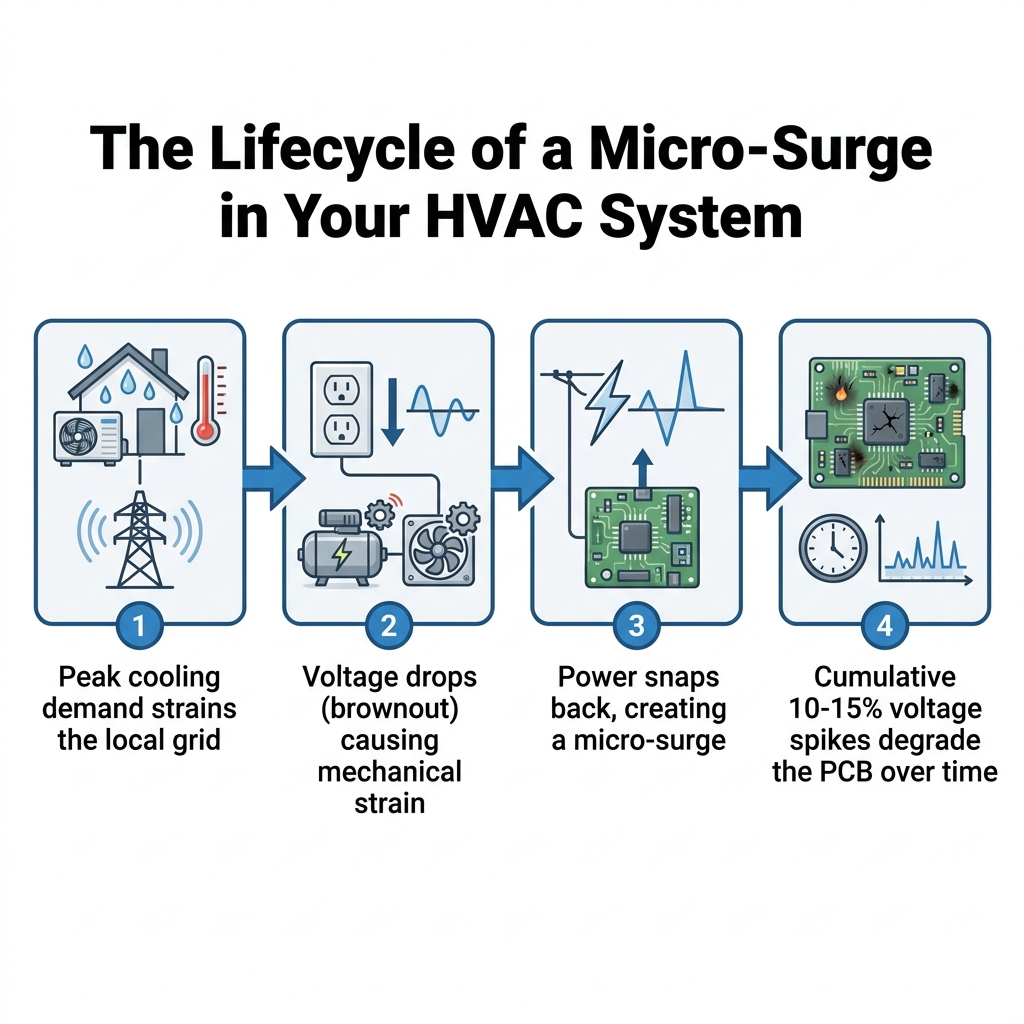
According to data from the Institute of Electrical and Electronics Engineers (IEEE), voltage fluctuations as small as 10 to 15 percent can cause permanent damage to these components. When the voltage spikes or drops beyond the board's design parameters, the delicate pathways on the PCB overheat, warp, or short out entirely. This vulnerability is the trade-off for the incredible energy efficiency and precise climate control that modern systems provide.
The Brain of Your HVAC System
Think of the control board as the traffic director for your entire HVAC setup. It regulates the timing of every component, ensuring the blower motor waits just a few seconds after the compressor starts so that cold air is ready to be distributed. It also manages critical safety lockouts, shutting the system down if it detects dangerous pressure levels or overheating.
When this electronic brain is compromised by electrical wear, the mechanical parts cannot function properly, even if they are brand new. A perfectly healthy compressor will refuse to turn on if the damaged control board cannot send the correct low-voltage signal to the contactor. This is why diagnosing an AC issue often requires deep electrical testing rather than just looking at the moving parts.
Lightning Strikes vs. Dirty Power: Understanding the Difference
A major misconception among homeowners is that electrical damage only happens during a severe, direct lightning strike. While a catastrophic power surge will certainly destroy an air conditioner, these events are relatively rare. The far more common threat is something industry professionals call "dirty power"—the ongoing, minor fluctuations, micro-surges, and frequency variations in your daily electrical supply.
A catastrophic power surge delivers thousands of excess volts in a fraction of a millisecond. If lightning strikes a nearby transformer on the Hammond local power grid, that massive spike travels down the utility lines, bypassing standard breakers, and instantly fries any unprotected electronics in its path. The impact is immediate, fatal, and often leaves visible scorch marks on the control board.
Dirty power, on the other hand, acts like electronic rust. Every time a major appliance in your home cycles on, or the local utility grid shifts loads, tiny micro-surges ripple through your wiring. These fluctuations might only be a few dozen extra volts, but they hit the AC control board multiple times a day. Over months and years, this daily bombardment degrades the circuitry, weakening the capacitors and breaking down the microscopic insulation on the board. Most control board failures our technicians encounter are the result of this cumulative dirty power damage rather than a single dramatic event.
• Catastrophic Surge — Frequency: Rare (Severe Storms) — Mechanism of Damage: Massive, instantaneous voltage spike (e.g., lightning) — System Impact: Immediate, fatal destruction of the PCB and often the compressor.
• Micro-Surges — Frequency: Daily / Weekly — Mechanism of Damage: Minor voltage spikes from grid shifts or large appliances — System Impact: Cumulative degradation, weakening circuits over months or years.
• Brownouts — Frequency: Occasional (Peak Summer) — Mechanism of Damage: Severe drop in voltage forcing motors to draw excess amperage — System Impact: Overheating of the control board and mechanical strain on motors.
• Dirty Power — Frequency: Constant — Mechanism of Damage: Ongoing frequency variations and electrical noise — System Impact: "Electronic rust" causing erratic behavior and premature failure.
How Hammond's Late-Summer Grid Strain Causes Micro-Surges
In our years of serving the Metairie and Hammond communities, we've seen how the local climate plays a massive role in the health of your cooling equipment. With August late-summer heat pushing temperatures to their extremes, peak cooling demand across the region heavily taxes the local electrical infrastructure. Every home and business is running their air conditioning at maximum capacity, which pulls an enormous amount of electricity from the grid simultaneously.
This intense demand frequently leads to brownouts—a temporary drop in voltage supplied by the utility company. When a brownout occurs, your air conditioner still tries to perform its job, but it has to do so with less electrical pressure. To compensate for the low voltage, the system's motors pull more amperage, which generates excess heat that bakes the control board and the surrounding wiring. Hammond's severe late-summer afternoon thunderstorms combined with peak cooling demand create the perfect storm for these brownouts and micro-surges.
The real danger often happens the moment a brownout ends. When full power is suddenly restored, or when demand abruptly shifts as a thunderstorm cools the area down, it creates a "snap-back" effect. This snap-back sends a micro-surge slamming into your AC unit. These events happen multiple times a week, often without the homeowner ever noticing the lights flickering in the living room. It is no surprise that AC repair calls surge during August thunderstorms, as the cumulative electrical strain finally pushes weakened control boards past their breaking point.

Signs of Micro-Surge Damage to Your AC Control Board
Because micro-surge damage happens cumulatively over the course of the August late-summer heat, the symptoms often start small and grow progressively worse. Homeowners frequently mistake these early warning signs for mechanical wear and tear, but they are actually the result of a failing electronic brain trying to operate a complex machine. Knowing what to look for can help you catch a degraded board before it leaves you stranded in the heat.
• The AC unit short cycling: If your system turns on, runs for only a minute or two, and then abruptly shuts off before cooling the house, the control board may be sending erratic signals or falsely triggering safety lockouts.
• Unexplained tripped breakers: A failing circuit board can cause electrical shorts or force the compressor to pull too much amperage, repeatedly tripping the dedicated breaker at your electrical panel.
• A blank or unresponsive thermostat: If your thermostat screen is blank despite having fresh batteries, the control board may have stopped sending the necessary low-voltage power to the indoor unit.
• Mismatched indoor and outdoor operation: If you hear the outdoor condenser running loudly but the indoor blower fan refuses to push air through the vents (or vice versa), the communication relays on the control board are likely fried.
• Strange clicking noises at the unit: A rapid, repetitive clicking sound from the indoor or outdoor unit often indicates a damaged relay on the board that is struggling to close an electrical circuit.
Diagnosing these issues requires patience and expertise. A pattern we see often at Cypress Cooling Company involves homeowners experiencing persistent, unexplained AC problems that seem like mechanical failures. For example, one local homeowner struggled with erratic cooling until our technician arrived. We were able to figure out the AC issues by tracing the problem back to deep electrical degradation rather than simple mechanical failure, working to fix it the same day. Electrical strain manifests in highly unpredictable ways, making accurate, professional diagnosis essential.
Why You Shouldn't Ignore Erratic AC Glitches
When an air conditioner starts behaving strangely—turning on at odd times, failing to reach the set temperature, or making unusual electrical humming noises—many homeowners misdiagnose the problem as simply "old age." They assume the equipment is just getting tired from the long summer and hope it will hold together until the weather cools down. Ignoring these erratic glitches is one of the fastest ways to turn a localized electrical issue into a complete system replacement.
Attempting a DIY diagnosis on electronic HVAC components is highly dangerous. Your air conditioning system operates on high-voltage electricity that can cause severe injury or death if mishandled. Furthermore, opening the electrical cabinet and tampering with the control board will almost certainly void your manufacturer warranty. Modern PCBs require precise multimeter testing to determine if the voltage pathways are intact, a task that should only be handled by a trained professional.
When our professionals inspect your system, we don't just look at the moving parts. We test the incoming voltage from the Hammond local power grid, inspect the back of the PCB for hidden scorch marks, and check for swollen or leaking capacitors. Cypress Cooling Company's localized expertise in diagnosing complex electronic failures means we prioritize proactive solutions over reactive board replacements. By identifying the root cause of the dirty power, our technicians can recommend protective measures that stop the damage in its tracks.
Early intervention is crucial because a failing control board can actively destroy other parts of your system. If a damaged relay sends power to the compressor in a stuttering, erratic manner, it can permanently burn out the compressor motor—the single most expensive component in your entire air conditioner. Having our team evaluate your Hammond air conditioning services needs at the first sign of trouble can save you from massive secondary repair bills.
Proactive Defense: Shielding Your HVAC System from Electrical Wear
The ultimate solution to the concrete problem of electrical degradation is not just replacing parts as they break, but actively shielding the equipment from the unpredictable Hammond grid. Many homeowners mistakenly believe that the basic power strips they use for their televisions and computers offer enough protection for the whole house. However, basic power strips do absolutely nothing to protect hardwired appliances like central air conditioners, which draw power directly from the electrical panel.
To truly protect your investment from the August late-summer heat and the accompanying electrical storms, you need dedicated HVAC surge protection. A dedicated surge protector is a heavy-duty device installed directly at the condenser disconnect box outside your home, as well as at the indoor air handler. These devices act as a sacrificial barrier. When a micro-surge or a larger voltage spike travels down the line, the surge protector absorbs and redirects the excess energy safely into the ground, preventing it from ever reaching the delicate control board.
Investing in this level of protection is incredibly cost-effective when compared to the alternative. The cost of installing dedicated surge protectors is a fraction of the price of replacing a fried microprocessor board, let alone replacing a burned-out compressor motor. Furthermore, if you are upgrading your system entirely, generic energy rebates or federal tax credits may apply to qualifying high-efficiency installations—though you should always verify current programs with your utility or a tax professional. Regardless of whether your system is new or old, dedicated protection provides peace of mind knowing that it is shielded from the invisible electrical wear that destroys so many units prematurely.
HVAC Surge Protectors vs. Whole-Home Systems
For the highest level of defense, professionals often recommend a two-tiered approach. A whole-home surge protector is installed directly at your main electrical breaker panel. This device monitors the power coming into the house from the utility lines and blocks massive external surges—like those caused by a nearby lightning strike or a major grid failure—before they can enter your home's internal wiring.
However, a whole-home protector cannot stop internal micro-surges generated by appliances inside your house, such as a refrigerator kicking on or a high-draw power tool being used in the garage. That is where the localized HVAC surge protector comes in. By having both layers of defense, they work together seamlessly to mitigate internal and external electrical threats, ensuring the clean, stable power your AC control board needs to survive.
Protect Your Investment Before the Next Storm
Dirty power and grid fluctuations are an unavoidable reality of modern living, especially when the Hammond local power grid is pushed to its limits. However, the resulting equipment damage is entirely preventable. You do not have to accept premature breakdowns and erratic system behavior as a normal part of summer.
By taking proactive steps to shield your system from electrical wear, you ensure that the electronic brain of your air conditioner remains healthy and communicative. Explore professional assessment and surge protection options today to guarantee your system survives the season, providing you with the reliable, uninterrupted cooling you expect.
Frequently Asked Questions
Can a power surge damage an AC unit?
Yes, a power surge can cause severe damage to an air conditioning unit. Massive surges can instantly fry the electronic control board and burn out the compressor motor. Even small, daily micro-surges slowly degrade the sensitive microprocessors over time, leading to erratic behavior and eventual system failure.
How do I know if my AC control board is bad?
Signs of a failing control board include the system short cycling, the outdoor unit running while the indoor fan stays off, or a completely blank thermostat screen. You might also notice unexplained tripped breakers or hear rapid clicking sounds coming from the equipment cabinet. A professional technician must use a multimeter to confirm the board has failed.
Do I need a surge protector for my HVAC?
Installing a dedicated surge protector for your HVAC system is highly recommended to protect the expensive, sensitive electronics inside modern units. Standard power strips do not protect hardwired appliances, leaving your AC fully exposed to grid fluctuations. A dedicated protector absorbs excess voltage and redirects it safely to the ground.
What happens to an air conditioner during a brownout?
During a brownout, the voltage supplied to your home drops significantly, forcing the air conditioner's motors to pull more amperage to keep running. This excess amperage generates intense heat that can melt wiring insulation and warp the printed circuit board. The sudden restoration of full power after a brownout often creates a damaging micro-surge.
Can dirty power cause my AC to short cycle?
Yes, dirty power can absolutely cause an air conditioner to short cycle. When the electrical supply is unstable, the control board may receive erratic signals or falsely detect a safety hazard, causing it to shut the system down prematurely. Over time, this constant stopping and starting puts immense mechanical strain on the compressor.
Will a whole-home surge protector save my AC's circuit board?
A whole-home surge protector provides an excellent first line of defense against large external surges coming from the utility grid. However, it may not catch the smaller internal micro-surges generated by other large appliances inside your home. For maximum protection, a whole-home unit should be paired with a dedicated HVAC surge protector at the condenser.
OUR CLIENTS HAVE TO SAY ABOUT US



Service areas
Our service areas are designed to meet the diverse needs of our clients. We focus on providing exceptional service and ensuring customer satisfaction in every location we operate.