Why We Recommend Preventative Maintenance for Marrero ACs Even After the Summer Peak
.webp)
The August AC Myth: Is It Too Late for Preventative Maintenance?
If you are wondering why we recommend preventative maintenance for Marrero ACs even after the summer peak, the answer comes down to one pervasive misconception: the belief that once July's extreme heat wave breaks, your air conditioning system is safe until next spring. Many homeowners assume that because the daily high temperatures might slightly dip, the strain on their HVAC equipment disappears. The reality is quite the opposite. During the late-summer August transition, the primary threat to your comfort and your home shifts from heat-induced mechanical strain to humidity-induced water volume. Deciding to skip maintenance now leaves your system vulnerable to issues that have been quietly compounding all summer long.
For comprehensive air conditioning services, including our dedicated preventative AC maintenance plan, reach out to our team to secure your system for the months ahead.
The Shift in Late-Summer Threats
Professional intervention at this stage of the year is about protecting your home's interior, not just keeping the air cold. By late summer, your air conditioner has been running non-stop for months. The parts that manage temperature might be holding up, but the components responsible for managing moisture are often pushed to their absolute limits. Waiting until a failure occurs often means dealing with interior water leaks rather than just a warm house.
• Early Summer (June - July) — Primary System Stressor: Extreme heat and long mechanical run cycles — Greatest Risk to Homeowners: Electrical failures, blown capacitors, warm air
• Late Summer (August - September) — Primary System Stressor: Relentless moisture extraction and humidity — Greatest Risk to Homeowners: Biological buildup, clogged drains, water damage
As the table illustrates, the nature of the wear and tear changes. A system that handled the mechanical stress of July perfectly well can easily succumb to the biological buildup of August. Recognizing this shift is the first step in protecting your property from unexpected end-of-season disasters.
Why Marrero's Cooling Season Defies the Standard Calendar
National HVAC advice often assumes a cooling season that neatly wraps up by the end of August. In many parts of the country, September brings crisp air and open windows. However, South Louisiana's prolonged heat and intense humidity dictate a completely different timeline. Providing reliable AC services in Marrero requires an understanding that continuous condensation persists throughout the fall.
The Reality of High Dew Points
August and September in the region maintain extreme dew points and high temperatures that force your air conditioner to act primarily as a heavy-duty dehumidifier well into October. The sheer volume of moisture extracted daily puts immense strain on the system's drainage components. When the air inside your home is thick with humidity, your AC has to run longer cycles just to pull that moisture out before it can effectively lower the ambient temperature.
Key factors driving late-season AC strain:
• Prolonged humidity: The air remains saturated with moisture, requiring continuous dehumidification.
• Shorter days, identical load: Even as daylight hours decrease, the latent heat and humidity trapped inside the home require the AC to run deep into the night.
• Compounding wear: Components that have been vibrating, spinning, and draining since May have zero recovery time before the heavy moisture loads of September hit.
Because the local climate forces your system to manage so much water, standard national timelines for maintenance simply do not apply. A tune-up in late summer is not a delayed spring service; it is a precisely timed intervention designed to handle the unique environmental pressures of the Gulf Coast fall.
The Mechanics of Condensation: What Happens Inside Your AC by Late Summer
To understand why late-season maintenance is so critical, you have to look at the mechanical reality of moisture extraction and biological buildup over months of continuous use. Air conditioners in humid climates can extract gallons of water from indoor air every single day. This is a normal and necessary function, but it creates a byproduct that must be safely managed.
The Problem: A Dark, Damp Environment
As warm, humid indoor air blows across the freezing cold evaporator coils, the moisture in the air condenses into liquid water. This water drips down into a primary condensate drain pan and is then channeled outside through a PVC drain line. Over the course of the summer, this creates a perpetually wet, dark environment inside your indoor air handler or furnace.
The Cause: The Lifecycle of Biological Buildup
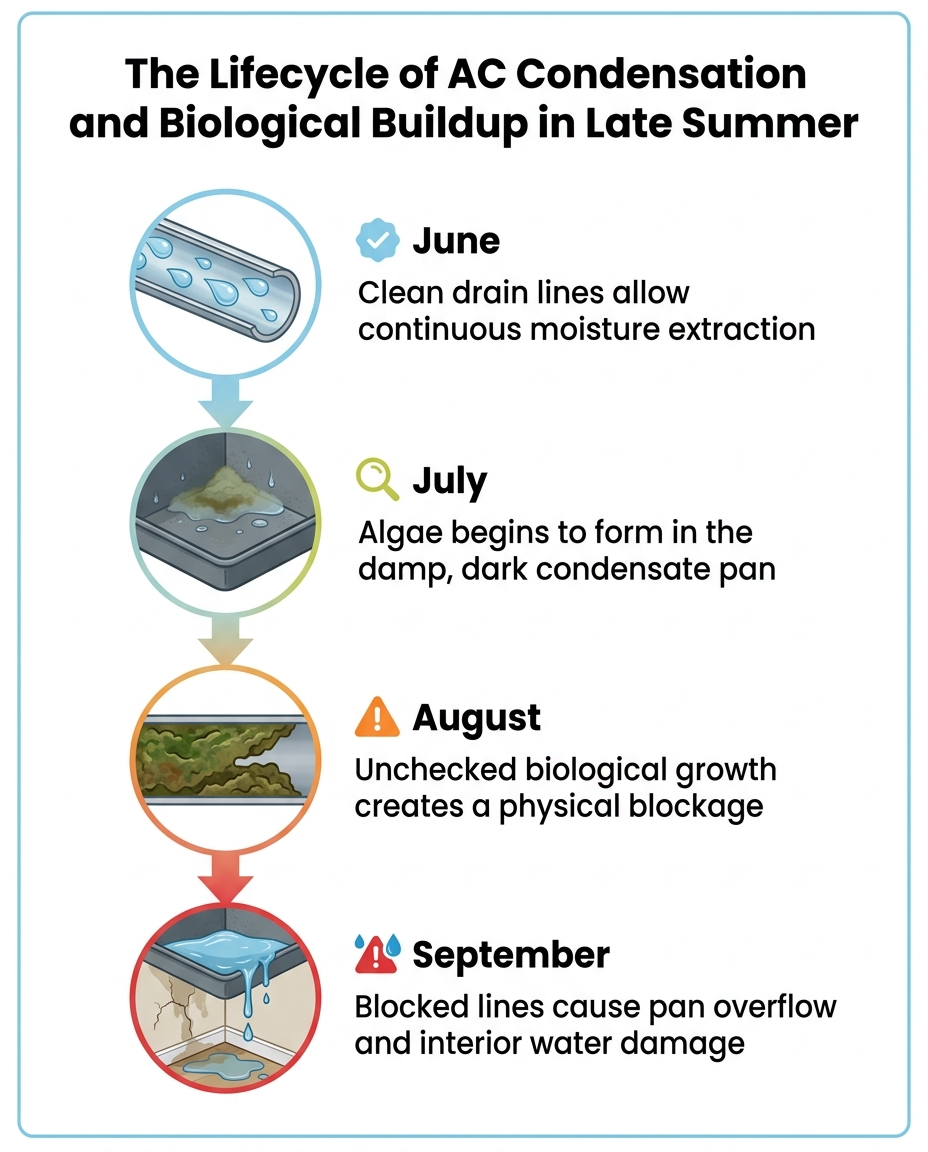
This dark, damp environment creates the perfect habitat for algae, mold, and mildew. During the early summer months, the continuous flow of water might keep the drain line relatively clear. But as the weeks pass, microscopic biological growth begins to cling to the sides of the pan and the interior walls of the PVC pipe. By the time the late-summer August transition arrives, this growth has had months of uninterrupted condensation to feed on. A system that was running perfectly and draining cleanly in June can become completely choked with a thick, gelatinous algae blockage by late August.
The Solution: Professional Intervention
The only way to break this cycle is to physically remove the biological buildup before it forms a solid plug. This requires specialized tools to clear the line safely without damaging the delicate plastic components or the attached coils. Preventative maintenance at this stage interrupts the lifecycle of the algae, restoring the system's ability to drain the massive amounts of water it will continue to pull from the air throughout September and October.

The Hidden Threat: Clogged Drain Lines and Catastrophic Water Damage
The primary risk of skipping late-summer maintenance is not just a breakdown that leaves you sweating; it is the severe threat of water damage to your home's interior. When a condensate drain line becomes fully blocked by late-summer biological buildup, the gallons of water the system extracts have nowhere to go. The water backs up into the primary drip pan, fills it to the brim, and eventually overflows.
How a Blockage Escalates
Depending on where your indoor unit is located, an overflowing drain pan can be disastrous. If the unit is in the attic, the water will quickly soak through the insulation and pool on the drywall ceiling below. If the unit is in a utility closet, the water will run under baseboards, warp hardwood floors, and soak into the surrounding drywall, creating a secondary mold issue within the home's structure.
One Marrero homeowner experienced this exact scenario during a recent summer heatwave. They reached out for emergency assistance because water was actively dripping from their ceiling. A technician responded quickly, diagnosed a failed and overflowing condensate system, and installed a new drip pan the same day. Because of the rapid response, the customer was not left without air conditioning for a second day, but the situation underscores how quickly a simple drainage issue escalates into a property damage emergency.
The true cost of skipping maintenance:
• Ceiling and drywall repair: Water-logged drywall sags, crumbles, and requires professional replacement and repainting.
• Flooring damage: Laminate and hardwood floors will buckle and warp when exposed to standing water from a utility closet leak.
• Insulation replacement: Wet attic insulation loses its thermal resistance and becomes a breeding ground for mold, requiring complete removal.
The cost, hassle, and disruption of water damage restoration far exceed the proactive investment in late-season preventative care. Clearing the line before it backs up is the most effective way to protect your property.
Why Evaporator Coil Washing is a Non-Negotiable Late-Season Step
Drain lines are only half of the moisture management equation. The evaporator coils themselves play a critical role in how condensation forms and sheds. Throughout the summer, these coils collect microscopic dust, pet dander, and airborne debris that manage to bypass the air filter. When this debris mixes with the constant condensation, it forms an insulating paste over the metal fins.
The Freezing Cycle
Dirty coils insulate the refrigerant running through them. Instead of absorbing heat from the indoor air, the refrigerant stays too cold, causing the condensation on the outside of the coils to freeze. A thin layer of frost can quickly turn into a solid block of ice encasing the entire coil assembly. This forces the system to work incredibly hard with almost zero cooling output.
The danger peaks when the system cycles off and that massive block of ice begins to melt. The rapid influx of melting water easily overwhelms even a clear drain pan, causing an immediate overflow. This is why knowing what is included in a professional AC tune-up is so important: proper maintenance goes beyond just checking the refrigerant pressure. It must address the cleanliness of the coils.
Why coil cleaning is strictly a professional job:
• Delicate fins: The aluminum fins on an evaporator coil are thinner than a credit card and bend easily, which permanently restricts airflow.
• Chemical safety: Applying the wrong type of cleaner can cause the metal to corrode, leading to catastrophic refrigerant leaks.
• Accessibility: Reaching the coils often requires partially disassembling the indoor air handler, which exposes high-voltage electrical components.
Only professional, specialized cleaning can safely restore the coils during the late-summer August transition without bending the delicate fins or risking electrical shock.
Proactive Protection: How Professionals Secure Your System for Fall
When you schedule a late-summer tune-up, you are paying for professional-grade actions that prevent water damage, strictly avoiding risky DIY attempts. Cypress Cooling Company focuses on proactive local expertise, prioritizing saving homeowners from catastrophic water damage rather than just performing a generic, box-checking exercise. We know exactly what the Marrero climate does to an HVAC system by August, and our process reflects that.
The Professional Maintenance Checklist
1. Clearing and flushing the condensate drain line: Technicians use specialized vacuums and safe flushing solutions to completely remove late-summer algae blockages. This ensures the pipe is restored to its full diameter, allowing water to flow freely.
2. Inspecting the primary and secondary drain pans: The pans are thoroughly checked for micro-cracks, rust, or signs of standing water. If a pan is holding water instead of draining it, the pitch of the unit may need adjustment, or the pan itself may need replacement before it fails.
3. Verifying safety float switches: A safety float switch is a small device wired into the drain line or secondary pan. If water backs up, the switch floats upward and immediately shuts off the air conditioner, stopping the creation of more condensation. Technicians test this switch with a digital multimeter to ensure it will actually cut the power if an overflow threatens your home.
4. Washing the outdoor condenser unit: While the indoor unit handles moisture, the outdoor unit needs its fins cleared of summer grass clippings, dirt, and debris so it can effectively release the heat it absorbed from your house.
5. Checking electrical connections: Months of vibration can loosen wiring. Tightening these connections prevents electrical arcing and extends the life of the compressor and motors.
These critical tasks require professional tools and expertise to ensure the system is truly protected. Attempting to clear a drain line with compressed air or a wire hanger often results in cracked PVC or compacted clogs that are even harder to remove.
Frequently Asked Questions About Late-Summer AC Maintenance
Is it too late to get AC maintenance in August?
No, August is actually a critical time for maintenance in humid climates. While standard advice might suggest spring is the only time for a tune-up, service during the late-summer August transition prevents the compounding issues of summer wear and tear from causing a sudden breakdown. By addressing biological buildup and dirty coils now, you ensure the system operates efficiently through the demanding fall months.
Why does my AC drain line keep clogging in the summer?
Continuous moisture extraction creates a dark, wet environment inside your air handler. This leads to rapid algae and mold growth that eventually forms a physical blockage in the narrow PVC pipe. Because the system runs almost non-stop during the peak summer months, the biological growth has a constant water source, allowing it to multiply rapidly until it completely chokes off the drainage pathway.
Why is my AC leaking water inside the house?
Indoor water leaks are usually caused by a clogged condensate drain line or a cracked drip pan. When the water cannot exit the home, it backs up, overflows the pan, and drips through your ceiling or onto your floors. This requires immediate professional attention to clear the blockage and verify the integrity of the pan to prevent severe, expensive property damage.
What happens if you skip AC maintenance before the fall?
Skipping late-summer maintenance leaves your system vulnerable to the specific threats of high humidity. The biological buildup that started in June will continue to grow, significantly increasing the risk of a drain line backup and interior water damage. Additionally, dirty coils will force the system to work harder, driving up your energy bills and increasing the likelihood of a frozen evaporator coil.
How often should AC drain lines be professionally cleared in humid climates?
In highly humid regions, AC drain lines should be professionally inspected and cleared at least once a year, though many systems benefit from a mid-to-late summer flush. Because the volume of moisture extracted is so high, preventative clearing is the only reliable way to stop algae from forming a solid plug. Relying on safety switches alone is risky; proactive clearing is always the safest approach.
Secure Your Home for the Fall: Next Steps for Local Residents
Ultimately, late-summer maintenance is fundamentally about preventing water damage and handling the continuous humidity that defines a Marrero fall. While it is easy to assume that the passing of peak July heat means your system is safe, the mechanical reality of heavy condensation proves otherwise. The gallons of water your system continues to extract daily must be safely managed to protect your drywall, flooring, and peace of mind.
Scheduling service now provides reassurance through the rest of the cooling season. By having a professional inspect your drain lines, clear biological buildup, and wash your coils, you eliminate the hidden threats that have been growing inside your unit all summer. Protect your home and ensure your comfort by reaching out to a local professional today. Do not wait for a ceiling leak to remind you that your system needs care—take the proactive step and secure your preventative maintenance now.
OUR CLIENTS HAVE TO SAY ABOUT US



Service areas
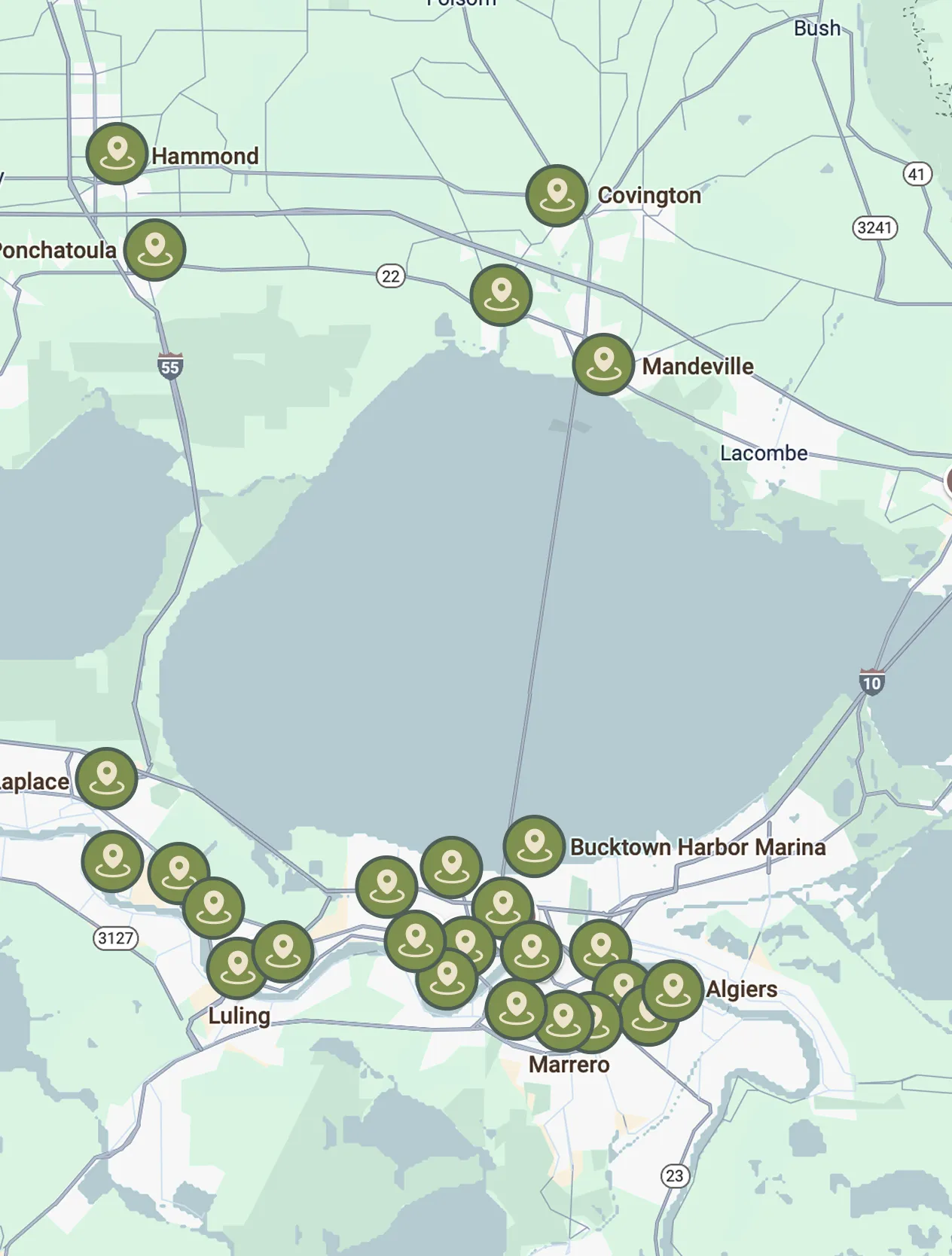
Our service areas are designed to meet the diverse needs of our clients. We focus on providing exceptional service and ensuring customer satisfaction in every location we operate.