How Cypress Cooling Diagnoses Short-Cycling ACs in Elevated Algiers Homes
.webp)
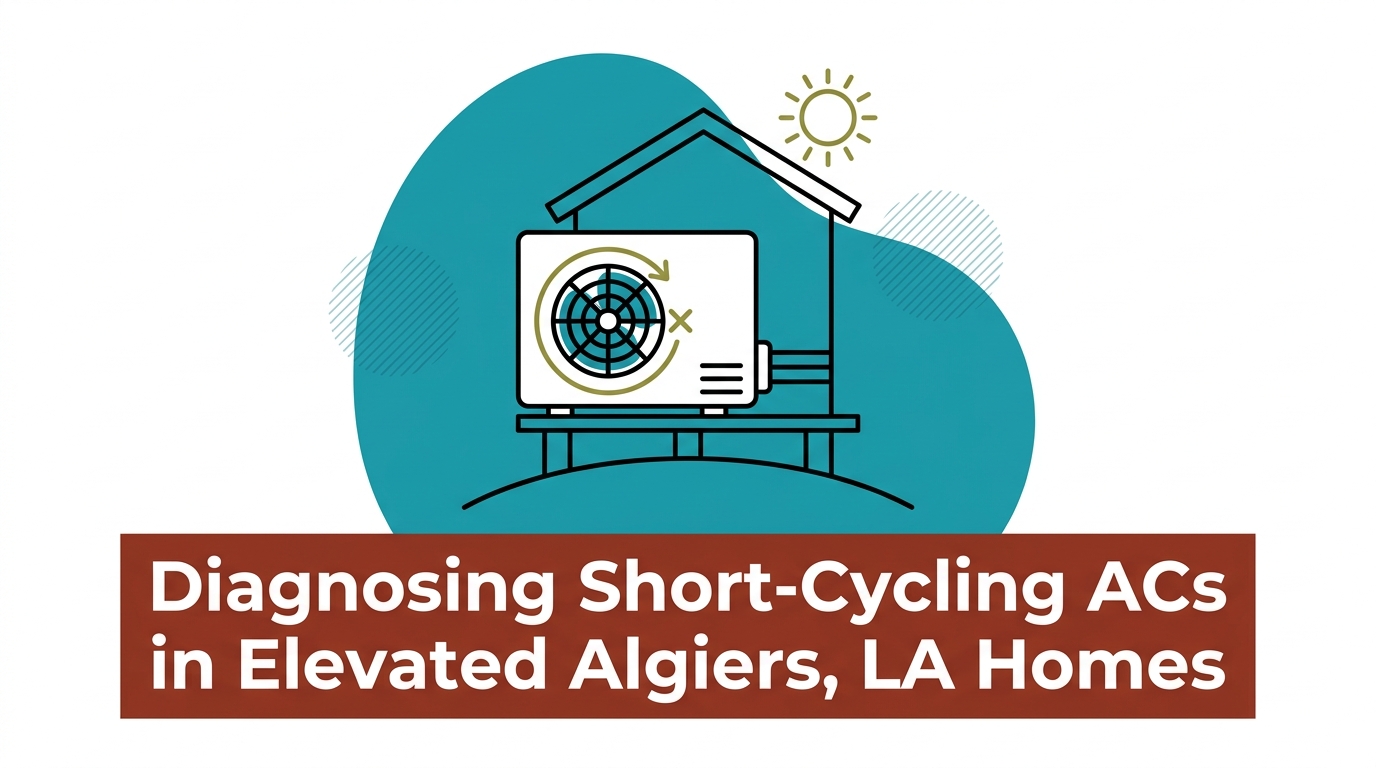
When Late-Summer Heat Causes Your AC to Constantly Turn On and Off
Your air conditioner kicks on, runs for a few loud minutes, and shuts down—only to start the entire process over again before your living room even feels cool. If you are wondering how Cypress Cooling diagnoses short-cycling ACs in elevated Algiers homes, the first step is understanding why this frustrating pattern happens when temperatures peak. During late summer in South Louisiana—just as families are managing the back-to-school transition this August—extreme heat and heavy humidity put immense pressure on your home's climate control system. At Cypress Cooling Company, our technicians frequently see this rapid on-and-off behavior, known as short-cycling, prevent systems from reaching a consistent, comfortable temperature. Instead of a steady, cooling breeze, you are left with temperature swings, high humidity, and a system that sounds like it is struggling to keep up with the weather outside.
Homeowners in raised properties face unique thermal challenges compared to those living in modern slab-on-grade construction. The space beneath your floorboards changes how heat and moisture interact with your home, making temperature regulation far more complex. Ultimately, resolving the issue comes down to a critical decision point: determining if the rapid cycling is caused by crawlspace ductwork issues restricting airflow, or if the unit itself is improperly sized for the home's actual cooling load.
If you need immediate help with your air conditioning systems, our team is ready to provide expert AC repair in Algiers.
How the Architecture of Elevated Algiers Homes Impacts HVAC Performance
The underlying problem: Elevated and historical homes in Algiers feature altered thermal envelopes that fundamentally change how heating and cooling operate. Unlike modern homes built on solid concrete slabs, raised foundations leave the underside of the house exposed to outside air, moisture, and temperature fluctuations. Many of these historical homes were constructed long before modern central air conditioning was invented, meaning their original design prioritized cross-ventilation over airtight insulation.
The structural cause: In our years of servicing properties across the Metairie and Algiers areas, our team has noticed a recurring pattern: when these beautiful historical homes undergo HVAC retrofits, the original airflow patterns are often disrupted. Installers sometimes fail to account for the uninsulated floors over the exposed crawlspaces, treating the house as if it were a modern, airtight box. While a dirty air filter can cause short-cycling in any home by suffocating the air handler, raised homes have structural variables that severely exacerbate the issue. Heat rises from the unconditioned space below the floorboards, fighting against the cold air your system is trying to push into the rooms. If you are trying to figure out why your AC keeps turning on and off, you have to look at the foundation just as closely as the equipment.
The necessary solution: Properly diagnosing cooling issues in these properties requires evaluating the home's specific structural footprint. You cannot apply a one-size-fits-all approach to a home with a pier-and-beam foundation. Understanding the unique thermal dynamics is the only way to establish a baseline for how much cooling power the home actually needs.
The Crawlspace Thermal Envelope
The thermal envelope of a building is the physical barrier separating conditioned indoor air from unconditioned outdoor air. In a raised foundation, this envelope includes the floor beneath your feet. Because the space under the house is completely unconditioned, the temperature and humidity levels down there mirror the extreme South Louisiana weather.
To understand the difference, consider how raised foundations compare to modern slab construction:
• Thermal Barrier — Slab-on-Grade Foundation: Solid concrete provides a thick, stable barrier against ground temperatures. — Raised / Elevated Foundation: Wood floors with varying levels of insulation face open, moving outdoor air.
• Moisture Exposure — Slab-on-Grade Foundation: Moisture barriers are poured directly under the concrete slab. — Raised / Elevated Foundation: Humid air constantly circulates directly beneath the floorboards.
• Ductwork Location — Slab-on-Grade Foundation: Ducts are typically located in the attic or within interior walls. — Raised / Elevated Foundation: Ductwork is often routed through the unconditioned, humid crawlspace.
• Cooling Load Impact — Slab-on-Grade Foundation: Predictable, stable cooling requirements based on standard modern insulation. — Raised / Elevated Foundation: Highly variable cooling loads due to heat rising through the floorboards.
The Overlooked Danger of Oversized Air Conditioners
One of the most persistent misconceptions our Cypress Cooling Company technicians encounter in residential HVAC is the belief that a larger, more powerful air conditioner will cool a drafty historical home better than a smaller unit. In reality, oversized equipment is a primary culprit behind constant short-cycling. When an air conditioner is too large for the square footage and thermal load of the house, it blasts the rooms with cold air at an incredibly rapid pace. The thermostat registers that the target temperature has been reached and shuts the system down before a full, healthy cooling cycle can complete.
The latent heat problem: Air conditioners perform two distinct jobs: sensible cooling (lowering the temperature) and latent cooling (removing humidity). Lowering the temperature happens relatively quickly, but pulling thick South Louisiana moisture out of the air takes time. Because an oversized unit cools the air too quickly and shuts off prematurely, it fails to adequately remove indoor humidity. This leaves the home feeling cold but clammy, forcing homeowners to lower the thermostat even further in an attempt to feel comfortable, which only accelerates the short-cycling loop.
Late summer (August) conditions maximize cooling loads, exposing these sizing flaws that might go completely unnoticed during milder spring months. When the humidity peaks, the system's inability to run a long, steady cycle becomes painfully obvious.
• Cold, clammy air: The temperature reads 70 degrees, but your skin feels sticky because the humidity remains high.
• Loud, aggressive airflow: The vents sound like a wind tunnel when the system kicks on, indicating too much air volume for the ductwork.
• Frequent starts and stops: The system runs for less than ten minutes at a time before abruptly shutting down.
• Uneven room temperatures: The rooms closest to the air handler freeze, while rooms further away remain warm and stagnant.
Crawlspace Ductwork: Airflow Restrictions and Thermal Loss
The underlying problem: The second major cause of short-cycling specific to raised homes in Algiers involves the ductwork routed beneath the floorboards. Ductwork located in unconditioned, humid crawlspaces suffers from significant thermal loss. When cold, conditioned air travels through thin metal or flexible ducts in a 95-degree crawlspace, the heat transfer forces the system to work much harder to deliver cold air into the living space.
The structural cause: We frequently see firsthand how the harsh environment beneath an elevated home takes a toll on duct materials over time. Improperly sealed ducts, deteriorating tape, or sagging flexible lines draw in thick moisture or leak precious conditioned air directly into the dirt below the house. When return ducts pull humid outdoor air into the system, the air handler is forced to cool hot, wet air instead of recirculating the pre-conditioned air from inside the house. More importantly, if the ductwork is crushed, undersized, or heavily restricted, the system cannot move enough air over the indoor evaporator coil.
The necessary solution: Restricted airflow causes the system's internal components to malfunction. Without enough warm indoor air blowing across the evaporator coil, the refrigerant inside drops below freezing. The condensation on the coil literally turns to ice, blocking airflow entirely. Once the system detects this dangerous pressure drop or temperature shift, safety switches trigger an immediate shutdown to protect the compressor. The system thaws, turns back on, and the cycle repeats. Resolving this requires a comprehensive evaluation of the ductwork's integrity, ensuring that the structural pathways can handle the required air volume without leaking or suffocating the equipment.
How Cypress Cooling Diagnoses Short-Cycling ACs in Elevated Algiers Homes
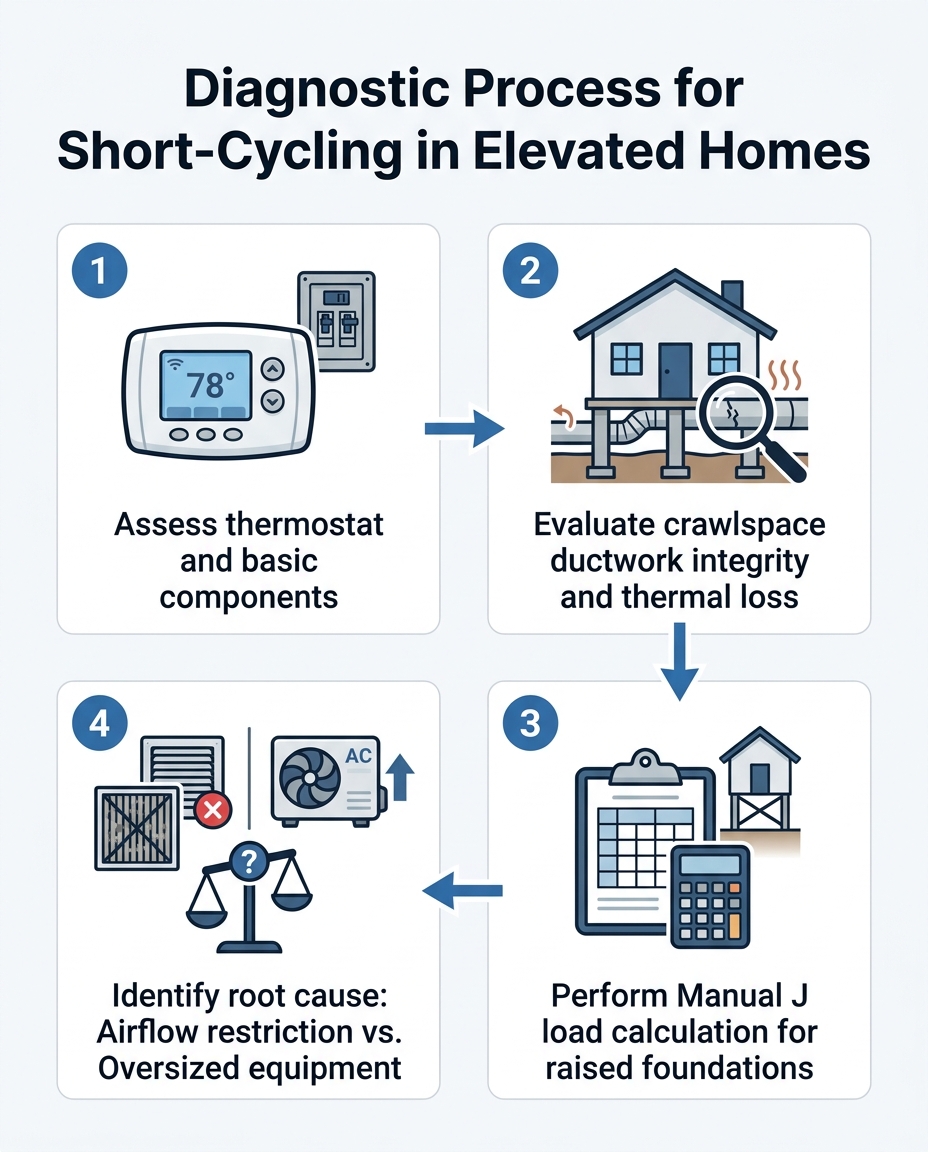
Resolving complex, recurring issues requires looking at the home as a complete system, rather than just swapping out parts and hoping for the best. After years of working on South Louisiana's unique raised properties, our diagnostic rigor for elevated homes goes far beyond checking the thermostat or testing a capacitor. We follow a precise, professional protocol to differentiate between ductwork airflow restrictions and actual equipment oversizing.
1. Assess the Thermostat and Basic Components: We begin by ruling out the simple culprits. We verify that the thermostat is calibrated correctly and not located near a heat source that is causing false readings. We also test the electrical components, such as contactors and capacitors, to ensure they are delivering the correct voltage.
2. Evaluate Crawlspace Ductwork Integrity: We physically inspect the ductwork located beneath the raised foundation. We look for sagging lines, disconnected joints, and areas where thermal loss is occurring. We measure the static pressure of the system to determine if the ductwork is too small for the air handler, which is a leading cause of suffocated airflow and frozen coils.
3. Perform Specialized Manual J Load Calculations: To determine if the equipment is oversized, we calculate the exact cooling load of the home. For raised properties in Algiers, this means factoring in the specific R-value of the uninsulated floors, the height of the ceilings, the age of the windows, and the exact directional orientation of the house. We do not guess based on square footage alone.
4. Identify the True Root Cause: By comparing the static pressure readings from the ductwork with the Manual J load calculation, we can definitively prove whether the short-cycling is caused by the system suffocating on restricted air or the equipment simply being too massive for the historical home's thermal envelope.
Working with a company that understands local architecture makes a significant difference. One local homeowner reached out during the July 4th holiday when their system began shutting down repeatedly. While the immediate trigger was a blown capacitor, our technician did not just swap the part and leave. We performed a full diagnostic to understand why the capacitor blew in the first place, uncovering underlying airflow strain caused by the home's layout. We fixed the immediate electrical failure and set up a preventive maintenance plan to protect the equipment long-term, showing how specialized local expertise in diagnosing and resolving HVAC sizing and airflow issues specific to raised historical homes prevents recurring breakdowns.

Protecting Your System from Premature Wear
Ignoring a short-cycling air conditioner is one of the most expensive mistakes a homeowner can make. Constant starting and stopping places immense strain on the compressor and the electrical components. The most energy-intensive part of an air conditioner's operation is the initial startup, which requires a massive surge of electricity known as inrush current. When your system starts up six times an hour instead of two, the compressor motor runs extremely hot, the capacitors degrade rapidly, and the contactors suffer from excessive electrical arcing. Over time, this repetitive stress leads to total compressor failure.
Beyond the mechanical damage, leaving the issue unresolved leads to prolonged high humidity inside the home. In historical properties, persistent indoor moisture is a serious threat. When humidity stays above 60 percent, it encourages mold growth on antique wood, damages plaster walls, and creates a breeding ground for dust mites. The cold, damp environment is uncomfortable and detrimental to your indoor air quality.
Long-term risks of ignoring rapid cycling:
• Skyrocketing utility bills: The constant electrical surge of starting the compressor consumes far more power than running a steady, continuous cycle.
• Premature compressor death: The compressor is the heart of the system; replacing it due to burnout is often as expensive as buying a new unit.
• Structural moisture damage: Unchecked humidity can warp floorboards and peel paint in older, elevated homes.
Regular, professional evaluations can catch these structural and sizing mismatches before they result in a complete system failure. By scheduling routine AC maintenance before the late summer (August) heat peaks, you give a professional the opportunity to measure static pressure and check the electrical draw of your compressor, ensuring your system is prepared for the hardest months of the year.
Get Expert Answers for Your Home's Cooling Challenges
Raised homes require specific, tailored HVAC knowledge to operate efficiently. You cannot apply standard modern building assumptions to a property with an exposed crawlspace and expect perfect results. A clear, factual explanation of your home's unique thermal dynamics is the first step to a permanent resolution.
Homeowners do not have to settle for cold, clammy rooms, skyrocketing energy bills, or a system that sounds like it is constantly turning on and off. We encourage you to seek a professional diagnostic evaluation to stop the short-cycling loop and restore consistent comfort to your living space. If you want to know exactly how Cypress Cooling diagnoses short-cycling ACs in elevated Algiers homes, our team is ready to inspect your ductwork, evaluate your equipment sizing, and provide a lasting solution. Reach out today for specialized AC repair in Algiers.
Frequently Asked Questions
Why does my AC turn on and off every 5 minutes?
Your system is experiencing a condition known as short-cycling, which prevents it from completing a full cooling cycle. This is usually caused by restricted airflow (such as a dirty filter or crushed ductwork), an oversized air conditioning unit, or a failing electrical component that forces the system to shut down prematurely to protect the compressor. A professional diagnostic is required to pinpoint the exact trigger.
How do you diagnose an oversized air conditioner?
We diagnose an oversized unit by performing a precise Manual J load calculation. This calculation factors in the home's square footage, ceiling height, window placement, and foundation type (such as an elevated crawlspace) to determine the exact cooling capacity required. If the installed equipment significantly exceeds this calculated load, it is oversized and will cool the space too quickly without removing humidity.
Can ductwork cause an AC to short cycle?
Yes, compromised ductwork is a leading cause of short-cycling. If the ducts are undersized, crushed, or heavily leaking in a crawlspace, the air handler cannot pull enough air across the indoor evaporator coil. This lack of airflow causes the coil to freeze, triggering safety switches that immediately shut the system down.
Is short cycling bad for an AC compressor?
Short-cycling is incredibly damaging to an AC compressor. The startup phase requires the highest surge of electricity and puts the most mechanical stress on the motor. When the system starts and stops constantly, the compressor overheats and experiences extreme wear, often leading to premature and costly failure.
How does high humidity affect air conditioning cycles in raised homes?
High humidity forces the air conditioner to work significantly harder to remove moisture from the air before the temperature can actually drop. In raised homes, humid air from the unconditioned crawlspace can seep through floorboards or enter through leaky return ducts, constantly adding moisture to the indoor air and making it difficult for the system to run an efficient, steady cycle.
Why are elevated homes harder to cool efficiently?
Elevated homes have an exposed thermal envelope beneath the floorboards, meaning they lack the insulating barrier of a solid concrete slab. Heat and humidity from the outside air constantly circulate under the house, rising through the floors and fighting against the conditioned air inside, which requires specialized HVAC sizing and sealed ductwork to overcome.
OUR CLIENTS HAVE TO SAY ABOUT US


Service areas
Our service areas are designed to meet the diverse needs of our clients. We focus on providing exceptional service and ensuring customer satisfaction in every location we operate.