
The Pros and Cons of Installing a Whole-House Dehumidifier in Metairie This September
.webp)
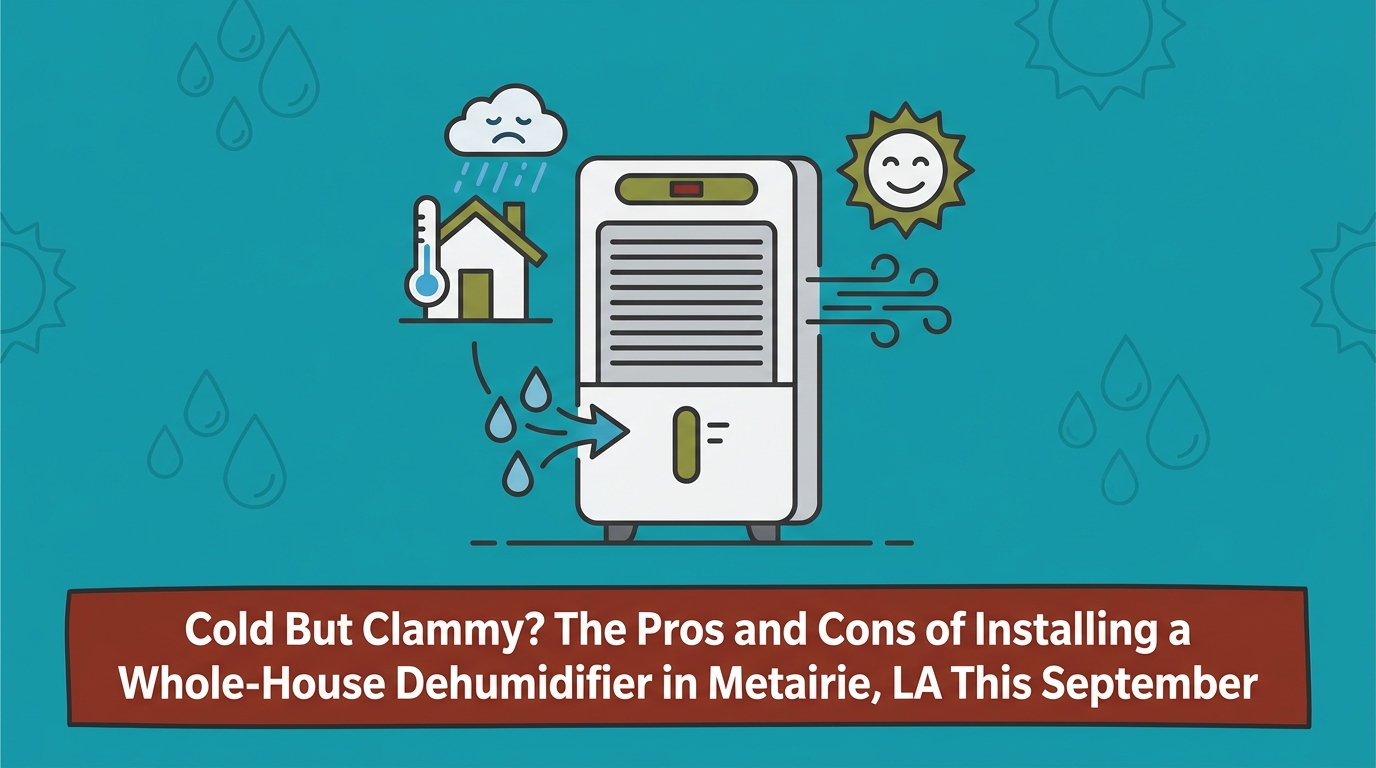
Is Your Metairie Home Suffering from the September 'Cold but Clammy' Effect?
At Cypress Cooling Company, we regularly hear from homeowners who are constantly adjusting their thermostats, trying to escape that damp, chilly feeling indoors while weighing the pros and cons of installing a whole-house dehumidifier in Metairie this September. If your home feels more like a cool cave than a comfortable sanctuary, you are experiencing a very specific regional phenomenon our technicians see every early fall. During the September fall transition, the weather in South Louisiana creates a perfect storm of discomfort. The blistering summer heat finally begins to break, but the thick, heavy Gulf moisture stubbornly remains.
This seasonal shift exposes a fundamental flaw in how standard heating and cooling systems operate. When outdoor temperatures drop into the 70s and 80s, your air conditioner doesn't have to work nearly as hard to cool your home. It cycles on, quickly reaches the target temperature, and shuts off. The problem? It leaves all the sticky humidity trapped inside your living space.
Many homeowners try to solve this by turning the thermostat down even lower, hoping the extra cooling will dry out the air. Instead, they end up freezing in their own living rooms, wrapped in blankets while the air still feels heavy and damp. Finding the right balance requires looking beyond basic temperature control and exploring comprehensive indoor air quality solutions.
The core dilemma for Metairie homeowners:
• The traditional approach: Forcing your primary cooling system to run longer just to remove moisture, which wastes energy and overcools your home.
• The dedicated approach: Adding specialized equipment that removes moisture independently of the temperature.
Deciding between these two paths doesn't have to be guesswork. Let's break down the actual physics of why your home feels this way, and objectively compare the benefits and drawbacks of upgrading your system.
The Physics of Fall Comfort: Sensible Heat vs. Latent Moisture
To understand why your house feels so uncomfortable during the early fall, you have to understand the two different types of heat that your HVAC system battles every day. The discomfort you feel isn't just in your head—it is basic thermodynamics at work.
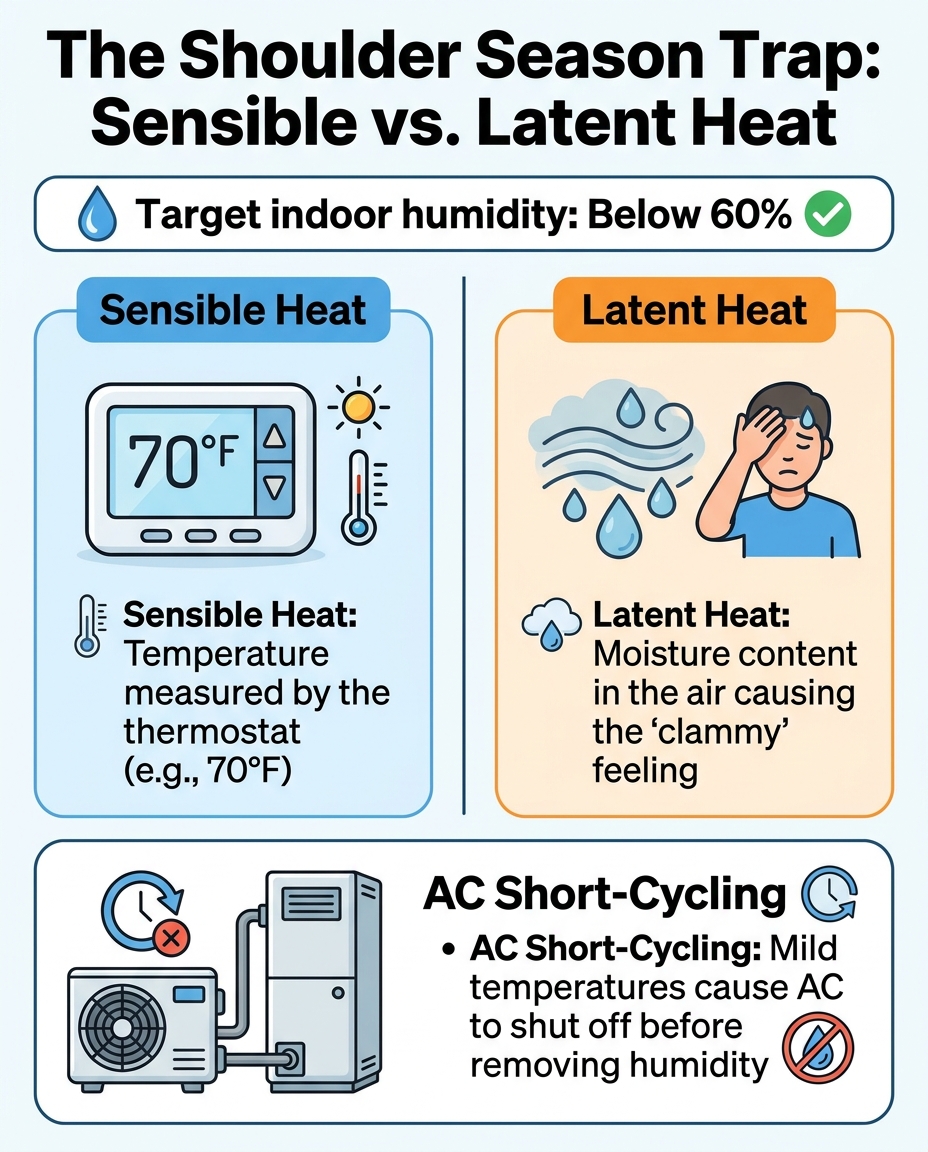
Sensible heat is the heat you can easily feel and measure. When you look at your thermostat and it says 74 degrees, you are looking at a measurement of sensible heat. Latent heat, on the other hand, is the energy trapped within the moisture in the air. You cannot measure latent heat with a standard thermometer, but your body definitely feels it. High latent heat makes the air feel heavy, sticky, and oppressive. According to the EPA, indoor relative humidity should remain below 60 percent to maintain human comfort and prevent biological growth.
When you combine a mild 70 degree indoor temperature with high humidity, you get a deeply uncomfortable, clammy environment. The air is technically cool, but because it is saturated with water vapor, your body's natural cooling mechanism (sweat evaporation) stops working. You feel damp and chilled to the bone.
Understanding the Thermostat's Blind Spot
The root cause of this fall discomfort lies in the limitations of your thermostat. Standard thermostats have a massive blind spot: they only read sensible heat. They have absolutely no idea how much latent moisture is floating around your living room.
If you set your thermostat to 72 degrees, your air conditioner will run until the air hits 72 degrees. Once that target is reached, the system shuts down. On a 95-degree August afternoon, the system has to run for hours to reach 72 degrees, which gives it plenty of time to wring the moisture out of the air. But on a mild September day, it might only take ten minutes to hit that temperature target. If you want to know more about this mechanical blind spot, you can read our detailed guide on why your house feels humid even when the AC is running.
The AC Short-Cycling Dilemma
This rapid cooling process is known as short-cycling, and it is the enemy of indoor comfort. When mild outdoor temperatures cause the AC to cool the house too quickly, the system fails to draw enough air over the indoor evaporator coil.
Why short-cycling ruins your comfort:
• Insufficient contact time: Air must pass over the cold indoor coil long enough for the moisture to condense into water droplets.
• Re-evaporation: When the system shuts off prematurely, the moisture left sitting on the wet coil can evaporate right back into your ductwork and blow back into your home.
• Stagnant air: Short cooling cycles mean the blower motor isn't circulating air through your home, leading to stuffy, stale pockets of air in bedrooms and hallways.

Why Relying on Your Air Conditioner Alone Falls Short in Early Fall
When the house feels sticky, the most common homeowner reaction is to walk over to the thermostat and drop the temperature down to 68 degrees. The logic makes sense: if the air conditioner turns on, it will pull moisture out of the air. While this does force the system to run, it is a deeply flawed strategy for long-term comfort.
Relying solely on your primary cooling equipment to handle heavy latent moisture loads during the shoulder season creates a host of secondary problems. First, you end up freezing out your family. You are using temperature to solve a humidity problem, which means you have to make the house uncomfortably cold just to make it dry enough to tolerate.
Second, this strategy can cause serious physical issues within your home's infrastructure. When you push your indoor temperature down into the upper 60s while the outside air is still thick with Gulf moisture, you create condensation. Our team at Cypress Cooling Company recently helped a local homeowner who experienced this firsthand when their house felt uncomfortably hot and their hardwood floors were literally sweating with moisture. After they struggled with an inaccurate thermostat reading, our technicians discovered that an unattached duct vent in the attic was severely impacting airflow and moisture removal. Once the vent was reattached and a proper filter installed, the home returned to a chilly, comfortable state. However, situations like sweating floors clearly demonstrate what happens when moisture and temperature fall out of balance.
The hidden costs of overcooling:
• Sweating ductwork: Cold air moving through ducts in a humid attic causes condensation, which can drip onto your ceiling drywall.
• Excessive wear and tear: Forcing your air conditioning systems to run constantly just to dehumidify puts unnecessary strain on the compressor and blower motor.
• Wasted energy: Cooling your home three to four degrees below your actual comfort preference burns significant electricity without solving the root cause of the problem.
Overcooling is a temporary band-aid. It might make the air feel slightly drier for an hour or two, but it is not a structural indoor air quality solution.
The Pros: Advantages of a Whole-House Dehumidifier
If forcing your cooling system to do double duty isn't the answer, what is? This is where dedicated equipment steps in. A whole-house dehumidifier is integrated directly into your existing HVAC ductwork, working alongside your primary cooling system to manage latent heat.
Here are the primary advantages of making this upgrade for your Metairie home.
Consistent Comfort Independent of Cooling
The single biggest advantage of a dedicated system is that it operates based on a humidistat, not a thermostat. It measures the actual moisture content in the air. When the relative humidity rises above your set point (usually around 50 to 55 percent), the unit turns on.
1. Targeted moisture removal: It pulls air from your return ducts, cools it to wring out the moisture, and then slightly warms the dry air before sending it back into your home.
2. No temperature drop: Because it neutralizes the temperature of the air it returns, it removes gallons of water from your home without making your living room feel like a refrigerator.
3. Eliminates the clammy feeling: You can finally set your thermostat to a comfortable 74 or 75 degrees and feel perfectly fine, because the sticky latent heat has been removed.
Protecting Your Home's Infrastructure
Excess humidity doesn't just make you uncomfortable; it damages your property. Keeping your indoor relative humidity below the EPA's 60 percent threshold is vital for home preservation in South Louisiana.
• Prevents biological growth: Mold and mildew require high moisture levels to thrive. By keeping the air dry, you eliminate their ideal breeding ground.
• Protects flooring and finishes: Hardwood floors can cup and warp when exposed to constant high humidity. Paint can peel, and doors can swell and stick in their frames.
• Reduces dust mites: Dust mites absorb moisture directly from the air. Lowering the humidity significantly reduces their population, which is a major benefit for allergy sufferers.
Furthermore, taking the latent heat load off your primary cooling equipment extends its lifespan. When your AC doesn't have to battle thick moisture every time it turns on, it runs more efficiently. If you are tired of the shoulder season struggle, exploring a whole-house dehumidifier installation is the most direct path to consistent comfort.
The Cons: Important Considerations Before Upgrading
While the comfort benefits are substantial, adding dedicated moisture control to your home is a major structural decision. It is important to look objectively at the drawbacks and requirements before moving forward.
Upfront Investment and Space Requirements
The installation footprint: These units are not small, portable devices you can tuck into the corner of a room. They are heavy, commercial-grade pieces of equipment that must be permanently installed in your attic, basement, or utility closet.
Professional integration: You cannot simply plug one in and walk away. Installation requires custom ductwork modifications to tie the unit into your existing supply and return plenums. It also requires dedicated electrical wiring and a permanent PVC drain line to route the extracted water safely outside your home. When our installation team at Cypress Cooling Company evaluates a home, we carefully assess your current HVAC footprint to ensure you have the physical space required for a proper, code-compliant installation.
Capital investment: Because it involves heavy equipment and professional labor, this is an investment in your home's infrastructure. While there may be general energy rebates or tax incentives available for high-efficiency HVAC upgrades (always check with your utility provider or tax professional for current programs), the initial upfront cost requires planning.
Routine Maintenance Needs
Adding to the checklist: A whole-house unit adds another layer of maintenance to your seasonal home care routine. Just like your primary cooling system, it requires attention to keep operating efficiently.
Filter replacements: The unit has its own dedicated air filter that must be cleaned or replaced regularly to maintain optimal airflow. If the filter clogs, the unit cannot draw enough air over its internal coils to remove moisture.
Annual servicing: The internal coils need to be inspected, and the drain lines must be flushed annually to prevent algae buildup and water backups.
Finally, it is crucial to understand that this equipment is not a replacement for your air conditioner. It only removes moisture. You still need a fully functional, properly sized cooling system to handle sensible heat during the peak of a Metairie summer.
Side-by-Side Comparison: Dedicated Dehumidification vs. Standard Cooling
To help synthesize these points, here is a direct comparison of how relying on standard cooling stacks up against installing dedicated moisture control during the early fall.
• Comfort During Mild Weather — Standard AC Cooling Alone: Poor. Often results in a "cold but clammy" feeling at 70 degrees. — Dedicated Whole-House Dehumidifier: Excellent. Maintains dry, comfortable air even at higher thermostat settings.
• Energy Consumption in Fall — Standard AC Cooling Alone: High energy waste from forcing the system to overcool the home. — Dedicated Whole-House Dehumidifier: Lower overall waste; allows the heavy-draw AC compressor to rest.
• Upfront Effort & Space — Standard AC Cooling Alone: Low. Uses existing equipment with no new spatial requirements. — Dedicated Whole-House Dehumidifier: High. Requires professional installation, duct integration, and dedicated space.
• Home Infrastructure Protection — Standard AC Cooling Alone: Low. Risk of sweating ducts, condensation, and warped flooring. — Dedicated Whole-House Dehumidifier: High. Actively prevents mold growth and protects sensitive wood finishes.
Evaluating these options requires deep local expertise in South Louisiana's unique climate challenges. In our years of servicing Metairie homes, we've seen firsthand how a system that works perfectly in a dry western climate will struggle against our relentless Gulf moisture. If you are weighing these pros and cons, consulting with professionals who provide comprehensive HVAC services in Metairie is the best way to determine if your specific ductwork and attic space can support the upgrade.
Frequently Asked Questions About Metairie Humidity Control
Why does my house feel damp even with the AC on?
Your house feels damp because your air conditioner is short-cycling due to mild outdoor temperatures. When the weather drops into the 70s during early fall, your AC reaches its target temperature quickly and shuts off. Because it doesn't run long enough to pull latent moisture out of the air, it leaves the heavy humidity behind, resulting in a cold, clammy environment.
Is a whole house dehumidifier worth the investment in Louisiana?
Based on our experience at Cypress Cooling Company, the investment is highly beneficial for most homeowners in South Louisiana due to our prolonged shoulder seasons. Because our climate features months of mild temperatures combined with oppressive humidity, standard cooling systems constantly struggle to keep homes dry. Adding dedicated moisture control protects your home from mold, preserves hardwood floors, and drastically improves daily comfort.
Can a dehumidifier help my AC run less?
Yes, it can significantly reduce the workload on your primary cooling system. Dry air feels cooler on your skin than humid air, which means you can comfortably set your thermostat several degrees higher. By raising the thermostat from 68 degrees to 74 degrees, your AC compressor will cycle on far less frequently, saving energy and reducing mechanical wear and tear.
What are the disadvantages of a whole house dehumidifier?
The primary disadvantages are the upfront requirements for space and professional installation. The equipment must be tied into your existing ductwork, which requires adequate room in your attic or utility closet, as well as dedicated electrical and drainage lines. Additionally, it requires its own routine maintenance, including regular filter changes and annual drain line clearings.
How does a whole-house dehumidifier integrate with my existing ductwork?
The unit is typically installed in parallel with your central air handler. It pulls humid air from your return duct, processes it through its own internal cooling and reheating coils to extract the water, and then pushes the dry air directly into your supply duct. This allows the dry air to be distributed evenly throughout every room in your house using your existing vents.
What is the ideal indoor humidity level for a Metairie home in the fall?
The ideal indoor relative humidity should be kept between 40 and 50 percent, and it should never exceed 60 percent. Keeping the humidity in this target range prevents dust mites from thriving, stops mold and mildew from growing, and ensures that your body's natural cooling mechanisms function properly, keeping you comfortable without needing to overcool the house.
Ready to Reclaim Your Indoor Comfort This Season?
Living with a cold, clammy house every September is not a requirement of living in South Louisiana. While over-running your air conditioner might seem like the easiest fix, it ultimately wastes energy, damages your equipment, and fails to provide genuine comfort.
A professional evaluation by our team can determine if your current ductwork and system layout make you a good candidate for a dedicated moisture control upgrade. By weighing the pros and cons of how a whole-house dehumidifier functions differently than a standard AC unit during mild, humid weather, you can make an informed decision for your home. You deserve a realistic, permanent solution that keeps your indoor environment dry, healthy, and perfectly comfortable all season long.
OUR CLIENTS HAVE TO SAY ABOUT US



Service areas
Our service areas are designed to meet the diverse needs of our clients. We focus on providing exceptional service and ensuring customer satisfaction in every location we operate.

