
AC Repair and Troubleshooting: What to Check Before Your First Fall Heating Cycle
.webp)

Is Your HVAC System Ready for the Switch from Cooling to Heating?
Are you truly prepared for the sudden shift from cooling to heating, or are you just hoping your system survives the switch? Navigating AC repair and troubleshooting is usually top of mind in July, but the true test of your equipment actually happens in October. After months of relentless operation, your system faces a massive transition. The components that have been working tirelessly to keep your home cool must now abruptly reverse their function or hand off the workload to the furnace or air handler.
In Metairie and the Greater New Orleans area, our high-humidity Gulf Coast climate forces air conditioners to run incredibly long cycles just to remove moisture from the indoor air. This extended runtime significantly increases component fatigue. By the time the weather cools down, your system is exhausted. Ignoring the strange noises or unusual smells during that initial startup can turn a minor adjustment into a major breakdown. If you already know your system is struggling, reaching out for professional HVAC services or scheduling dedicated air conditioning repair and installation is the safest way to protect your home before the cold weather sets in.
Understanding the Toll of Summer on Your HVAC Components
To understand why the fall transition is a high-risk stress point, you have to look at what your system just endured. Seven or more months of continuous, heavy operation takes a massive toll on every moving part. Switching modes is not just a simple thermostat flip; it is a complex mechanical transition that demands peak performance from components that are already worn down.
Here is how the grueling summer months silently degrade your system:
1. Continuous Cycling: High temperatures force the compressor and fan motors to turn on and off dozens of times a day. Each startup draws a massive surge of electricity, stressing the internal electrical components.
2. Moisture Management: South Louisiana is known for sudden summer thunderstorms and high dew points. Your air conditioner works double duty, acting as a powerful dehumidifier. This requires longer cooling cycles, meaning the system rarely gets a chance to rest.
3. Vibration and Friction: Months of non-stop operation cause belts to stretch, bearings to lose lubrication, and electrical connections to vibrate loose.
This wear-and-tear often remains completely hidden until the system is forced to switch modes. One local homeowner experienced this firsthand on a sweltering Saturday night when their capacitor finally gave out after a brutal summer stretch. A technician arrived the next day and used a temporary part to get the AC running immediately, providing relief until the permanent replacement arrived. Without that intervention, the system would not have survived the transition into the fall.
Hidden Wear and Tear on Capacitors and Contactors
Two of the most vulnerable components in your outdoor unit are the capacitor and the contactor. The capacitor acts as a massive battery, delivering the jolt of electricity needed to start the compressor and fan motors. The contactor is a mechanical switch that controls the flow of electricity to these parts.
Constant cycling in extreme heat degrades both of these components. The intense electrical loads can cause contactors to pit and burn, while capacitors slowly lose their ability to hold a charge. Because they have been weakened over the summer, these parts are a leading cause of failure during the first seasonal transition. When they fail, the entire system shuts down, leaving you without heating or cooling right when the weather shifts.
Why Does My Heater Smell Like Burning Dust?
The short answer is: Dust settles on your heat exchangers during the long summer cooling months and burns off during the first heating cycle, causing a temporary odor.
According to the U.S. Department of Energy, this is a completely normal phenomenon for your October first heating startup. While your system was focused on cooling, the heating components sat idle. Household dust, pet dander, and airborne particles naturally accumulated on the furnace burners or heat strips. When you finally turn the heat on, these particles are instantly incinerated, sending a distinct burning smell through your ductwork.
However, it is crucial to know the difference between a normal dust burn-off and a dangerous situation. Here is what to look for:
• The Normal Dust Smell: Smells exactly like singed dust or a slightly warm, earthy odor. It should dissipate within 30 to 60 minutes of the heater running.
• The Electrical Odor: Smells like melting plastic, burning wires, or ozone. This is never normal and indicates a failing motor, a melting wire casing, or a severe electrical short.
• The Rotten Egg Smell: If you have a gas furnace and smell sulfur or rotten eggs, this indicates a natural gas leak.
If the burning dust smell lasts longer than an hour, or if you ever detect the smell of melting plastic or gas, shut your system down immediately at the thermostat. Do not attempt to investigate the cabinet yourself; call a licensed professional to evaluate the system safely.
Troubleshooting AC Short-Cycling During the Seasonal Transition
One of the most frustrating issues homeowners face during the October first heating startup is short-cycling. Short-cycling occurs when your HVAC system turns on, runs for a brief moment, and then shuts down before reaching the target temperature on the thermostat. It then immediately turns back on, repeating this rapid loop.
The primary cause: Airflow restrictions are the most common culprit. After heavy summer use, your air filter is likely packed with dust, pollen, and debris. When you switch to heating, the furnace or air handler requires massive amounts of airflow to distribute the warm air and keep the internal components from overheating. If the filter is clogged, the system's high-limit safety switch will detect extreme internal heat and shut the unit down to prevent a fire. Once it cools off a few minutes later, it tries again, creating the short-cycle loop.
Other hidden causes: Worn-out flame sensors in gas furnaces can also cause short-cycling. If the sensor is coated in carbon buildup from the previous winter, it won't detect the flame and will shut the gas valve off within seconds as a safety precaution. Additionally, a malfunctioning thermostat might be sending erratic signals to the control board.
Ignoring a short-cycling system is incredibly destructive. The constant starting and stopping consumes massive amounts of electricity, driving up your utility bills. Worse, it puts extreme stress on the blower motor and compressor, often leading to a complete system failure. If you want to understand the mechanics behind this rapid on-and-off behavior, learning why your AC keeps turning on and off can help you identify when a simple filter change isn't enough to solve the problem.
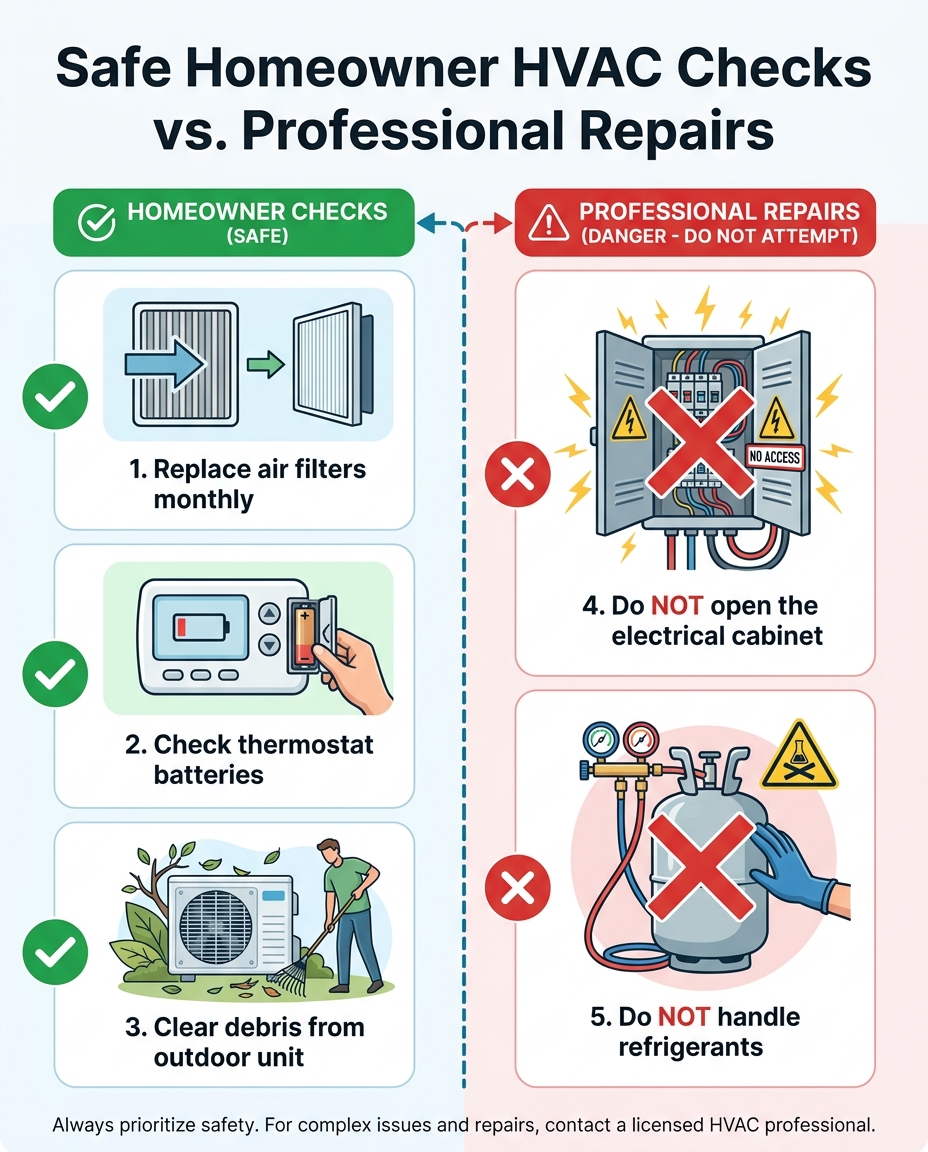
Safe Homeowner Checks vs. Professional AC Repair
When preparing for the fall transition in Metairie and the Greater New Orleans area, knowing what you can safely do yourself—and what requires a licensed technician—is the key to protecting your investment and your family.
Modern HVAC systems carry high-voltage electricity, pressurized chemical refrigerants, and, in many cases, combustible natural gas. Crossing the line from basic homeowner maintenance into amateur repair is dangerous and can instantly void your manufacturer's warranty.
• Replacing the indoor air filter every 30-90 days — Requires a Licensed Professional: Opening the internal electrical cabinet
• Changing the batteries in your thermostat — Requires a Licensed Professional: Testing or replacing capacitors and contactors
• Clearing leaves and debris 2 feet away from the outdoor unit — Requires a Licensed Professional: Handling, measuring, or adding chemical refrigerants
• Ensuring all indoor return and supply vents are fully open — Requires a Licensed Professional: Cleaning the internal evaporator coil or heat exchanger
• Pouring a cup of white vinegar down the condensate drain line — Requires a Licensed Professional: Adjusting gas valves or cleaning flame sensors
Sometimes, what seems like a minor issue requires rapid professional intervention. One local homeowner noticed water dripping from their ceiling during a heavy usage period. A technician responded quickly, diagnosed a failing drip pan in the attic unit, ordered the replacement, and installed it before the end of the day—ensuring the home wasn't without air conditioning for a second day and preventing severe drywall damage.
Relying on a local expert ensures your system meets regional compliance and safety standards. Furthermore, if a professional determines that your aging system is no longer viable for repair, they can guide you through replacement options. Keep in mind that federal tax credits may apply to qualifying high-efficiency heat pump upgrades (always verify current programs with your utility provider or a tax professional). If you need reliable oversight, connecting with Metairie area cooling services ensures your home is handled by experts who understand the local climate demands.

The Value of a Pre-Winter Preventative Inspection
Transitioning from troubleshooting specific problems to adopting a proactive maintenance strategy is the best way to avoid unexpected breakdowns. A dedicated pre-winter inspection is designed specifically to catch the hidden summer wear-and-tear before it leaves you shivering during the first cold snap.
When you schedule a professional tune-up for your October first heating startup, the technician performs a comprehensive audit of the system. This includes testing the electrical draw on the motors, verifying the integrity of the capacitors, tightening loose high-voltage connections, and thoroughly cleaning the heat exchanger or heating coils. They will also calibrate the thermostat and clear the condensate drain line, which often becomes clogged with algae during the humid summer months.
The benefits of this proactive approach are substantial:
• Extended Equipment Lifespan: Regular cleaning and lubrication reduce mechanical friction, allowing the system to operate smoothly for years longer than a neglected unit.
• Improved Indoor Air Quality: According to the Environmental Protection Agency (EPA), proper HVAC maintenance and clean internal components are critical for reducing indoor airborne pollutants.
• Lower Energy Bills: A well-calibrated system doesn't have to work as hard to heat your home, directly reducing your monthly utility costs.
Most importantly, preventative care provides peace of mind. South Louisiana cold snaps can be unpredictable and sharp. When unmaintained systems inevitably fail during these sudden temperature drops, having a relationship with a company that offers 24/7 emergency dispatch and same-day service availability is invaluable. To keep your system running reliably year-round, enrolling in a preventative AC maintenance plan is the smartest investment a homeowner can make.
Frequently Asked Questions About Fall HVAC Transitions
Why does my heater smell like burning dust when I turn it on?
The short answer is that dust and debris settle on the heating elements during the summer, and this buildup burns off when the heater is activated. Because your furnace or heat strips sit idle for over half the year in Metairie and the Greater New Orleans area, natural household dust accumulates on the surface. The moment the intense heat kicks on, this dust incinerates. It is a normal part of the seasonal transition and should resolve itself quickly. If the smell persists, it may indicate a dirty filter or a deeper mechanical issue.
Is it normal for my heater to smell the first time I use it?
Yes, a temporary burning smell is completely normal during the first heating cycle of the season. You should expect a faint, warm, dusty odor that lasts anywhere from 30 to 60 minutes. Opening a few windows during this initial startup can help clear the air. However, if the smell resembles melting plastic, burning rubber, or electrical ozone, shut the system off immediately. Those odors are not normal and require an immediate professional inspection to prevent a fire hazard.
How do I prepare my AC and heating system for the winter?
The best preparation involves replacing your air filter, clearing the outdoor unit of debris, and scheduling a professional tune-up. Start by ensuring your thermostat has fresh batteries and that all your indoor vents are unblocked by furniture or rugs. Outside, remove any leaves, branches, or overgrown vegetation within two feet of the condenser to ensure proper airflow. Finally, having a licensed technician inspect the electrical components and clean the heat exchanger ensures the system is safe and efficient for winter operation.
What should I check before turning on the heater for the first time?
Before switching your thermostat to heat, check your air filter, inspect your vents, and verify the area around your furnace is clear. A clogged filter will immediately suffocate the system, leading to short-cycling or overheating. Ensure that no flammable materials, boxes, or cleaning supplies are stored near your indoor air handler or furnace cabinet. Finally, do a quick visual check of your outdoor unit to ensure it isn't choked by fall debris, as heat pumps still rely on the outdoor coil during the winter.
Why is my HVAC short cycling when I switch to heat?
Short-cycling during the switch to heating is usually caused by a severely clogged air filter or a dirty flame sensor. When the system cannot pull enough air through a dirty filter, the internal temperature skyrockets, tripping the high-limit safety switch and shutting the unit down. Once it cools, it tries again, creating a rapid on-and-off loop. In gas furnaces, a soot-covered flame sensor will fail to detect the burner flame, prompting the system to shut off the gas valve as a safety measure. Both issues require prompt attention to prevent permanent motor damage.
Can high summer humidity cause my heater to fail in the fall?
Yes, the intense workload required to remove summer humidity heavily degrades electrical components, which can then fail when you switch to heating. In the Gulf Coast climate, your AC runs longer cycles primarily to dehumidify the air. This constant strain wears down capacitors, contactors, and blower motors. When October arrives and you demand heat, these weakened parts are suddenly subjected to a new electrical load. If they are already compromised from the summer, the transition will often push them past their breaking point, resulting in a sudden failure.
Schedule Your Fall HVAC Inspection Today
The transition from relentless summer cooling to fall heating is the most vulnerable time for your home's comfort system. Addressing the hidden wear-and-tear before the cold weather sets in is the only way to prevent a sudden breakdown during your October first heating startup. A professional check provides clear, regionally specific guidance without the guesswork, ensuring every electrical connection and safety switch is operating perfectly.
Don't wait until the first freezing night to find out your heater is struggling. Take control of your home's comfort and safety by scheduling an inspection today. A thorough evaluation will give you the peace of mind that your system is clean, efficient, and ready to handle whatever the winter season brings.
OUR CLIENTS HAVE TO SAY ABOUT US



Service areas
Our service areas are designed to meet the diverse needs of our clients. We focus on providing exceptional service and ensuring customer satisfaction in every location we operate.

