
AC Repair & Fall Maintenance: Addressing Summer Wear Before the Heating Transition
.webp)
The Hidden Toll of a Long Summer on Your HVAC System
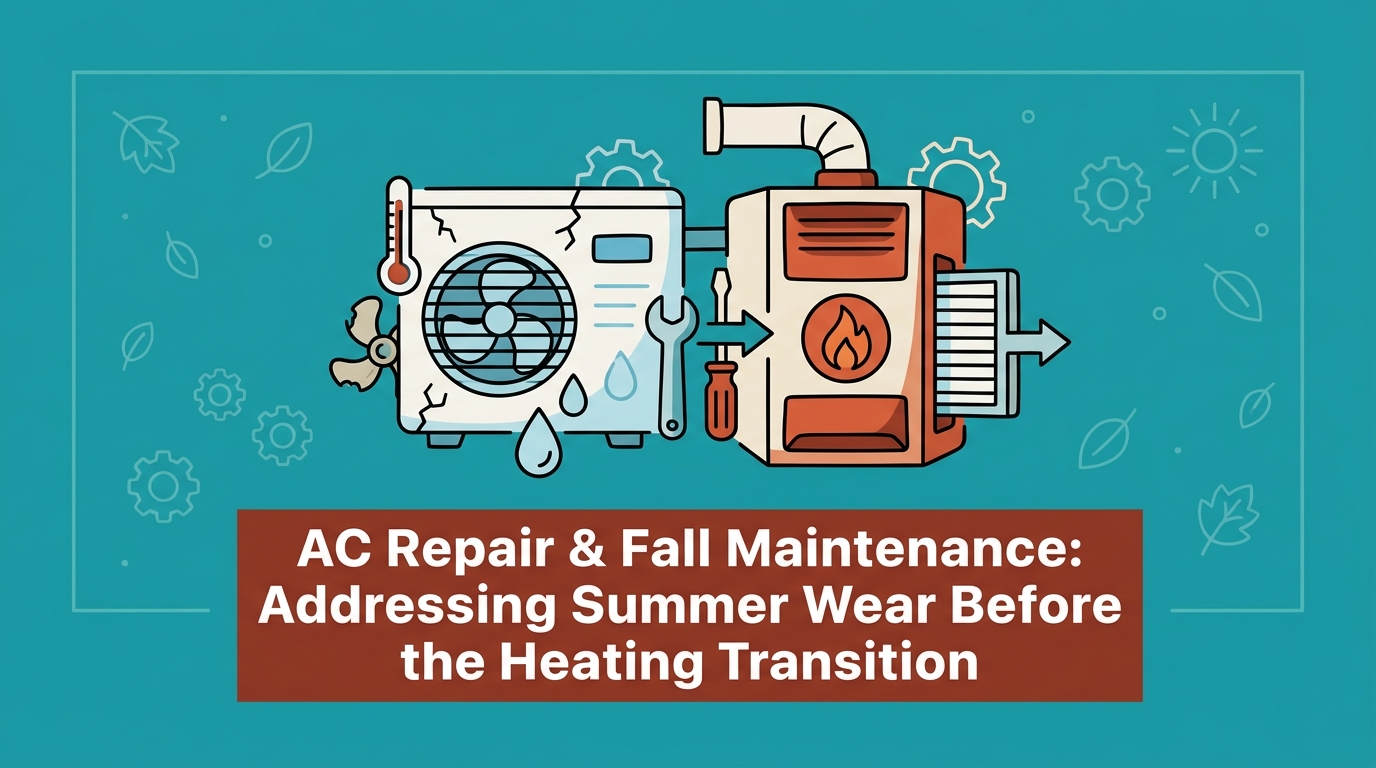
October is arriving, and before the first real cold snap hits, every homeowner should be finalizing their seasonal home maintenance checklist. While the intense heat is finally beginning to break, the shift from heavy summer cooling to the early heating season demands careful attention. Your air conditioning system has likely been running almost continuously for the past six to eight months. Transitioning a residential HVAC system to heating mode without addressing that accumulated wear and tear is a significant risk. Ignoring minor AC repair needs right now often leads to unexpected furnace startup failures exactly when you need warmth the most.
For a complete approach to your seasonal transition, exploring professional HVAC Services is the most effective way to protect your equipment.
With the intense heat and high humidity of the Gulf Coast, cooling systems are forced to operate under extreme moisture and electrical stress. This environment degrades components much faster than in milder climates. By the time the October heating-startup window arrives, parts that were functioning normally in May might be operating entirely out of tolerance. At Cypress Cooling Company, our team typically sees this exact scenario play out every fall. Homeowners face a critical decision point right now: scheduling a professional inspection to reset the system's baseline, or risking sudden, cascading breakdowns later in the winter. Addressing the hidden toll of a long summer ensures your home remains comfortable, safe, and efficient year-round.
Why High Humidity Wreaks Havoc on Condensate Lines
The Problem: High humidity environments accelerate the growth of algae, mold, and biological slime inside HVAC condensate drains. Throughout a long, humid summer in Metairie LA, your air conditioner extracts hundreds of gallons of moisture from the indoor air. This water drips off the cold evaporator coil into a drain pan and flows outside through a PVC pipe. Over time, the constant presence of moisture creates the perfect breeding ground for blockages.
The Cause: Generic national checklists often underestimate the sheer volume of water a subtropical climate forces an AC unit to process. As biological growth expands inside the dark, damp drain line, it restricts the flow of water. Eventually, the line clogs completely. When the water has nowhere to go, it backs up into the primary drip pan. If the secondary safety switches fail or are improperly calibrated, that water quickly overflows into your home, potentially causing significant ceiling, wall, or floor damage.
The Solution: Clearing these lines is a crucial step before the system switches to heating mode. Lingering moisture issues left unresolved in the fall can lead to severe indoor air quality problems during the winter. A faulty drip pan or a clogged line is one of the most common reasons for emergency service calls at the end of the cooling season. In one instance, a Metairie homeowner reached out to us when water suddenly started dripping from their ceiling. Our team responded quickly, diagnosed a failed drip pan, ordered a replacement, and installed it before the end of the day so the customer wasn't without cooling. Preventative care stops these emergencies before they start.
Integrating professional Routine AC Maintenance into your seasonal routine ensures these critical drainage components are cleared and tested before they can cause property damage.
Electrical Wear and Tear: The Risk of Constant Cycling
Continuous operation over a long, demanding summer degrades electrical components, and capacitors bear the brunt of this stress. A capacitor is a small, cylindrical component that stores electricity and delivers a powerful jolt to start the compressor and fan motors. Because it sits outside in the extreme heat, and because it is constantly charging and discharging to manage the cooling load, the internal dielectric fluid slowly breaks down. As the capacitor weakens, the motors have to pull more amperage to start, which generates even more heat and accelerates the wear on the entire system.
A failing capacitor can cause the system to short-cycle, where it turns on and off rapidly without fully cooling the home, or it can cause the outdoor unit to fail to start entirely. If you notice your system struggling to initiate, understanding Why Your AC Keeps Turning On and Off is the first step toward diagnosing electrical fatigue.
Addressing this electrical wear during an October heating-startup tune-up prevents emergency power failures when the heater is finally engaged. Professional diagnostics can identify capacitors, contactors, and relays that are operating out of tolerance before they cause a complete system shutdown. This proactive approach is essential for maintaining comfort. A pattern we see often at Cypress Cooling Company involves electrical failures happening at the worst possible times. In one case, a customer's capacitor went out late on a Saturday night. One of our technicians arrived the next day, installed a temporary part to restore cooling immediately, and returned later with the permanent replacement to finalize the repair. Catching these weak components during a fall inspection eliminates the need for weekend emergency calls.
The Critical Link Between Summer AC Wear and Furnace Failures
Many homeowners assume that the air conditioner and the furnace are entirely separate systems. In reality, they share vital internal components, and unresolved cooling issues directly impact heating performance. If you ignore the need for Air Conditioning Repair at the end of the summer, those exact same mechanical deficits will haunt your heating system in the winter. In our experience, a comprehensive seasonal check ensures the transition doesn't trigger safety shutoffs or catastrophic failures.
The sequence of how summer wear translates into winter failure typically follows a specific path:
1. Debris Accumulation: Throughout the summer, dust, pet dander, and airborne particles bypass minor filter gaps and settle on internal components.
2. Airflow Restriction: This buildup restricts the volume of air that can move through the system, forcing the blower motor to work longer and harder to circulate conditioned air.
3. Heat Exchanger Stress: When the furnace ignites, it relies on a steady, high volume of airflow to pull heat away from the heat exchanger and push it into the home. If airflow is restricted by summer dust, the heat exchanger overheats.
4. Safety Lockout: Modern furnaces are equipped with high-limit switches that detect this overheating. The switch will shut the furnace down to prevent a fire, leaving you without heat on a cold night.
Shared Components That Require Attention
The blower motor is the heart of the air distribution system, operating year-round whether you are cooling or heating. Blower motor stress from restricted airflow significantly reduces its lifespan and increases your energy consumption. Additionally, the evaporator coil's cleanliness directly impacts heat transfer. While the coil primarily functions to absorb heat during the summer, a dirty coil acts as a physical wall, blocking the airflow required to keep the furnace operating safely during the October heating-startup phase. Cleaning these shared components is non-negotiable for a safe seasonal transition.
Heat Exchanger Inspections and Carbon Monoxide Safety
The most critical safety check of the entire fall transition revolves around the heat exchanger. The heat exchanger is a series of metal tubes or coils responsible for safely venting toxic combustion gases—including carbon monoxide—out of the home while transferring the heat from those gases into your breathing air. Because it is subjected to extreme temperature fluctuations every time the furnace cycles on and off, the metal constantly expands and contracts. Over years of use, this thermal fatigue can cause the metal to crack or develop stress fractures.
Cracks or stress fractures in the heat exchanger pose a severe, life-threatening carbon monoxide risk. Carbon monoxide is an odorless, colorless gas that can quietly leak into your ductwork if the heat exchanger is compromised. Visual and technical inspections of this component require specialized tools, such as high-definition combustion analysis meters and flexible inspection cameras, along with rigorous professional training. It is impossible to accurately assess the integrity of a heat exchanger with the naked eye alone.
This inspection is an absolute necessity before turning the heat on for the first time in Metairie LA. Working with our team at Cypress Cooling Company means you benefit from deep local expertise in Gulf Coast climate-specific failures. We know exactly how high humidity and long dormant periods affect these sensitive metal components. Furthermore, this local expertise ensures prompt dispatch for emergency safety repairs if a dangerous crack is discovered. For comprehensive safety checks and reliable local support, exploring Metairie AC Services provides the peace of mind that your heating system is structurally sound and safe to operate.
DIY Upkeep vs. Professional Heating-Startup Maintenance
Maintaining a complex HVAC system requires a balance between consistent homeowner diligence and highly technical professional intervention. Clarifying the boundaries between what you can do yourself and what requires a licensed professional is vital for safety, efficiency, and warranty compliance. Attempting DIY repairs on complex mechanical or electrical systems is dangerous, often leads to more expensive damage, and will almost certainly void the manufacturer's warranty.
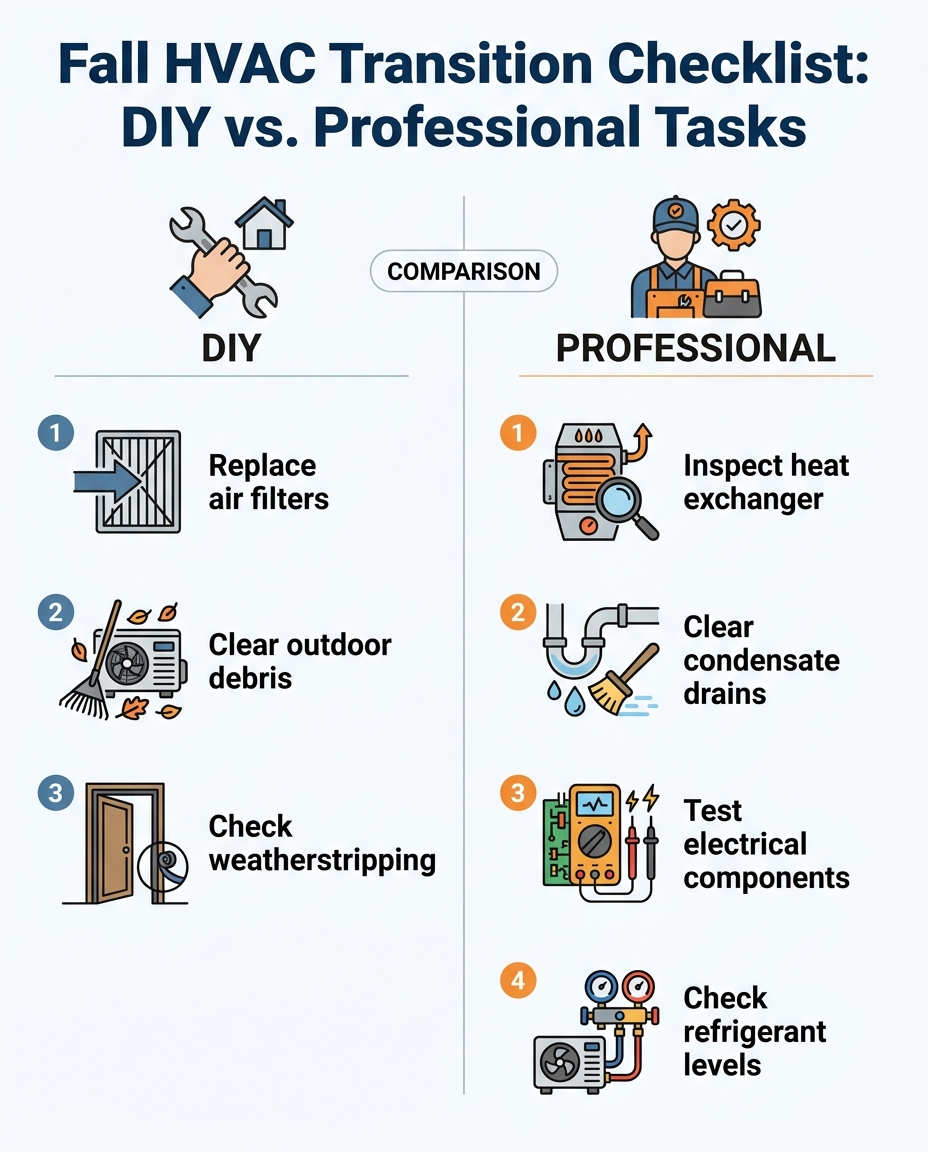
Homeowners should focus on maintaining proper airflow and keeping the exterior of the system clear. Regularly replacing HVAC air filters, checking weatherstripping around doors and windows to prevent drafts, and clearing leaves, branches, and debris from around the outdoor condensing unit are all excellent DIY tasks. However, tasks like checking refrigerant levels, testing high-voltage electrical connections, and inspecting the heat exchanger must be left to licensed professionals who possess the proper tools and EPA certifications.
Here is a breakdown of how our team recommends responsibilities should be divided during the Metairie LA seasonal transition:
• Replacing Air Filters — DIY or Professional?: DIY (Monthly) — Why It Matters: Prevents dust buildup, maintains proper airflow, and reduces strain on the blower motor.
• Clearing Outdoor Debris — DIY or Professional?: DIY (As Needed) — Why It Matters: Ensures the outdoor condenser can properly exhaust heat without restriction.
• Inspecting the Heat Exchanger — DIY or Professional?: Professional Only — Why It Matters: Requires specialized cameras and combustion analyzers to prevent carbon monoxide leaks.
• Testing Capacitors & Relays — DIY or Professional?: Professional Only — Why It Matters: Involves high-voltage electrical diagnostics to prevent sudden weekend system failures.
• Clearing Condensate Drains — DIY or Professional?: Professional Only — Why It Matters: Requires specific tools to safely remove deep algae blockages and prevent water damage.
• Checking Refrigerant Pressures — DIY or Professional?: Professional Only — Why It Matters: Federal law requires EPA certification to handle, measure, and adjust chemical refrigerants safely.
A professional tune-up provides peace of mind that the entire system is precisely calibrated for the upcoming season, ensuring you aren't caught off guard by a sudden mechanical failure.

Preparing Your Home for the First Cold Snap
Understanding exactly what a professional checks during a fall tune-up helps prevent winter breakdowns and indoor air quality problems. The transition from intense summer cooling to winter heating is not a passive event; it requires active preparation to ensure the equipment that worked so hard in July is physically capable of keeping you warm in December. By addressing summer wear and tear right now, you ensure a seamless, safe transition to reliable heating.
As the October heating-startup window closes, the urgency to finalize your seasonal home maintenance checklist increases. Do not wait for a cold night to discover that a dirty coil or a weak capacitor has compromised your furnace. Explore professional maintenance options today to keep your system running safely, efficiently, and reliably year-round.
Frequently Asked Questions
What is included in fall HVAC maintenance?
Fall HVAC maintenance includes a comprehensive inspection of both the cooling and heating components. A licensed technician will clean the evaporator and condenser coils, clear the condensate drain line, test all high-voltage electrical connections, and inspect the blower motor. Crucially, they will also perform a thorough safety check of the furnace heat exchanger to ensure there are no cracks that could leak carbon monoxide into the home.
Why do I need to inspect my AC before winter?
Inspecting your AC before winter addresses the severe wear and tear accumulated during the long summer months. Because the air conditioner and furnace share critical components like the blower motor and ductwork, unresolved cooling issues will directly impact heating performance. Catching a weak electrical component or a dirty coil now prevents your furnace from overheating or failing when you first turn it on.
How does Louisiana humidity affect my HVAC system?
Louisiana's high humidity forces your HVAC system to extract massive amounts of moisture from the indoor air, which creates a constantly damp environment inside the unit. This constant moisture accelerates the growth of algae and mold within the condensate drain lines, leading to severe clogs. If these lines are not professionally cleared before winter, the backed-up water can cause significant property damage and lingering indoor air quality issues.
What should be on a fall home maintenance checklist?
A comprehensive fall home maintenance checklist should prioritize safety and energy efficiency as the seasons change. Homeowners should replace their HVAC air filters, check door and window weatherstripping, and clear debris from around the outdoor AC unit. Most importantly, the checklist must include scheduling a professional heating-startup tune-up to inspect the heat exchanger and test electrical components.
Why is preventative HVAC maintenance important?
Preventative HVAC maintenance identifies and resolves minor mechanical and electrical stresses before they escalate into catastrophic system failures. By proactively replacing weak capacitors, clearing blocked drains, and cleaning dirty coils, you ensure the system operates at peak efficiency. This not only extends the lifespan of the equipment but also protects your home from sudden breakdowns and potential safety hazards.
Can summer AC wear and tear cause my furnace to fail?
Yes, unresolved summer AC wear and tear is a leading cause of early-season furnace failures. If the evaporator coil is clogged with summer dust, it restricts the airflow needed to keep the furnace heat exchanger cool. This restricted airflow causes the furnace to overheat, triggering safety limit switches that will completely shut down the heating system to prevent a fire.
OUR CLIENTS HAVE TO SAY ABOUT US



Service areas
Our service areas are designed to meet the diverse needs of our clients. We focus on providing exceptional service and ensuring customer satisfaction in every location we operate.

