Whole House Dehumidifiers in Pontchartrain Gardens, LA
.webp)
Cypress Cooling's whole house dehumidification solutions for Pontchartrain Gardens homes help you effectively manage humidity, prevent mold growth, and protect your valuable wood and fabrics. We achieve this by integrating a dedicated dehumidification unit with your existing HVAC system. We understand the challenges posed by our local climate and can compare refrigerant and desiccant systems to find the best fit for your needs. We provide sizing guidelines based on your home's size and occupancy, cover installation procedures, drainage considerations, routine maintenance, and expected energy usage. We'll also help you determine practical settings to optimize both comfort and efficiency.

Whole House Dehumidifiers in Pontchartrain Gardens, LA
Living in Pontchartrain Gardens means dealing with high humidity most of the year. Excess indoor moisture leads to mold, mildew, musty odors, damaged wood, and discomfort. A properly sized and installed whole house dehumidifier provides centralized humidity control for your entire home, reducing these risks while improving comfort and indoor air quality. This page explains how centralized dehumidification works in Pontchartrain Gardens homes, how to choose the right system, what installation and maintenance involve, and what performance and energy use to expect.
Why whole house dehumidification matters in Pontchartrain Gardens
Pontchartrain Gardens sits in a humid subtropical climate with warm temperatures, frequent humidity swings, and proximity to Lake Pontchartrain that increases ambient moisture. That combination makes interiors prone to:
- Visible mold and mildew on walls, ceilings, and window frames
- Musty odors in closets, crawlspaces, and attics
- Condensation on windows and inside walls
- Faster deterioration of wood floors, furniture, and painted surfaces
A single centralized dehumidifier tied into your home HVAC system treats all living spaces uniformly, removes moisture at the source, and prevents high-humidity pockets that portable units often miss.
Common whole house dehumidifier types and issues
- Refrigerant (compressor) whole house units: Most common for warm-humid climates. They remove moisture by cooling air over coils. Best for typical Louisiana conditions.
- Desiccant units: Use moisture-absorbing materials, perform well at lower temperatures, more common in specialized or industrial settings.
- Integrated HVAC bypass or ducted systems: These connect to the return plenum or run through the existing ductwork for whole-home coverage.
Common issues in local installations:
- Undersized unit that cannot keep up during sultry summer months
- Improper integration causing short cycling with the air handler
- Inadequate condensate drain routing or blocked lines leading to leaks
- Improper setpoint causing over-drying or insufficient moisture control
- Lack of routine maintenance allowing coils and drains to clog
Sizing and selection guidance for Pontchartrain Gardens homes
Sizing should be driven by home square footage, airtightness, occupant habits (showers, cooking), and local climate load. Use these guidelines as a starting point; a professional load assessment will confirm final sizing.
- Small homes or tighter 1,200 to 1,500 sq ft houses: consider whole house units rated around 70 to 90 pints per day capacity.
- Medium homes 1,500 to 3,000 sq ft: consider 90 to 120 pints per day capacity, especially if you have crawlspaces or a finished basement.
- Larger homes, high occupancy, or homes with moisture sources: 120+ pints per day may be required.
Choose a unit rated for continuous operation in warm-humid climates, with corrosion-resistant coils and a design that integrates with your HVAC airflow. Look for models offering a built-in humidistat or external control compatibility so setpoints and runtime are easy to manage.
Integration with existing HVAC systems
Most whole house dehumidifiers tie into the central HVAC return plenum or are inserted inline with existing ductwork. Key integration points:
- Location: Installed in return plenum for balanced airflow, or in a mechanical closet with supply and return duct connections.
- Control: Use a dedicated humidistat or integrate with a smart thermostat that supports humidity control. Proper control prevents the dehumidifier from running when the AC is managing moisture.
- Airflow: Maintain proper CFM through the unit. The HVAC blower must be compatible and sized to avoid pressure issues.
- Condensate coordination: Condensate must be routed to an appropriate drain or condensate pump if gravity drainage is not available.
Proper integration reduces cycling, avoids stress on the air handler, and maximizes latent load removal.
Installation steps and drain requirements
Typical installation steps:
- Site evaluation to determine plenum access, duct layout, and electrical availability.
- Mounting the unit in the return plenum or mechanical room and connecting to ductwork.
- Electrical connection to a dedicated circuit per manufacturer specifications.
- Installing a condensate drain: gravity drain to a floor drain or condensate pump to route water to a drain or condensate disposal point.
- Connecting the control humidistat or integrating signals to the HVAC control system.
- System start-up and testing for airflow, leak-free drainage, and correct setpoint operation.
Drain requirements and best practices:
- Gravity drain is preferred where possible; slope the condensate line and avoid traps that can hold water.
- Use a condensate pump when the drain point is higher than the unit or when routing outside the foundation.
- Install an accessible condensate trap and cleanout, and check for algae or debris that can clog small lines.
- In Pontchartrain Gardens, where biological growth in warm, moist lines is common, schedule periodic drain cleaning to prevent blockages and odors.
Routine maintenance and common service points
Regular servicing keeps performance high and prevents water damage:
- Replace or clean the air filter every 3 months, more often if you have pets or high dust.
- Inspect and clean coils annually to maintain efficiency and avoid frost-up in certain conditions.
- Flush and inspect condensate drains and condensate pump every 1 to 3 months, especially during humid seasons.
- Check electrical connections and controls annually; confirm the humidistat reads accurately.
- Listen for unusual noises that could indicate a failing fan motor or compressor issues.
Keeping a simple maintenance checklist reduces emergency repairs and preserves indoor air quality.
Expected energy use and comfort improvements
Energy use varies by model, capacity, and runtime. In Pontchartrain Gardens, dehumidifiers typically run more hours during the long humid season. Typical considerations:
- Consumption: Whole-house refrigerant dehumidifiers commonly use a few hundred watts while running. A mid-size unit running 8 to 12 hours daily during peak months can add noticeable kWh consumption, but actual use depends on runtime and equipment efficiency.
- Latent load benefit: Removing moisture reduces the latent load on your air conditioner. In many homes this reduces AC runtime for dehumidification even if total energy use for humidity control rises modestly. The net result is a more comfortable home with fewer cycles of indoor condensation and less mold risk.
- Comfort improvements: Expect reduced musty odors, fewer visible mold spots, drier surfaces, and more stable indoor relative humidity. Better humidity control often feels cooler and allows you to set slightly higher thermostat temperatures with similar comfort.
Recommended settings and practical tips for Pontchartrain Gardens homes
- Target relative humidity: 45% is a practical year-round setpoint in warm-humid climates like Pontchartrain Gardens. It keeps mold growth low while avoiding overly dry indoor air that can crack woodwork. In winter months with milder outdoor air, 45 to 50% can prevent condensation on windows.
- Seasonal use: Run the whole-house dehumidifier continuously during the hot, humid months. In cooler months, monitor humidity and run as needed.
- Balance with ventilation: Use controlled ventilation to manage pollutants. Avoid forcing humid outdoor air into the house through unconditioned ventilation during peak humidity periods.
- Monitor problem areas: Check closets, crawlspaces, and attic entries for localized moisture. These areas may need supplemental control or improved air sealing.
Whole house dehumidifiers in Pontchartrain Gardens, LA solve common local moisture problems, protect your home and possessions, and improve year-round comfort. Proper sizing, professional integration with your HVAC system, and regular maintenance are the keys to consistent performance and long-term value.
OUR CLIENTS HAVE TO SAY ABOUT US



Service areas
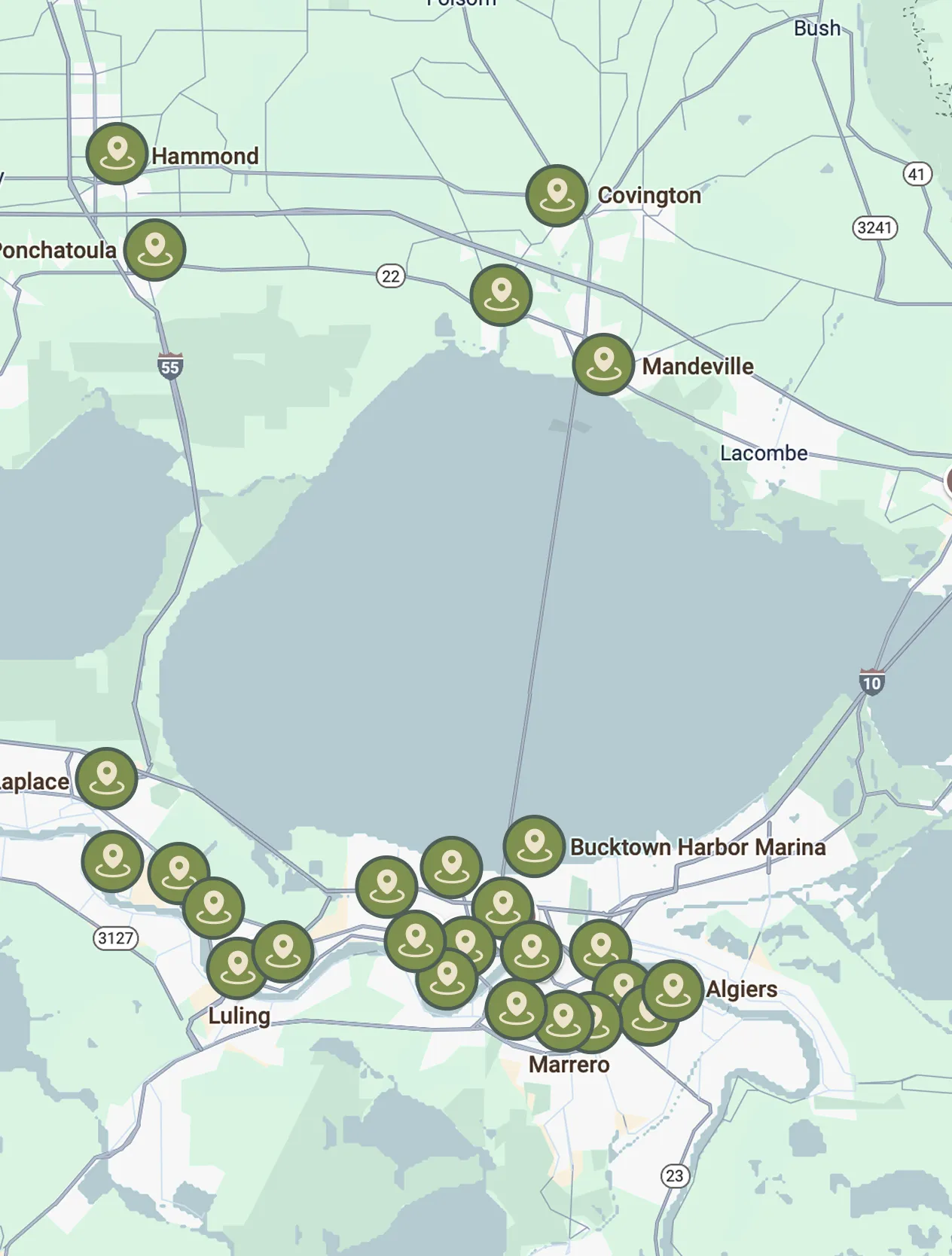
Our service areas are designed to meet the diverse needs of our clients. We focus on providing exceptional service and ensuring customer satisfaction in every location we operate.