Whole House Dehumidifiers in Ponchatoula, LA
.webp)
For Ponchatoula homeowners, Cypress Cooling offers whole house dehumidifiers that provide centralized humidity control, a significant upgrade from portable units. These systems improve air quality throughout your entire ducted system. Our professional sizing and installation ensure optimal relative humidity (4050%), seamless integration with your existing HVAC, and efficient condensate handling. We'll cover placement, commissioning, maintenance, and energy considerations, highlighting the benefits, such as reduced mold risk and more comfortable interiors. We'll also discuss typical use cases, pricing factors, and the value of regular service to protect your home.
-min.webp)
Whole House Dehumidifiers in Ponchatoula, LA
High humidity is one of the most common indoor comfort and health problems in Ponchatoula, LA. Whole house dehumidifiers control moisture throughout your home, not just one room, reducing mold and mildew growth, protecting wood floors and cabinetry, improving indoor air quality, and helping your HVAC system run more efficiently. This page explains how whole-home dehumidification differs from portable units, how systems are sized and installed, integration options with existing HVAC, maintenance and condensate handling, energy considerations and realistic outcomes for homes in Ponchatoula.
Why whole-home dehumidification matters in Ponchatoula
Ponchatoula sits in a humid subtropical climate with hot, humid summers and frequent moisture intrusion during wet seasons. Typical issues in local homes include:
- Persistent damp basements, crawlspaces, and garages
- Mold and mildew on walls, insulation, and window frames
- Musty odors and increased allergy symptoms
- Faster deterioration of wood floors, furniture, and electronics
- Longer run times and strain on air conditioning systems trying to remove moisture
A whole-house dehumidifier addresses moisture across the entire ducted space to keep relative humidity (RH) in a healthy range and prevent recurring problems that portable units cannot fully solve.
Whole-house vs portable dehumidifiers
Portable units are useful for spot treatment but have clear limitations:
- Treat single rooms only; multiple units may be needed for whole-home coverage
- Require frequent emptying, moving, and are noisy
- Do not integrate with central HVAC for consistent control
Whole-house systems:
- Integrate with existing ductwork or mount directly on the air handler
- Provide centralized humidity control via a whole-home humidistat or a smart controller
- Remove more moisture with lower per-unit energy use when compared to multiple portables
- Eliminate the need to manually empty reservoirs and reduce noise in living spaces
Common whole-house dehumidifier types and placement
- Ducted, return-air mounted units: Installed in the return plenum or duct run so conditioned air passes through the dehumidifier before distribution.
- Side-stream or bypass units: Pull a portion of supply or return air through a dehumidifier core and return treated air to the system.
- Standalone whole-house units: Mounted near the air handler or in a mechanical closet and connected directly to the duct system.Placement considerations in Ponchatoula homes:
- Close to the central air handler to simplify duct connections and wiring
- Accessible for maintenance and condensate routing
- In or near basements, conditioned crawlspaces, or mechanical rooms if those areas are moisture sources
Sizing and load assessment
Proper sizing is the most important step for lasting performance. A professional assessment typically includes:
- Calculating space volume and conditioned area
- Measuring or estimating current indoor RH and temperature
- Identifying moisture sources (ground moisture, appliance use, roof leaks, showers)
- Considering occupancy patterns and local climate (high outdoor humidity in summer)Manufacturers usually size whole-home units by pints per day (or liters per day) at specified conditions. The goal for most homes is to maintain indoor RH between 40% and 50% for comfort and mold prevention.
Integration with existing HVAC systems
Whole-house dehumidifiers can link to your central HVAC in several ways:
- Duct integration: Unit installed in the return or supply ductwork and controlled by a humidistat; the air handler circulates treated air.
- Control integration: Wired into existing thermostats or smart home systems for coordinated temperature and humidity control.
- Hybrid operation: Some setups allow the dehumidifier to run independent of the compressor to dehumidify without extra cooling, which saves energy during shoulder seasons.A properly integrated system avoids conflicts between dehumidification and cooling, so your home stays comfortable without overcooling.
Installation and commissioning process
A typical installation includes:
- Pre-install survey and load assessment
- Selecting unit capacity and location, planning condensate route
- Mounting the unit and connecting to ductwork and electrical supply
- Setting up controls and wiring to the thermostat or humidistat
- Routing condensate to a gravity drain or installing a condensate pump if necessary
- Commissioning: measuring airflow, verifying refrigerant and electrical connections, calibrating humidistats, and confirming target RH levelsCommissioning ensures the system removes moisture as expected and runs efficiently in Ponchatoula’s humidity conditions.
Condensate handling and code considerations
Condensate must be managed safely and reliably:
- Gravity drains to a floor drain or laundry sink are preferred when possible
- Condensate pumps are used when gravity drainage is not available; pumps should be sized for expected condensate volume
- Secondary safety devices like float switches or emergency shutoff can protect against backupsAll condensate installations should follow local plumbing practices and municipal requirements to prevent sanitary or structural issues.
Maintenance and common service needs
Routine maintenance keeps performance consistent and prevents problems:
- Replace or clean air filters 2 to 4 times per year depending on use and indoor air quality
- Annual inspection of coils, drain lines, and condensate pumps
- Verify controls and humidistat calibration at least once per year
- Check duct connections and airflow to prevent pressure imbalancesCommon issues observed in Ponchatoula homes include clogged condensate drains, dirty filters reducing airflow, and improper setpoints that allow RH to remain too high. Regular service agreements typically cover seasonal checks, cleaning, and preventive adjustments.
Energy considerations and expected results
Whole-house dehumidifiers are more energy efficient for whole-home moisture control than multiple portable units. Key points:
- Units are rated by pints removed per day and have differing energy usage; newer models are more efficient
- Integrated operation with the HVAC system can reduce unnecessary cooling by allowing targeted dehumidification
- Typical results: consistent RH reduction to target 40% to 50%, leading to reduced mold growth, better comfort, and lower perceived temperature indoorsEnergy savings depend on system efficiency, local electricity rates, and how well the home is sealed against outdoor humidity.
Common use cases in Ponchatoula
- Homes with persistent high indoor humidity during summer months
- Crawlspaces, attics, or basements with musty smells or mold stains
- Residences with wood floors or cabinetry showing signs of moisture-related swelling or rot
- Houses recently renovated or with additions where moisture levels are higher than the original structure
- Properties recovering from storm-related water intrusion that need long-term moisture control
Pricing factors and service agreements
Pricing varies based on multiple factors rather than a flat rate:
- Unit capacity and manufacturer
- Complexity of duct modifications and required electrical work
- Condensate routing needs (gravity vs pump)
- Integration level with thermostat or smart controls
- Accessibility and labor for installation and commissioningService agreements usually offer scheduled inspections, filter changes, condensate system checks, and priority scheduling for repairs. Agreements help maintain performance and extend equipment life in the long-term humid climate of Ponchatoula.
Final considerations
Whole-house dehumidification is a practical, long-term solution for humidity-related problems common in Ponchatoula homes. When sized correctly, integrated with your HVAC system, and maintained regularly, a whole-home dehumidifier stabilizes indoor humidity, protects building materials, improves comfort, and reduces health risks associated with mold and mildew. A professional assessment and proper commissioning are essential to realize the full benefits in this Gulf Coast climate.
OUR CLIENTS HAVE TO SAY ABOUT US



Service areas
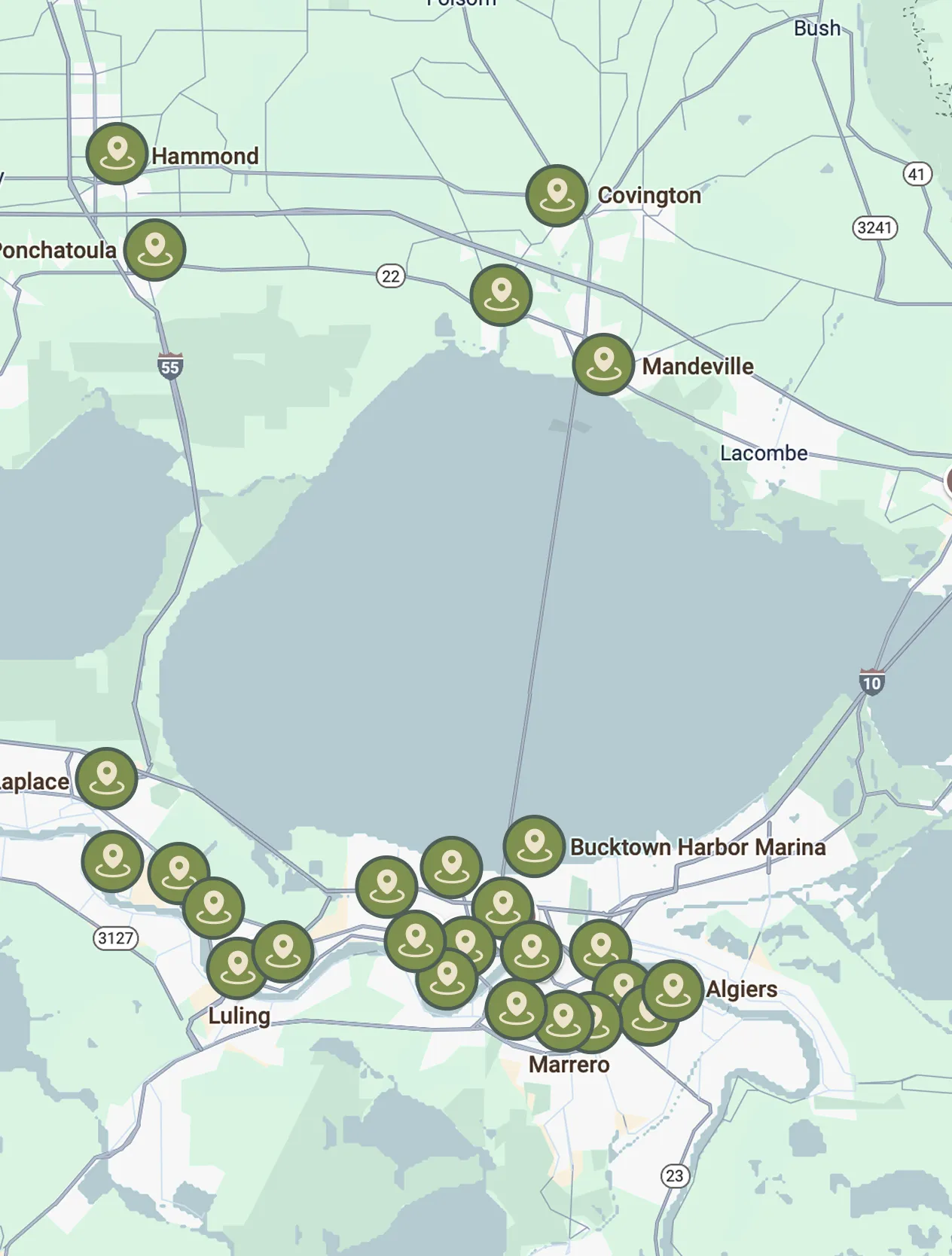
Our service areas are designed to meet the diverse needs of our clients. We focus on providing exceptional service and ensuring customer satisfaction in every location we operate.