Whole House Dehumidifiers in Norco, LA
.webp)
Cypress Cooling provides whole house dehumidification solutions in Norco, LA, addressing critical aspects like sizing, HVAC integration, energy consumption, maintenance, service plans, and follow up testing. Humidity control is essential in our hot and humid climate. We tackle common humidity issues and provide the benefits of properly sized and integrated systems for improved comfort, mold prevention, and better indoor air quality. We'll guide you in selecting the right dehumidifier type, emphasize the impact of installation on performance, and highlight the importance of ongoing maintenance for reliable and efficient humidity control in your Norco home.

Whole House Dehumidifiers in Norco, LA
Controlling indoor humidity in Norco, LA is not optional if you want a comfortable, healthy home and long-lasting building materials. Whole house dehumidifiers remove excess moisture from the entire HVAC-treated space, helping prevent mold, mildew, musty odors, and wood deterioration that are common in south Louisiana s humid, warm climate. This page explains how whole-home dehumidification works, the types and sizing considerations, how systems integrate with your HVAC, expected energy use and performance, maintenance needs, service plan options, and recommended follow-up testing specific to Norco homes.
Why humidity control matters in Norco, LA
Norco sits in a hot-humid subtropical climate with high year-round relative humidity, especially in summer and during prolonged rainy seasons. High indoor humidity causes:
- Visible mold growth in bathrooms, attics, closets, and crawlspaces
- Condensation on windows and ductwork, which can rot framing or insulation
- Persistent musty odors and reduced indoor air quality
- Increased perceived temperature and higher cooling runs and energy use
A properly sized whole house dehumidifier reduces indoor relative humidity (RH) to an ideal range, typically around 40 to 50 percent, improving comfort and lowering mold risk without overcooling the house.
Common whole-house dehumidifier issues in Norco, LA homes
- Inadequate capacity for very humid conditions, resulting in persistent high RH
- Poor integration with HVAC leading to short cycling or uneven humidity control
- Blocked condensate drains or scale buildup from hard water in drains
- Dirty filters or coils reducing removal efficiency
- Crawlspace or attic moisture intrusion not addressed by whole-house systems alone
Knowing these typical issues helps you select a system and maintenance plan that actually solves humidity problems rather than masking symptoms.
Types of whole-house dehumidifiers
- Ducted refrigerant dehumidifiers: Installed in the HVAC return or plenum and use a refrigeration coil to condense moisture. Best for most climate-controlled homes and cost-effective for moderate to high moisture loads.
- Desiccant dehumidifiers: Use a drying material to adsorb moisture and are effective at lower temperatures or for specialized applications such as humid crawlspaces. They are less common for standard whole-house use but useful in specific situations.
- Bypass vs. integrated units: Bypass models draw air through the dehumidifier using the HVAC fan; integrated (duct-mounted) units are installed in-line and often have dedicated fans for higher capacity and independent control.
- Portable vs. whole-house: Portable units can supplement spot problems but cannot manage whole-home loads or integrate with HVAC controls; choose whole-house for comprehensive, consistent results.
Sizing and load considerations
Proper sizing is the single most important decision. Sizing depends on:
- Square footage and ceiling height of conditioned space
- Number of occupants and typical occupancy patterns
- Indoor moisture sources (cooking, showers, laundry, indoor plants)
- Building envelope tightness and local climate humidity
- Crawlspace, attic, or basement conditions
Whole-house units are commonly rated in pints removed per day under a standard test (for example, 50 to 140 pints/day). A qualified assessment includes a humidity load calculation that estimates moisture generation and infiltration. Oversizing can cause inefficiency and short cycling; undersizing will leave RH too high. For Norco, LA s elevated outdoor moisture, engineers often recommend a slightly higher capacity than for drier climates, or adding targeted moisture controls for problem spaces.
Installation and HVAC integration
Typical installation steps:
- Site assessment to determine best mounting location, electrical needs, and condensate routing
- Mounting the dehumidifier in the return plenum, mechanical room, or dedicated closet
- Duct connections (bypass or in-line), including access for service
- Electrical connection to a dedicated circuit when required
- Condensate drain connection to a floor drain or condensate pump if needed
- Control wiring to a humidity controller or integration with the home thermostat/humidistat
Good integration ensures the dehumidifier runs efficiently with minimal additional noise and avoids interference with HVAC defrost or cooling cycles. In Norco s humid conditions, carefully routing condensate and ensuring corrosion-resistant fittings helps prevent future service issues.
Expected performance and energy use
A properly sized whole-house dehumidifier should:
- Maintain indoor RH near the target setpoint (commonly 40 to 50 percent) under typical conditions
- Reduce HVAC runtime by reducing latent load on the air conditioner in hot months
- Remove substantial moisture even during high outdoor humidity days
Energy use varies by capacity and technology. Modern units with variable-speed compressors and efficient fans will use less electricity for a given moisture removal rate than older models. Expect operating costs to rise during the most humid months; this is normal, but efficient units and smart controls minimize energy use while maintaining comfort.
Maintenance and filter care
Regular maintenance keeps performance high and prevents breakdowns:
- Replace or clean intake filters every 1 to 3 months depending on use and indoor air quality
- Inspect and clean coils annually to maintain heat exchange efficiency
- Check and clear condensate drains and pump reservoirs to prevent backups
- Verify control calibration and humidity sensor accuracy during seasonal maintenance
- Annual inspection of electrical connections and mounting hardware
Using washable pre-filters or higher-quality filters can protect the dehumidifier and HVAC system while keeping indoor particulates down. In coastal or high-salinity environments, inspect metal components for corrosion periodically.
Pricing structure and service plans (what to expect)
Whole-house dehumidification offerings commonly include:
- One-time system purchase and installation with a warranty on parts and labor
- Preventive maintenance plans that include seasonal inspections, filter swaps, and condensate cleaning
- Performance tuning visits to adjust setpoints and controls after initial commissioning
- Extended service agreements for priority maintenance and discounted repairs
Norco homeowners should compare plan inclusions: number of annual visits, scope of inspections, parts covered, and any diagnostic testing. Because local humidity is persistent, plans that include seasonal checks and rapid response for drain or control issues are often the best match.
Recommended follow-up testing and monitoring
After installation, follow-up helps confirm the system meets expectations:
- Room-by-room hygrometer readings collected over several weeks to verify stable RH levels
- Duct and building envelope checks to locate residual moisture entry points
- Mold inspection in previously affected areas to confirm remediation success
- Indoor air quality spot tests if occupants have health concerns
- Periodic energy use monitoring to assess efficiency relative to removal performance
Monitoring for a few weeks after commissioning is especially important in Norco because outdoor humidity and occupant habits determine real-world performance.
Whole house dehumidifiers in Norco, LA address a core environmental challenge for local homes: year-round high humidity that damages building materials and reduces indoor comfort. Choosing the right type and size, integrating the unit correctly with your HVAC, and committing to routine maintenance and follow-up testing are the keys to reliable, energy-efficient humidity control that protects your home and improves indoor air quality.
OUR CLIENTS HAVE TO SAY ABOUT US



Service areas
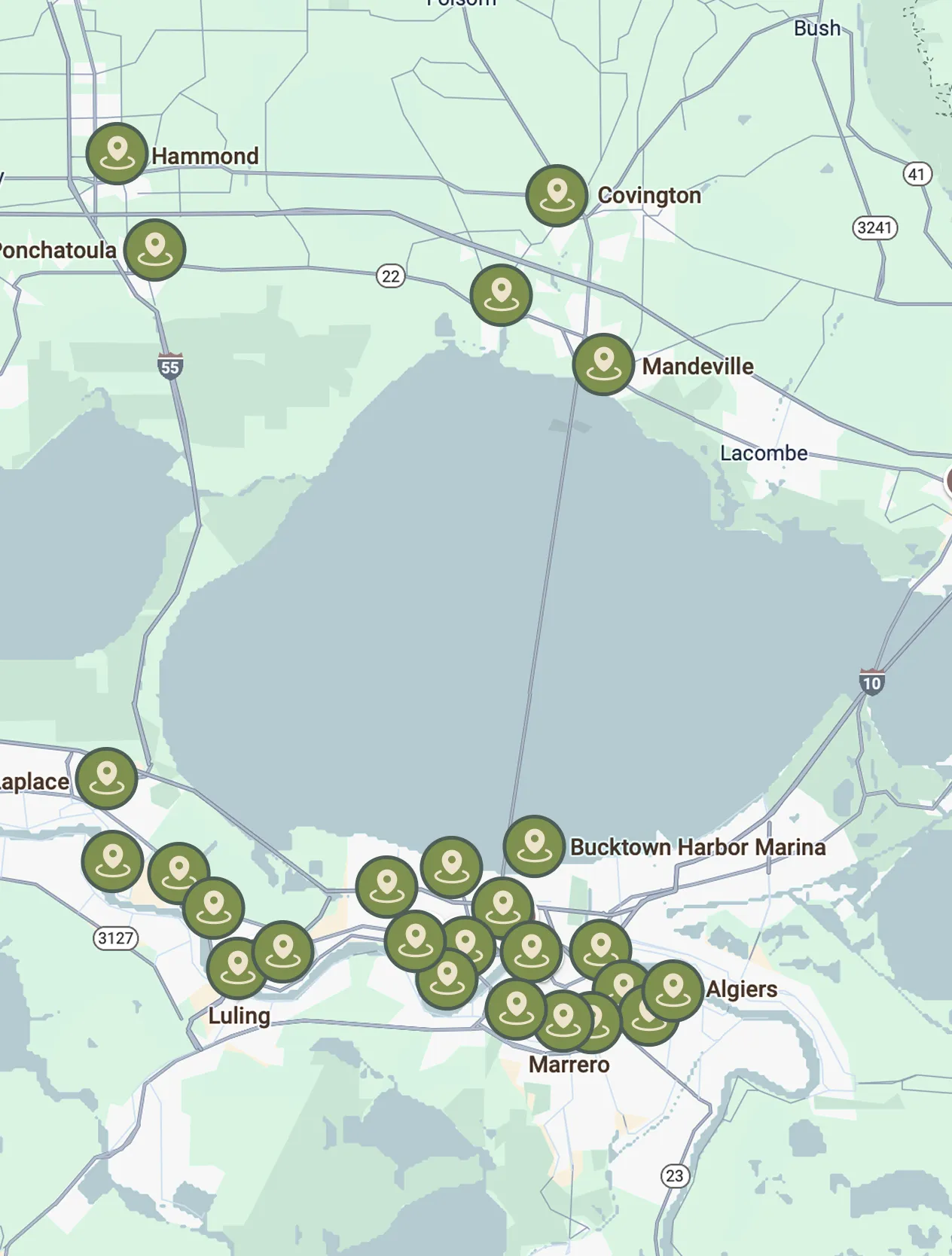
Our service areas are designed to meet the diverse needs of our clients. We focus on providing exceptional service and ensuring customer satisfaction in every location we operate.