Whole House Dehumidifiers in Luling, LA
.webp)
For Luling, LA homeowners, whole house dehumidification is more than just a comfort upgrade; it's an investment in your home's health. Cypress Cooling understands the specific needs of homes in humid Southeast Louisiana. This guide covers essential aspects like equipment sizing and placement, installation and drainage considerations, and expected energy use and maintenance requirements. We'll also discuss how to integrate dehumidification with ventilation and filtration systems to further enhance your indoor air quality. Addressing common issues with practical troubleshooting guidance, we'll highlight the key benefits of a properly designed dehumidifier system, providing you with the practical guidance you need to select, install, and maintain a system that effectively protects your wood, finishes, and overall health.
-min.webp)
Whole House Dehumidifiers in Luling, LA
Living in Luling, LA means dealing with hot, muggy summers, frequent rain, and a high moisture load year round. A dedicated whole house dehumidifier can be the difference between a comfortable, healthy home and chronic mold, musty odors, and accelerated wear on wood, drywall, and HVAC equipment. This page explains how whole-home dehumidification works in Luling-area homes, how to size and place equipment, installation and drainage considerations, energy and maintenance expectations, and how dehumidification integrates with ventilation and filtration to improve indoor air quality.
Why whole house dehumidification matters in Luling, LA
Southeast Louisiana climate produces prolonged periods of high relative humidity. That extra moisture:
- Encourages mold and mildew growth on walls, cabinets, and fabrics.
- Causes condensation on windows and interior surfaces, which can damage paint and wood trim.
- Increases perceived temperature, making air conditioning work harder.
- Worsens allergy and asthma symptoms by supporting dust mites and microbial growth.
A whole house dehumidifier controls moisture continuously for the entire living space, not just single rooms. That consistent control is especially important in Luling homes with crawlspaces, slab foundations, or limited attic insulation where humidity can migrate through building materials.
Common whole house dehumidifier issues in Luling
Homeowners in Luling frequently encounter the following problems that a whole-house system addresses:
- Persistent musty odors in basements, closets, and crawlspaces.
- Visible mold or mildew in bathrooms, laundry rooms, and behind cabinetry.
- Condensation on windows and metal surfaces during summer evenings.
- AC short-cycling and higher energy bills because the system is fighting moisture, not just temperature.
- Indoor RH staying above 60 percent, which is the threshold where mold growth accelerates.
How whole house dehumidifiers work
Whole house units remove moisture from conditioned air by passing it across a cold coil or through a desiccant material, collecting condensate, and returning drier air to the ductwork. Systems are available as:
- Ducted, in-line dehumidifiers that integrate with your existing HVAC supply and return.
- Dedicated units installed near the air handler that use the central blower to circulate air.
- Crawlspace or basement-specific models for homes with moisture intrusion below grade.
Built-in humidistats and control logic maintain a target relative humidity (RH). In Luling, a practical target for both comfort and mold prevention is about 45 to 50 percent RH; this reduces mold risk while avoiding overly dry air that can irritate respiratory systems.
Sizing and placement guidance
Proper sizing and placement are crucial. General considerations:
- Assess the whole-house moisture load: square footage, ceiling height, number of occupants, presence of indoor pools, frequent laundry, and local climate severity.
- Use manufacturer capacity ratings (pints per day at a standard test condition) as a baseline. Many Luling homes will need 30 to 70 pints per day for smaller homes and 70 to 140 pints per day for larger homes or those with high moisture loads. Extremely damp crawlspaces or homes with chronic water issues may require specialized equipment or multiple units.
- Place equipment in the central return plenum or near the air handler for even distribution. Crawlspace units should be positioned to allow proper airflow and easy condensate access.
- Avoid locating the unit where it will short cycle from frequent door openings or near exterior walls prone to infiltration.
Exact capacity should be determined by a trained assessment that measures current RH across multiple rooms and evaluates hidden moisture sources.
Installation and drainage requirements
A professional installation ensures correct electrical supply, duct connections, and safe condensate removal. Typical installation steps:
- Mount the unit in the HVAC return or designated service location with adequate clearance for airflow and maintenance.
- Provide dedicated electrical circuit and breaker sized for the dehumidifier.
- Connect condensate drainage using gravity to a floor drain when possible, or install a condensate pump if the unit is above the drain level.
- Tie controls into the existing thermostat or install a remote humidistat for zone control.
- Commission the system with airflow and dew point testing to verify performance.
In coastal Louisiana, installers will also check for corrosion-resistant fittings and recommend freeze protection settings for cooler months when interior temperatures drop.
Energy use and operating considerations
Whole house dehumidifiers use electricity but are often more efficient than multiple portable units because they target the entire ducted air stream and avoid redundant operation. Energy considerations include:
- Look for models with variable speed blowers and energy efficient motors for lower energy draw.
- Running the dehumidifier can reduce air conditioning runtime by lowering latent load, which may offset some energy use.
- Monitor setpoints; maintaining RH at 45 to 50 percent balances comfort and efficiency.
- Expect seasonal variation: higher runtime in summer and hurricane season when outdoor humidity is highest.
Maintenance and troubleshooting tips
Routine maintenance keeps performance high and energy use low:
- Clean or replace unit filters every 3 months or as recommended.
- Inspect and clear condensate lines and P-traps to prevent backups and odors.
- Check coils for dust and scale; clean annually.
- Verify humidistat calibration and inspect electrical connections.
- Watch for common problems: insufficient capacity (RH remains high), leaking condensate lines, noisy operation, or short cycling. These usually indicate sizing, drainage, or control issues.
An annual inspection before the high-humidity season helps catch problems early.
Pairing dehumidification with ventilation and filtration
Dehumidification is most effective when integrated into a whole-house IAQ strategy:
- Ventilation: Controlled mechanical ventilation brings fresh air without overwhelming the dehumidifier. In Luling, tactical ventilation combined with dehumidification prevents bringing uncontrolled moisture into the living space during humid months. Energy recovery ventilators (ERVs) can be helpful in some climates, but in very humid conditions they may introduce moisture that must be managed by the dehumidifier.
- Filtration: Maintaining clean filters and using higher MERV ratings where compatible with the HVAC system reduces particulate load and keeps coils cleaner, improving dehumidifier efficiency. Drier air also reduces biological growth on filters and duct surfaces.
- Additional controls: Zoned humidity sensors and smart dehumidification controls maintain consistent RH in multiple areas, preventing hidden pockets of moisture in bathrooms, crawlspaces, or bonus rooms.
Benefits for Luling homes
Installing a whole house dehumidifier in Luling, LA delivers measurable outcomes:
- Reduced mold and mildew risk, protecting health and property.
- Improved comfort with less reliance on excessively low thermostat settings.
- Preservation of woodwork, flooring, and electronics from moisture damage.
- Better overall indoor air quality when paired with proper ventilation and filtration.
- Potentially lower total energy use by allowing AC to focus on sensible cooling rather than moisture removal.
Regular maintenance and a properly designed system tailored to your home layout and moisture sources are the keys to reliable year-round performance in Southeast Louisiana.
OUR CLIENTS HAVE TO SAY ABOUT US



Service areas
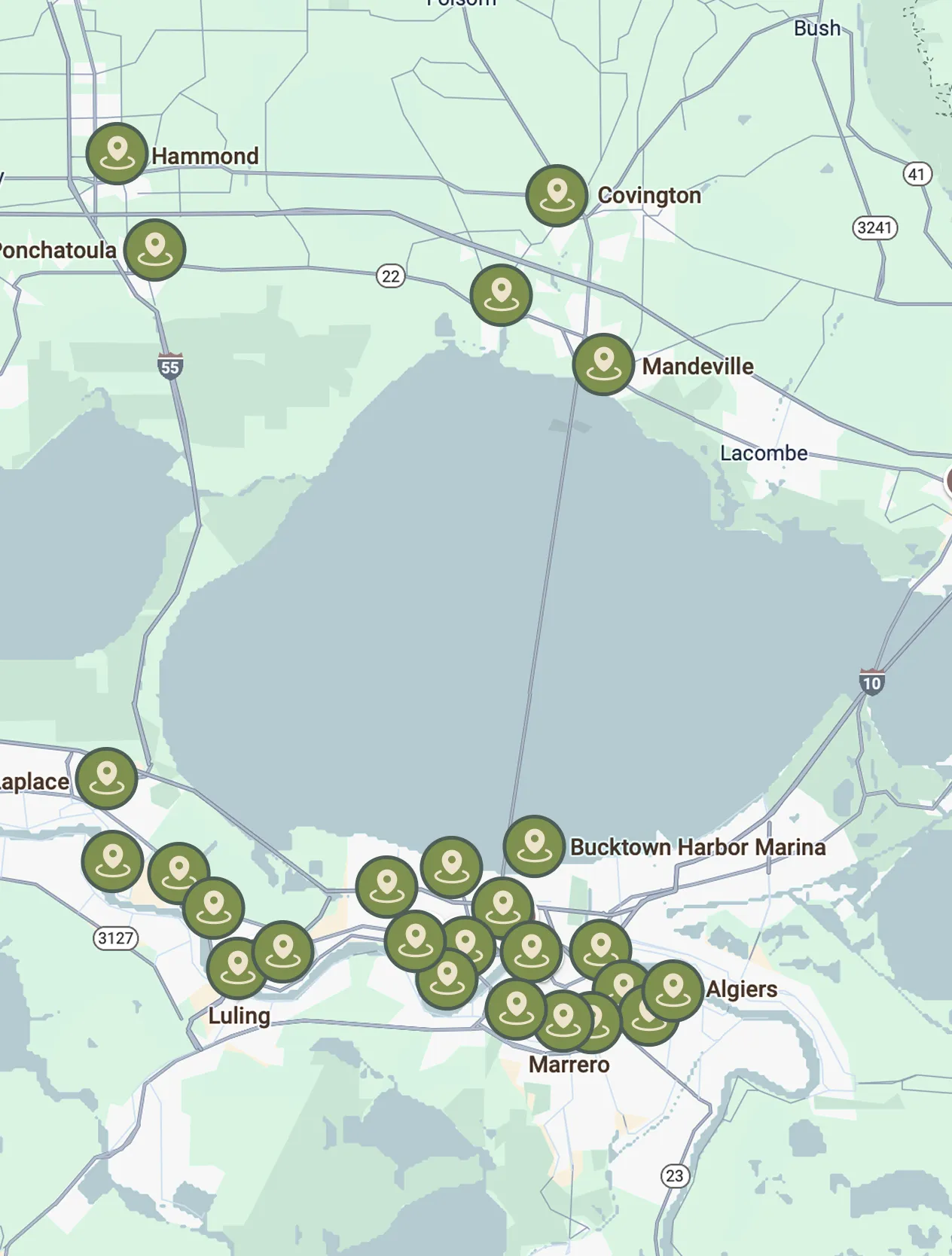
Our service areas are designed to meet the diverse needs of our clients. We focus on providing exceptional service and ensuring customer satisfaction in every location we operate.