Whole House Dehumidifiers in Laplace, LA
.webp)
Addressing humidity related issues in Laplace, LA homes requires a comprehensive approach. That's where whole house dehumidification comes in. Cypress Cooling can help you understand the benefits of properly sized and expertly installed systems. This guide covers various solution types—including ducted, standalone, crawlspace, and integrated HVAC packages—along with crucial sizing considerations, effective installation strategies, energy efficiency tips, and routine maintenance schedules. We'll highlight how to integrate these systems with your central HVAC, the comfort improvements you can expect, and what a typical on site evaluation from Cypress Cooling entails. This information empowers homeowners to select the right approach, protect their structural materials, and maintain a stable indoor environment year round, supporting informed decisions and long term value.

Whole House Dehumidifiers in Laplace, LA
Living in Laplace, LA means dealing with persistent humidity most of the year. High indoor relative humidity contributes to mold and mildew growth, musty odors, peeling paint, warped wood floors and furniture, and aggravated allergy or asthma symptoms. A correctly sized and installed whole house dehumidifier is a long-term solution that protects your property, improves indoor comfort, and reduces the workload on your air conditioning system.
Common whole house dehumidifier issues in Laplace, LA
Homes in southeast Louisiana commonly show these symptoms that point to a need for whole-home dehumidification:
- Persistent indoor humidity above 55% RH, visible condensation on windows, or sticky indoor air.
- Musty odors in living spaces, closets, basements, or crawlspaces.
- Mold or mildew around windows, behind appliances, or in bathrooms despite regular cleaning.
- Warped or cupped hardwood floors, swollen door frames, or peeling paint and wallpaper.
- Frequent HVAC short cycling or systems struggling to maintain comfortable temperature.
Local climate factors such as warm, humid summers and the increased moisture after storm events make these problems common in Laplace homes. Whole house systems address the root cause — excess moisture — rather than just masking symptoms.
Types of whole-house dehumidification solutions
Whole-house solutions vary by home layout and moisture source:
- Ducted whole-home dehumidifiers that tie into your HVAC return or supply ducts for centralized control and distribution.
- Standalone whole-house units placed in utility rooms, mechanical closets, or attics with duct connections to living spaces.
- Crawlspace and basement dehumidifiers for homes with moisture intrusion below grade.
- Integrated HVAC dehumidification packages that include humidity sensing and control layered with existing heating and cooling equipment.
Each approach has pros and cons depending on square footage, duct design, and wet areas common to Laplace houses.
How whole-house dehumidifiers reduce mold, mildew and humidity problems
Humidity control works by removing moisture from the air to keep indoor relative humidity in a target range, generally 45% to 50% RH for southern climates. Benefits include:
- Slowing or stopping mold and mildew growth that thrives above 60% RH.
- Reducing dust mite populations and limiting allergen levels.
- Minimizing condensation that damages windows, framing, and finishes.
- Lowering that “heavy” or clammy feeling so occupants feel comfortable at higher thermostat settings.
A consistent RH level protects building materials and contents over months and years, not just days.
Sizing and placement: what matters for Laplace homes
Correct sizing is critical. Sizing depends on:
- Home square footage and ceiling height.
- Envelope tightness and ventilation rates.
- Number of occupants and activities that add moisture (cooking, laundry, showers).
- Presence of basements, crawlspaces, or attached garages that introduce moisture.
- Local outdoor humidity and seasonal patterns.
Capacity is commonly rated in pints per day. Typical whole-house units for single-family homes in humid climates range from about 30 to 120 pints per day. Placement matters: ducted units often perform best with the unit near the HVAC return or mechanical closet to treat air centrally. Crawlspace or basement units should be located where drainage and airflow are practical and where they address the primary moisture source.
Integration with HVAC systems
Whole-house dehumidifiers can be integrated with central HVAC in two common ways:
- Duct-mounted units placed on the return or supply side and controlled by a wall-mounted humidistat or integrated into the thermostat.
- Standalone whole-home units with dedicated ducts that distribute drier air to living areas and return humid air to the unit.
Integration allows coordinated control so the HVAC handles temperature (sensible load) while the dehumidifier handles moisture (latent load). Properly sized systems reduce overall HVAC runtime because removing moisture makes spaces feel cooler without dropping thermostat settings excessively.
Energy usage and efficiency considerations
Energy use varies by technology and control strategy. Key efficiency factors:
- Modern whole-house units use variable-speed compressors and smart controls to match dehumidification to demand, lowering power consumption during low-load periods.
- A dehumidifier that reduces latent load can improve overall HVAC efficiency, but it adds its own electrical use — efficient matching and control are essential.
- Choosing a unit with a higher moisture removal per kilowatt-hour improves operational cost. Units installed to operate intermittently with a target humidity (instead of running constantly) yield better energy performance in Laplace’s climate.
Expect some increase in electrical usage, but balanced against lower AC runtime, reduced mold remediation risk, and preserved home value.
Installation and maintenance routines
Proper installation and ongoing maintenance keep systems effective:
- Drainage: options include gravity drain to an exterior or floor drain, connection to a condensate drain, or use of a condensate pump if gravity drainage is not available.
- Coils and filters: coils should be accessible for seasonal cleaning; filters need regular inspection and cleaning or replacement per manufacturer guidelines.
- Controls: humidity sensors and control wiring should be calibrated and tested during installation and checked annually.
- Winterization: in cooler months or low-demand periods, follow recommended procedures to avoid coil freeze or standing water.
- Annual service: includes cleaning coils, checking refrigerant level, inspecting condensate lines for clogs and leaks, and testing control operation.
Routine maintenance preserves capacity and prevents secondary issues like leaks or microbial growth on coils and pans.
Typical outcomes for indoor comfort and property protection
With the right system and maintenance, homeowners in Laplace can expect:
- Indoor RH stabilized in the 45% to 50% range most days, reducing visible condensation and musty odors.
- Noticeable reduction in mold and mildew growth over weeks to months.
- Better longevity for wood floors, cabinets, and painted surfaces.
- Fewer allergy symptoms for sensitive occupants and lower odors in closets and storage.
- More consistent HVAC performance and potentially lower AC runtime during humid weather.
Improvements in comfort are often noticeable within days, while property protection benefits accumulate over time.
What to expect from an on-site evaluation
An on-site evaluation typically includes:
- Measurement of indoor relative humidity and temperature in multiple rooms, and a brief moisture survey of attics, crawlspaces or basements.
- Inspection of existing HVAC equipment, duct layout, and potential installation locations.
- Calculation of the home's latent load based on size, occupancy, and moisture sources plus local outdoor conditions.
- Recommendation of unit type and capacity, drainage strategy, and integration approach with the HVAC system.
- A maintenance and operation overview so homeowners know what to expect from performance, energy use, and upkeep.
Homeowners preparing for an evaluation can note the home square footage, number of occupants, known problem areas, previous mold or water intrusion events, and current indoor humidity readings if available.
Final considerations for Laplace, LA homes
Whole house dehumidifiers are a practical investment for Laplace residences where humidity is a year-round concern and storm events can drive extra moisture into structures. Properly sized and installed systems reduce health risks, protect building materials, and improve comfort without constant reliance on overcooling. Regular maintenance and monitoring of indoor relative humidity are key to long-term success in the Gulf Coast climate.
OUR CLIENTS HAVE TO SAY ABOUT US



Service areas
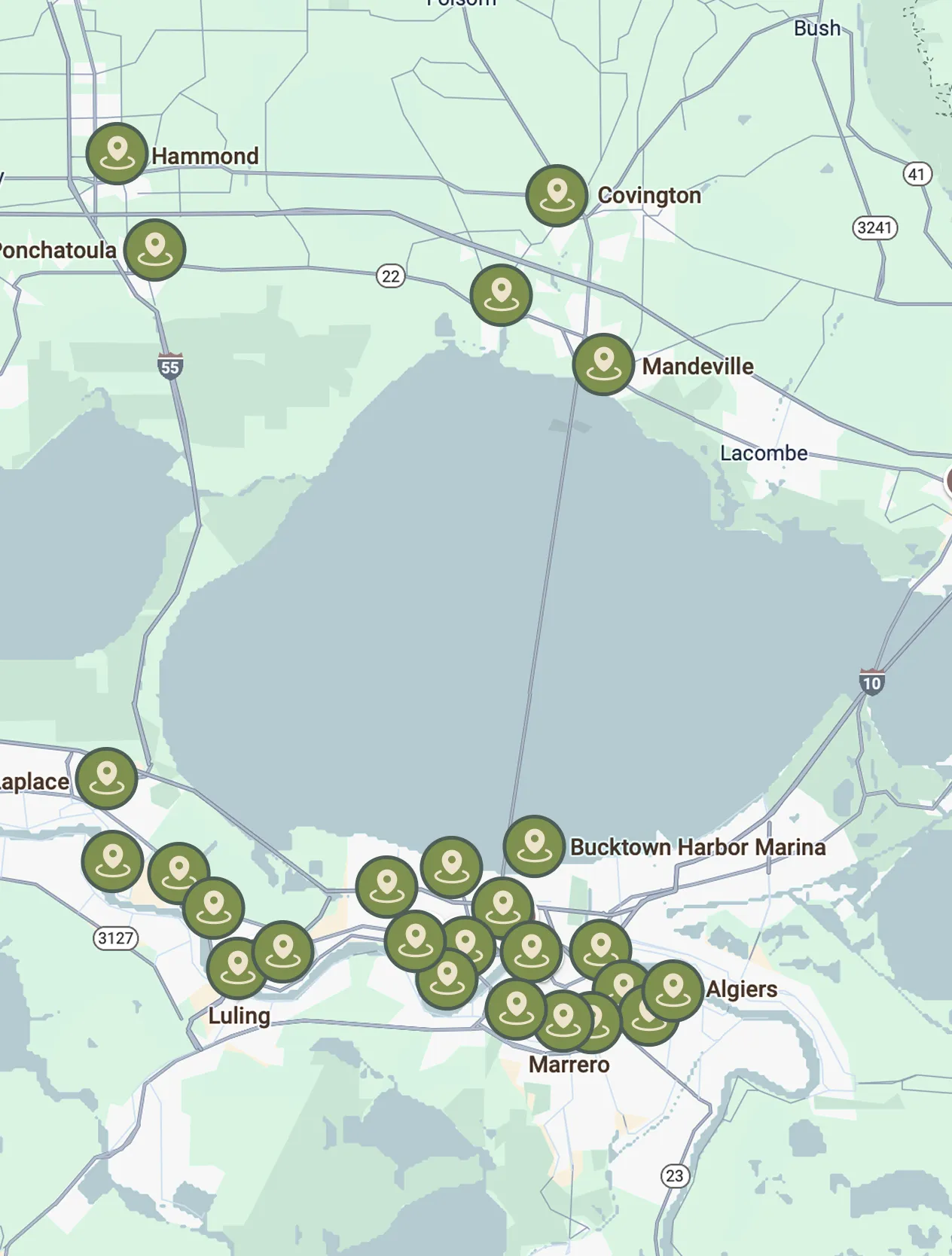
Our service areas are designed to meet the diverse needs of our clients. We focus on providing exceptional service and ensuring customer satisfaction in every location we operate.