Whole House Dehumidifiers in Harahan, LA
.webp)
Whole house dehumidifiers in Harahan, LA, are an excellent tool for managing our region’s humid climate. By removing excess moisture from your central HVAC system, these units, professionally installed by Cypress Cooling, help maintain indoor relative humidity around the ideal 4555% range, reducing mold, condensation, and comfort issues. This guide covers sizing, placement, condensate management, and integration with your existing equipment, along with routine maintenance and energy considerations. Homeowners will learn when a dedicated dehumidifier is necessary versus adjustments to the HVAC system, and how improvements to your home's envelope can complement humidity control for a healthier and more comfortable living environment. Trust Cypress Cooling for expert solutions.
-min.webp)
Whole House Dehumidifiers in Harahan, LA
Living in Harahan, LA means coping with a humid subtropical climate where high indoor humidity is a year-round problem. Whole house dehumidifiers are a targeted solution for homes suffering from persistent moisture: they control relative humidity throughout ducted systems, prevent mold and mildew, protect wood and furnishings, and improve comfort without relying solely on colder air from your AC. This page explains how whole-home dehumidification works, why it matters in Harahan, how to size and place systems, condensate handling, integration with existing HVAC, routine maintenance, energy impacts and ROI, and when to choose a dedicated unit versus HVAC adjustments.
Why whole-home dehumidification matters in Harahan, LA
Harahan’s hot, humid summers and frequent wet weather push indoor relative humidity well above comfortable and healthy levels. High indoor humidity can cause:
- Mold and mildew growth on walls, ceilings, and inside closets
- Worsened allergy and asthma symptoms from dust mites and fungal spores
- Condensation on windows and metal surfaces, risking paint and finish damage
- A clammy, uncomfortable feeling that prompts excessive AC use
- Accelerated deterioration of wood floors, furniture, and electronics
A whole-house dehumidifier removes moisture from the air before it circulates through living spaces, helping maintain an ideal indoor relative humidity (RH) range of about 45–55% in Harahan homes. That balance reduces allergens, protects building materials, and often allows more efficient cooling.
How whole-house dehumidifiers work
Whole-home units are larger, more powerful systems designed to work with your central HVAC. Key components and functions:
- Air handling: The unit draws a portion of the return air from the HVAC system through its evaporator coil to remove moisture.
- Cooling and condensation: Moist air passes over chilled coils; water condenses and is collected in a drain pan.
- Reheat or bypass: Some models reheat the air slightly after dehumidification to avoid overcooling living spaces; others bypass reheating and rely on the furnace or heat strips to balance temperature.
- Controls and sensors: Integrated humidistats and controls maintain setpoint RH and can be wired to the thermostat or operate independently.
- Ducted vs. bypass: Ductable units install directly into the return or plenum, providing whole-home coverage; bypass (or crawlspace) models tie into specific ducts and are useful when zoned control is needed.
Common whole house dehumidifier issues in Harahan, LA
Homes in Harahan experience specific challenges that influence system selection and troubleshooting:
- Persistent high RH despite AC: Common when AC cycles are short or when the HVAC system is oversized, reducing latent removal.
- Condensate drainage problems: Due to low elevation and high groundwater, gravity drains may be impractical; condensate pumps or interior drain routing are often required.
- Poor distribution: Inadequate airflow from the HVAC system or restrictive ductwork can leave rooms with higher humidity.
- Frequent cycling or freeze-ups: Coastal humidity and warm return air can cause coil freeze if airflow is low or settings are incorrect.
- Neglected filters and coils: Coastal dust and pollen build-up reduces efficiency and moisture removal capacity.
Sizing and placement guidance
Correct sizing is critical for performance and efficiency. Sizing considers home square footage, ceiling height, envelope tightness, number of occupants, and moisture sources (showers, cooking, humidifiers, indoor plants, leaks). General guidance:
- Evaluate the home’s total conditioned volume, not just floor area.
- Use a moisture load calculation that considers Harahan-specific conditions like frequent rainfall and high indoor-outdoor delta humidity.
- Choose a unit rated for whole-home capacity (pints per day or gallons/day) and compatible with your HVAC’s airflow (CFM).
- Place the unit in the return plenum or mechanical room for even distribution; avoid installing in attics susceptible to extreme heat unless specified by the manufacturer.
- For homes with crawlspaces or basements prone to dampness, consider targeted dehumidifiers for those zones in addition to a whole-house system.
Condensate handling and local considerations
Harahan’s low-lying geography and seasonal storms affect condensate planning:
- Gravity drain is ideal when possible, running to a floor drain, sink, or exterior. However, elevation and code issues can block straightforward gravity solutions.
- Condensate pump is often necessary to move discharge to higher outlets, municipal drains, or utility sinks. Pumps require proper maintenance and a reliable power source.
- Plumbing connections must comply with local codes; backflow prevention and routing away from foundations are important to avoid structural moisture problems.
- Overflow protection: Units should have float switches or safety shutoffs to prevent water damage if drains clog or pumps fail.
Integration with existing HVAC equipment
Whole-house dehumidifiers can integrate several ways:
- Duct-mounted (direct-connect): Installed in the return plenum, this provides central control and even RH across the home.
- Independent control: Many systems have their own humidistat; integrating with the thermostat can coordinate dehumidification and cooling.
- Compatibility: Ensure the unit matches your HVAC’s airflow and doesn’t create excessive static pressure. For heat pumps and variable-speed systems, select models designed to work with those control strategies.
- Zoning: If your home has zoning dampers, coordinate dehumidifier operation to prevent humidity transfer between zones.
Routine maintenance and longevity
Routine maintenance preserves efficiency and prevents common failures:
- Replace or clean filters on the dehumidifier and HVAC system regularly.
- Inspect and clean coils and drain pans annually to prevent mold buildup.
- Check condensate lines and pumps for clogs or wear; test float switches.
- Verify humidistat calibration and system controls each cooling season.
- Confirm airflow is within manufacturer recommended CFM to maintain latent removal performance.
- Schedule periodic professional inspections, especially after storm seasons common in Harahan.
Energy impacts and ROI
Whole-house dehumidifiers do consume electricity, but they’re often more energy-effective than relying solely on lower AC setpoints or multiple portable units. Key points:
- They reduce latent load on the air conditioner, which can decrease AC runtime and wear, particularly in hot, humid months.
- Properly sized systems provide consistent humidity control that protects property and health—factors that contribute to indirect ROI through reduced mold remediation risk, extended furniture and flooring life, and fewer allergy-related health costs.
- Energy impact varies by model and usage; high-efficiency units with variable-speed technology offer the best balance of performance and energy use.
- Consider envelope improvements (air sealing, proper insulation, bathroom/kitchen ventilation) alongside dehumidification to reduce overall energy demand and speed payback.
When to choose a dedicated dehumidifier vs HVAC adjustments
Choose a dedicated whole-house dehumidifier when:
- Indoor RH regularly exceeds 60% despite proper AC operation.
- You need humidity control independent of cooling (for example, in shoulder seasons when the AC is off).
- The home has moisture-prone spaces (finished basements, crawlspaces) or high occupant/activity loads.
- The HVAC system is oversized, short-cycling, or lacks latent capacity to remove moisture effectively.
Consider HVAC adjustments (thermostat calibration, airflow balancing, right-sizing, adding insulation or ventilation) when:
- The issue is primarily due to poor insulation, leaks, or mechanical problems.
- Humidity spikes are rare and tied to specific activities.
- You want a lower-cost, immediate fix and the HVAC system has adequate latent capacity once corrected.
Choosing the right approach in Harahan often combines both: tighten and ventilate the building envelope, optimize HVAC performance, and add a whole-house dehumidifier where persistent humidity remains.
Final considerations and benefits
Installing a whole-house dehumidifier in Harahan, LA addresses a specific local need: constant high humidity from long, sultry summers and wet weather. Benefits include mold and mildew prevention, improved comfort at higher thermostat settings, reduced allergens, and protection of home finishes. Effective systems require proper sizing, correct integration with HVAC equipment, reliable condensate management, and routine maintenance to deliver consistent performance. When combined with basic envelope improvements and ventilation fixes, whole-home dehumidification is a practical, long-term solution for healthier, more comfortable homes in Harahan.
OUR CLIENTS HAVE TO SAY ABOUT US



Service areas
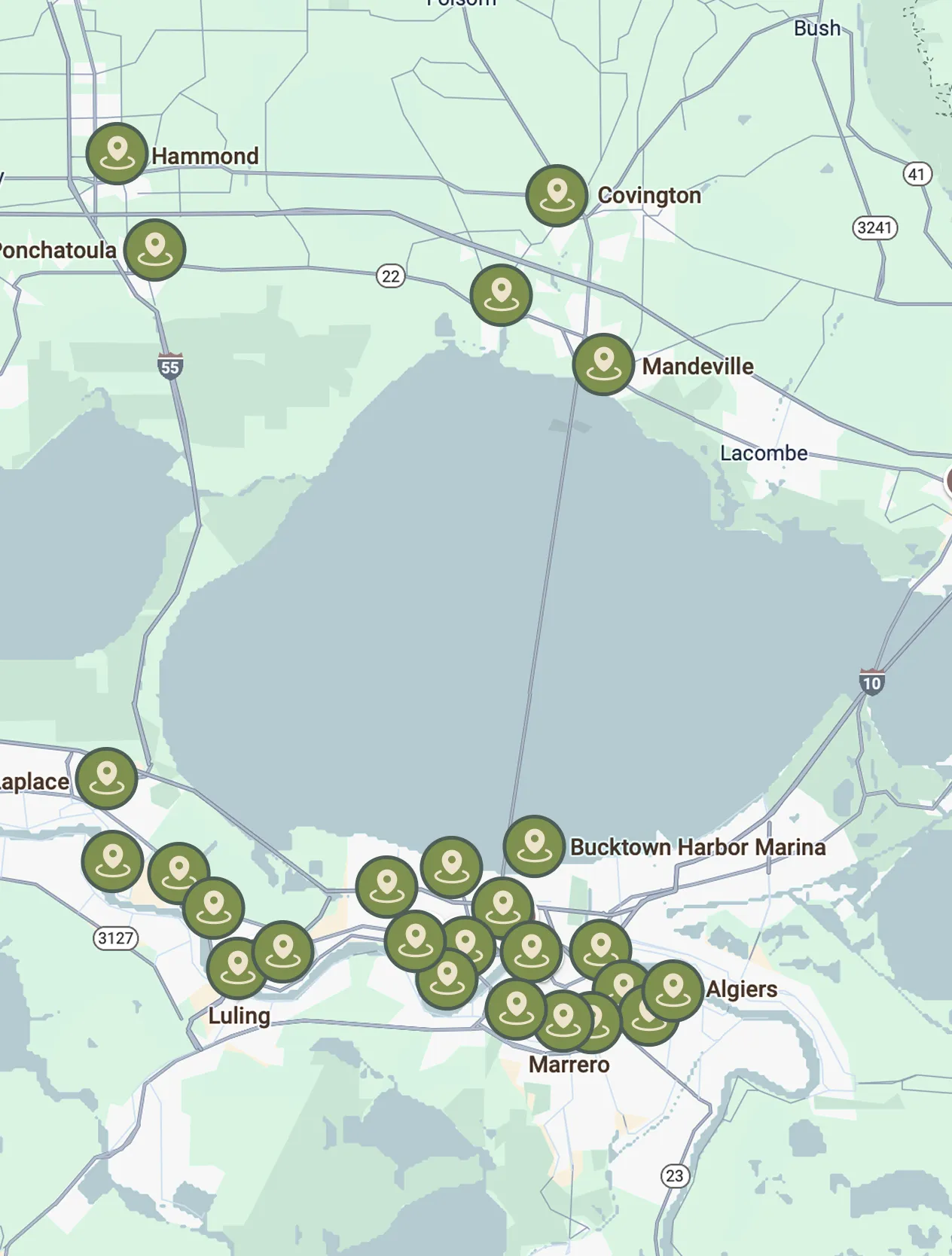
Our service areas are designed to meet the diverse needs of our clients. We focus on providing exceptional service and ensuring customer satisfaction in every location we operate.