Whole House Dehumidifiers in Hammond, LA
.webp)
For consistent humidity control, mold prevention, and enhanced indoor comfort throughout your home in Hammond, LA, consider a whole house dehumidifier. Cypress Cooling offers expert advice and installation services. This guide explains how these systems operate, how to determine the correct size for your square footage, installation and ducting options, the comfort and energy saving benefits you can expect, and ongoing maintenance and financing considerations to help you make an informed decision. We'll highlight common issues, discuss integration with your existing HVAC system, and provide practical relative humidity targets to protect your surfaces and belongings while reducing humidity related costs. Let Cypress Cooling help you create a healthier, more comfortable home.

Whole House Dehumidifiers in Hammond, LA
Living in Hammond, LA means dealing with high humidity year-round. Whole-house dehumidifiers control moisture across your entire home, preventing mold, condensation, musty odors, and the discomfort that follows sustained high relative humidity. This page explains how whole-house dehumidifier solutions work in Hammond homes, how to choose and size a system, installation and ducting options, expected outcomes for comfort and energy use, and ongoing maintenance and financing considerations to help you make an informed decision.
Why a whole-house dehumidifier matters in Hammond, LA
Hammond's subtropical climate, frequent summer thunderstorms, and proximity to the Gulf make indoor humidity a constant challenge. High humidity:
- Encourages mold and mildew growth in walls, attics, and crawlspaces
- Causes condensation on windows and cold surfaces
- Makes homes feel warmer and forces air conditioners to run longer
- Damages wood floors, cabinetry, and stored items
A whole-house dehumidifier treats the entire HVAC zone rather than a single room. That means consistent relative humidity (RH) throughout the living space, better protection for your home, and often improved HVAC efficiency during humid months.
Common whole-house dehumidifier issues in Hammond, LA
Homeowners considering a system should know the typical problems these units solve and the issues that can arise without proper selection or installation:
- Uneven humidity control due to undersized equipment or poor ducting
- Continuous condensate or drain clogs from insufficient drainage planning
- Frozen coils when units are set too low for cooler seasons or poorly maintained
- Short cycling if the dehumidifier and HVAC controls are not coordinated
- Excessive noise or vibration if the unit is improperly mounted
Addressing these issues starts with correct sizing, professional integration with existing HVAC, and regular maintenance.
System sizing and selection criteria
Choosing the right whole-house dehumidifier depends on home size, construction type, moisture sources, and local climate patterns. Key selection factors:
- Capacity: Whole-house units are rated by moisture removal capacity (pints per day). Typical ranges for residential systems are about 50 to 150 pints/day. A professional assessment helps determine the correct capacity for your square footage and humidity load.
- Placement: Attic, closet, mechanical room, or garage installations each have pros and cons. Accessibility for maintenance and proximity to HVAC ductwork and drainage matter.
- Integration: Decide on a unit that integrates with your HVAC system controls and offers a built-in humidistat or smart control to maintain target RH.
- Features: Look for models with variable-speed compressors, corrosion-resistant coils for coastal humidity, low-temperature operation if you want year-round dehumidification, and energy-efficient components.
- Noise and footprint: Consider models designed for quiet operation and compact installation if living space or attic access is limited.
A qualified technician in Hammond will perform a moisture load calculation that accounts for local humidity patterns, construction type, and typical interior moisture generation to recommend the right size.
Installation and ducting options
Whole-house dehumidifier installation involves electrical hookup, condensate drain plumbing, and ductwork integration. Common configurations:
- Integrated with HVAC air handler: The dehumidifier connects to the return and supply ducts, allowing conditioned air to be dehumidified and redistributed through existing ductwork.
- Dedicated supply and return pair: For more control, a dedicated duct loop isolates the dehumidifier air flow, avoiding interference with the HVAC cycle.
- Bypass or retrofit attachments: Some systems bypass a portion of return air through the dehumidifier and back to the air handler, useful for retrofits without full duct changes.
- Standalone placement: In homes without central ductwork, installers can create short-run ducts or place the unit in a central space with curated airflow.
Condensate management options include gravity drains to a floor drain, sloped PVC drain lines, or condensate pumps when gravity drainage is not available. Electrical permits or local code compliance may be required for installation work, so professional installation ensures safe, code-compliant setup.
Mold and condensation prevention benefits
Keeping indoor RH in the recommended range stops many moisture-related problems. Practical targets and benefits:
- Target RH: Maintain indoor relative humidity between 40% and 50% most of the year in Hammond to prevent mold and condensation while avoiding overly dry air.
- Mold prevention: Consistently lower RH reduces mold growth on drywall, wood framing, insulation, and HVAC components.
- Condensation control: Proper dehumidification prevents water on windows, pipes, and in crawlspaces—protecting structure and reducing insect attraction.
- Improved indoor air quality: Lower humidity reduces dust mite populations and musty odors, making homes healthier and more comfortable.
Ongoing maintenance and efficiency considerations
To keep a whole-house dehumidifier operating effectively:
- Change or clean filters regularly to maintain airflow.
- Inspect and clear condensate drains and trap assemblies to prevent backups and leaks.
- Schedule annual service to check refrigerant charge, coils, controls, and electrical connections.
- Use the built-in humidistat or smart controls to avoid over-dehumidification and unnecessary energy use.
- Consider pairing dehumidification strategies with ventilation improvements and attic/crawlspace sealing for best results.
High-efficiency models and features such as variable-speed compressors, efficient motors, and proper controls will lower operating costs. In many Hammond homes, reducing humidity can also reduce the runtime on air conditioners, indirectly saving energy.
Typical outcomes for indoor comfort and energy savings
When correctly sized and installed, whole-house dehumidifiers deliver:
- More stable indoor humidity and fewer humidity spikes after storms or during summer
- Noticeably improved comfort; rooms feel cooler and fresher at the same thermostat setting
- Reduced risk of mold-related repair costs and preserved building materials
- Potential reduction in perceived cooling load, which can lower HVAC runtime and energy costs over time
- Better protection for belongings, wood floors, and electronics in a humid coastal-influenced climate
Actual energy savings vary by home, system efficiency, and usage patterns, but maintaining proper humidity usually lowers overall moisture-related expenses.
Scheduling and financing details
Typical process and timeline:
- Initial assessment: Professional home visit and moisture load calculation
- Proposal and selection: Equipment recommendation based on capacity and features
- Installation scheduling: Installation is often completed in one to two days depending on complexity
- Post-install tuning: Technician calibrates controls and instructs on settings
Financing options commonly available in Hammond include financing plans through HVAC service providers, home improvement loans, and sometimes utility rebates or energy-efficiency incentives for qualifying equipment. Homeowners should request details on local incentive programs and financing terms when evaluating systems.
Final considerations
Whole-house dehumidifiers in Hammond, LA are a practical, long-term solution to persistent humidity problems. Proper sizing, professional installation, and routine maintenance are essential to achieve consistent comfort, reduce mold risk, and protect your home. For Hammond homes especially, integrating a high-quality dehumidification strategy addresses climate-specific challenges and preserves indoor air quality through humid summers and wet weather seasons.
OUR CLIENTS HAVE TO SAY ABOUT US



Service areas
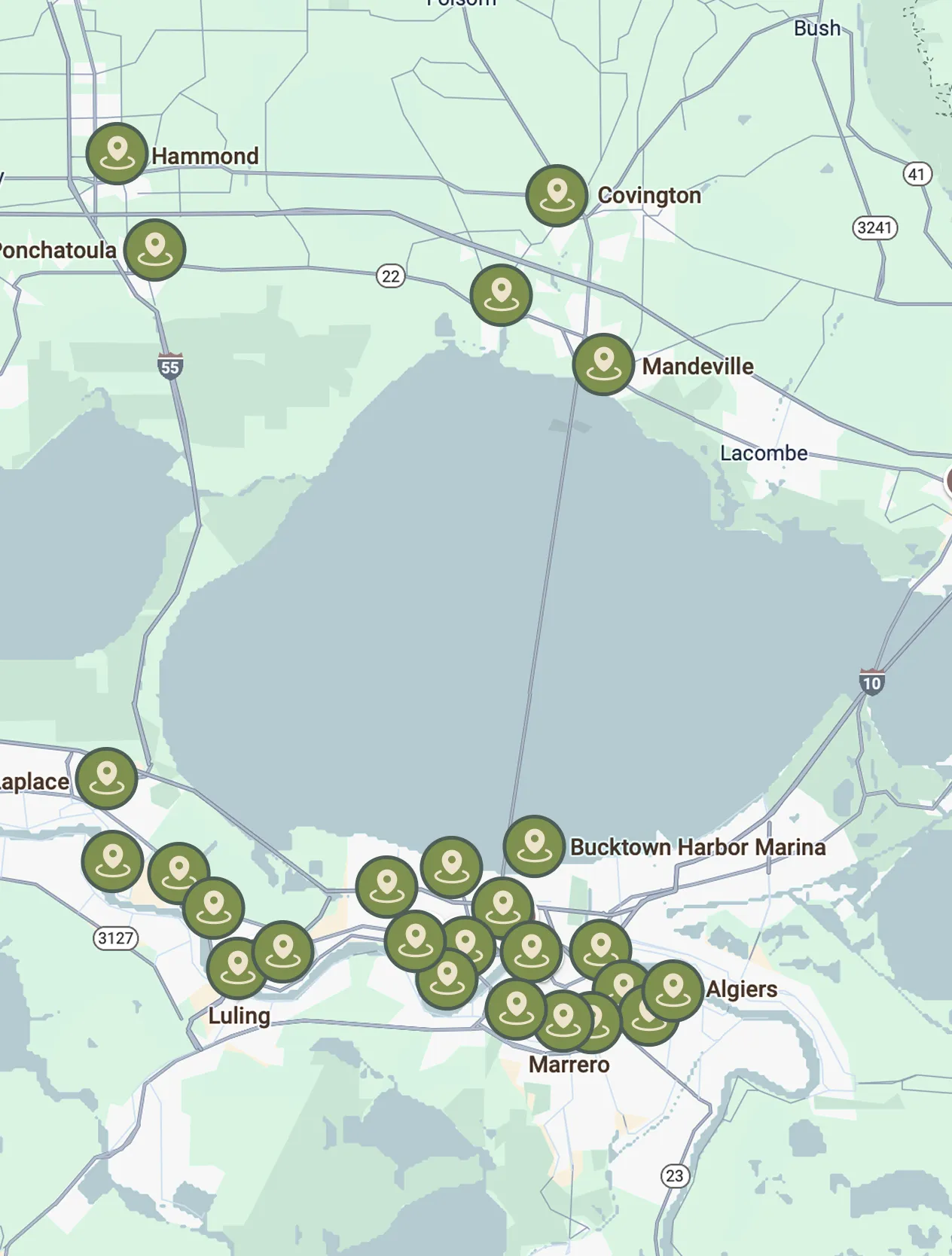
Our service areas are designed to meet the diverse needs of our clients. We focus on providing exceptional service and ensuring customer satisfaction in every location we operate.