Air Quality Testing in New Sarpy, LA
.webp)
Protect your health and comfort with Cypress Cooling's comprehensive air quality testing in New Sarpy, LA. We provide a thorough evaluation of indoor pollutants, covering particulates (PM2.5/PM10), mold spores, VOCs, humidity, and CO2, with outdoor baselines for context. Cypress Cooling follows a transparent sampling and lab analysis process, delivering plain language results, and tailoring remediation recommendations from source control to improved ventilation and filtration. Our customized reports, ongoing monitoring, and seasonal considerations help homeowners and professionals verify remediation success and maintain healthier indoor air over time.

Air Quality Testing in New Sarpy, LA
Keeping indoor air healthy in New Sarpy, LA is essential for comfort and long-term health. The Gulf Coast’s humid, subtropical climate, proximity to the Mississippi River and nearby industrial corridors, and periodic heavy rain and flooding increase the risk of moisture-driven problems and allow outdoor pollutants to infiltrate homes. Professional indoor air quality testing in New Sarpy, LA helps you identify invisible problems—mold spores, fine particulates, volatile organic compounds (VOCs), and ventilation shortcomings—so you can take targeted, effective steps to protect your family and property.
Common indoor air quality issues in New Sarpy, LA
- Mold and microbial growth driven by high humidity, past water intrusion, or inadequate drying after storms.
- Elevated humidity that causes dampness, musty odors, and dust mite proliferation.
- VOCs from paints, cleaning products, new building materials, and occasional industrial emissions that can enter homes.
- Fine particulate matter (PM2.5/PM10) from outdoor traffic, nearby industrial sources, or indoor sources like cooking and candles.
- Poor ventilation and elevated CO2 levels in tightly sealed or poorly ventilated spaces, leading to stale air and reduced cognitive comfort.
What we test for: types of indoor air quality tests
We use a suite of targeted tests to give a complete picture of indoor air conditions in New Sarpy homes:
- Particulate counts (PM2.5 and PM10): Real-time monitors measure airborne particle concentrations to identify fine and coarse particle loads from outdoor infiltration or indoor activities.
- Mold spore sampling (air and surface): Air impaction samples capture airborne spores; surface or tape lifts document settled growth. Samples are compared against outdoor baselines for context.
- VOC testing: Can include total VOC screening and targeted sampling for specific compounds such as formaldehyde, benzene, and toluene when suspected. VOCs are tested using sorbent tubes or PID-based instruments depending on the screening needs.
- Humidity and temperature logging: Continuous or spot measurements to document conditions that support mold growth or occupant discomfort.
- CO2 measurements: Used as a proxy for ventilation effectiveness and occupancy-related ventilation shortfalls.
The sampling and lab-analysis process
We follow a clear, step-by-step process designed to minimize disruption while producing defensible results:
- Initial walkthrough and scoping: Inspect visible problem areas, past water damage, HVAC setup, and occupant concerns to select sampling locations and methods tailored to your home.
- Baseline outdoor sampling: Outdoor air samples are taken to create a reference for interpreting indoor results, especially for mold spore counts and particulate matter.
- Indoor sampling:
- Particulate monitors run in living areas and suspected problem rooms, often for several hours to capture typical activity patterns.
- Air and surface mold samples are collected in suspected areas (bathrooms, crawlspaces, basements, behind drywall) and in living spaces for comparison.
- VOC samples are collected where products or materials are suspected sources or where occupants report symptoms.
- Humidity and CO2 data logging can run from several hours to multiple days, depending on the scope.
- Laboratory analysis: Collected samples are analyzed by accredited labs. Mold spore counts are identified to genus and reported as spores per cubic meter; VOCs are quantified in parts per billion (ppb) or micrograms per cubic meter; particulate data are reported as micrograms per cubic meter for PM2.5/PM10.
- Quality control: Field blanks, duplicates, and chain-of-custody procedures ensure reliable, defensible results.
Typical lab turnaround for analyzed samples is several business days, depending on the tests requested and lab schedules. Continuous monitors provide immediate particulate and CO2 readings that are included in the on-site review.
How results are interpreted
Results are presented in plain language with context and actionable thresholds:
- Particulate readings are compared to health-based benchmarks and outdoor levels to determine infiltration vs indoor sources.
- Mold spore counts are reviewed alongside outdoor baselines and identified species; high indoor counts of common indoor molds or growth of species known to colonize building materials indicate active infestation.
- VOC concentrations are compared to reference guidelines for acute and chronic exposure; particular compounds trigger different levels of concern.
- Humidity above recommended indoor ranges (typically above 50-60% in humid climates) is flagged as a moisture risk.
- Elevated CO2 indicates insufficient fresh air per occupancy and suggests ventilation improvements.
Every result set is explained in non-technical terms with visuals and tables so you can see where problems lie and why they matter.
Recommended remediation and mitigation strategies
Based on findings, practical, prioritized solutions are recommended for New Sarpy homes:
- Source control: Remove or seal VOC-emitting materials, address water leaks, and remediate visible mold using industry-standard methods.
- Filtration upgrades: High-efficiency filters (MERV 8–13 depending on HVAC capability, or HEPA units for stand-alone filtration) reduce particulates and some bioaerosols indoors.
- Ventilation improvements: Balanced ventilation systems or energy recovery ventilators (ERVs) bring in filtered outdoor air and reduce CO2 and indoor pollutant buildup without excessive energy penalty.
- Humidity control: Dehumidification solutions (whole-house or targeted dehumidifiers) and improving drainage/grade around the foundation reduce mold risk in high-humidity New Sarpy homes.
- Duct cleaning and HVAC maintenance: Address dusty or contaminated ductwork and ensure condensate lines, drip pans, and coils are clean and functioning to prevent microbial growth.
- Targeted professional mold remediation: When active growth is confirmed on building materials, remediation follows containment, removal or cleaning, and repair of moisture sources.
Each recommendation is tied to the specific measurements and observations so you understand the expected benefits and the order of priority.
Customized reports and next-step recommendations
Deliverables include a clear, customized report that typically contains:
- Executive summary with key findings and prioritized actions
- Full lab results with interpretation and comparative benchmarks
- Photos, diagrams, and sampling maps showing where samples were taken
- Short-term and long-term mitigation options, including maintenance recommendations and monitoring plans
- Expected outcomes for each recommended step and guidance on verification testing after remediation
Reports are designed for homeowners, property managers, and remediation professionals to use directly for repair planning or for documentation during property transactions.
Ongoing monitoring and seasonal considerations for New Sarpy
Because New Sarpy experiences high humidity and seasonal storms, periodic checks are often valuable after major weather events or building changes. Simple ongoing steps that complement testing:
- Maintain indoor relative humidity between 40% and 50% when practical.
- Run kitchen and bathroom exhaust fans during and after use.
- Use high-quality filtration in HVAC systems and change filters on schedule.
- Inspect for foundation, roof, and plumbing leaks after storms and address water intrusion quickly.
Professional follow-up testing after remediation verifies effectiveness and provides peace of mind.
Final notes
Air quality testing in New Sarpy, LA provides the data needed to convert concern into concrete action. By identifying specific contaminants and root causes—mold from moisture, VOCs from materials, particulates from outdoor infiltration, or ventilation shortfalls—you can prioritize fixes that improve health, comfort, and property resilience against the region’s humid climate and seasonal risks. Detailed, evidence-based reports make remediation predictable and measurable, so indoor air problems are resolved, not just temporarily masked.
OUR CLIENTS HAVE TO SAY ABOUT US



Service areas
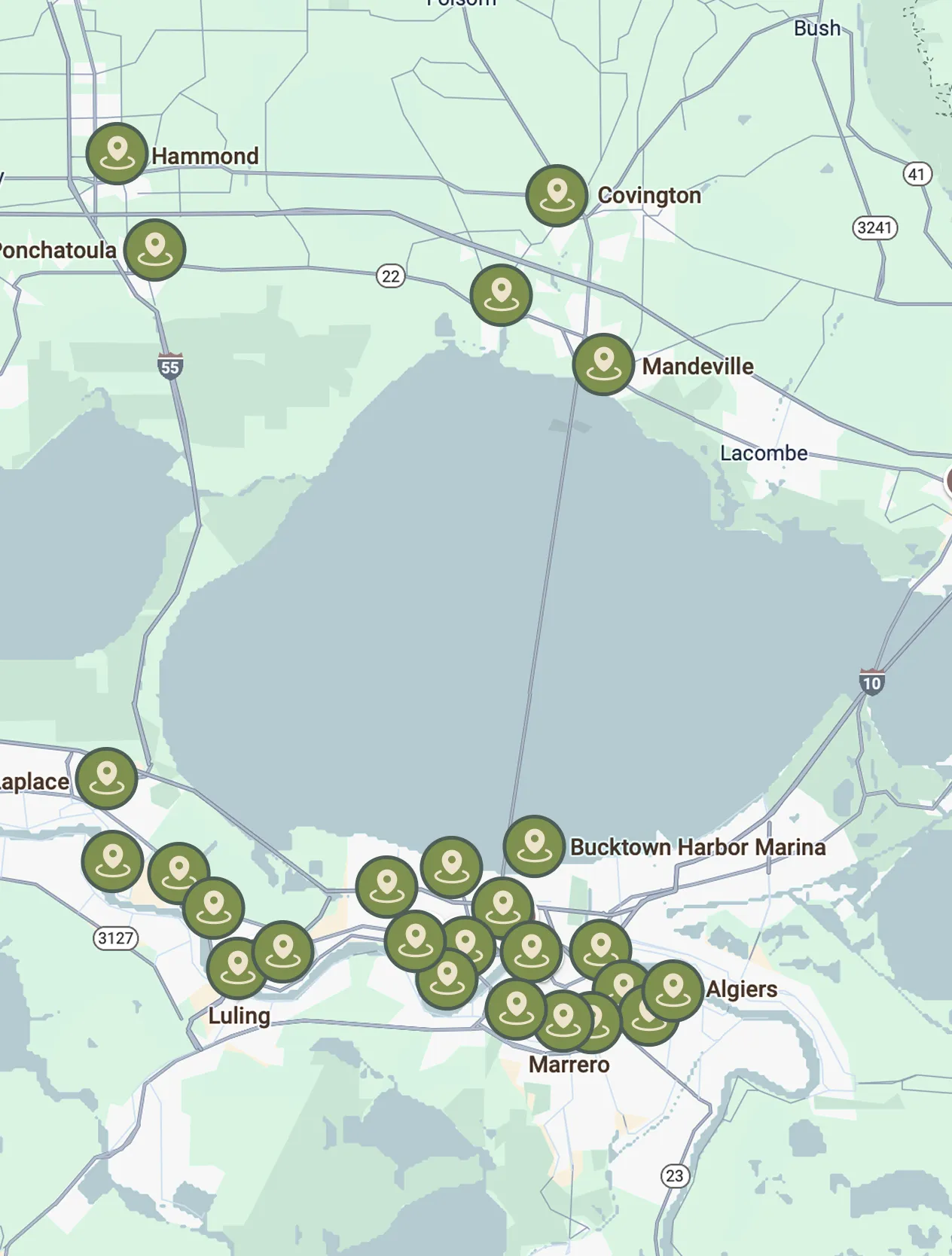
Our service areas are designed to meet the diverse needs of our clients. We focus on providing exceptional service and ensuring customer satisfaction in every location we operate.