Air Quality Testing in New Orleans, LA
.webp)
Cypress Cooling's air quality testing in New Orleans, LA, provides objective data to identify mold, VOCs, PM2.5, and moisture risks, guiding targeted improvements for your home. Our process includes thorough walkthroughs, targeted sampling, short term measurements, and lab analysis, followed by clear, actionable reports. Typical findings highlight issues such as high humidity, outdoor pollution ingress, and renovation related emissions. Cypress Cooling offers customized mitigation strategies spanning source control, enhanced filtration, dehumidification, and ventilation adjustments. We emphasize ongoing monitoring and a maintenance plan to sustain healthier indoor air and comfort for your New Orleans property.

Air Quality Testing in New Orleans, LA
Indoor air quality testing for New Orleans homes helps identify hidden health risks, prioritize cost-effective improvements, and create an ongoing maintenance plan tailored to the Gulf Coast climate. High humidity, year-round AC use, flood-prone basements, and older building stock in New Orleans increase the likelihood of mold, elevated particulate levels, and moisture-related problems. This page explains common residential tests, the testing process and equipment used, how results are interpreted, and the practical, prioritized mitigation options that follow.
Why air quality testing matters in New Orleans
- High humidity and frequent storms create persistent mold growth risk in attics, crawlspaces, and behind walls.
- Older homes and post-storm renovations can release volatile organic compounds (VOCs) from paints, new flooring, and building materials.
- Fine particulate matter (PM2.5) can penetrate indoors from outdoor wildfire smoke, traffic, and industrial activities around the port.
- Continuous air conditioning and mechanical ventilation choices affect humidity, CO2 buildup, and distribution of allergens.
Testing provides objective data so homeowners can invest in the fixes that reduce health risk, improve comfort, and protect property value.
Common residential tests we perform
- Particulate matter (PM2.5 and PM10) - measures fine and coarse particles that impact respiratory health.
- Mold spore sampling - includes air samples and targeted surface swabs or bulk samples when visible or suspected growth exists.
- Volatile organic compounds (VOCs) - screening for total VOCs and targeted tests for formaldehyde or common renovation-related chemicals.
- Relative humidity and temperature logging - short and longer-term logging to identify dew point excursions and condensation risk.
- Carbon monoxide (CO) and carbon dioxide (CO2) - spot or continuous measurements where combustion appliances or poor ventilation may be an issue.
- Allergen and pollen screening - when occupants report seasonal worsening of symptoms.
- Advanced tests on request - radon screening, lead dust sampling, or microbial PCR analysis for complex cases.
When to test: common triggers in New Orleans homes
- Post-flood or heavy storm events, or after home moisture intrusion.
- Visible mold, musty odors, unexplained allergy or respiratory symptoms.
- After remodeling, new flooring, or recent painting work.
- Persistent condensation on windows, high indoor humidity, or attic moisture stains.
- Concerns about smoke impacts during wildfire or controlled burn events.
The testing process and typical equipment
- Initial walkthrough and symptom inventory - identify occupant concerns, visible moisture, and likely pollutant sources.
- Targeted sampling plan - select rooms and locations based on walkthrough, HVAC layout, and occupant use patterns.
- Short-term measurements - deploy calibrated instruments:
- Optical particle counters for PM2.5 and PM10.
- Direct-reading VOC meters and passive VOC samplers.
- Portable CO and CO2 monitors.
- Temperature and humidity data loggers.
- Microbial sampling - use spore trap cassettes for air sampling and sterile swabs or tape lifts for surfaces; when needed, collect bulk material for lab culture or DNA-based analysis.
- Chain-of-custody and lab analysis - samples that require lab work (mold spore counts, VOC lab chromatography) are handled with documented procedures.
- Follow-up monitoring - short-term results are often supplemented by 24-72 hour logs for humidity, CO2, or particulate spikes to capture occupant activity patterns.
Equipment used is industry-standard calibrated instrumentation appropriate for residential settings; samples sent to accredited labs for microbial and VOC speciation when necessary.
Interpreting results in plain terms
- Results are compared to health-based guidelines and baseline outdoor levels to determine whether indoor concentrations are elevated.
- Reports highlight:
- Which pollutants exceeded typical indoor baselines or health guidelines.
- Likely sources (e.g., mold in crawlspace, poor filtration, recent renovations).
- Whether a short-term spike or persistent condition is present.
- Mold results show spore types and concentrations; interpretation focuses on growth-indicative profiles versus outdoor background.
- VOC results identify common compounds and their likely origin, plus whether concentrations suggest chronic exposure risk.
Reports emphasize actionable interpretation, not just raw data, so homeowners can understand the severity and urgency.
Typical findings and causes in New Orleans
- Elevated relative humidity leading to high mold spore counts in basements, crawlspaces, and attic spaces.
- Intermittent PM2.5 spikes associated with outdoor smoke events or nearby traffic and port activity entering through windows and HVAC intakes.
- Detectable VOCs after renovations or in homes with new furniture and finishes.
- Localized CO2 elevation in tightly sealed rooms with poor ventilation, especially bedrooms at night.
Customized mitigation recommendations
Recommendations are prioritized by effectiveness, cost, and local relevance:
- Source control (highest priority)
- Repair leaks, improve drainage, address flood-damaged materials, and remediate visible mold growth with proven protocols.
- Filtration upgrades
- Improve HVAC filtration to higher MERV-rated filters compatible with the system; add stand-alone HEPA filtration for rooms with high particulate or smoke events.
- Dehumidification
- Install or optimize dehumidification systems to keep indoor relative humidity in a target range that limits mold growth.
- UV and ventilation
- Consider UV germicidal lights in HVAC for microbial control in systems with moisture exposure; balance with refrigerated-type dehumidification and adequate ventilation rates.
- VOCs management
- Increase ventilation, use low-VOC materials, and allow extended off-gassing periods or employ activated carbon-based adsorption to reduce chemical concentrations.
- Combustion safety
- Repair or replace malfunctioning gas appliances, ensure proper venting, and add CO alarms where appropriate.
- Monitoring
- Deploy continuous monitors for humidity, PM2.5, or CO2 in sensitive rooms to track long-term performance and post-mitigation improvement.
Each recommendation is tied to expected benefits, estimated timeframe to improvement, and which follow-up tests are suggested to confirm effectiveness.
What a sample report includes
- Executive summary of key findings and prioritized actions.
- Visuals: graphs of PM2.5, humidity, and temperature logs; mapped sampling locations.
- Lab results with interpretation notes (mold spore counts, VOC species).
- Source attribution and confidence levels.
- Recommended mitigation steps in order of priority, expected impact, and suggested maintenance intervals.
- Follow-up testing plan to verify improvements.
How testing informs prioritized IAQ improvements and maintenance plans
Air quality testing turns uncertainty into a targeted improvement plan. Instead of replacing equipment or making broad changes, homeowners receive a prioritized roadmap:
- Immediate safety fixes (combustion issues, active leaks).
- Next-step investments with highest return on health and comfort (filtration, dehumidification).
- Long-term maintenance schedule (filter change cadence, seasonal humidity checks, post-storm re-inspections).
- Verification strategy (post-mitigation testing and periodic monitoring) so investments are validated.
Testing is especially valuable in New Orleans because it helps balance moisture control, mold prevention, and filtration needs in a region where humidity, storms, and older building materials create recurring risks.
Residential air quality testing in New Orleans, LA provides clear, actionable data that identifies health risks, directs efficient remediation, and creates a sustainable maintenance plan tailored to local climate and building conditions. Well-documented results and prioritized recommendations let homeowners address the most impactful issues first and verify that improvements deliver measurable benefits.
OUR CLIENTS HAVE TO SAY ABOUT US



Service areas
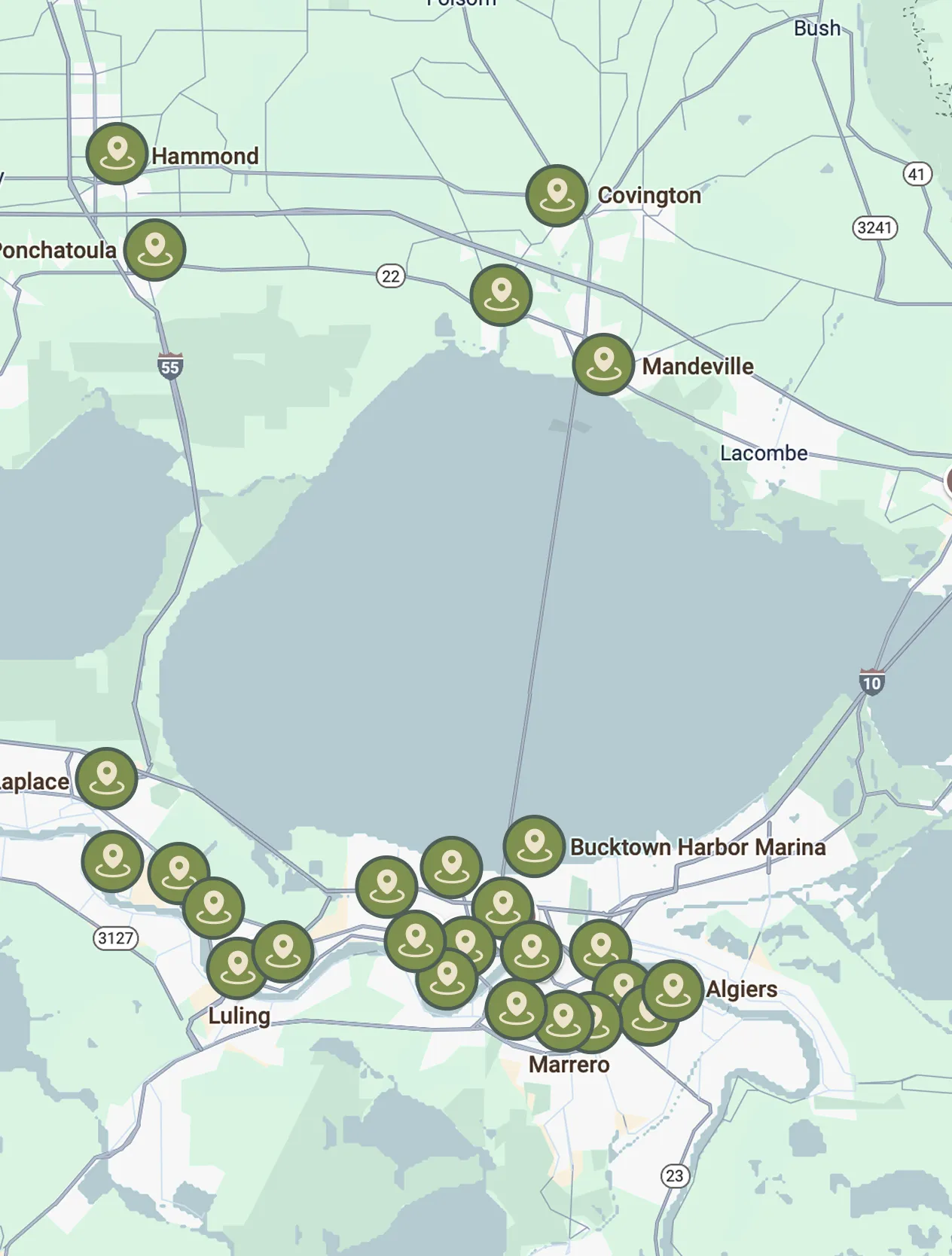
Our service areas are designed to meet the diverse needs of our clients. We focus on providing exceptional service and ensuring customer satisfaction in every location we operate.