Air Quality Testing in Luling, LA
.webp)
Cypress Cooling's air quality testing in Luling, LA, delivers a clear, evidence based assessment of indoor contaminants and conditions. Our process includes baseline measurements, walkthrough inspections, realtime monitoring, and lab analysis of mold, VOCs, and particulates. We also track humidity and CO2 levels to gauge ventilation effectiveness. The results inform a prioritized, space specific remediation plan, including filtration upgrades, source control, humidity management, duct cleaning, and ventilation improvements. With regular reporting and followup testing, we ensure lasting improvements in comfort, health, and building durability.
Air Quality Testing in Luling, LA
Indoor air quality testing in Luling, LA helps homeowners and building managers understand what they are breathing and how to fix problems that affect comfort, health, and building durability. Luling’s humid subtropical climate, seasonal pollen, and proximity to riverfront industry can increase the risk of mold, elevated humidity, and volatile organic compounds. Professional air quality testing identifies particulate matter, mold spores, VOCs, CO2, and humidity issues so you can prioritize targeted solutions rather than guessing.
Why test indoor air in Luling homes
- High year-round humidity encourages mold growth in attics, crawl spaces, and HVAC systems.
- Seasonal pollen and outdoor particulate can infiltrate buildings, aggravating allergies.
- Local industrial and traffic sources may elevate VOCs and fine particulate near some neighborhoods.
- Aging ductwork, recent renovations, or water damage incidents create localized air quality risks.
Testing translates suspicion into evidence. A clear diagnostic report shows what is present, where it likely came from, and which remediation steps will genuinely improve air quality.
What we test (and why it matters)
- Particulate matter (PM2.5 / PM10) — fine and coarse particles affect respiratory health and are an indicator of indoor combustion, outdoor infiltration, or dusty systems.
- Mold spores (airborne) — identifies active spore counts compared to outdoor baselines and flags likely growth sites.
- Volatile Organic Compounds (VOCs) — includes solvents, off-gassing from building materials, household products, and some industrial emissions.
- Carbon dioxide (CO2) — elevated CO2 indicates inadequate ventilation and can correlate with stale air and occupant discomfort.
- Temperature and relative humidity — humidity outside the ideal range promotes mold and dust mite proliferation and reduces comfort.
- Targeted surface or bulk samples — used when visible mold, water damage, or renovation debris require confirmation.
Typical step-by-step testing process
- Pre-assessment and intake
- Review property history: recent water events, renovations, HVAC age, occupant symptoms.
- Identify priority areas: bedrooms, living spaces, attics, basements, and return vents.
- Walk-through inspection
- Visual check for moisture stains, visible mold, HVAC issues, and potential pollutant sources.
- Document conditions and select sampling locations.
- Baseline real-time monitoring
- Use portable particle counters for PM2.5/PM10 and direct-reading VOC meters for immediate readings.
- Deploy CO2 and humidity loggers to measure trends over several hours if ventilation is a concern.
- Air sampling
- Collect spore trap samples for airborne mold analysis, often both indoors and outdoors for comparison.
- Take active or passive VOC samples depending on suspected contaminants.
- Optional surface swabs or tape lifts when visible contamination is present.
- Chain-of-custody and lab analysis
- Seal and document samples; send to accredited laboratories for microscopic spore counts and detailed VOC analysis when required.
- Reporting and recommendations
- Interpret real-time data and lab results against health-based guidelines and local outdoor baselines.
- Provide a prioritized, location-specific improvement plan.
Equipment commonly used
- Handheld particle counters (PM2.5/PM10)
- Spore traps and calibrated air pumps for mold sampling
- Photoionization detectors (PID) or gas monitors for VOC screening
- CO2 sensors and temperature/humidity dataloggers
- Surface sampling kits and moisture meters
- HVAC airflow meters and inspection cameras for duct checks
How results are interpreted
- Indoor vs outdoor comparison: higher indoor spore counts than outdoors often indicate an indoor source.
- Ventilation assessment: CO2 trend data shows whether rooms are adequately ventilated during occupancy.
- Humidity targets: sustained relative humidity above about 50 percent increases mold risk; ideal indoor humidity is typically between 30 and 50 percent.
- Particulate and VOC context: high PM2.5 suggests infiltration or combustion; elevated VOCs point to off-gassing materials, cleaning products, or chemical sources.
- Results are explained in plain terms, with clear risk levels and recommended next steps tailored to each sampled space.
Common remediation recommendations for Luling homes
- Filtration upgrades: Install high-efficiency filters (HEPA or MERV 13+ where compatible) in HVAC systems and use portable HEPA units for rooms with persistent particulate or allergens.
- Source control: Identify and remove or isolate VOC-emitting materials, address solvent use, and adopt low-VOC products.
- Humidity control: Use whole-home or portable dehumidifiers, improve attic and crawl space ventilation, and repair leaks that feed moisture problems.
- UV germicidal lights: Consider UV-C installations in HVAC systems for persistent biological contamination in ductwork and coils.
- Duct and HVAC cleaning: Clean and disinfect ducts, coils, and drip pans when testing shows contamination or prior water damage.
- Ventilation improvements: Increase fresh air exchange with mechanical ventilation, energy recovery ventilators, or by optimizing existing HVAC balancing.
- Targeted repairs: Fix roof, plumbing, or foundation leaks uncovered during inspection to remove sustained moisture sources.
Sample reports and timelines
- On-site preliminary data: Immediate for particle counts, VOC screening, CO2, and humidity. These inform urgent interventions the same day.
- Mold spore lab results: Typically returned within 48 to 72 hours for spore trap analysis.
- Detailed VOC lab analysis: Often 3 to 7 days depending on the scope of compounds tested.
- Final report: Consolidated report includes raw data, lab findings, photographic documentation, explanation of health and comfort implications, and a prioritized IAQ improvement plan customized to the property.
How testing informs a tailored IAQ improvement plan
Testing creates an evidence-based roadmap. Results show which rooms or systems are problematic and which solutions will have the highest impact. For example:
- Elevated indoor mold spores plus attic moisture points directly to attic remediation and improved attic ventilation.
- High VOCs concentrated in a renovated room suggest removal of problematic materials and localized air cleaning with activated carbon.
- Consistently high CO2 levels in bedrooms indicate the need for improved ventilation or intermittent fresh air strategies.
A tailored plan includes short-term fixes for occupant comfort and long-term corrections that prevent recurrence, with monitoring recommendations to verify effectiveness.
Long-term benefits and maintenance
- Reduced allergy and respiratory symptom triggers through targeted filtration and source control.
- Prevention of building damage and secondary problems by addressing moisture and mold early.
- Better occupant comfort and energy-efficient strategies by balancing ventilation and filtration.
- Measurable improvement tracked with follow-up testing or continuous monitoring sensors.
Air quality testing in Luling, LA turns uncertainty into a clear, prioritized plan. Accurate diagnostics protect health, preserve property, and guide the most effective investments in filtration, ventilation, and moisture control for your home or building.
OUR CLIENTS HAVE TO SAY ABOUT US



Service areas
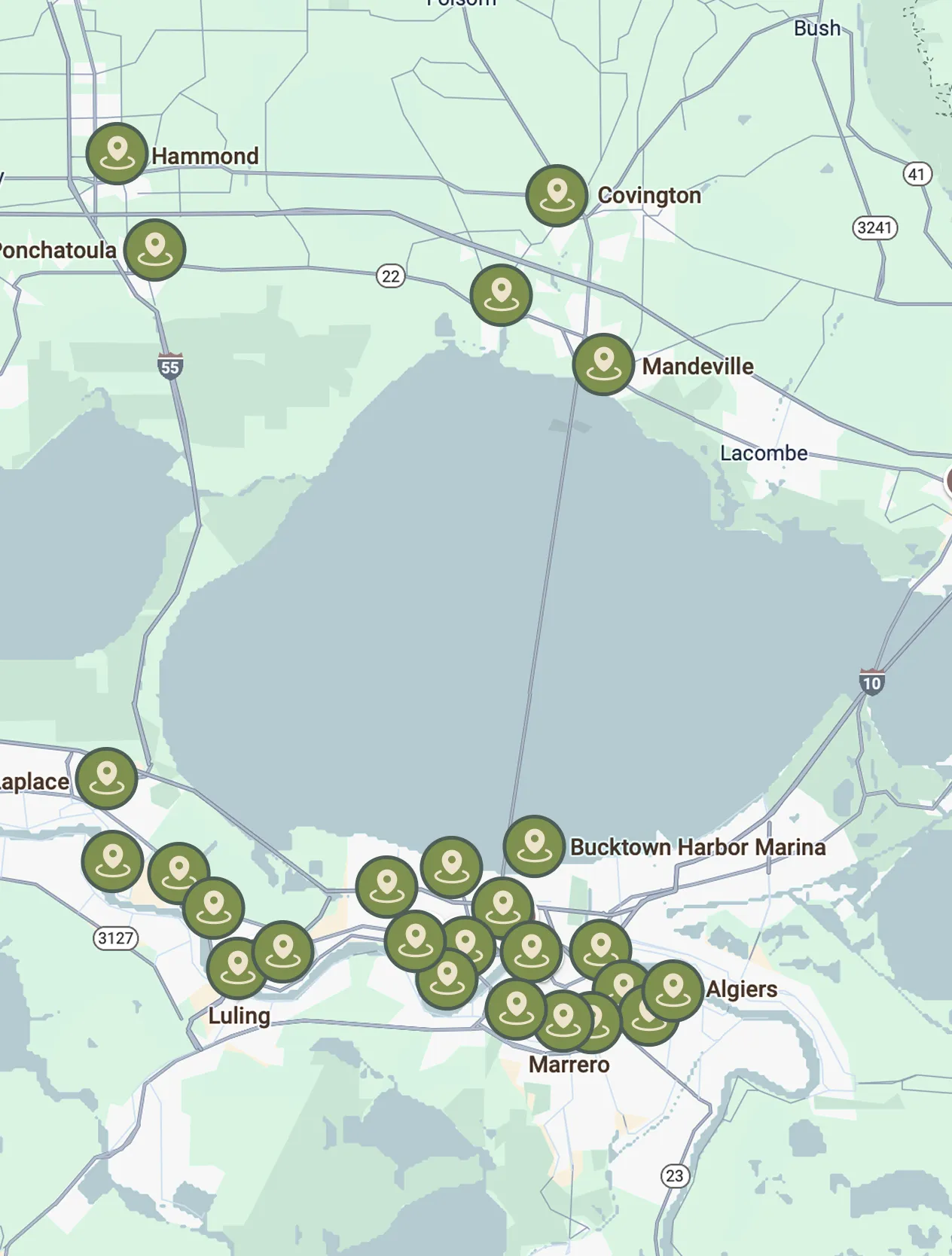
Our service areas are designed to meet the diverse needs of our clients. We focus on providing exceptional service and ensuring customer satisfaction in every location we operate.