Air Quality Testing in Covington, LA
.webp)
Cypress Cooling's air quality testing service in Covington, LA, delivers objective assessments of indoor environments to identify mold, VOCs, particulates, and ventilation deficiencies. We outline a transparent process—from gathering pre assessment data to conducting on site sampling, performing lab analysis, and delivering a comprehensive written report with actionable recommendations. At Cypress Cooling, we translate results into plain language, prioritize remediation steps, and align them with your maintenance plans to improve comfort, health, and building performance in humid southeast Louisiana. Our clients gain clear expectations, measurable outcomes, and confidence in protecting occupants and assets.

Air Quality Testing in Covington, LA
Indoor air quality directly affects comfort, health, and the longevity of building systems in Covington, LA. Homes and businesses here face unique challenges from high humidity, seasonal pollen, flood events, and older building stock. Professional Air Quality Testing in Covington, LA identifies hidden problems—mold, volatile organic compounds, excess particulates, and inadequate ventilation—so you can make informed decisions about remediation and long-term maintenance.
Why test indoor air in Covington homes and businesses
Covington’s warm, humid climate and proximity to wetlands increase the risk of mold growth, dust mite populations, and persistent musty odors after heavy rains. Older homes and commercial buildings may also have compromised ventilation or aging HVAC systems that let outdoor pollutants, wildfire smoke, or construction dust accumulate indoors. Testing gives objective data that describes what is actually in your air, not just what you can smell or see.
Common air quality issues in Covington, LA
- Elevated mold spore counts after flooding or roof leaks
- High relative humidity that promotes microbial growth and dust mite activity
- Volatile organic compounds (VOCs) from renovation materials, paints, or stored chemicals
- Fine particulate matter (PM2.5 and PM10) from nearby roadways, construction, or seasonal smoke
- Elevated carbon dioxide indicating insufficient ventilation in tight or renovated spaces
Types of tests offered
Our comprehensive testing approach includes targeted measurements used to diagnose most indoor air quality problems in Covington properties:
- Particulate matter testing
- PM2.5 and PM10 concentration monitoring to assess fine and coarse particle loads
- Volatile organic compound (VOC) screening
- Total VOC scans and targeted sampling for specific compounds when indicated
- Mold spore counts
- Airborne spore sampling and surface tape lifts to compare indoor and outdoor baselines
- Temperature and humidity logging
- Continuous or spot measurements to identify conditions that support mold or dust mites
- Carbon dioxide (CO2) monitoring
- Short-term or multi-hour sampling to evaluate ventilation effectiveness
- Allergen and pollen assessment (seasonal testing)
- Comparative indoor/outdoor pollen profiling when symptoms correlate with outdoor seasons
Assessment process and sample reporting
Our assessment follows a clear, documented process designed to be transparent and actionable.
- Pre-assessment review
- We gather information on occupancy patterns, recent water events, renovations, HVAC history, and resident symptoms to focus testing.
- On-site inspection and field sampling
- Visual inspection for moisture, staining, HVAC issues, and potential pollutant sources.
- Placement of air samplers, particle counters, CO2 monitors, and humidity loggers in representative rooms. Sampling durations are selected based on the issue (short spot checks or multi-hour/day logs).
- Laboratory analysis and validation
- Collected samples are analyzed by accredited labs for spore identification, VOC speciation, and particulate mass. Field instruments provide immediate readings for PM and CO2 trends.
- Comprehensive written report
- Reports include raw data, graphs of time-based measurements, interpreted results compared to typical reference ranges, likely sources, and prioritized recommendations. Sample reports show before and after comparisons where remediation was performed.
Interpreting results
Reports translate technical findings into plain language and clear next steps:
- Elevated mold spore counts with indoor species dominance usually indicate an active moisture problem requiring source control.
- High VOC concentrations, especially after renovations, point to the need for material removal, increased ventilation, or targeted filtration.
- Sustained high CO2 levels suggest that ventilation rates are below recommended levels and that HVAC or mechanical ventilation adjustments are needed.
- Persistent PM2.5 spikes correlate with poor filtration, indoor combustion sources, or outdoor smoke infiltration.
Each finding is accompanied by a risk assessment tailored to occupants, such as allergy sufferers, infants, or elderly residents, and by recommended priorities for remediation.
Recommended remediation and system upgrades
Remediation plans focus on controlling sources, improving ventilation, and upgrading filtration or air-cleaning technologies:
- Source control and building repairs
- Fix roof leaks, plumbing issues, and areas of chronic condensation; remove or remediate wet building materials following industry protocols.
- Filtration upgrades
- High-efficiency HVAC filters (MERV-rated appropriate for the system) and stand-alone HEPA units for bedrooms or high-use areas.
- UV germicidal irradiation
- In-duct or coil-mounted UV to reduce microbial growth on cooling coils and drain pans in humid environments.
- Humidification and dehumidification strategies
- Controlled dehumidification to maintain relative humidity between recommended ranges and avoid over-drying; whole-house dehumidifiers for homes prone to high summer humidity.
- Ventilation improvements
- Balanced mechanical ventilation, energy recovery ventilators, or targeted exhaust solutions to reduce CO2 and dilute indoor pollutants.
- Targeted cleaning and containment
- HEPA vacuuming, wet cleaning of hard surfaces, and controlled remediation of mold-affected materials when necessary.
Recommendations are prioritized by health impact and feasibility, with options for short-term mitigation while longer repairs are planned.
Sample findings and case examples
- Residential sample: After heavy rains, a Covington bungalow showed intermittent musty odor. Testing found elevated indoor Aspergillus spore counts and relative humidity sustained above 65 percent in the crawlspace. Remediation combined crawlspace encapsulation, insulation upgrades, and a dehumidifier. Post-remediation testing showed spore counts reduced to background levels.
- Commercial sample: An office renovation produced persistent headaches among employees. VOC screening identified elevated levels of formaldehyde and solvent-related VOCs. Recommendations included replacement of the materials emitting VOCs where possible, increased ventilation, and temporary portable air cleaners until levels returned to acceptable ranges. Follow-up testing confirmed reduced VOCs and improved occupant comfort.
These anonymized examples illustrate how testing identifies root causes and measures the effectiveness of interventions.
Scheduling, timeline, and what to expect
- Typical scheduling window and duration
- Testing can be scheduled to accommodate occupancy patterns, with single-day spot assessments or multi-day monitoring when needed. Field visits generally include a 30 to 90 minute inspection and set up of monitors.
- Reporting timeline
- Initial field data is reviewed at the time of visit. Laboratory analyses for spores or VOC speciation follow; final reports are delivered in a clear, written format within an agreed timeframe after sampling.
- Follow-up and verification testing
- Post-remediation verification testing is recommended to confirm that interventions have reduced pollutants to acceptable levels and to validate long-term maintenance plans.
How testing ties into ongoing maintenance plans
Air quality testing becomes most valuable when integrated into regular building care:
- Baseline and seasonal testing
- Establish a baseline during a neutral season and re-test after high-risk periods such as heavy pollen season or after storm events.
- Preventive maintenance for HVAC and dehumidification systems
- Regular filter changes, coil cleaning, and humidity control maintain improvements identified during initial testing.
- Verification after repairs or upgrades
- Follow-up testing quantifies improvement and ensures investments produce measurable benefits.
- Occupant health monitoring
- For sensitive occupants, periodic testing helps manage triggers and supports decisions about further remediation or medical referrals.
Conclusion: the value of testing in Covington, LA
Professional air quality testing delivers objective, location-specific insight into indoor environmental risks in Covington. Test results guide targeted, cost-effective actions such as moisture repairs, filtration upgrades, ventilation improvements, and humidity control. When integrated into an ongoing maintenance plan, testing protects occupant health, improves comfort, and preserves building assets in the humid, storm-prone climate of southeast Louisiana.
OUR CLIENTS HAVE TO SAY ABOUT US



Service areas
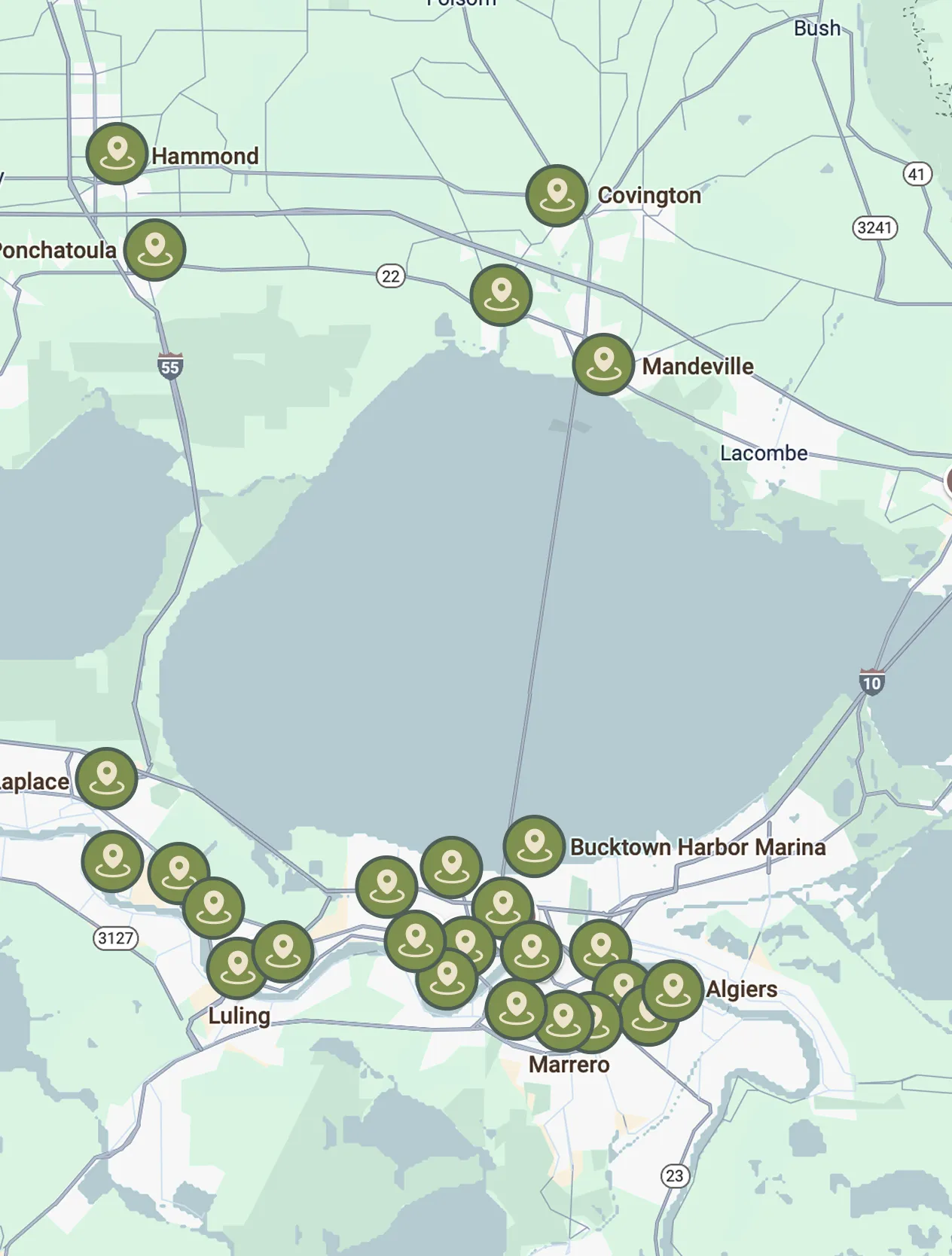
Our service areas are designed to meet the diverse needs of our clients. We focus on providing exceptional service and ensuring customer satisfaction in every location we operate.