Air Purification in Ponchatoula, LA
.webp)
If you're a homeowner in Ponchatoula, LA, and concerned about indoor air quality, Cypress Cooling can help. We offer practical options to combat pollen, humidity, smoke, and mold, ensuring a healthier living environment. We'll compare HEPA filtration, electronic air cleaners, UVGI systems, and combined approaches, explaining how each integrates with your existing HVAC system. Cypress Cooling also provides insights into installation considerations, performance metrics, maintenance schedules, and what a professional assessment typically involves. With our practical advice and sizing guidance, you can choose a tailored, multi layered strategy for a healthier and more comfortable home.
jpg.webp)
Air Purification in Ponchatoula, LA
Keeping indoor air clean and comfortable in Ponchatoula, LA requires solutions tuned for humid, pollen-heavy conditions and seasonal smoke or mold concerns. Whether you want whole-home filtration tied into your HVAC or targeted point-of-use systems for bedrooms and living areas, modern air purification options address allergens, smoke, odors, and microbial threats. This page compares HEPA filtration, electronic air cleaners, UV systems, and combined solutions, explains installation compatibility with existing HVAC systems, covers maintenance and performance metrics, and outlines what a professional assessment typically examines for Ponchatoula homes.
Why air purification matters in Ponchatoula, LA
Ponchatoula’s humid subtropical climate encourages high pollen counts in spring, year-round dust mite activity, and seasonal mold growth in damp months. Hurricanes and regional fires can bring smoke and fine particulate matter into homes. These local factors make effective air purification important for residents who suffer from allergies, asthma, or general sensitivities to smoke and odors.
Common air quality problems we see in Ponchatoula homes
- High pollen infiltration during spring and early summer
- Persistent indoor humidity causing mold spores and musty odors
- Smoke intrusion from regional fires or fireplace use
- Pet dander and household dust accumulation
- Cooking and VOC odors in open-plan living spaces
Air purification options: what they do and when to choose them
HEPA filtration (point-of-use and whole-home filter boxes)
- What it is: Mechanical filters rated to capture 99.97% of particles 0.3 microns and larger.
- Best for: Allergens (pollen, pet dander), dust, and fine particulates from smoke.
- Deployment: Portable HEPA air cleaners or whole-home HEPA filter housings integrated into the return duct.
- Pros: Proven particle removal, no ozone byproduct.
- Considerations: HEPA adds airflow resistance; whole-home installations must account for static pressure.
Electronic air cleaners (electrostatic precipitators, ionizers)
- What it is: Electrically charges particles and collects them on plates or causes them to adhere to surfaces.
- Best for: Fine particles and reducing visible dust; some models target smoke.
- Pros: Low maintenance if self-cleaning; high particle capture efficiency on certain designs.
- Considerations: Some types can produce ozone; effective performance depends on design and maintenance. Not a substitute for mechanical filtration for allergen removal unless combined.
UV germicidal irradiation (UVGI)
- What it is: Ultraviolet-C light installed in ducts or near coils to inactivate microorganisms.
- Best for: Reducing microbial growth on HVAC coils and in ductwork, limiting mold and some bacteria spread.
- Pros: Improves HVAC hygiene, helps maintain coil efficiency.
- Considerations: UV is not a particle filter. Effectiveness depends on exposure time and intensity; requires correct placement and annual bulb replacement.
Combined systems
- What it is: Integrating mechanical filtration (HEPA or high-MERV prefilter), electronic cleaning, and UVGI for comprehensive control.
- Best for: Homes with multiple indoor air quality concerns — allergies plus odors or microbial risks.
- Pros: Multi-stage removal of particles, odors, and microbes; tailored to home needs.
- Considerations: Higher initial complexity and needs assessment for duct work and fan capacity.
Installation and compatibility with existing HVAC systems
- Return plenum and filter cabinet: Whole-home HEPA or high-MERV filters require an appropriately sized filter cabinet or a dedicated bypass to avoid excessive static pressure.
- Fan capacity and static pressure: High-efficiency filters increase resistance. Many systems can handle moderate MERV upgrades, but high-efficiency whole-home HEPA often requires a fan or blower upgrade or a dedicated air handler.
- Duct layout and sealed returns: Proper airflow needs sealed ducts and correctly sized returns to ensure even distribution and avoid bypassing filters.
- Electrical and space requirements: Electronic air cleaners and UV systems need a power source and space in the return duct or near the coil; professional placement ensures effectiveness and safety.
- Point-of-use vs whole-home: Portable HEPA units require no HVAC integration and are effective for targeted rooms. Whole-home systems protect all living spaces but must be professionally matched to the system.
Performance metrics and how to evaluate systems
- HEPA rating: True HEPA = 99.97% capture at 0.3 microns. Check manufacturer test data.
- MERV: Minimum Efficiency Reporting Value indicates filter performance at different particle sizes. MERV 13 is often recommended for enhanced whole-home protection without excessive pressure drop.
- CADR (Clean Air Delivery Rate): For portable units, CADR indicates how fast a purifier cleans smoke, dust, and pollen in a given room. Match CADR to room size for target ACH.
- ACH (Air changes per hour): For allergy relief aim for 4 to 6 ACH; for smoke or strong odor reduction aim for 6 to 10 ACH in the occupied space.
- UVGI effectiveness: Expressed in log reductions for specific microbes under defined conditions. Proper in-duct installation improves coil cleanliness more reliably than in-room UV placement for surface disinfection.
Practical sizing example: To achieve 5 ACH in a bedroom with 2,000 cubic feet, you need roughly 167 CFM of clean air (ACH = CFM * 60 / cubic feet). Choose a portable unit with that CADR or a whole-home system sized by a technician.
Maintenance and filter replacement
- HEPA and mechanical filters: Replace according to manufacturer guidance, typically 6 to 12 months for whole-home filters and 6 to 12 months for portable HEPA prefilters/HEPA combos depending on use and pollutant load. Homes with heavy pollen or smoke may need more frequent changes.
- Electronic air cleaner cells: Clean collector plates monthly to quarterly; follow manufacturer instructions to avoid damage. Replace non-cleanable collector cartridges per schedule.
- UV bulbs and ballast: Replace UV-C bulbs annually to maintain output; clean quartz sleeves as needed to prevent coating that reduces intensity.
- HVAC checks: Annual or semi-annual HVAC inspections help ensure fan performance, duct integrity, and that increased filter loads are not harming the system.
Recommended use cases for Ponchatoula homes
- Whole-home HEPA or high-MERV upgrade: Best for families with chronic allergy sufferers, homes with central HVAC, and those seeking continuous, whole-house protection from pollen and dust.
- Point-of-use HEPA units: Ideal for renters, single rooms like bedrooms and nurseries, or as supplemental smoke protection during wildfire season or outdoor burning episodes.
- UVGI in-duct: Recommended if your HVAC shows signs of mold growth on coils or you have frequent humidity-related microbial problems.
- Combined approach: Consider a high-MERV prefilter in-duct, supplemented by a portable HEPA unit in the living room or bedroom, plus UVGI at the coil for homes with mold and allergy concerns.
What to expect from a professional assessment
A thorough assessment tailored to Ponchatoula homes typically includes:
- Indoor air quality symptom review and identification of problem rooms
- HVAC system inspection for filter cabinets, fan capacity, static pressure measurements, and duct integrity
- Measurement of home size and calculation of required CFM/CADR for target ACH
- Identification of moisture sources and ventilation needs related to local humidity
- Recommendation of whole-home or point-of-use systems, and an itemized plan for installation and maintenance needs
Final considerations
Selecting the right air purification strategy in Ponchatoula means balancing particle removal, microbial control, odor reduction, system compatibility, and maintenance. True HEPA filtration provides the most reliable particle capture, UVGI targets microbes and improves coil performance, and electronic systems can augment particulate removal when maintained properly. Proper sizing and professional integration into your HVAC system ensure performance without compromising airflow or efficiency. Regular maintenance and seasonal attention to filter life are essential in Ponchatoula’s humid, pollen-prone environment to keep indoor air healthy and comfortable.
OUR CLIENTS HAVE TO SAY ABOUT US



Service areas
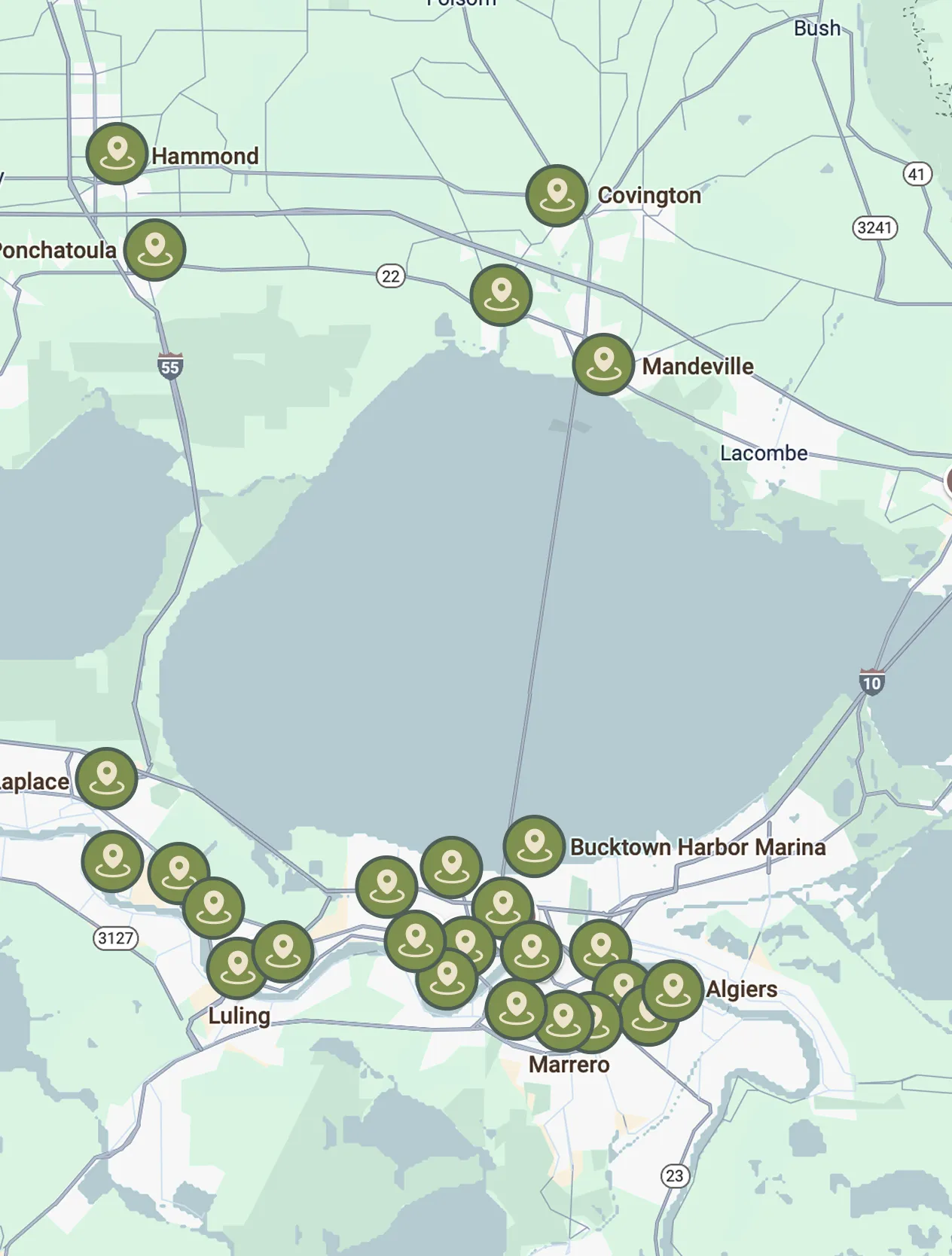
Our service areas are designed to meet the diverse needs of our clients. We focus on providing exceptional service and ensuring customer satisfaction in every location we operate.