Air Purification in New Orleans, LA
.webp)
In New Orleans, Cypress Cooling recognizes the unique challenges of high humidity, mold risk, VOCs, and outdoor pollutants. That's why we offer a comprehensive range of air purification solutions, including both whole home and point of use options. We compare HEPA filtration, activated carbon, electronic air cleaners, and APCO X filtration, and outline installation options such as whole home integration, in duct housings, and portable units. We'll walk you through a typical installation process, explain the measurable benefits (PM reductions, VOC reductions), detail the necessary maintenance, and provide guidance for choosing systems that fit your home size, humidity control needs, and occupant sensitivities. Let Cypress Cooling help you create a healthier and more comfortable indoor environment.
jpg.webp)
Air Purification in New Orleans, LA
Keeping indoor air clean in New Orleans homes means addressing heat, humidity, seasonal pollen, and frequent mold pressure after storms. Whole-home and point-of-use air purification can reduce allergens, lower indoor particle counts, and cut VOCs that aggravate asthma and allergies. This page explains the technologies available, how installations typically work in New Orleans homes, measurable benefits you can expect, maintenance needs, and practical guidance for choosing the right system for your situation.
Why air purification matters in New Orleans homes
New Orleans climate and housing stock create specific indoor air challenges:
- High humidity and frequent storms increase risk of mold and mildew growth.
- Year-round warmth keeps HVAC systems running, circulating indoor pollutants.
- Older homes and renovations can contribute to elevated VOCs from paints, finishes, and building materials.
- Outdoor pollen, road dust, and cooking emissions can drive indoor particle levels higher.
A properly specified air purification approach reduces airborne particles (PM2.5/PM10), captures allergens such as pollen and pet dander, and lowers odors and many VOCs, making indoor environments more comfortable for people with allergies and asthma.
Main air purification technologies compared
- HEPA filtration
- Captures 99.97% of particles down to 0.3 microns when properly sized.
- Best for removing dust, pollen, smoke, mold spores, and pet dander.
- Available as portable units, in-duct systems with specialized housings, or high-efficiency filters in compatible HVAC systems.
- Activated carbon
- Adsorbs many VOCs, odors, and gaseous contaminants.
- Performance depends on carbon quantity, contact time, and pollutant concentration.
- Often paired with HEPA for combined particle and gas control.
- Electronic air cleaners
- Includes electrostatic precipitators and ionizers that charge and collect particles.
- Can be effective for fine particles but performance varies with maintenance.
- Some units can generate low levels of ozone; consider certified low-ozone models.
- APCO X whole-home filtration (photocatalytic/advanced oxidation-based systems)
- Designed for continuous whole-home operation, targeting VOCs, odors, and microbial contaminants through advanced oxidation processes and catalytic media.
- Often integrated into HVAC for treated airflow throughout the home.
- Best evaluated alongside particle filtration because oxidation systems do not remove particles by filtration alone.
Installation options and what to expect
- Whole-home HVAC integration
- Installed in the return or supply side of the existing ductwork.
- Provides continuous treatment for all conditioned air rooms.
- Requires evaluation of HVAC airflow and filter loading; higher-efficiency media may affect fan performance.
- Dedicated in-duct HEPA or carbon housings
- Larger filter cartridges for higher capacity particle and VOC removal than register-style filters.
- Typically installed by a technician and sized to the system.
- Portable point-of-use units
- Standalone HEPA or HEPA-plus-carbon units for bedrooms, living rooms, or kitchens.
- Useful for renters or targeted treatment where whole-home installation is not practical.
- Hybrid approaches
- Combine whole-home baseline filtration with point-of-use units in high-priority rooms (nurseries, bedrooms).
Typical installation process
- Initial assessment and baseline indoor air testing.
- System selection based on home size, HVAC compatibility, and pollutant profile.
- Installation or retrofit work (duct modifications, mounting, electrical as needed).
- Commissioning and verification testing to confirm performance.
Measurable benefits and typical performance metrics
- Particle removal
- Properly sized HEPA filtration can reduce airborne particulate levels by 85 to 99% for particles in the 0.3 to 10 micron range, depending on air changes and unit placement.
- Whole-home solutions combined with good HVAC circulation commonly lower PM2.5 measured indoors by 50 to 90 percent compared to baseline.
- VOC reduction
- Activated carbon and advanced oxidation systems can reduce a wide range of VOCs. Typical reductions vary widely by compound and system sizing; many homes see 30 to 70 percent reductions in common indoor VOC readings after installation.
- Allergy and asthma outcomes
- Many occupants report fewer symptoms, reduced nasal congestion, and improved sleep quality when particle and allergen loads are consistently lowered. Objective measures such as fewer high particle events and lower PM2.5 correlate with symptomatic improvements in allergy-prone households.
Before-and-after testing to verify performance
- Use a particle counter to measure PM2.5 and particle counts before and after installation.
- Measure VOCs (ppb/ppm) to evaluate gas-phase contaminant changes.
- Consider targeted tests for mold spores or formaldehyde where suspect sources exist.
- Track relative humidity alongside purification because high humidity undermines comfort and exacerbates mold risk.
Maintenance and ongoing operation
- Replace or clean prefilters and HEPA cartridges on the schedule recommended by the manufacturer and adjusted for local conditions. In humid New Orleans environments, filter loading from biological material may occur faster.
- Replace activated carbon media or catalytic cartridges per manufacturer guidance; effectiveness declines as adsorption sites saturate.
- Electronic collectors require periodic cleaning of collection plates.
- UV lamps and photocatalytic components typically require annual checks and replacements on manufacturer schedules.
- Regular HVAC maintenance and ensuring proper ventilation and dehumidification support long-term air quality and extend purifier life.
Choosing the right system for your New Orleans home
Consider these factors:
- Primary pollutant concerns: particles (HEPA), gases/odors (carbon/advanced oxidation), or both (combined systems).
- Home size and HVAC compatibility: whole-home integration best for central systems; portable units for apartments or targeted rooms.
- Humidity and mold risk: pair purification with dehumidification and moisture control to address mold spores effectively.
- Occupant sensitivities: households with asthma, children, or elderly occupants benefit most from high-efficiency particle filtration and verified VOC reduction.
- Energy and airflow impacts: high-MERV or HEPA-grade in-duct filters can increase resistance; ensure your HVAC fan can handle the load or use dedicated housings with compatible fans.
Final considerations
Air purification in New Orleans should be viewed as part of a holistic indoor air strategy that includes moisture control, source removal, and adequate ventilation. Objective before-and-after testing and a tailored maintenance plan are essential for ensuring real-world improvements in particles and VOCs. Selecting the right combination of whole-home and point-of-use solutions based on the home layout, pollutant profile, and local climate will produce the most durable benefits for allergy and asthma management in New Orleans homes.
OUR CLIENTS HAVE TO SAY ABOUT US



Service areas
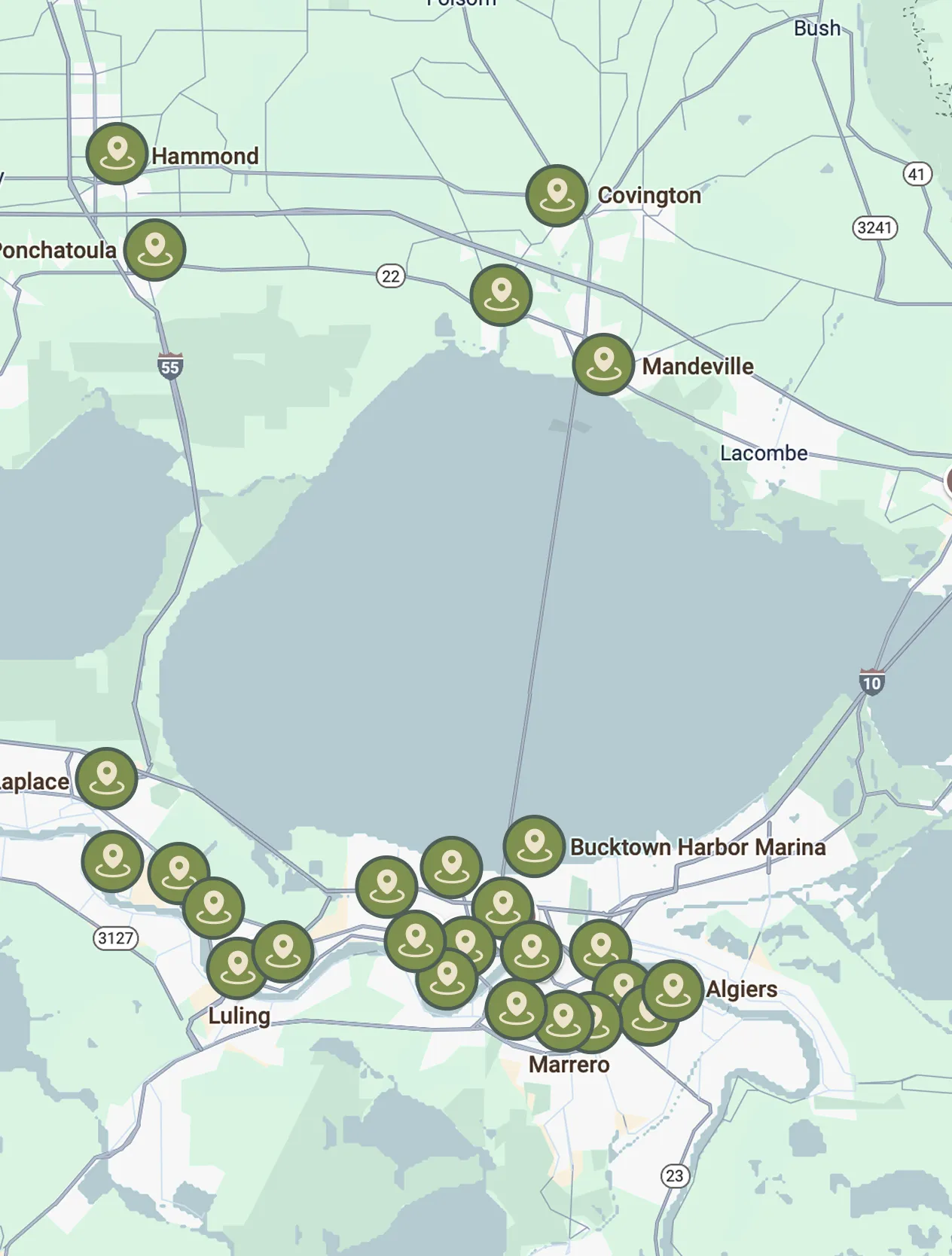
Our service areas are designed to meet the diverse needs of our clients. We focus on providing exceptional service and ensuring customer satisfaction in every location we operate.