Air Purification in Madisonville, LA
.webp)
Considering air purification solutions for your Madisonville, LA home? Cypress Cooling addresses common indoor air concerns such as pollen, humidity, VOCs, and odors. We offer a range of options, from whole house systems to portable units, featuring technologies like True HEPA filtration, activated carbon, UV C/PCO treatment, and multi stage configurations. We provide guidance on selecting the right system based on your home size, specific air quality issues, and compatibility with your existing heating and cooling equipment. Cypress Cooling ensures proper integration with your current infrastructure, explains expected performance, and outlines the maintenance practices needed to maintain consistently healthier indoor air.
PNG.webp)
Air Purification in Madisonville, LA
Maintaining clean indoor air in Madisonville, LA is essential for comfort and health. Local humidity, year-round pollen, and occasional storm-related moisture create ideal conditions for allergens, mold, and odors to affect homes. Whole-home and point-of-use air purification options can significantly reduce particles, gases, and biological contaminants, helping allergy and asthma sufferers breathe easier and improving overall indoor air quality.
Common indoor air problems in Madisonville, LA
- High pollen counts in spring and fall from oak, pine, and ragweed that infiltrate homes.
- Elevated humidity that encourages mold growth and dust mite activity.
- VOCs and odors from cooking, cleaning products, paints, and air fresheners in tighter, well-sealed homes.
- Pet dander and indoor particulates from daily activity.
- Post-storm moisture and potential microbial growth after floods or extended damp periods.
Understanding which contaminants are most problematic in your home is the first step toward selecting the right system.
Air purification options: whole-home and point-of-use
Below are the primary technologies available for Madisonville homes, with what they do and typical use cases.
- HEPA filtration (True HEPA)
- Removes 99.97 percent of particles 0.3 microns and larger. Excellent for pollen, dust, pet dander, and many mold spores.
- Best as a point-of-use portable purifier for bedrooms or as a whole-home installed HEPA module in the HVAC return.
- Requires regular replacement of the HEPA element and consideration of added pressure drop when installed in ductwork.
- Activated carbon filtration
- Adsorbs gases, odors, and many volatile organic compounds (VOCs). Important in homes with cooking odors, new finishes, or chemical smells.
- Often paired with HEPA in combined systems for particle and gas control.
- Carbon beds need periodic replacement and their lifespan depends on VOC load.
- Photochemical systems (UV-C and photocatalytic oxidation, PCO)
- UV-C light inactivates bacteria, viruses, and some mold on surfaces or in the airstream when applied correctly.
- PCO uses UV with a catalyst to break down VOCs; effectiveness varies and some PCO devices can produce byproducts if not designed correctly.
- Best used as a complement to filtration, not a sole solution for particle removal.
- Combined multi-stage systems
- Typical whole-home solutions layer a prefilter, HEPA or high-MERV filter, activated carbon, and sometimes UV. This approach addresses particles, gases, and microbes together.
- Combined systems provide balanced performance for allergy, asthma, and odor control.
- Ionic purifiers and ozone generators
- Ionizers can reduce fine particles but may deposit residue and are less reliable for high particle loads.
- Ozone-generating devices are not recommended for occupied spaces due to respiratory risks and are generally avoided for asthma and allergy management.
Comparison of technologies (quick guide)
- Best for particles: True HEPA.
- Best for gases and odors: Activated carbon.
- Best for biological control: UV-C as a supplement.
- Best all-around for homes with multiple concerns: Multi-stage combined systems.
- Technologies to approach with caution: Ozone generators, some PCO units if not independently verified.
Installation and maintenance requirements
- Whole-home in-duct systems require professional sizing to ensure the HVAC blower can handle increased static pressure. Proper installation is critical to maintain airflow and heating/cooling efficiency.
- Portable point-of-use units require only electrical power and appropriate placement for optimal circulation. Look for CADR (Clean Air Delivery Rate) ratings and match the unit to room size.
- Filter replacement intervals vary: prefilters 3 to 6 months, HEPA elements 12 to 24 months depending on use and pollutant load, activated carbon packs often 3 to 12 months. UV lamps typically need replacement annually for reliable output.
- Routine maintenance also includes cleaning prefilters, checking for moisture in ductwork in humid climates, and ensuring HVAC condensate and drainage are functioning to prevent mold.
Performance expectations
- Portable units: expect CADR-based performance listed by manufacturers; aim for a unit sized to achieve at least 4 to 6 air changes per hour in bedrooms for allergy relief.
- Whole-home systems: performance depends on system design, HVAC runtime, and filter efficiency. Properly designed systems can significantly reduce airborne particles and lower VOC concentrations when carbon capacity is adequate.
- No system removes 100 percent of all contaminants at all times. Combined approaches and proper ventilation produce the best real-world results, especially in a humid, pollen-prone environment like Madisonville.
Integration with existing HVAC systems and whole-home filtration promotions
- Integrating purification into your existing HVAC offers centralized control, quieter operation, and whole-house coverage when the fan runs. Consider setting the fan to continuous or periodic runtime to circulate air through installed filters.
- Key integration points include measuring static pressure impact, selecting filters rated to preserve airflow, and choosing compatible mounting locations in the return plenum or ductwork. Zoning systems and variable speed blowers can affect distribution and may require custom solutions.
- Many local providers offer whole-home filtration programs or seasonal promotions to bundle filtration upgrades with HVAC service. These programs often include filter initial setups, sizing assessments, and education on runtime and maintenance needs.
How to choose the right purifier for your Madisonville home
- Identify primary concerns: pollen and allergies, mold prevention, pet dander, odors, or VOCs. Prioritize HEPA for particle issues and add activated carbon for odors and VOCs.
- Consider home size and occupancy: portable units for focused room treatment, whole-home systems for uniform coverage. Match CADR and ACH targets to room volume.
- Factor in maintenance willingness: multi-stage systems deliver best results but require scheduled filter and UV maintenance. Portable units with washable prefilters reduce consumable costs.
- Assess HVAC compatibility: if installing in-duct, ensure the blower can accommodate increased filter resistance and that the system has sufficient runtime to circulate air.
- Account for local climate: high humidity in Madisonville increases the need for mold control and moisture management alongside purification. Combine filtration with proper dehumidification and ventilation strategies.
Benefits and ongoing care
Properly selected and maintained air purification in Madisonville, LA reduces allergy and asthma triggers, lowers odors, and provides measurable improvements in indoor comfort. Regular filter changes, attention to system runtime, and addressing humidity and ventilation are essential to sustain performance. For homes with specific health concerns or post-storm moisture issues, combining filtration, dehumidification, and targeted cleaning yields the most reliable results.
OUR CLIENTS HAVE TO SAY ABOUT US



Service areas
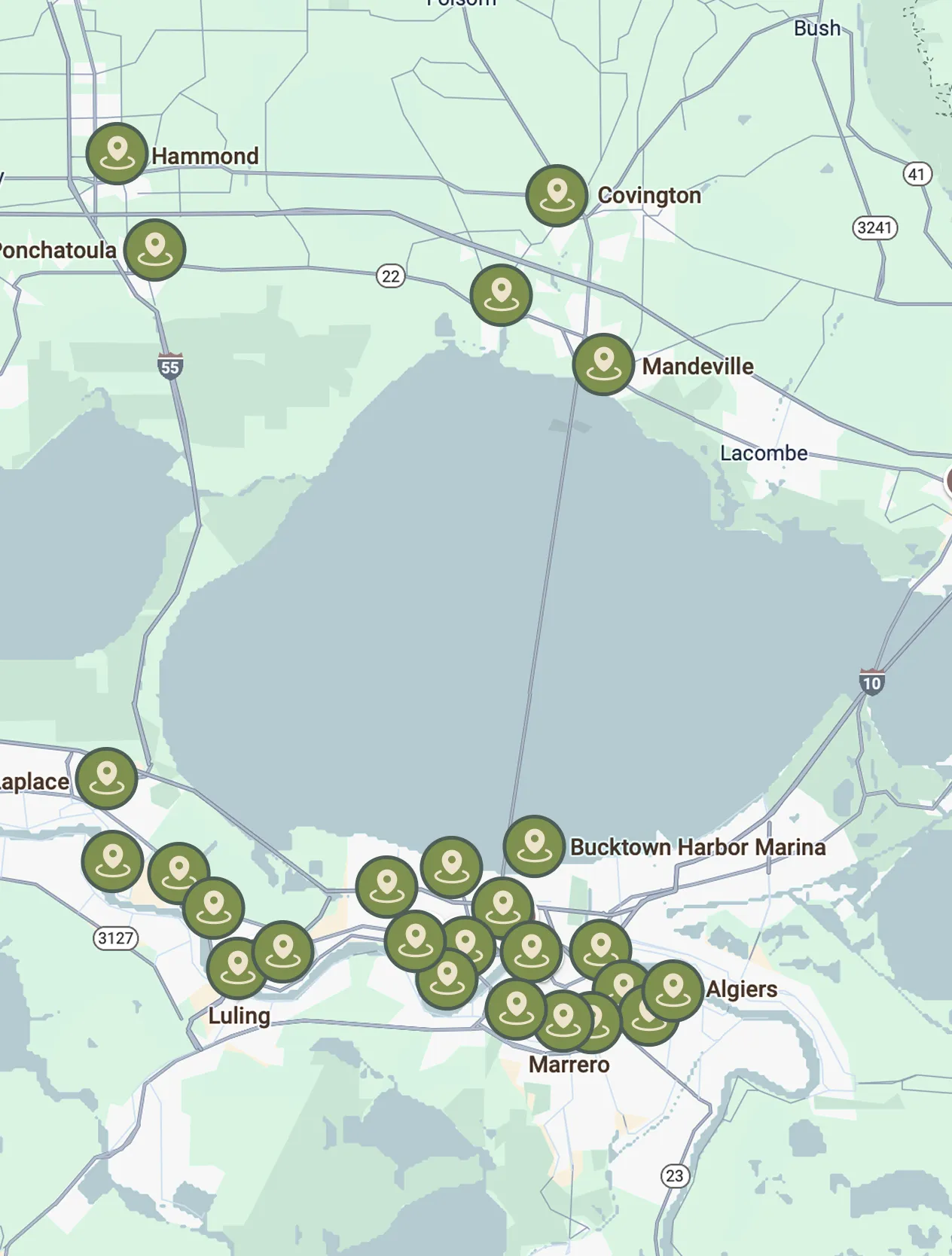
Our service areas are designed to meet the diverse needs of our clients. We focus on providing exceptional service and ensuring customer satisfaction in every location we operate.