Air Purification in Laplace, LA
.webp)
Concerned about air quality in your Laplace, LA home? Cypress Cooling offers a comprehensive overview of indoor air quality challenges and practical solutions. We understand the common problems in Laplace, such as humidity driven mold, pollen, pet dander, odors, and VOCs. We'll compare whole home versus point of use systems and outline key technologies like HEPA, activated carbon, electrostatic precipitators, and APCO/UV. Cypress Cooling will explain how performance varies by pollutant and guide you through installation, maintenance, and measurement. Our goal is to help you select the right system to improve comfort and health in your Laplace home.
PNG.webp)
Air Purification in Laplace, LA
Indoor air quality matters in Laplace, LA. High humidity, seasonal pollen, frequent thunderstorms and occasional flooding increase the risk of mold, allergens and moisture-driven odors. Homes here also contend with pet dander, vehicle exhaust and VOCs from building materials and household products. Whole-home and point-of-use air purification systems reduce those risks, improve breathing comfort, and can make indoor environments safer for allergy sufferers, children and older adults.
Common indoor air issues in Laplace homes
- High humidity-driven mold growth and musty odors after storms or minor flooding
- Elevated pollen counts in spring and fall that aggravate allergic rhinitis
- Pet dander and dust-mite allergens in older, carpeted homes
- Odors from cooking, smoke and nearby road traffic
- VOCs from paints, cleaners, new furniture and stored chemicals — worse in tightly sealed homes during summer
- Reduced comfort during summer when HVAC runs continuously and filters get loaded faster
Whole-home versus point-of-use: which fits your home
- Whole-home (in-duct) systems integrate with the HVAC system and treat air for the entire living space. Best for ongoing allergen control, continuous filtration and households wanting centralized maintenance. Ideal in Laplace where humidity and whole-house ventilation needs are common.
- Point-of-use (portable/standalone) units concentrate cleaning power in one room — bedrooms, living rooms, or areas with known odor or allergen issues. Useful in multi-family layouts, older homes without compatible ductwork, or to supplement whole-home systems in high-use areas.
How the main technologies compare
- HEPA (True HEPA)
- Performance: Removes 99.97% of particles down to 0.3 microns. Very effective for pollen, pet dander, dust and smoke particulates.
- Limits: Does not remove gases or most odors on its own. Requires pre-filters and often activated carbon to address VOCs/odors.
- Activated carbon
- Performance: Adsorbs many gases, odors and a range of VOCs. Effective for cooking, pet and household chemical odors.
- Limits: Carbon capacity is finite; effectiveness declines as the bed becomes saturated. Best paired with particle filtration.
- Electronic/polarization (electrostatic precipitators, ionizers)
- Performance: Can capture fine particles by charging and collecting them. Low-maintenance models reduce airborne particulates.
- Limits: Some models produce ozone; choose only units certified as low- or zero-ozone output (CARB-compliant). Performance varies with maintenance and airflow.
- APCO-style / Photocatalytic systems (UV-assisted oxidation)
- Performance: Designed to break down VOCs and odors through photocatalytic processes, often combined with carbon and HEPA stages. Useful for persistent odors and some VOCs.
- Limits: Effectiveness depends on catalyst condition, airflow and residence time. Not all claims are equal — look for independent performance data.
Performance by problem type (general expectations)
- Allergens (pollen, dust, pet dander): Best reduced with True HEPA or high-MERV (MERV 13+) whole-home filtration. Proper sizing and continuous operation can reduce airborne allergen counts by a large majority in the treated space.
- Odors: Activated carbon and APCO-style systems typically perform best. Whole-home carbon beds reduce housewide odors; portable units can quickly clear cooking or smoke smells in a single room.
- VOCs: Photocatalytic/APCO systems plus carbon are most effective for a broad spectrum of VOCs. HEPA alone has little effect on gaseous pollutants.
Installation and assessment process (what to expect)
- On-site evaluation: A technician inspects the home layout, HVAC capability, duct condition, existing filter access, indoor humidity and resident sensitivities. Photographs and measurements determine recommended equipment size and placement.
- Air testing (optional): Baseline particulate counts, VOC screening, humidity and visual mold inspection help prioritize solutions. Results guide whether whole-home treatment or targeted point-of-use units are appropriate.
- System selection: Recommendations balance pollutant targets (allergens vs odors vs VOCs), noise preferences, maintenance expectations and compatibility with existing HVAC.
- Installation steps for in-duct units: shut down HVAC, install media or electronic cleaner at the return or supply plenum, seal and wire per code, test airflow and controls. Typical in-duct installs are completed in a few hours.
- Installation steps for point-of-use units: position for optimal airflow, verify electrical supply, run initial performance and noise checks. Portable placement and CADR guidance ensure effective coverage.
Filter and replacement schedules (typical guidelines)
- True HEPA filters: replace every 6–12 months depending on use and pollutant load; check pre-filters monthly for visible dirt.
- Activated carbon cartridges: 3–12 months depending on odor and VOC levels; heavy producers may need more frequent replacement.
- Electronic precipitators: cleaning recommended every 1–3 months; professional cleaning or inspection annually.
- APCO/UV bulbs and catalyst cells: inspect annually and replace bulbs or catalyst modules according to manufacturer intervals (often yearly for UV bulbs).
- Whole-home MERV upgrades: medium-efficiency MERV 8 pre-filters monthly; MERV 13+ media generally replaced every 6–12 months.
Measurable air quality benefits and certifications
- Particle removal: Properly sized HEPA systems remove the majority of fine particulates; manufacturers often report CADR (Clean Air Delivery Rate) values to estimate room performance. Whole-home upgrades to MERV 13+ can markedly reduce particles transferred through HVAC.
- VOC/odor reduction: Carbon and APCO approaches often deliver measurable reductions in odor intensity and many common VOCs; efficacy should be validated by pre- and post-install VOC screening if needed.
- Certifications to look for: AHAM/CADR ratings for room units, CARB compliance for ozone emissions, UL safety listings, and manufacturer performance data. For HVAC-integrated devices, look for documented MERV ratings and compatibility statements from HVAC brands such as major OEMs used by contractors.
Choosing the right system for Laplace homes
- If allergies, pollen and asthma are primary concerns: prioritize True HEPA and higher-MERV whole-home filtration combined with proper humidity control to inhibit mold.
- If odors and VOCs are prominent after storms or renovations: include activated carbon or APCO-style treatment alongside particulate filtration.
- For older or ductless homes: high-CADR portable HEPA units and targeted carbon filtration can provide immediate relief.
Maintenance and long-term considerations
- Monitor indoor humidity; keep RH between 40–50% to reduce mold and dust-mite activity.
- Replace filters on the recommended schedule and record dates to maintain performance.
- Re-test indoor air quality after major events (flooding, mold remediation, renovations) to confirm system effectiveness.
- Prefer systems with documented CADR, AHAM or third-party testing and clear replacement part availability.
Typical next steps after selecting a solution
After deciding on the type of system, a professional assessment usually confirms sizing and placement, followed by installation, an initial performance check and a written maintenance schedule. Homeowners commonly receive a baseline and follow-up air quality measurement if VOCs or mold were primary concerns.
This guidance reflects common performance expectations and practical considerations for Air Purification in Laplace, LA. Selecting technology that matches your primary indoor pollutants, combined with regular maintenance and humidity control, delivers the most reliable, measurable improvements in indoor comfort and health.
OUR CLIENTS HAVE TO SAY ABOUT US



Service areas
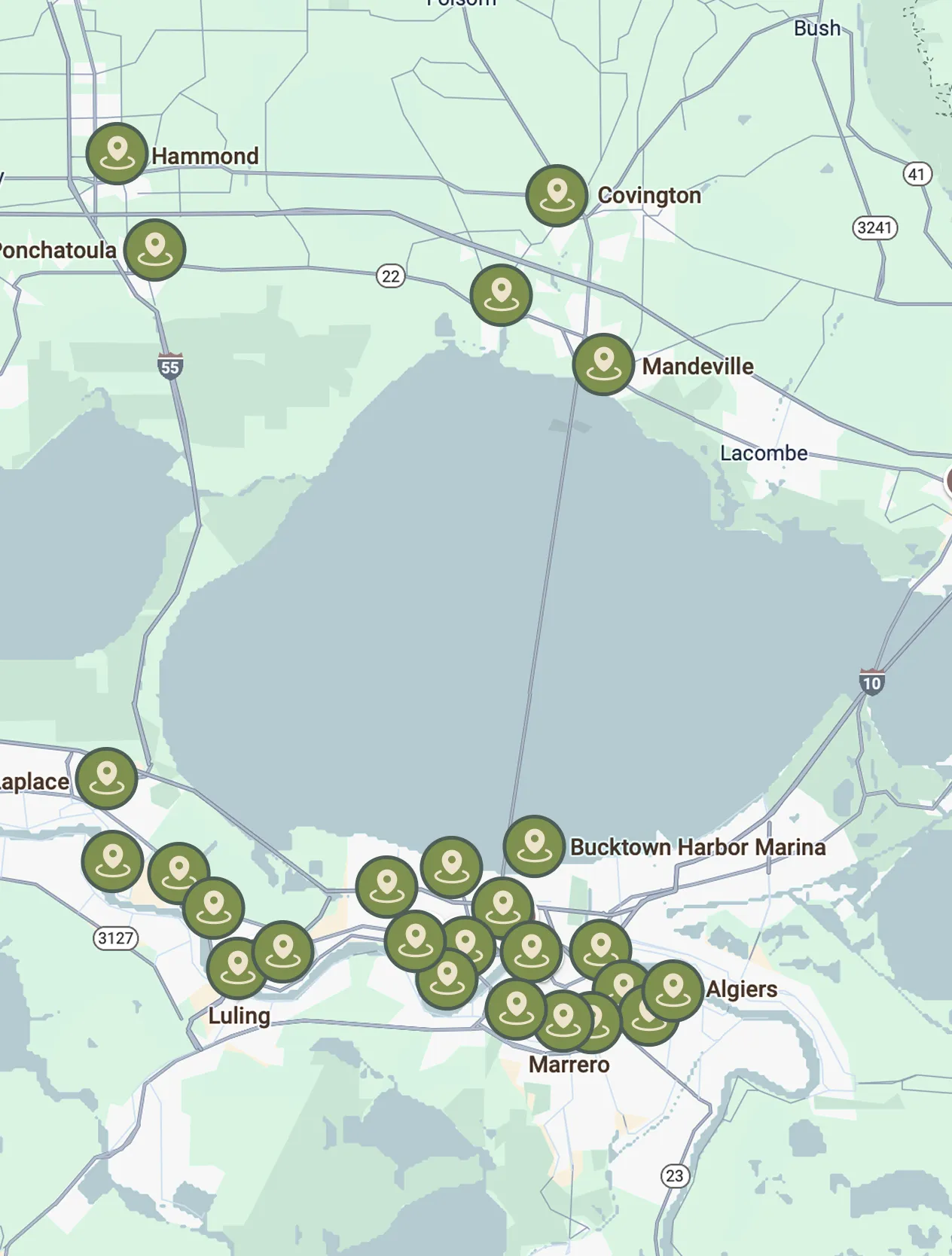
Our service areas are designed to meet the diverse needs of our clients. We focus on providing exceptional service and ensuring customer satisfaction in every location we operate.