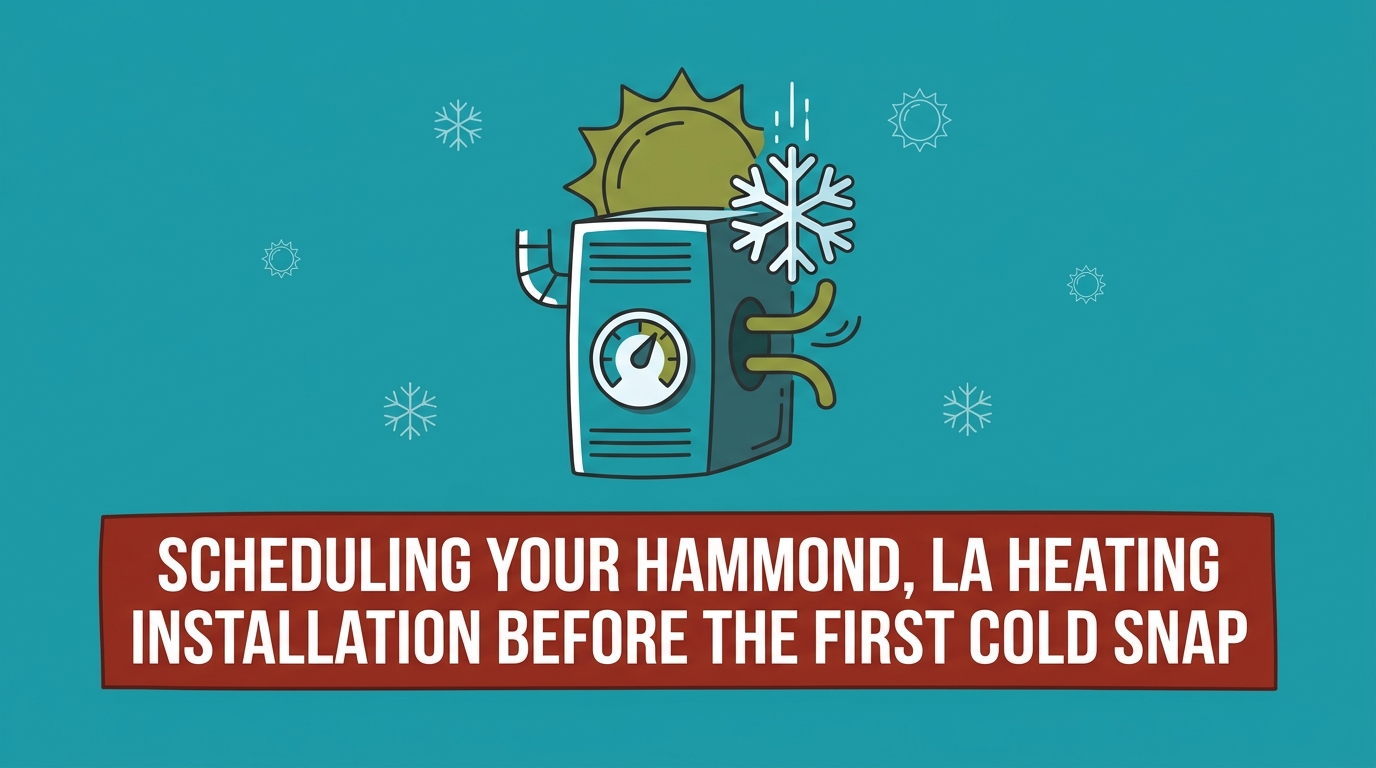
Scheduling Your Hammond Heating Installation Before the First Cold Snap
.webp)
The Hidden Risks of Waiting for Winter Weather
Fall in South Louisiana is notoriously deceptive. Here at Cypress Cooling Company, our team regularly sees homeowners lulled into a false sense of security while their dormant heating equipment quietly ages in the background. While the calendar says September, the afternoon temperatures often tell a different story, masking the reality of what is to come. Scheduling Your Hammond Heating Installation Before the First Cold Snap is the single most effective way to protect your home from an unexpected breakdown when the weather finally turns. The concrete problem many homeowners face is risking days without heat by holding out until the first freezing night to replace a failing system. The critical decision you must make now is whether to proactively book your replacement during the September pre-heating season versus crossing your fingers that an old unit survives the first November freeze.
If you are ready to explore your options, learn more about our comprehensive heating services and professional heat pump installation.
Many homeowners operate under the assumption that if their furnace or heat pump worked adequately at the end of last winter, it will seamlessly fire up again this year. Unfortunately, in our experience, older HVAC equipment does not age gracefully during long periods of inactivity. Components degrade, lubrication dries up, and electrical connections weaken. When you wait for winter weather to arrive before testing or replacing your system, you are essentially gambling with your family's comfort. A proactive upgrade in the early fall shifts you from a reactive, emergency mindset into a planned, controlled process where you have the luxury of time, choice, and peace of mind.
Upgrading your heating system before it completely fails also allows you to take advantage of modern advancements in HVAC technology. Today's heat pumps and furnaces offer variable-speed operation, superior humidity control, and significantly lower energy consumption compared to models manufactured just a decade ago. By initiating this process during the September pre-heating season versus the first November freeze, you position yourself to make a financially sound, well-researched decision rather than a panicked purchase in the middle of a cold, uncomfortable night.
Understanding South Louisiana's Sudden Thermal Stress
The reality of South Louisiana weather is that air conditioning is often used right up until late fall, meaning the switch to heating is abrupt and highly stressful on aging HVAC equipment. In our years serving Metairie, Hammond, and the surrounding communities, we've seen firsthand how local weather patterns frequently deliver drastic temperature drops overnight. This unique climate anomaly creates what industry professionals call sudden thermal stress, a phenomenon that we regularly see wreaking havoc on heating systems that have sat entirely dormant for over half the year.
1. Continuous Summer Operation: During the long, brutal summer months, your air conditioner runs almost constantly. While the cooling components are heavily utilized, the heating components—such as the furnace burners, heat exchangers, and specific heat pump reversing valves—sit completely idle, collecting dust and losing lubrication.
2. The Abrupt Transition: When the first strong cold front pushes through Hammond, the temperature can plummet rapidly. Homeowners simultaneously switch their thermostats from cooling to heating, demanding immediate, high-capacity performance from equipment that hasn't moved in months.
3. Mechanical Shock: This sudden demand forces stiff, unlubricated motors to spin up to top speed and pushes high-amperage electrical currents through dormant capacitors and relays. The resulting mechanical and electrical shock is the primary reason our technicians respond to so many failed older systems on the very first cold night of the year.
The Impact of Dormancy on Aging Heaters
Understanding exactly how dormancy affects your heating system highlights why sudden thermal stress is so damaging. When a furnace or heat pump sits unused, several physical changes occur within the cabinet that compromise its ability to function safely and efficiently.
• Dust accumulation on burners and heat exchangers: Over the summer, household dust, pet dander, and airborne particulates settle on the heating elements. When the system fires up for the first time, this debris burns off. In older systems, excessive buildup can clog burners, cause uneven heating, and even create micro-fissures in weakened heat exchangers.
• Stiffened belts and unlubricated moving parts: Blower motors and fan assemblies rely on bearings and belts that need regular movement to remain pliable and properly lubricated. Months of stagnation cause belts to become brittle and bearings to dry out, leading to heavy friction, grinding noises, and eventual motor failure when suddenly forced to operate continuously.
• Electrical components stressed by sudden high-amperage draws: Capacitors, contactors, and relays degrade over time. A sudden, massive draw of electricity required to start a dormant heating cycle can easily overwhelm a weakened electrical component, causing a blown fuse, a tripped breaker, or a completely fried circuit board.
The Logistical Bottleneck: Why November Replacements Are Chaotic
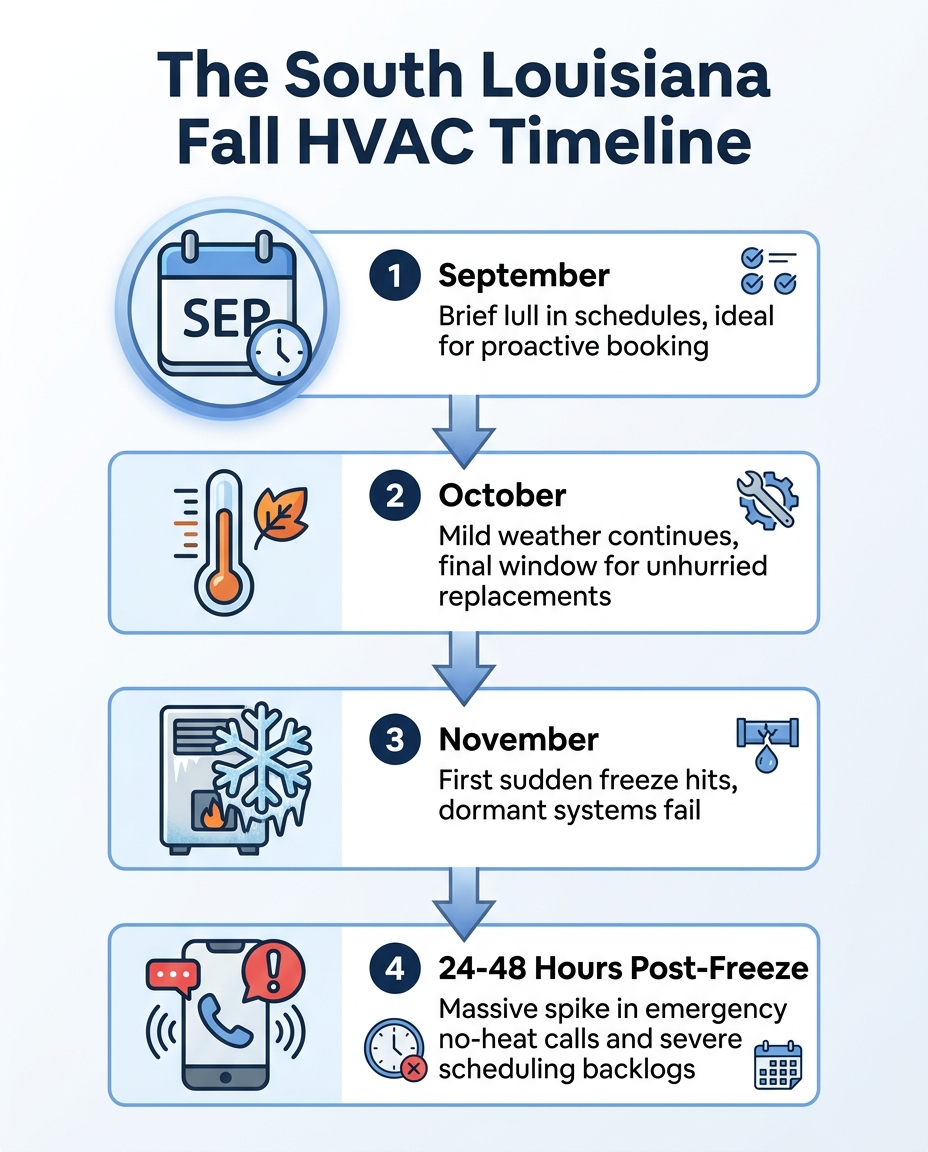
The 24-to-48-hour period following the first freeze is a notoriously chaotic time in the HVAC industry. When a sudden cold snap hits, hundreds of aging heating systems across the region fail simultaneously under the stress of abrupt operation. This creates a massive, immediate spike in emergency no-heat calls, overwhelming local contractors and leading to a severe scheduling backlog. Homeowners who waited to evaluate their heating needs suddenly find themselves at the back of a very long line.
During this chaotic window, searches for 247 heating installation hammond skyrocket as families scramble to restore warmth to their homes. However, the reality of this surge is that actual availability is severely limited. We know this because dispatch boards across the region can fill up for the entire week within a matter of hours. If your system requires a complete replacement rather than a simple repair, you may be facing multiple days without heat while waiting for an available installation crew.
Beyond the wait times, the supply chain realities of emergency replacements often put homeowners at a distinct disadvantage. When you need a new heater immediately, you are restricted to whatever equipment the contractor currently has sitting in their local warehouse. This often means settling for a standard-efficiency unit that happens to be in stock, rather than taking the time to order a perfectly sized, high-efficiency system that better suits your home's long-term energy needs.
The True Cost of Emergency Replacements
Waiting for an emergency to dictate your HVAC replacement carries hidden costs that go far beyond the initial installation invoice. By comparing the differences between a planned September pre-heating season installation versus a reactive first November freeze replacement, the benefits of proactive scheduling become abundantly clear.
• Scheduling Availability — Proactive September Installation: Flexible dates, easily aligned with your personal schedule. — Reactive November Emergency: Severe backlogs; potential multi-day wait for an open time slot.
• Equipment Selection — Proactive September Installation: Full access to premium, high-efficiency models and exact sizing. — Reactive November Emergency: Limited to whatever standard inventory is currently in stock locally.
• Home Comfort — Proactive September Installation: Seamless transition with zero days spent freezing in your home. — Reactive November Emergency: Extended discomfort while waiting for technicians and parts to arrive.
• Decision Making — Proactive September Installation: Calm, deliberate choices with time to research options and features. — Reactive November Emergency: Rushed, high-pressure decisions made under stressful, cold conditions.

Leveraging the September Scheduling Window
Identifying and utilizing the brief lull in HVAC schedules that occurs in September is the smartest move a homeowner can make before the unpredictable late-fall weather arrives. During this window, the frantic pace of summer AC repairs has subsided, and the winter heating rush has not yet begun. This pre-season calm presents a strategic opportunity to handle your heating upgrade with precision and care.
Booking early ensures that you receive the full, undivided attention of your installation team. With flexible scheduling dates available, you can choose an installation day that minimizes disruption to your routine. Furthermore, this window gives you ample time to evaluate advanced technologies, such as highly efficient hybrid HVAC systems, which seamlessly alternate between an electric heat pump and a gas furnace to optimize energy usage based on the outside temperature.
As a proactive partner in your home comfort, Cypress Cooling Company focuses on helping customers secure reliable scheduling well before the emergency rush begins. Taking action during the September pre-heating season versus the first November freeze means you have the breathing room to make the best possible investment for your property.
• Evaluate advanced technologies: Take the time to research high-efficiency heat pumps, variable-speed air handlers, and smart thermostat integrations without the pressure of a freezing house.
• Access premium inventory: Ensure the exact make, model, and size required for your home's unique footprint is ordered and available, rather than settling for standard warehouse stock.
• Research financial incentives: Proactive planning allows homeowners time to research generally applicable federal tax credits or utility incentives for energy-efficient upgrades, which can help offset the initial investment of a modern system. Always consult with a tax professional or your local utility provider to verify current program eligibility.
• Secure flexible dates: Pick an installation day and time that works perfectly for your family's busy fall schedule, rather than taking whatever emergency slot becomes available.
• Ensure comprehensive testing: Allow technicians the time to perform thorough system calibrations and airflow testing without the pressure of a dozen other emergency calls waiting on the dispatch board.
What a Seamless, Proactive Installation Looks Like
The difference between a rushed emergency swap and a calm, planned installation is night and day. When you schedule your replacement proactively, the entire process is deliberate, organized, and focused heavily on long-term performance rather than just a quick fix. A rushed winter breakdown often involves technicians working in harsh conditions, fighting the clock to restore heat, while a scheduled fall replacement allows for meticulous attention to detail.
For example, our Cypress Cooling Company team recently helped a local homeowner schedule a new system installation well ahead of the severe weather. Because they planned ahead, our technicians were able to execute a completely seamless installation, taking the necessary time to thoroughly explain the new system's operation, answer all questions, and ensure the equipment was running flawlessly before leaving the property. This is the standard of care that is possible when you aren't competing with a massive emergency backlog.
A proper installation begins long before the new unit is unboxed. It requires a comprehensive pre-installation assessment to ensure the new heater is perfectly sized for your home's specific layout, insulation levels, and ductwork capacity. When you trust top-tier Hammond HVAC services with a planned replacement, you gain the ultimate peace of mind knowing your home is fully prepped for whatever winter brings.
How Our Professionals Handle Your Replacement Process
1. In-depth load calculation and system selection: Our technicians perform a detailed Manual J load calculation to determine the exact heating capacity your home requires. Oversized units short-cycle and waste energy, while undersized units run constantly without ever reaching the set temperature. Precision sizing is critical.
2. Safe removal and disposal of the old heating equipment: The team carefully disconnects the aging furnace or heat pump, safely capturing any remaining refrigerants and removing the heavy equipment without damaging your home's interior, floors, or landscaping.
3. Ductwork inspection and preparation: Before the new unit is seated, our experts inspect the existing ductwork and plenums for leaks, proper sizing, and adequate airflow, ensuring the new high-efficiency system isn't bottlenecked by old, failing ducts.
4. Precision installation and calibration: The new equipment is securely installed, leveled, and connected. Technicians then calibrate the blower speeds, check the static pressure, and ensure the thermostat is communicating perfectly with the new control board.
5. Final walk-through and education: The lead technician walks you through the operation of your new system, explains how to change the filters, demonstrates the thermostat features, and answers any questions you might have about maintaining your new investment.
Frequently Asked Questions About Fall Heating Replacements
Why is fall the best time to replace a heating system?
Fall provides a brief window of mild weather and open scheduling between the busy summer and winter seasons. Replacing your system now means you won't suffer in a freezing house while waiting for an emergency installation. It also allows you ample time to research high-efficiency options and secure the exact equipment your home needs before local inventory is depleted.
How can I avoid needing emergency heating installation?
The most effective way to avoid an emergency is to replace aging, unreliable equipment proactively before it completely fails. Scheduling a comprehensive inspection in September allows our technicians to identify cracked heat exchangers, failing motors, or weak compressors. If the system is near the end of its lifespan, booking a planned replacement in the fall guarantees you won't be caught off guard.
How long does a furnace installation take?
A standard furnace or heat pump installation typically takes a full day, usually between six to eight hours, depending on the complexity of the job. This timeline includes safely removing the old unit, modifying the ductwork plenum if necessary, installing the new system, and performing rigorous calibration and testing. Planned installations ensure the crew has the entire day dedicated solely to your home.
What happens if my heater breaks in the winter?
If your heater breaks during a winter freeze, you will likely face a multi-day wait for service due to the massive spike in emergency calls across the region. During this time, your home will become uncomfortably cold, and you may be forced to settle for whatever replacement equipment is currently in stock rather than the ideal, high-efficiency model you prefer.
Does a sudden freeze really damage an old heating system that much?
Yes, sudden thermal stress is a leading cause of early-season breakdowns. When a heating system sits completely dormant all summer, belts stiffen, dust settles on burners, and electrical components degrade. Forcing these dormant, aging parts to suddenly run at maximum capacity during a rapid temperature drop frequently results in blown capacitors, snapped belts, or cracked heat exchangers.
Why do HVAC companies get so busy in November in South Louisiana?
HVAC companies experience a massive surge in November because South Louisiana's climate often shifts abruptly from air conditioning weather straight into freezing temperatures. Hundreds of dormant, aging heating systems fail simultaneously across the region under the sudden mechanical stress, creating an immediate, severe backlog of emergency no-heat calls that books up schedules for days or even weeks.
Secure Your Winter Comfort Today
The logic is clear: holding out for your aging heater to survive another winter is a gamble that rarely pays off. By acting now, you bypass the massive logistical backlog that plagues the HVAC industry following a sudden temperature drop, ensuring your family remains comfortable and safe all season long. Booking a proactive replacement during the September pre-heating season versus the first November freeze guarantees you have access to the best equipment, the most flexible scheduling, and the undivided attention of expert technicians.
Take advantage of the mild weather while it lasts. You have the power to transform a potential winter emergency into a smooth, planned upgrade. Protect your home and your peace of mind by scheduling your comprehensive consultation and heating installation with Cypress Cooling Company before the first cold snap hits.
OUR CLIENTS HAVE TO SAY ABOUT US



Service areas
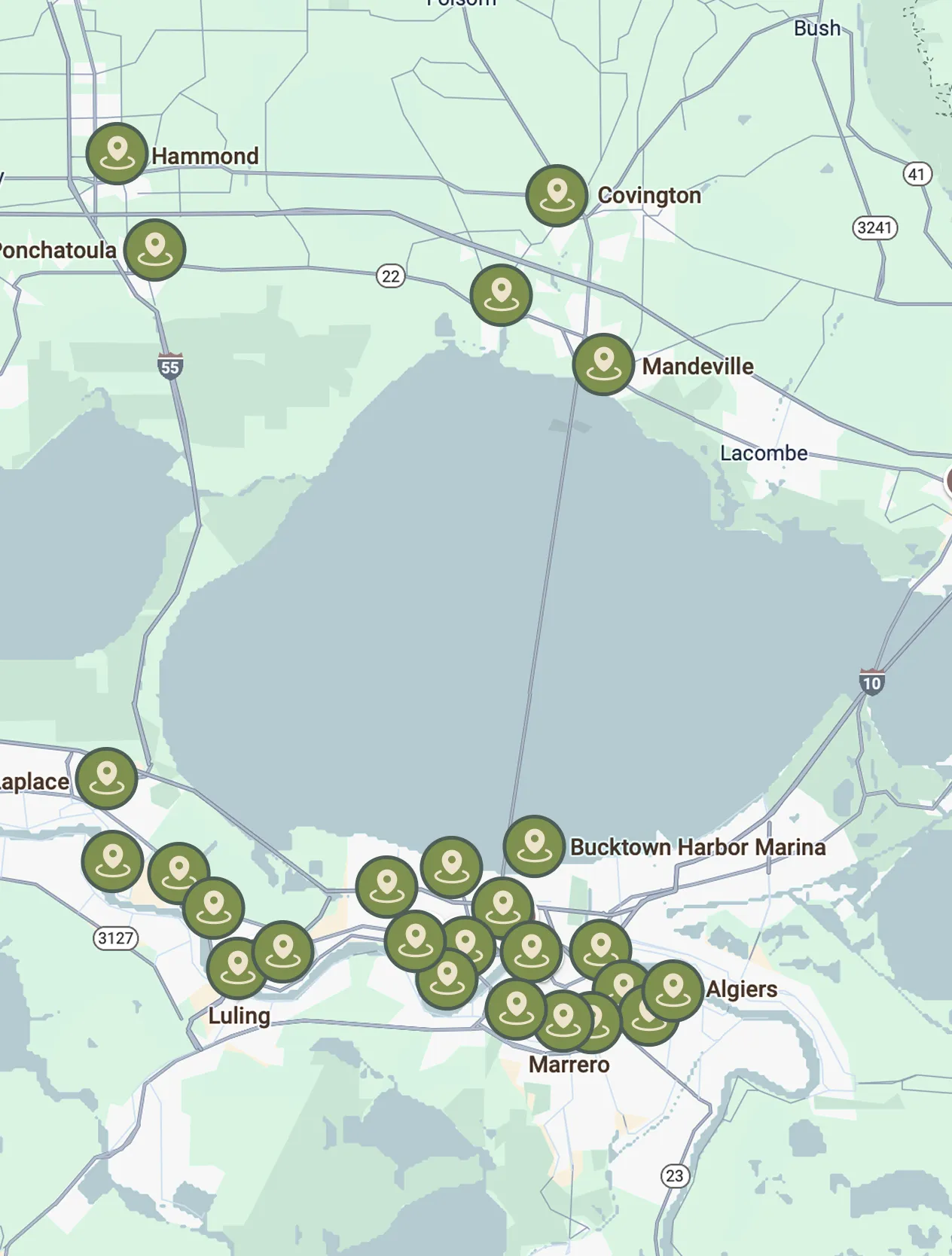
Our service areas are designed to meet the diverse needs of our clients. We focus on providing exceptional service and ensuring customer satisfaction in every location we operate.