Why Your First Heater Cycle of the Season Smells Like Burning Dust in Algiers
.webp)
Is It Normal for My Heater to Smell Like It's Burning?
Are you wondering why your first heater cycle of the season smells like burning dust in Algiers? You are certainly not alone. Every September and early fall, our dispatchers at Cypress Cooling Company field dozens of frantic calls from local homeowners experiencing this exact issue. It usually happens during that very first cold snap. You walk over to the thermostat, switch the system from cooling to heating, and within a few minutes, a distinct, alarming burning odor begins filling your hallways and living spaces. For many homeowners, the immediate reaction is panic. You might wonder if a wire has crossed, if a motor is failing, or if your house is in imminent danger of an electrical fire.
The short answer is that a slight burning smell during the first cold morning of the year is incredibly common and, in the vast majority of cases, completely harmless. Before you rush to shut down your entire heating system, it helps to understand the mechanics of what is happening inside your ductwork and equipment.
The Mechanics of the Fall Heating Transition
In our years of servicing HVAC systems across Metairie and Algiers, we know that throughout the long summer months, your heating components sit entirely dormant. While your air conditioner is running daily, household air continues to circulate over the internal heating elements—specifically, the heat exchanger in a gas furnace or the electric heat strips in an air handler. As this air moves, microscopic particles naturally drop out of the airflow and settle on these cold, unused metal surfaces.
This settled debris typically includes:
• Pet dander and hair: Microscopic flakes from dogs and cats that easily bypass older or thinner air filters.
• Clothing lint and carpet fibers: Everyday textile dust that floats through the home.
• Aerosolized cooking oils: Grease particles from the kitchen that travel through the return vents and adhere to internal HVAC components.
• Standard household dust: Dead skin cells, pollen, and outdoor dirt tracked inside.
When you finally trigger that first heater cycle, those metal surfaces rapidly heat up to hundreds of degrees. The layer of debris that has spent months accumulating is instantly incinerated. What you are smelling is quite literally the flash-burning of months' worth of settled household dust. The critical decision point for any homeowner is knowing how to tell the difference between this normal dust burn-off and a genuine electrical emergency that requires immediate intervention.
The 15-to-30 Minute Rule for Dust Burn-Off
If you are actively experiencing this issue and wondering whether you need to call for heat pump services, the most reliable metric you can use is the clock. Because the layer of dust on a heat exchanger is incredibly thin, it does not take long for the system to completely incinerate it and clear the air.
Our technicians at Cypress Cooling Company rely on the 15-to-30 minute rule to help homeowners accurately gauge whether their system is operating safely or experiencing a malfunction. Here is exactly how a normal dust burn-off timeline should progress when your first heater cycle smells like burning dust:
1. Minutes 1 to 5 (The Ignition Phase): The smell will be at its absolute strongest. As the blower motor pushes warm air through the vents for the first time, it carries the concentrated odor of singed dust directly into your living spaces. This is when the smell is most alarming.
2. Minutes 10 to 15 (The Dissipation Phase): The heating elements have reached their maximum operating temperature, and the vast majority of the settled debris has already been burned away. You should notice the smell plateauing and beginning to fade. It will no longer smell like active burning; instead, it will smell like a lingering, dry warmth.
3. Minutes 20 to 30 (The Clearing Phase): The odor should be nearly unnoticeable unless you are standing directly over a supply register. The system has successfully cleaned its own heating elements.
Ventilate Instead of Panicking
One pattern our team sees often during early fall service calls is homeowners immediately shutting the system down at the five-minute mark out of fear. While this is an understandable reaction, it actually prolongs the problem. If you turn the heater off before the dust has fully burned away, the exact same smell will return the next time you try to heat the house.
The quick fix: Instead of shutting the system down, leave the thermostat set to heat. Open a few windows on opposite sides of the house to create a cross-breeze, and turn on your ceiling fans to help circulate the air. Give the system a full 30 minutes to do its job. If the smell persists beyond an hour, or if it grows noticeably stronger and more acrid as time goes on, the situation has escalated past a normal dust issue, and it is time to take further action.
Why South Louisiana's Climate Makes the Initial Burning Odor Stronger
You might wonder why this phenomenon seems particularly intense in our region compared to what family members in northern states experience. The severity of the burning dust smell is directly tied to the unique climate of South Louisiana.
In colder northern climates, heating systems are used for six to eight months of the year, leaving only a short window for dust to settle on dormant heating elements. In the Gulf South, our technicians know firsthand that that timeline is completely reversed. Our exceptionally long cooling season means that a furnace or heat pump's heating strips might sit completely unused from early March all the way through late October or even November.
The Impact of High Indoor Humidity
Beyond just the length of the dormant period, humidity plays a massive role in how much dust accumulates. Even with a highly efficient air conditioner running, indoor humidity levels in South Louisiana are naturally higher during the peak of summer. This slightly elevated moisture content in the air makes microscopic dust particles heavier and stickier.
When airborne particulates, pet dander, and household dust travel through your ductwork, they are far more likely to adhere to the internal metal surfaces of your HVAC system because of this sticky, humid environment. Over an eight-month cooling season, this creates a surprisingly thick, stubborn layer of debris on the heat exchanger.
When those sudden, unpredictable late-fall cold snaps finally arrive, they force a rapid, heavy transition from AC to heat. The system has to incinerate an unusually thick layer of sticky summer dust all at once. If you are looking for HVAC services in Algiers, it is helpful to know that this heavy, noticeable dust burn-off is a completely normal regional quirk. The longer the cooling season lasts, the stronger that first heating cycle is going to smell.
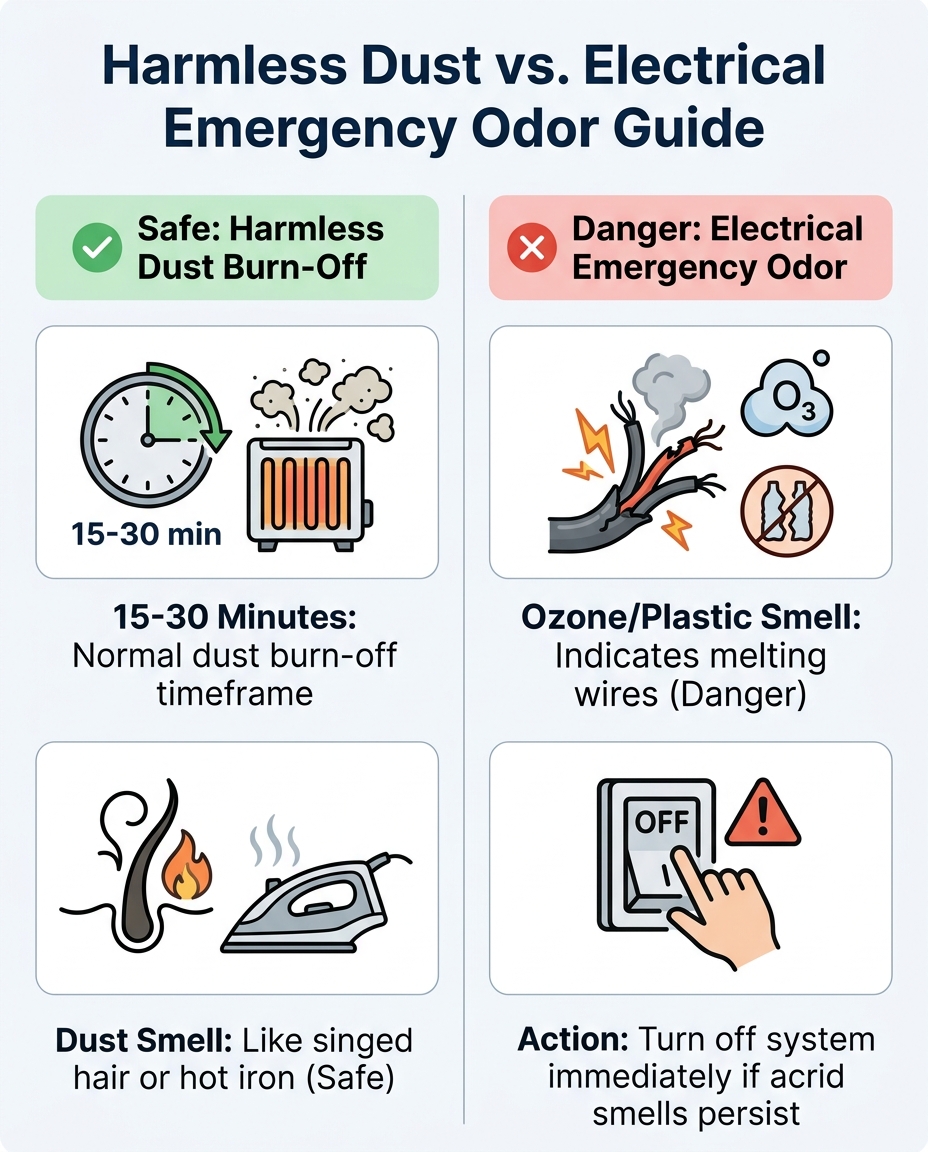
Harmless Dust vs. Dangerous Electrical Shorts: A Quick Odor Guide
While the 15-to-30 minute rule is an excellent guideline, your nose is often the best diagnostic tool you have. The human sense of smell is incredibly adept at distinguishing between harmless organic material burning and synthetic, dangerous materials melting. Knowing the difference is crucial for your family's safety.
When a homeowner searches because their first heater cycle smells like burning dust, they are usually trying to triage the specific scent in their home. Here is a breakdown of what our experts typically diagnose based on different odor profiles.
• Hot clothes iron / Dusty dry heat — Likely Cause: Normal settled dust and lint burning off the heat exchanger. — Danger Level: Low (Completely normal) — Action Required: Let the system run for 30 minutes. Open windows to ventilate.
• Singed hair / Burning fur — Likely Cause: Pet dander that has bypassed the filter and settled on heating strips. — Danger Level: Low (Normal in homes with pets) — Action Required: Allow 30 minutes to clear. Check and replace your air filter.
• Acrid melting plastic / Chemicals — Likely Cause: Failing capacitor, melting wire insulation, or overheating plastic components. — Danger Level: Severe (Fire hazard) — Action Required: Turn system off immediately at the thermostat. Call for professional service.
• Sharp ozone / Fishy smell — Likely Cause: Electrical arcing, failing blower motor, or short-circuiting control board. — Danger Level: Severe (Fire hazard) — Action Required: Turn system off immediately. Do not attempt to inspect wiring.
• Rotten eggs / Sulfur — Likely Cause: Natural gas leak (if you have a gas furnace). — Danger Level: Critical (Explosion hazard) — Action Required: Evacuate the home, leave doors open, and call the gas company immediately.
Identifying Electrical Odors
The most dangerous odors are those that indicate electrical failure. Whether you have a standard electric furnace or one of the newer hybrid HVAC systems, electrical components are subject to wear and tear. When a wire connection becomes loose, it creates electrical resistance. This resistance generates intense heat, which can quickly melt the protective plastic insulation surrounding the wire.
Melting wire insulation produces a harsh, chemical, acrid smell that is impossible to ignore. It will sting your eyes and the back of your throat. Similarly, electrical arcing (electricity jumping across a gap) ionizing the surrounding air produces a distinct "ozone" smell, which many people describe as smelling vaguely metallic or fishy. If you detect either of these scents, it is not dust. It is an electrical emergency, and the system must be powered down.

Immediate Triage: What to Do When the Burning Smell Persists
If you have applied the 15-to-30 minute rule and the smell is only getting worse, or if you immediately recognized the harsh, chemical scent of melting plastic, you need to shift from observation to active triage. Taking swift, decisive action can be the difference between a minor repair bill and catastrophic component failure—or worse, a home fire.
Here are the exact steps we recommend you take if you determine the odor is not a normal September/early fall dust burn-off:
1. Turn off the heating system at the thermostat immediately. Do not wait to see if it gets better. Switch the thermostat setting from "Heat" to "Off." This stops the call for heat and cuts the primary operational signal to the equipment. Wait to ensure the blower motor actually powers down (it may run for a minute or two to cool the heat exchanger).
2. Check the home's electrical panel. Walk to your main breaker box and look for any tripped breakers labeled for the HVAC system, air handler, or furnace. A tripped breaker is a critical safety mechanism indicating that the system pulled too much amperage, likely due to a short circuit or failing motor. Important safety note: If the breaker is tripped, do not repeatedly reset it. Resetting a breaker that immediately trips again forces electricity back into a failing circuit, dramatically increasing the risk of an electrical fire.
3. Keep the system powered off and wait for a professional assessment. Never attempt to open the air handler cabinet or inspect the high-voltage wiring yourself. HVAC systems contain high-voltage capacitors that hold lethal electrical charges even after the power is disconnected.
Safety Above All Else
At Cypress Cooling Company, our commitment to safety is our highest priority. We would always prefer that homeowners call us for a quick triage over the phone rather than risk running a dangerous system. If you are ever in doubt about a smell coming from your vents, err on the side of caution. Shut the system down. It is infinitely better to spend one chilly evening under extra blankets while waiting for a technician than to risk the safety of your home by ignoring an electrical warning sign.
Preventing the Panic: The Value of Pre-Season Heating Maintenance
While the initial burning dust smell is harmless, the panic it causes is entirely preventable. You do not have to subject your family to the odor of incinerated lint every time the first major cold snap hits Algiers. The most effective way to eliminate this problem—and rule out actual electrical hazards—is through proactive, pre-season preparation.
Professional heating maintenance is designed to address the exact issues that cause fall heater odors before you ever touch the thermostat.
What Pre-Season Maintenance Accomplishes
When one of our technicians performs routine preventative maintenance on your heating system, they are doing far more than just looking it over. They are actively cleaning and securing the system for the heavy workload ahead.
• Comprehensive Cleaning: A technician will physically clean the heat exchanger, burners, and electric heat strips, removing the thick layer of summer dust, pet dander, and debris. Because the dust is removed manually, there is nothing left to burn off when you turn the heat on.
• Electrical Connection Verification: The technician will inspect every wire, terminal, and contactor inside the cabinet. The vibration of a running AC unit over the summer can slowly loosen electrical connections. By tightening these connections, the technician eliminates the electrical resistance that causes wire insulation to melt and create those dangerous plastic odors.
• Airflow and Filter Checks: Restricted airflow is a leading cause of overheating furnaces. If your air filter is clogged with summer dust, the blower motor has to work twice as hard, which can cause the motor to overheat and emit a burning electrical smell. A technician will ensure your filter is fresh and your airflow is unobstructed.
Scheduling this routine service before the weather drops guarantees that when you finally need your heater, it will turn on safely, efficiently, and without filling your home with alarming odors.
Frequently Asked Questions About Fall Heater Odors in Algiers
Is it normal for a heater to smell like burning dust?
Yes, it is completely normal for a heater to smell like burning dust during the first few uses of the season. Throughout the long summer months, airborne dust, pet dander, and lint settle on the dormant heat exchanger and heating strips. When the system is finally turned on in the fall, these components heat up rapidly, instantly incinerating the accumulated debris and pushing that dusty, singed odor through your air vents.
How long does the burning smell last when you turn on the heater?
The smell should dissipate within 15 to 30 minutes of the heater turning on. The strongest odor will occur in the first five minutes, gradually fading as the dust is completely burned away. Opening a window or turning on a ceiling fan can help clear the harmless odor from your living spaces much faster.
What does an electrical fire smell like in a heater?
An electrical fire in a heater smells sharply of melting plastic, sulfur, or fishy ozone. This is entirely distinct from the dry, dusty, hot-iron smell of normal dust burn-off. If you detect acrid, chemical odors that sting your eyes or throat, it usually indicates melting wire insulation or a failing blower motor, which is a severe safety hazard.
Should I turn off my heater if it smells like burning?
If it smells like dry dust and has been running for less than 30 minutes, you should leave it on to allow the debris to finish burning off. However, if it smells like melting plastic, chemicals, or if the dusty smell lasts longer than 45 minutes without fading, you should turn the system off immediately at the thermostat and call a professional for an inspection.
Can a dirty air filter cause a burning smell?
Yes, a clogged or excessively dirty air filter restricts critical airflow, causing the heating system to overwork and potentially overheat. When the blower motor struggles against a blocked filter, it can overheat and emit a burning electrical odor. You should always install a fresh, clean air filter before transitioning your system to the heating season.
Stay Safe and Warm This Fall With Local Heating Expertise
Transitioning your home from cooling to heating should bring comfort, not anxiety. While it is reassuring to know that the vast majority of the time, the first heater cycle smells like burning dust simply because of settled summer debris, you should always trust your instincts. If a smell seems too harsh, lasts too long, or carries the distinct chemical scent of melting plastic, never hesitate to prioritize your family's safety.
For homeowners in Algiers and Metairie, a quick professional inspection from our team at Cypress Cooling Company can provide the ultimate peace of mind. Having an expert clean your heat exchanger, tighten your electrical connections, and verify your system's safety safeties ensures that your home will stay warm and secure all winter long. Plus, if it turns out your old system needs replacing, general federal tax credits or local utility incentives may apply to qualifying heat pump installations—we always advise verifying current programs with your utility or a tax professional. If you are dealing with persistent odors, or if you simply want to get ahead of the cold weather with a thorough system check, reach out to our trusted local technicians to schedule your pre-season maintenance today.
OUR CLIENTS HAVE TO SAY ABOUT US



Service areas
Our service areas are designed to meet the diverse needs of our clients. We focus on providing exceptional service and ensuring customer satisfaction in every location we operate.