
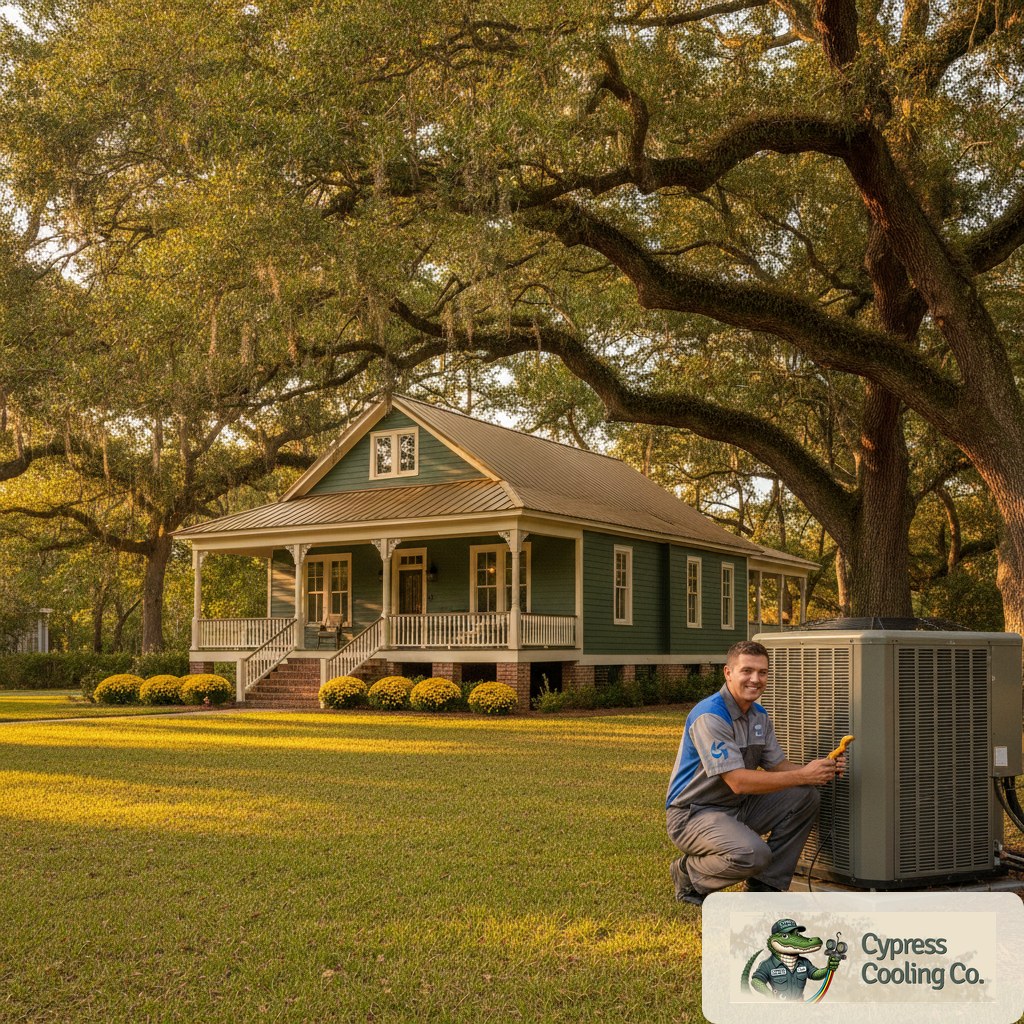
How to Prep Your Home Before an HVAC Technician Arrives
Ten minutes of prep before we ring the doorbell will save you forty minutes of diagnostic time, sharpen the measurements we take, and often shave a real number off the final invoice. None of it is hard. Most of it is stuff you can do the night before in your slippers.
Here's the operational pre-visit checklist we wish every Metairie, New Orleans, Mandeville, Slidell, and Covington homeowner had before we knocked. We're not asking you to do our job. We're asking you to remove the friction that turns an honest 90-minute service call into a 150-minute one.
None of this is required — we'll work around an unprepped home cheerfully. But if you want the cleanest, fastest, most accurate visit, this is how it gets done.
What is pre-visit prep, and what does it actually accomplish?
Pre-visit HVAC prep is a short, homeowner-side checklist completed the day before (or hour before) an appointment. It clears physical access, gathers the information we'll ask for at the door, secures the household, and gets the system into a state where our measurements will be valid the moment we walk in.
Three things prep is designed to remove:
- Access friction — boxes blocking the air handler, a hedge grown into the condenser, a locked attic, an inaccessible disconnect.
- Measurement noise — a clogged filter that throws off static pressure readings, a thermostat set to off so the system never enters a cooling cycle, a stack of laundry leaning on a return-air grille.
- Safety and household chaos — pets underfoot when we open electrical panels, kids playing near refrigerant lines, parking blocked.
None of this is required for us to do the job. All of it makes the job faster, sharper, and cheaper.
Which visits actually benefit from pre-visit prep?
Every paid HVAC visit benefits from prep. The list of visit types where it matters most:
- Repair visits — a clogged filter or blocked return will mask the real failure. Prep lets us measure the actual system, not the air-starvation symptom.
- Tune-ups and annual diagnostics — the entire visit is measurement-based. See tune-up vs inspection vs diagnostic for what each one actually covers.
- Second-opinion visits — every minute we save on access we spend on measurement. The honest second-opinion diagnosis guide covers what to bring to the door.
- Humidity and indoor-air-quality surveys — we need a real hygrometer reading at the return, plus visual access to every supply register. Boxes on top of registers ruin the data.
- Duct inspections — we'll be in the attic and the crawl space. Prep removes the wasted twenty minutes of moving holiday-decoration bins.
- Heat-pump shoulder-season visits — defrost-cycle and balance-point diagnostics need the system actually running long enough to settle.
About the only visit type where heavy prep is unnecessary is a warranty part swap where the diagnosis has already been done — and even then, replacing the filter the night before still helps.
What goes wrong when a home isn't prepped?
An unprepped home turns honest diagnostics into bad data. Specifically:
- The filter is six months old. Total external static pressure reads high — we now have to decide whether it's the filter, the ductwork, or the coil. Replacing the filter at the start of the visit and re-measuring eats 20 minutes.
- Two feet around the condenser isn't clear. We can't pull amp draws on the compressor safely, we can't get the panel off cleanly, and recirculation around the coil throws off the saturation temperature.
- The thermostat was switched to "off" the night before. The system has been cold for twelve hours. Subcooling and superheat readings need a settled cooling cycle of at least 15 minutes to be meaningful, so we start the visit waiting on the equipment.
- The air handler is buried under storage. Closet door blocked, attic ladder buried in seasonal storage, the return-air grille covered by a laundry basket. We can't get a clean static pressure reading or a representative return-air temperature.
- Pets and kids in the work area. Polite to point out, but real — refrigerant lines and live electrical panels are not safe with a Boxer underfoot.
- Model and serial are unknown. We spend 10 minutes hunting nameplates before we can pull the spec sheet. Spec values for charge, superheat, and capacitor microfarads depend on the exact model.
None of these are deal-breakers. All of them turn a 90-minute visit into a 150-minute one.
What does a properly prepped visit let us actually measure?
A prepped home lets the first 30 minutes (see what happens in a Cypress Cooling service call) hit every measurement we need:
- True total external static pressure — taken across a fresh, correctly-rated filter (we recommend a MERV-rated pleated filter, not a fiberglass throwaway). Reading is valid because the filter isn't the restriction.
- Accurate temperature split — return-air temperature at an unblocked return grille, supply-air temperature at the closest register. Target is 18–22°F across the coil. Furniture on top of either ruins the reading.
- Settled refrigerant data — measured subcooling and superheat in degrees after a 15-minute cooling cycle. Requires the thermostat in "cool" with a meaningful setpoint when we arrive.
- Valid IR thermography — coil sweat, electrical panel hot spots, and supply-register temperature mapping all need ambient airflow and unobstructed line-of-sight to the equipment.
- Real indoor humidity reading — digital hygrometer at the return grille, not a closet stacked with damp towels.
- Compressor electrical baseline — clean access to the outdoor disconnect with the equipment in a steady cooling state lets us pull amp draw and microfarads in 60 seconds.
The result is a written diagnostic on the same visit, with numbers you can verify against the equipment nameplate or a third opinion. That's the whole point of prep — it gets you a real diagnosis on the first visit instead of a "we'll come back to confirm" callback.
Your 10-minute pre-visit checklist
Run this list the night before (or the hour before) we arrive. It takes ten minutes if you don't dawdle.
- Replace the air filter. If you don't have a fresh one, write the size down (it's on the existing filter's edge) so we bring the right replacement.
- Clear two feet around the indoor unit. Air handler closet, attic platform, or basement utility space — boxes, storage, holiday decorations, all moved out of the way.
- Clear two feet around the outdoor unit. Hedges trimmed back, hose reels moved, garbage cans rolled away, kids' bikes relocated. Recirculation kills the diagnostic.
- Photograph the model and serial nameplates. Indoor unit and outdoor unit. One photo each. Text them to the appointment number if we asked.
- Write the symptom down in one sentence. When it started, what it sounds like or feels like, what makes it worse. Specific beats vague.
- Set the thermostat to a real cooling call. 30 minutes before our scheduled arrival, switch to "cool" with a setpoint 4–5°F below the current indoor temperature. The system should be running when we walk in.
- Confirm attic and crawl-space access. Ladder works, hatch isn't painted shut, no storage stacked on the pull-down.
- Secure pets. A closed bedroom or a crate is fine. We love dogs. Live electrical panels do not.
- Keep one parking spot near the driveway clear. The van is heavy with equipment — closer is faster.
- When you're ready to book, request service with Cypress Cooling. We'll send a confirmation text the day before that links back to this checklist.
Special prep for humidity and indoor-air-quality visits
If we're coming for a humidity complaint, a mold concern, or an indoor air quality survey, add four steps to the checklist:
- Run the system on "cool" with the fan in "auto" for the four hours leading up to the visit. We need a real dehumidification ratio reading, not a snapshot.
- Don't run dehumidifiers, exhaust fans, or shower vents in the hour before we arrive. They'll mask the actual return-air humidity.
- Note any rooms that feel sticky compared to others. Bedroom, bonus room, sunroom — wherever the complaint lives.
- Have your last three electric bills handy. kWh trend tells us whether the system is running constantly to chase humidity.
What we bring vs what you provide
You don't need to provide tools, parts, or supplies. We arrive with everything diagnostic — gauges, manometer, IR camera, hygrometer, combustion analyzer, common capacitor sizes, a stocked filter shelf for the most common residential sizes, and the parts inventory for the manufacturers we install (Amana, primarily, plus parts compatibility for most major brands).
What we can't carry: your model-specific OEM parts that need to be ordered from the factory (typical 1–3 business days), exotic filter sizes for non-standard returns, or replacement equipment until a load calc is done. None of these block the 30-minute diagnostic.
Frequently asked questions
Reviewed by Cypress Cooling Technical Team · Last reviewed: 2026-06-26
Ready when you are.
We diagnose, educate, and guide — we don't sell. Whenever you're ready for a real measurement-based conversation, here are the next steps.
Continue learning
Next reads from the Cypress Cooling Learning Center
Why Louisiana Homes Hide Humidity Problems (And What to Do About Them)
In South Louisiana, a 'cooling' problem is usually a humidity problem in disguise. Here's how Gulf Coast homes hide moisture issues, what to measure, and which fixes actually work in our climate.
Read the learn article → CompareTune-Up vs Inspection vs Diagnostic — What You're Actually Paying For
Tune-up, inspection, and diagnostic mean three different things. Here's what each HVAC visit actually delivers, what it should cost, and how to tell when you're being upsold.
Read the compare article → ActWhat Happens in the First 30 Minutes of a Cypress Cooling Service Call
What a Cypress Cooling tech actually does in the first 30 minutes of an HVAC service call — minute by minute, with the tools and measurements named.
Read the act article →Let’s get your home comfortable again.
Honest diagnosis, fair pricing, and a team that actually cares. Call Cypress Cooling or request service online — we'll take it from here.