
Why September is the Sweet Spot for A/C Maintenance in Kenner
.webp)
The September Illusion: Why the Cooling Season Is Far From Over
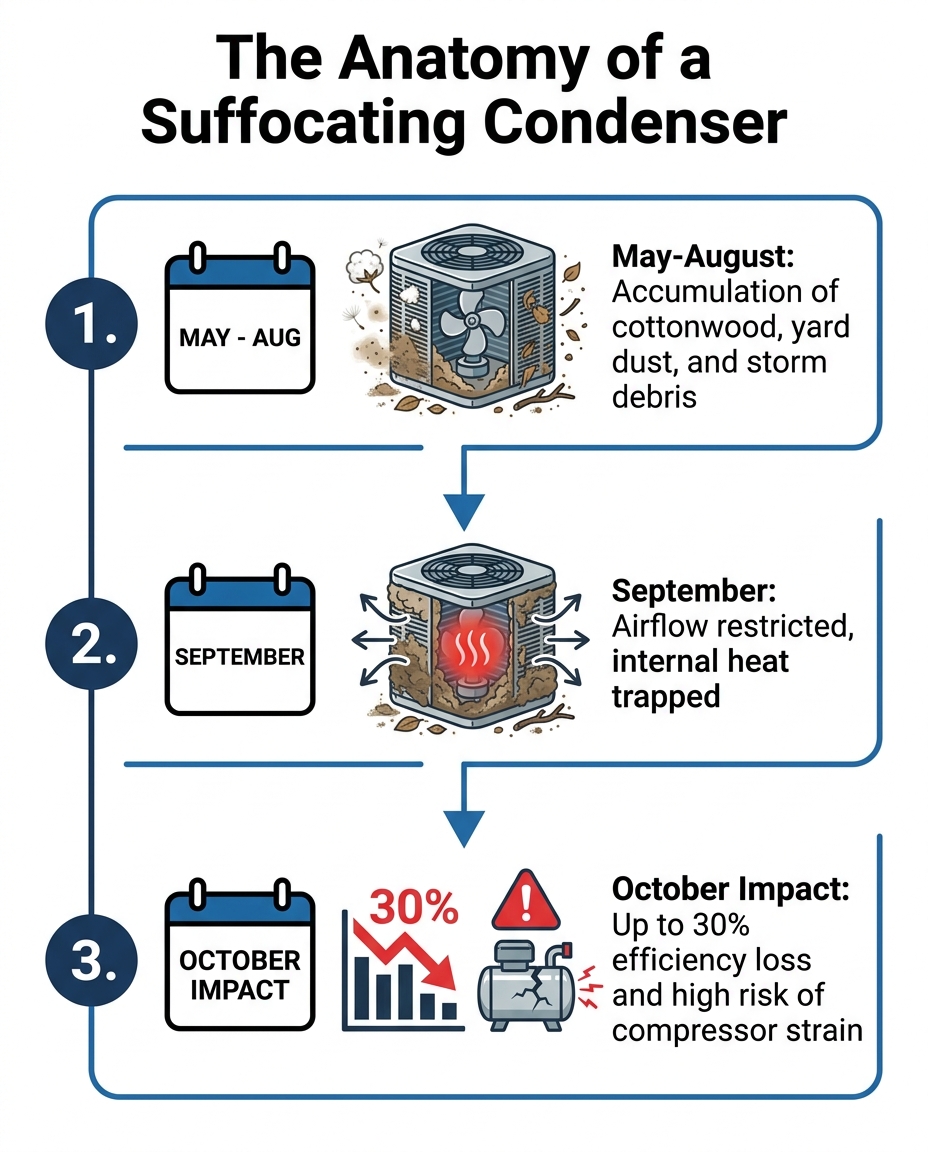
While the rest of the country is unpacking sweaters and preparing for autumn, understanding why September is the sweet spot for A/C maintenance in Kenner is the key to keeping your home comfortable through the end of the year. The transition into September in South Louisiana often brings a false hope of cooler weather. A slight dip in morning temperatures masks the reality that your cooling system will still be running at near-maximum capacity for weeks to come. At this point in the year, your outdoor condenser unit is likely suffocating under a heavy blanket of summer's cottonwood, dust, and severe storm debris.
This creates a critical decision point for homeowners: ignore the system because "summer is supposedly over," or schedule a targeted cleaning to prevent a major breakdown during the inevitable late-season heatwaves. A mid-season intervention clears away months of buildup, allowing the equipment to breathe and operate safely. For comprehensive support, explore our Air Conditioning Services to keep your system running smoothly through the end of the year.
Surviving the Threat of Lingering October Heatwaves
The calendar does not dictate HVAC needs in the Deep South. While national advice often suggests shutting down cooling systems by late September, the reality of the local climate tells a completely different story. October high temperatures in the Greater New Orleans area frequently remain in the 80s, accompanied by the thick, oppressive humidity that defines the region. This continuous high-humidity cooling cycle places immense stress on an already fatigued system.
At Cypress Cooling Company, our years of hands-on experience navigating the extended South Louisiana cooling season mean our team sees exactly how this subtropical weather pattern impacts residential equipment. Systems that have been running non-stop since May are suddenly forced to handle heavy moisture removal and temperature regulation without a break. Proactive care in September ensures seamless comfort straight through Halloween, rather than crossing your fingers and hoping an exhausted machine survives another month.
The Subtropical Reality of Early Fall
To understand why late-season maintenance is non-negotiable, it helps to look at the stark contrast between a typical national autumn and the lingering October heat experienced locally.
• Average High Temps — National Average (Early Fall): 60s to low 70s — Kenner & South Louisiana (Early Fall): Mid to upper 80s
• Humidity Levels — National Average (Early Fall): Dropping significantly — Kenner & South Louisiana (Early Fall): Remaining high, requiring constant dehumidification
• HVAC System Demand — National Average (Early Fall): Transitioning to heating — Kenner & South Louisiana (Early Fall): Heavy, continuous cooling cycles
• Debris Threat — National Average (Early Fall): Falling dry leaves — Kenner & South Louisiana (Early Fall): Wet storm debris, heavy dust, and lingering organic matter
Because high humidity drastically increases the perceived temperature inside your home, your air conditioner must run longer cycles just to remove moisture from the air. If you need localized support for these exact conditions, our Kenner A/C Services are designed specifically for the demands of this subtropical environment.
The Anatomy of a Suffocating Condenser
The outdoor condenser unit is the lungs of your cooling system. Its primary job is to release the heat absorbed from inside your home into the outside air. However, by the time September rolls around, that unit has endured the peak of Atlantic hurricane and storm season, along with months of daily lawn maintenance and dry spells. The resulting airborne debris creates a physical barrier that stops the heat transfer process in its tracks.
When debris accumulates, it acts exactly like a heavy winter coat wrapped around the unit. The system is literally suffocating, trapping the exhaust heat inside the chassis and forcing the compressor to work exponentially harder to achieve the same cooling output indoors.
Summer's Leftovers: What Blocks Your Airflow
The specific types of debris found in local outdoor units are particularly damaging because they layer together to form a dense, restrictive mat over the coil fins.
• Cottonwood and organic matter: Sticky seeds, pollen, and fine organic fibers weave themselves into the narrow aluminum fins of the condenser, creating a felt-like barrier that blocks airflow.
• Micro-dust buildup: Extended dry spells kick up microscopic dirt particles. When combined with morning dew or high humidity, this dust turns into a fine paste that coats the coils.
• Lawn clippings and yard waste: Trimmers and mowers consistently throw wet grass clippings against the lower half of the unit, which bake onto the metal in the afternoon sun.
• Mud splatter: Heavy late-summer thunderstorms cause rain to splash mud up into the lower condenser chassis, blocking the delicate fins near the base of the unit.

The Mechanical Toll: Why Compressors Fail in Early Fall
According to data from the U.S. Department of Energy, operating an air conditioner with dirty condenser coils can reduce the system's overall efficiency by up to 30%. But the true danger isn't just a higher utility bill—it is the catastrophic mechanical strain placed on the heart of the system. When airflow is restricted, the heat that should be blown away by the fan stays trapped inside. This causes operating pressures and internal temperatures to spike far beyond their safe design limits.
Our technicians at Cypress Cooling Company frequently see this exact cascading failure. Just last September, we helped a local homeowner whose capacitor went out on a hot Saturday night during a late-summer heat spike. Our team was able to use an alternative part to temporarily restore cooling, allowing the family to get out of the heat while waiting for the exact replacement to arrive. However, the root cause of the failure we uncovered was clear: excessive heat buildup from a struggling, dirty system had pushed the electrical components past their breaking point.
From Reduced Efficiency to Total Breakdown
The progression from a dirty coil to a dead compressor follows a predictable, destructive pattern if not interrupted by professional maintenance.
1. Airflow Restriction: The blanket of debris prevents the fan from pulling enough ambient air across the hot coils.
2. Heat Retention: Because the heat cannot escape, the refrigerant returning to the compressor is much hotter than it should be.
3. Electrical Strain: The system runs longer cycles to try and cool the house, causing the run capacitor to overheat, bulge, and eventually fail.
4. Compressor Overheating: Without a functioning capacitor, or with constantly elevated pressures, the compressor itself overheats, trips its internal thermal overload, and eventually seizes up completely.
These breakdowns rarely happen on a mild Tuesday morning. They almost always occur on weekends or during unexpected October heat waves when the suffocating condenser is pushed to its absolute limit.
Beyond the Condenser: Resetting Your Indoor Air Quality
While the outdoor unit takes a beating from the elements, the indoor components of your HVAC system have been quietly filtering thousands of cubic feet of air every single day since spring. Months of continuous operation circulate high volumes of indoor dust, pet dander, volatile organic compounds, and seasonal allergens. By September, the standard air filters are often heavily loaded, which restricts indoor airflow just as severely as debris restricts the outdoor unit.
Furthermore, humidity control inside your Kenner home relies entirely on a clean, fully functioning evaporator coil. When the indoor coil becomes coated in micro-dust that slips past a dirty filter, it loses its ability to condense moisture effectively. This can lead to a damp, clammy feeling indoors and create an environment ripe for mold and mildew growth within the ductwork. In our experience serving Metairie and Kenner, resetting your system in early fall isn't just about protecting the machinery; it is about resetting the air your family breathes. Incorporating comprehensive Indoor Air Quality Solutions alongside a mechanical tune-up ensures that your home remains both cool and healthy.
What Professional September Maintenance Actually Looks Like
It is crucial to understand that properly cleaning and calibrating a modern HVAC system is not a weekend DIY project. Safely handling high-voltage electrical components, pressurized refrigerants, and delicate aluminum coil fins requires the tools and training of a licensed professional. Using a high-pressure power washer or the wrong chemical cleaners on an outdoor condenser unit will easily flatten the fins, permanently destroying the unit's ability to release heat.
During a recent routine service call, one of our customers noted how our Cypress Cooling Company technician took the time to explain every step of the process, thoroughly clean the unit using specialized low-pressure techniques, and provide tailored maintenance tips for their specific setup. This level of detail is what separates a quick visual check from a true protective tune-up.
The Professional Tune-Up Checklist
When a licensed technician performs a late-season intervention, they execute a precise series of protective measures:
• Safe debris removal: Carefully clearing the chassis of leaves, mud, and cottonwood without bending the heat exchange fins.
• Chemical coil washing: Applying foaming, non-acidic coil cleaners that push dirt out from the inside of the coils safely.
• Electrical testing: Measuring the microfarads of the capacitors and the amp draw of the compressor to detect heat damage before it causes a failure.
• Refrigerant level verification: Ensuring the system has the exact charge needed to handle the lingering October heat efficiently.
• Condensate drain clearing: Flushing the indoor drain lines to prevent water backups and ceiling leaks.
Curious about everything that goes into this process? You can review a complete professional AC tune-up checklist to see exactly how your equipment is protected.
Kenner Homeowner FAQs: Late-Season A/C Care
Is it too late to get my AC serviced in September?
Absolutely not. With high temperatures continuing through October in South Louisiana, September is the ideal mid-season intervention point. A service visit now clears away the heavy summer buildup, giving your system the relief it needs to survive the final heatwaves of the year efficiently.
Why is fall AC maintenance important in Louisiana?
Because the cooling season extends much longer than the national average, local systems endure significantly more wear and tear. Systems need immediate relief from summer storm debris and cottonwood to maintain proper airflow. Without this maintenance, the equipment is highly vulnerable to breaking down just as the lingering October heat sets in.
Can dirty condenser coils cause compressor failure?
Yes, dirty coils are a leading cause of premature compressor death. Dirt acts as a thick insulator, trapping exhaust heat inside the unit and forcing the compressor to run hotter and at much higher pressures. Over time, this extreme thermal stress causes the mechanical components to seize up entirely.
How often should AC be serviced in Louisiana?
Due to the extended runtimes and extreme humidity of the region, proactive homeowners often schedule checks twice a year. An initial visit prepares the system before the peak summer heat, and a crucial second visit in early fall clears away the accumulated debris to prevent late-season suffocation.
What happens if I don't clean my outdoor AC unit?
If you leave the outdoor unit clogged, airflow becomes severely restricted, which can drop system efficiency by up to 30%. This leads to noticeably higher energy bills, poor indoor cooling performance, and a significantly increased risk of a major mechanical breakdown due to overheated electrical components.
Protect Your System Before the October Heat Arrives
Clearing a summer's worth of debris from your suffocating condenser is the absolute best defense against a sudden, late-season breakdown. September is not the time to cross your fingers and hope your equipment holds together; it is the perfect window to restore its efficiency and protect its most expensive components. Enjoy the peace of mind that comes with knowing your home will stay reliably cool through the lingering October heat. Take action today and schedule your next visit through our comprehensive A/C Maintenance Plan.
OUR CLIENTS HAVE TO SAY ABOUT US



Service areas
Our service areas are designed to meet the diverse needs of our clients. We focus on providing exceptional service and ensuring customer satisfaction in every location we operate.

